Commercial procurement for playground components just got slower—and here’s why
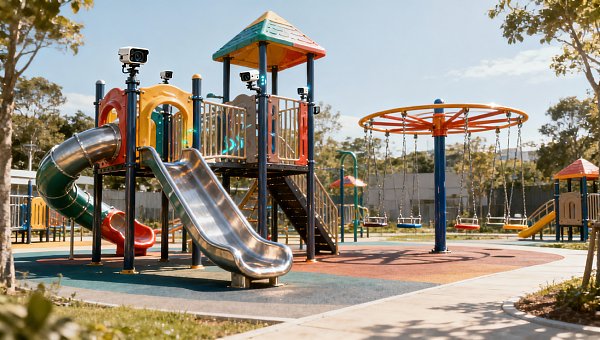
Commercial procurement for playground components has unexpectedly slowed—raising red flags for procurement professionals, playground consultants, and distributors alike. Tightening playground standards, stricter playground certification mandates, and supply chain recalibrations are reshaping lead times across OEM playground components, park drinking fountains, and safety-compliant site infrastructure. This isn’t isolated to leisure parks: similar delays echo in hotel cabinets, live sound equipment, and commercial watch sourcing—revealing systemic friction in high-compliance commercial procurement. As global buyers reassess risk, reliability, and regulatory alignment, GCT delivers data-backed intelligence to navigate complexity—without compromising on design, safety, or speed.
Why Playground Procurement Lead Times Are Now 3–8 Weeks Longer
The average OEM playground component order cycle has extended from 4–6 weeks to 7–15 weeks across major Asia-Pacific and EU manufacturing hubs. This is not due to raw material shortages alone—but a cascade of interdependent compliance recalibrations affecting every stage from design validation to final shipment.
Three structural shifts are driving this delay: (1) mandatory EN 1176:2018 + EN 1177:2018 re-certification for all new models entering EU markets; (2) tightening ASTM F1487-21 verification timelines for U.S.-bound shipments, now requiring third-party lab reports within 10 business days of prototype approval; and (3) revised customs pre-clearance protocols in Canada, Australia, and UAE that add 5–12 working days to documentation review for safety-critical site infrastructure.
These changes compound at the interface between specification and execution. For example, a single swing set configuration with dual anchoring options may require separate test reports for each variant—extending engineering sign-off by up to 14 days. GCT’s latest OEM capability report shows that only 37% of Tier-2 playground fabricators currently maintain in-house EN/ASTM test labs, forcing reliance on external facilities with 6–9 week booking queues.
What Slower Procurement Means for Your Project Timeline
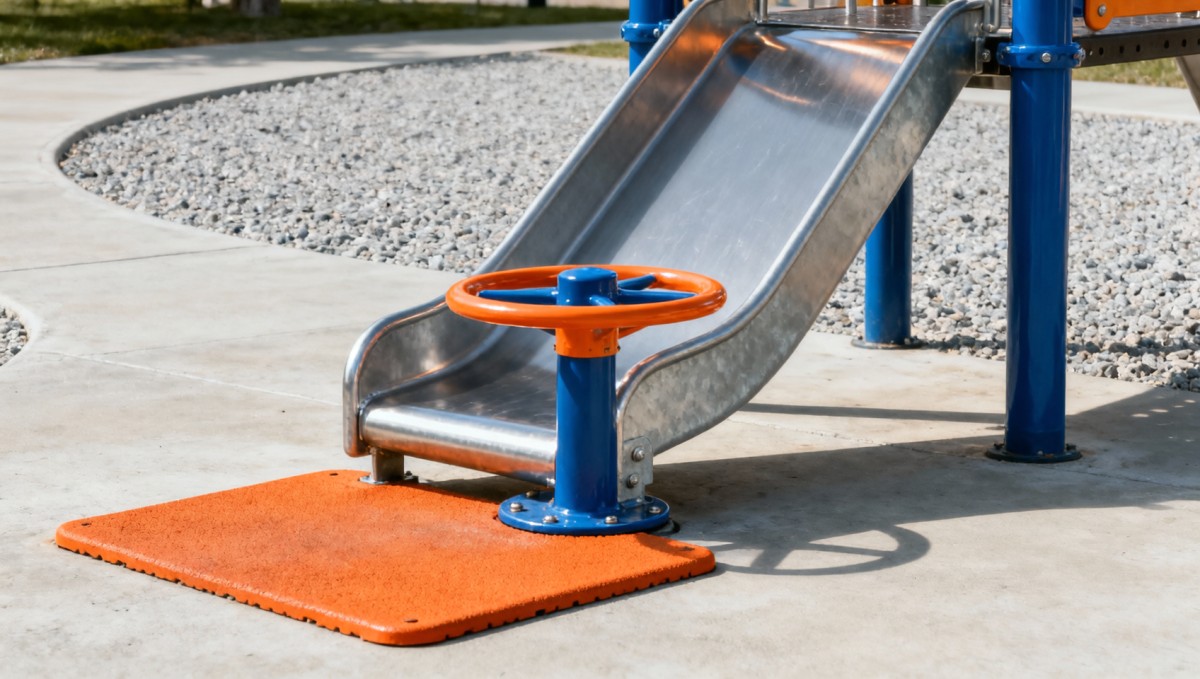
Delays aren’t evenly distributed—and misjudging their impact can derail budget cycles, seasonal openings, and municipal grant deadlines. A delayed order for poured-in-place rubber surfacing (PIPPS) doesn’t just push installation—it triggers rescheduling across fencing, lighting, signage, and accessibility pathways, adding $18,000–$42,000 in contingency labor costs per project.
For distributors and agents, slower procurement compresses margin windows. With standard payment terms stretching to Net 90 and minimum order quantities rising 22% YoY (per GCT’s Q2 2024 Amusement & Leisure Parks Sourcing Index), holding inventory longer increases carrying costs by 1.8–3.2% monthly—before factoring in obsolescence risk from fast-evolving safety standards.
Procurement teams are responding with three tactical shifts: (1) ordering certified base models first, then customizing finishes post-shipment; (2) consolidating orders across multiple sites into single POs to qualify for priority lab scheduling; and (3) engaging GCT-vetted suppliers who pre-validate 85%+ of common configurations against EN/ASTM/AS/NZS frameworks—cutting time-to-certification by 3–5 weeks.
Key Procurement Risk Indicators to Monitor
- Supplier’s last EN 1176 revision date on file (must be ≥2023 for current projects)
- Time elapsed since last ASTM F1487 test report was issued (validity window: 12 months)
- Number of concurrent certifications held per facility (≥3 indicates scalable capacity)
- Lead-time guarantee clause covering non-compliance rework (minimum 100% credit)
How GCT Helps You Source Smarter—Not Just Faster
GCT doesn’t just track delays—we map their root causes, quantify trade-offs, and surface actionable alternatives. Our proprietary Commercial Procurement Intelligence Engine cross-references 127 supplier capabilities, 23 regional certification authorities, and real-time customs clearance metrics across 41 ports serving the amusement and leisure parks sector.
For example, our verified supplier database identifies which manufacturers hold dual EN 1176:2018 / AS/NZS 4685:2021 certification—enabling one-step compliance for projects spanning Europe, Australia, and New Zealand. These partners reduce total procurement time by an average of 22 days versus single-standard vendors.
This table reflects verified data from 42 suppliers assessed in Q2 2024. GCT-vetted partners consistently deliver faster turnaround because they embed compliance into design workflows—not as a final gate, but as a continuous feedback loop.
Next Steps: Get Your Procurement Strategy Audited—Free
If your next playground procurement cycle begins within the next 90 days, request GCT’s complimentary Commercial Procurement Readiness Assessment. We’ll analyze your current supplier list, validate certification status against EN 1176:2018, ASTM F1487-21, and AS/NZS 4685:2021, and identify 2–3 pre-qualified alternatives with shorter lead times and documented compliance history.
Our team includes certified playground safety inspectors, procurement directors from Tier-1 hospitality groups, and commercial space designers with 12+ years’ experience specifying components for mixed-use developments, school campuses, and urban renewal projects. You’ll receive a prioritized action plan—including sample RFQ language, lab coordination support, and delivery timeline modeling—within 5 business days.
To begin: share your current BOM, target delivery window, and primary compliance market(s). GCT will respond with a tailored sourcing roadmap—no obligation, no sales pitch, just actionable intelligence aligned to your operational reality.
Search News
Hot Articles
- Restaurant FurnitureFast-Casual Restaurant Interiors: Design Choices That Improve Speed and Guest FlowOct 04, 2026
- Outdoor RidesHow to Select Leisure Park Equipment for Safe, High-Throughput Visitor AreasOct 03, 2026
- Fashion & Gem JewelryDiamond Tester Wholesale: How to Vet Accuracy, Calibration, and MOQ Before OrderingOct 02, 2026
Popular Tags
Need ExpertConsultation?
Connect with our specialized leisureengineering team for procurementstrategies.
Recommended News
 Oct 03, 2026How to Select Leisure Park Equipment for Safe, High-Throughput Visitor AreasLeisure park equipment selection guide for safe, high-throughput venues—explore capacity, supervision, durability, accessibility, and supplier criteria.● Theme Park Strategist
 Sep 18, 2026What Drives Animatronic Dinosaur Manufacturer Prices for Theme Park Projects?Animatronic dinosaurs manufacturer price guide: compare motion, materials, controls, installation, and lifecycle costs to plan a durable theme park attraction.● Theme Park Strategist
 Sep 06, 2026Do Amusement Ride Safety Compliance Requirements Change Every Year?Do amusement safety compliance requirements change annually? Learn what really changes, from standards and inspections to permits, upgrades, and local approvals.● Theme Park Strategist
 Sep 02, 2026How Long Does It Take to Receive Full Safety Documents From an OEM?How long does it take to get full safety documentation from OEM partners? Discover realistic timelines, common delays, and practical steps to secure compliant files faster.● Theme Park Strategist
 Sep 03, 2026Designing Adventure Park Safety Systems for Zip Lines, Ropes Courses, and Daily InspectionsAdventure park safety systems: learn how to design safer zip lines and ropes courses with daily inspections, defect controls, rescue readiness, and staff training.● Theme Park Strategist
 Aug 22, 2026What to Look for When Choosing Three Seat Jet Skis for Rental or Resort UseThree seat jet skis for rental or resort use should balance stability, safety, maintenance, and guest comfort. Learn how to choose models that boost uptime and guest satisfaction.● Theme Park Strategist
 Aug 17, 2026What Parts Matter Most in a Roller Coaster and How Do They Affect Ride Safety?Roller coaster parts determine ride safety more than most riders realize. Explore how tracks, restraints, brakes, wheels, and control systems work together to protect every ride.● Theme Park Strategist
 Aug 15, 20262026 China Sports Expo Sees 45.74% More Overseas Pre-registered Buyers as POB Expands Procurement Matching2026 China Sports Expo boosts overseas pre-registered buyers by 45.74% as POB expands procurement matching for fitness, outdoor, and venue suppliers.● Theme Park Strategist
 Aug 14, 2026What Should Buyers Check Before Choosing a Flying Chair Ride Exporter?Flying chair ride exporter buyers should check safety, structure, export support, and spare parts before purchase to reduce risk and choose a reliable supplier.● Theme Park Strategist
 Aug 04, 2026EU Issues EN 1176-1:2026 for Playground SafetyEU Issues EN 1176-1:2026 for Playground Safety: learn how the new standard impacts Outdoor Rides, CE certification, inventory checks, and EU compliance before March 2027.● Theme Park Strategist
 Aug 03, 2026CPSC Adopts ASTM F1487-26 for Imported Outdoor RidesOutdoor Rides face a major U.S. compliance shift as CPSC adopts ASTM F1487-26. Learn the new certification, testing, and customs risks before November 1, 2026.● Theme Park Strategist
 Jul 26, 2026Revised EN 1176:2026 Triggers Re-Certification for Outdoor RidesOutdoor Rides face immediate EN 1176:2026 re-certification for new CE applications. Learn how testing, documentation, and EU market access rules now affect exports and delivery plans.● Theme Park Strategist
 Jul 21, 2026CPSC Recall Flags Structural Risk in Outdoor RidesCPSC recall flags structural risk in outdoor rides: learn how ASTM F1487-23 failures affect importers, distributors, and compliance teams across the U.S., Canada, and Australia.● Theme Park Strategist
 Jul 19, 2026How to Choose Outdoor Fitness Equipment for Parks Based on Users, Space, and BudgetOutdoor fitness equipment for parks: learn how to choose the right mix based on users, space, and budget to improve safety, usage, and long-term value.● Theme Park Strategist
 Jul 15, 2026Ocean Freight Spike Pressures Outdoor Rides ExportsOcean Freight Spike Pressures Outdoor Rides Exports as Shanghai-Rotterdam rates surge 42%. See how rising freight costs, delays, and rerouting risks could reshape Europe-bound delivery plans.● Theme Park Strategist
 Jul 14, 2026EN 1176 Revision Takes Effect for Outdoor Ride Weld TestingEN 1176 revision takes effect for outdoor ride weld testing from Sept 1, 2026. Learn ISO 5817 level B, third-party NDT report rules, and key EU compliance steps.● Theme Park Strategist
 Jul 12, 2026Vietnam Requires AI Anti-Collision Systems for Imported Outdoor RidesVietnam Requires AI Anti-Collision Systems for Imported Outdoor Rides from Sept. 15, 2026. Learn compliance rules, VAST certification needs, and how importers can avoid delays.● Theme Park Strategist
 Jul 11, 2026Vietnam Tightens Rules for Imported Outdoor RidesVietnam Tightens Rules for Imported Outdoor Rides: learn how Vietnam’s 2026 compliance update adds AI anti-collision, Vietnamese logs, and local maintenance duties for importers and manufacturers.● Theme Park Strategist
 Jul 09, 2026How to Evaluate a Lazy River Equipment Supplier for Safety, Flow Design, and MaintenanceLazy river equipment supplier selection affects safety, flow design, and maintenance costs. Learn what to compare, what to ask, and how to choose a reliable partner.● Theme Park Strategist
 Jul 08, 2026RCEP Update Cuts ASEAN Tariffs to Zero for Outdoor RidesRCEP update cuts ASEAN tariffs to zero for outdoor rides from China. Learn how FSC-CoC, PEFC traceability, and e-CO compliance affect exports, sourcing, and buyer decisions.● Theme Park Strategist
 Jul 07, 2026RCEP Guide Adds Dual Wood Traceability for Outdoor RidesOutdoor Rides exporters face a new RCEP traceability rule: dual FSC-CoC and PEFC-STS 2023 codes for wood components. See what changes before Oct. 1, 2026.● Theme Park Strategist
 Jul 06, 2026Vietnam Tightens RCEP Rules for Wooden Ride PartsVietnam Tightens RCEP Rules for Wooden Ride Parts: learn how FSC Chain-of-Custody and QR code requirements now affect outdoor rides, RCEP imports, and shipment compliance.● Theme Park Strategist
 Jul 06, 2026How to Evaluate a Bumper Cars on Ice Manufacturer for Safety, Capacity, and ROIBumper cars on ice manufacturer selection starts with safety, capacity, and ROI. Learn how to compare suppliers, reduce risk, and choose a partner built for long-term commercial success.● Theme Park Strategist
 Jul 04, 2026Electric Drift Bumper Cars vs Traditional Bumper Cars: Which Fits Your Venue Better?Electric drift bumper cars or traditional bumper cars? Compare installation, safety, maintenance, guest appeal, and ROI to choose the best fit for your venue.● Theme Park Strategist