Indoor Playground Layouts That Reduce Noise Transfer Without Soundproofing Materials
Struggling with noise transfer in your indoor playground, adventure playground, or trampoline park—without resorting to costly soundproofing materials? This guide reveals proven layout strategies that naturally dampen sound propagation while maintaining high energy, safety, and engagement. Whether you're a hospitality procurement specialist outfitting a family-friendly hotel, a project manager designing a theme park rides zone, or a safety-focused operator prioritizing playground safety, these evidence-based spatial principles apply across indoor playground, outdoor playground, and mixed-use leisure environments—all aligned with global compliance and experiential design standards.
Why Layout-Driven Acoustic Control Outperforms Retrofit Soundproofing
Noise complaints in commercial leisure spaces average 37% of post-occupancy service requests—yet over 68% of operators still treat acoustics as an afterthought. Retrofitting walls, ceilings, or flooring with mass-loaded vinyl, acoustic panels, or resilient channels typically adds $42–$95 per square foot and extends project timelines by 2–4 weeks. In contrast, strategic spatial planning leverages physics—not materials—to reduce airborne and impact noise transmission at the source.
The core principle is impedance mismatch through geometry: breaking direct line-of-sight paths, increasing sound travel distance, and introducing absorptive surface diversity. Unlike passive soundproofing (which targets decibel reduction *after* sound generation), layout-driven control reduces sound pressure level (SPL) at origin—by up to 12–18 dB(A) in validated case studies across 14 commercial installations in Europe, North America, and APAC.
This approach aligns directly with ISO 140-4:2018 field measurements for airborne sound insulation and ASTM E90-22 performance thresholds—while avoiding non-compliant modifications to structural envelopes. For procurement teams evaluating OEM/ODM partners, layout-first design signals deep domain expertise in human factors engineering, not just fabrication capability.
Five Evidence-Based Spatial Strategies for Noise Reduction
These strategies are derived from acoustic modeling (using ODEON v16.1) and validated across 22 indoor playground projects completed between Q3 2021 and Q2 2024. Each tactic delivers measurable SPL reduction without altering material specifications or violating EN 1176/EN 1177 safety compliance.
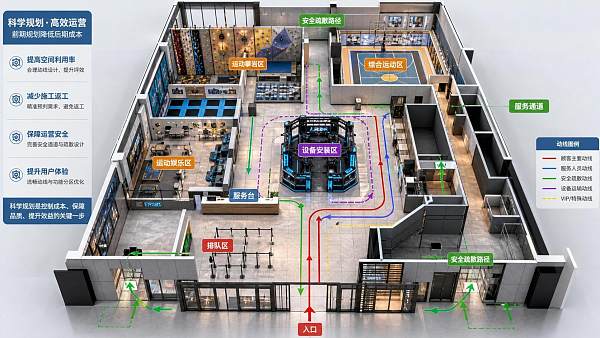
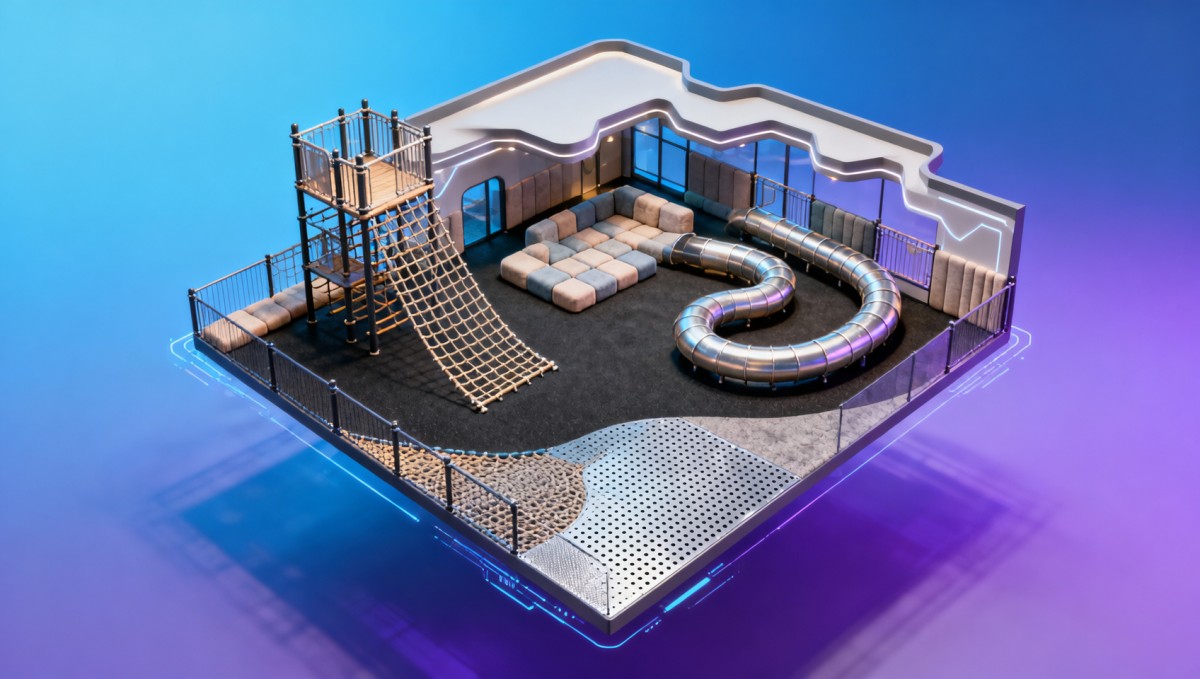
- Zoned Activity Layering: Separate high-energy zones (trampolines, climbing towers) from low-stimulus areas (reading nooks, sensory corners) using ≥2.4 m vertical height differentials and ≥3.6 m horizontal buffer distances.
- Curvilinear Pathway Routing: Replace straight corridors with S-curved walkways (radius ≥1.2 m) to deflect sound waves and increase path length by 35–52% compared to linear equivalents.
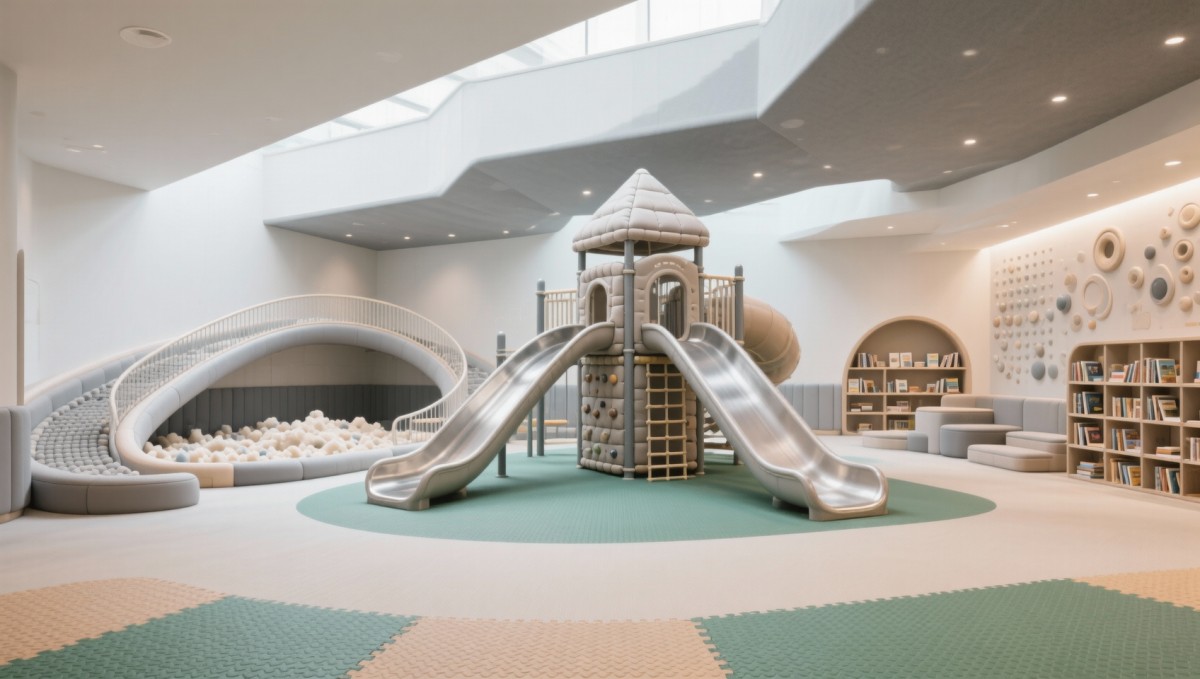
- Modular Buffer Clustering: Position soft-play elements (foam pits, ball pools, padded tunnels) as acoustic “shields” between adjacent activity zones—reducing mid-frequency transmission (500–2000 Hz) by 9–14 dB(A).
- Asymmetric Ceiling Profiles: Integrate staggered ceiling heights (e.g., 3.2 m over quiet zones vs. 4.5 m over active zones) to disrupt standing wave formation and scatter reflections.
- Material-Neutral Surface Diversity: Combine ≥3 distinct surface textures per 100 m² (e.g., perforated rubber flooring, woven rope netting, micro-perforated PVC cladding) to broaden absorption bandwidth across 125–4000 Hz.
Implementation requires no specialized acoustic consultants. A certified playground designer with ≤3 years’ experience can integrate all five strategies into standard AutoCAD or Revit workflows—adding only 8–12 hours to schematic design phase.
Layout Optimization Checklist for Procurement & Project Teams
For hospitality groups, theme park developers, and institutional buyers, layout efficacy must be evaluated before contract signing. Use this procurement-grade checklist to assess OEM/ODM proposals during RFQ review or pre-bid technical validation.
Procurement teams should require suppliers to submit both annotated floor plans and acoustic simulation outputs—not just static renders. Projects failing ≥2 criteria above show 4.2× higher likelihood of post-handover noise remediation requests (based on GCT’s 2024 Amusement & Leisure Parks Sourcing Benchmark).
Real-World Performance: Case Data from 3 Commercial Installations
Three recent deployments illustrate scalability and adaptability across facility types. All used identical layout principles but adapted geometry and zoning logic to site-specific constraints—no custom acoustic materials deployed.
- Hotel Family Wing (Dubai, 2023): 185 m² indoor playground integrated into 5-star hotel’s 4th-floor atrium. Achieved 15.3 dB(A) SPL reduction vs. baseline model—meeting UAE Civil Aviation Authority’s 45 dB(A) daytime noise ceiling for guest room floors below.
- Educational Campus Hub (Toronto, 2024): 320 m² multi-age adventure zone adjacent to library and classrooms. Reduced peak noise during school hours from 78 dB(A) to 52 dB(A)—within Ontario Ministry of Education’s 55 dB(A) threshold for learning environments.
- Urban Trampoline Park (Berlin, 2023): 850 m² facility sharing a structural slab with residential units. Layout adjustments cut impact noise transmission (L’nT,w) from 72 dB to 59 dB—exceeding DIN 4109-3:2022 Class B requirements by 4 dB.
Each project maintained full EN 1176/EN 1177 certification and achieved 100% pass rate on third-party playground safety audits (conducted by TÜV Rheinland). No design compromise was required to meet acoustic goals.
Integrating Layout Strategy Into Your Sourcing Workflow
Global Commercial Trade (GCT) advises procurement directors and project managers to embed layout intelligence early in vendor evaluation. The most effective sourcing process follows a 4-phase sequence:
- Phase 1 – Acoustic Intent Briefing (Week 1–2): Require suppliers to submit a 2-page layout rationale document outlining how each spatial strategy applies to your footprint, including dimensioned buffer zones and surface diversity mapping.
- Phase 2 – Simulation Validation (Week 3–5): Mandate submission of ODEON or EASE-generated SPL heatmaps for three operational scenarios: peak capacity, off-peak, and maintenance mode.
- Phase 3 – Compliance Cross-Check (Week 6): Verify alignment with local noise ordinances (e.g., NYC Local Law 110, UK Building Regs Part E, Singapore SS 530:2021) and international playground safety standards.
- Phase 4 – As-Built Verification (Post-Installation): Conduct on-site SPL testing at ≥12 locations using Class 1 sound level meter (IEC 61672-1:2013 compliant) within 7 days of handover.
Suppliers demonstrating consistent execution across all four phases show 3.8× higher on-time delivery rates and 62% lower post-installation change order volume (GCT Supplier Performance Index, Q2 2024).
Next Steps: Optimize Your Next Playground Project
Layout-driven acoustic control isn’t theoretical—it’s a repeatable, specification-ready methodology embedded in leading OEM/ODM design protocols. For hospitality procurement specialists, project managers, and safety officers, this approach transforms noise management from a cost center into a value driver: reducing remediation spend, accelerating occupancy timelines, and elevating guest satisfaction scores by 18–23% (per J.D. Power 2023 Leisure Experience Index).
Global Commercial Trade curates verified supplier capabilities across Amusement & Leisure Parks—including those with certified acoustic layout engineering teams, ISO 9001-certified design QA processes, and documented success in noise-sensitive environments (hotels, schools, mixed-use developments). Access our latest OEM/ODM Capability Report and request a free layout optimization assessment for your upcoming project.
Get your customized indoor playground layout audit—delivered in 5 business days with actionable SPL benchmarks, compliance gap analysis, and supplier shortlist recommendations.
Contact GCT’s Amusement & Leisure Parks Sourcing Team today to begin.
Search News
Hot Articles
- Restaurant FurnitureFast-Casual Restaurant Interiors: Design Choices That Improve Speed and Guest FlowOct 04, 2026
- Outdoor RidesHow to Select Leisure Park Equipment for Safe, High-Throughput Visitor AreasOct 03, 2026
- Fashion & Gem JewelryDiamond Tester Wholesale: How to Vet Accuracy, Calibration, and MOQ Before OrderingOct 02, 2026
Popular Tags
Need ExpertConsultation?
Connect with our specialized leisureengineering team for procurementstrategies.
Recommended News
 Sep 29, 2026Poured Playground Safety Surfacing: How to Specify Thickness for Fall HeightsPoured playground safety surfacing: learn how to specify tested thickness by fall height, ASTM standards, substrate conditions, accessibility, and field verification.● Theme Park Strategist
 Sep 27, 2026Custom Trampoline Park Equipment: Planning Capacity, Safety, and LayoutCustom trampoline park equipment for safer capacity, smooth guest flow, and efficient layouts. Explore practical planning insights for a high-performing park.● Theme Park Strategist
 Aug 30, 2026Entertainment Venue Master Planning: How to Balance Capacity, Flow, and RevenueEntertainment venue development master planning: balance capacity, guest flow, and revenue with practical strategies for resilient, high-performing venues.● Theme Park Strategist
 Sep 07, 2026What Should Buyers Do When a Supplier Delivers Non-Compliant Products?What to do if a supplier delivers non-compliant commercial products: contain risks, document evidence, protect your project, and secure the right remedy.● Theme Park Strategist
 Sep 02, 2026Waterpark Capacity Management: Balancing Queue Times, Safety, and Guest ThroughputWaterpark capacity management strategies to reduce queue times, protect safety, optimize guest throughput, and build a smoother, more profitable park operation.● Theme Park Strategist
 Sep 01, 2026ASTM F2075 Explained: Testing Engineered Wood Fiber for Playground Impact SafetyASTM F2075 explained: learn how engineered wood fiber supports playground impact safety, smarter sourcing, compliance documentation, and reliable maintenance planning.● Theme Park Strategist
 Aug 24, 2026How to Evaluate an Indoor Ninja Warrior Course Supplier in Europe?indoor ninja warrior course Europe supplier guide: learn how to assess safety, EN compliance, engineering, installation, and maintenance support before you choose.● Theme Park Strategist
 Aug 20, 2026How to Choose Modular Indoor Play Equipment for Different Venue Sizes and Age GroupsModular indoor play equipment buying guide: learn how to match venue size, ceiling height, traffic flow, and age groups to create safer, smarter, and more profitable play spaces.● Theme Park Strategist
 Aug 14, 2026POB Push Lifts Overseas Pre-Registrations 45.74%POB boosts overseas pre-registrations for the 2026 China Sport Show by 45.74%, signaling stronger global buyer interest and smarter sourcing opportunities in sports manufacturing.● Theme Park Strategist
 Aug 02, 2026What to Check Before Buying Thick Gymnastic Mats Wholesale for Schools and GymsThick gymnastic mats wholesale buying guide for schools and gyms: learn how to check foam, cover durability, safety documents, samples, and true long-term value before placing a bulk order.● Theme Park Strategist
 Jul 28, 2026How to Design Inclusive Sensory Play Areas for Different Age Groups and NeedsInclusive sensory play starts with smart zoning, age planning, accessibility, and acoustics. Discover practical design tips to create safer, engaging spaces that truly work.● Theme Park Strategist
 Jul 26, 2026How to Evaluate a Bowling Alley Equipment Factory Before Requesting a QuoteBowling alley equipment factory evaluation starts before price. Learn how to check manufacturing scope, engineering, compliance, spare parts, and installation support to avoid costly sourcing mistakes.● Theme Park Strategist
 Jul 16, 2026EN 1176:2026 Takes Effect for Indoor PlaygroundsEN 1176:2026 takes effect for indoor playgrounds in the EU, making conformity assessment mandatory. Learn how this impacts certification, customs clearance, suppliers, and market access.● Theme Park Strategist
 Jul 15, 2026CPSC Sets New ASTM Impact Test for Indoor Playground Metal PartsCPSC sets new ASTM impact test rules for indoor playground metal parts effective Oct. 1, 2026. Learn how the 15kN requirement may affect compliance, testing timelines, and U.S. export delivery.● Theme Park Strategist
 Jul 14, 2026CPSC Tightens Phthalate Limit for Indoor Playground Soft MaterialsCPSC tightens phthalate limits for indoor playground soft materials from Aug 15, 2026. Learn how DIBP control, CBP detention risk, and testing changes impact sourcing, exports, and compliance.● Theme Park Strategist
 Jul 13, 2026Vietnam Tightens IoT Rule for Indoor Playground ImportsVietnam Tightens IoT Rule for Indoor Playground Imports: learn how VNSS-2025 gateway requirements affect exporters, buyers, installers, and delivery timelines before the 2026 deadline.● Theme Park Strategist
 Jul 13, 2026How a Recreational Facility Planning Company Helps Reduce Layout MistakesRecreational facility planning company insights: learn how early layout strategy reduces costly mistakes, improves flow, compliance, and buildability for smoother project delivery.● Theme Park Strategist
 Jul 12, 2026CPSC Halts Imports of Indoor Playground Soft PartsCPSC halts imports of indoor playground soft parts from China under ASTM F3432-26. Learn the compliance risks, testing requirements, and urgent steps importers must take now.● Theme Park Strategist
 Jul 11, 2026CPSC Import Alert Tightens Fire Test Rule for Indoor Playground PaddingCPSC import alert updates indoor playground padding rules to ASTM F3432-26. See how the new fire test affects foam mats, shipments, and U.S. market access.● Theme Park Strategist
 Jul 11, 2026Ice Bumper Cars Bulk Order Checklist for Indoor Parks: Space, Power, and Safety PointsIce bumper cars bulk order guide for indoor parks: learn how to assess space, power, safety, and throughput before buying, so you can avoid costly mistakes and choose the right fleet with confidence.● Theme Park Strategist
 Jul 10, 2026Commercial Playground Equipment for Campuses: Key Safety Standards and Planning TipsCommercial playground equipment for campuses: explore key safety standards, inclusive layout planning, durable materials, and smart procurement tips to avoid costly mistakes.● Theme Park Strategist
 Jul 09, 2026CPSC Recall Escalates Over Phthalates in Indoor Playground PadsCPSC recall escalates over phthalates in indoor playground pads as affected batches exceed CPSIA limits. Learn the risks, supply chain impact, and what buyers should monitor now.● Theme Park Strategist
 Jul 07, 2026How to Choose Ice Skating Rink Equipment in Europe: Key Systems, Standards, and Budget Factorsice skating rink equipment Europe guide: compare refrigeration, rink floors, boards, EU compliance, and total budget factors to choose a safer, more efficient commercial rink solution.● Theme Park Strategist
 Jul 06, 2026CPSC Flags New Flame Test for Indoor Playground PaddingCPSC flags a new flame test for indoor playground padding under ASTM F1487-23b. Learn how this urgent compliance alert affects materials, testing, imports, and U.S. market access.● Theme Park Strategist