How to Source Luxury Accessories for Women
Sourcing luxury accessories for women is not just about finding beautiful products at competitive prices. For B2B buyers, distributors, and commercial evaluators, the real challenge is identifying suppliers that can consistently deliver premium design, verified quality, customization capability, and dependable global fulfillment. In practice, the best sourcing decisions come from balancing aesthetics with business fundamentals: supplier specialization, material transparency, MOQ flexibility, compliance readiness, and long-term brand fit. Whether you are comparing a custom jewelry manufacturer, evaluating a luxury jewelry manufacturer, or building a luxury jewelry wholesale portfolio, this guide outlines how to source with more confidence and less risk.
What Is the Real Buying Intent Behind Luxury Accessories Sourcing?
Most professional buyers searching for how to source luxury accessories for women are not looking for fashion inspiration alone. They are trying to answer practical procurement questions:
- Which supplier can match premium brand positioning?
- How do we verify quality before committing to volume?
- Should we choose stock collections, OEM, or ODM?
- What are the risks in custom jewelry design and overseas manufacturing?
- How can we protect margin while keeping luxury appeal?
That means an effective sourcing process should focus less on trend commentary and more on supplier evaluation, category strategy, product development, and operational reliability. For luxury accessories, especially jewelry, eyewear-adjacent accessories, and premium gift items, weak sourcing decisions often lead to brand damage, returns, inconsistent finishing, and lost sales windows.
Start with the Right Product Strategy, Not the Supplier List
Before requesting quotations, buyers should define what kind of luxury accessory program they are building. This step saves time and helps filter out suppliers that look attractive on paper but are wrong for the business model.
In most cases, sourcing falls into one of four paths:
- Private label wholesale: Suitable for distributors and retailers that want faster speed to market with lower development cost.
- OEM production: Best when you already have detailed designs, technical drawings, material requirements, and packaging standards.
- ODM collaboration: Useful when you need a capable supplier to support design adaptation and collection development.
- Fully custom development: Ideal for brands or premium commercial projects needing exclusive custom luxury jewelry or signature accessory lines.
For many buyers, the mistake is contacting a luxury jewelry wholesale supplier when the real need is a custom jewelry manufacturer with prototyping and finishing expertise. Others overinvest in bespoke development when a curated stock collection would deliver better margin and lower lead-time risk.
A good internal brief should define:
- Target retail or resale price band
- Core category: necklaces, earrings, bracelets, brooches, gifting sets, premium accessories
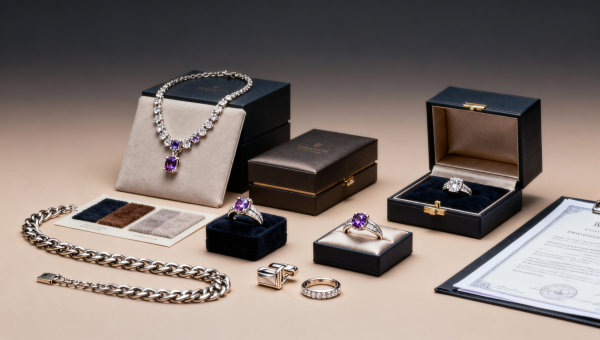
- Material expectations: sterling silver, brass, stainless steel, gold plating, gemstones, lab-grown stones, pearls
- Expected order volume and replenishment frequency
- Brand positioning: accessible luxury, premium gifting, high-end luxury jewelry, or bespoke collector-grade
- Required packaging and presentation standard
How to Identify the Right Type of Supplier
Not every supplier in the jewelry and luxury accessories market serves the same buyer profile. A sourcing decision becomes much easier when suppliers are grouped by capability rather than by catalog size.
Look for one of these supplier types:
- High-volume wholesalers: Strong for broad assortments and price efficiency, but often weaker in uniqueness and premium finishing.
- Custom jewelry manufacturers: Better for proprietary design, controlled branding, and differentiated collections.
- Luxury jewelry manufacturers: More suitable for premium material control, refined craftsmanship, and brand-sensitive production.
- Studios with OEM/ODM support: Helpful when buyers need market-ready design input plus manufacturing execution.
For women’s luxury accessories, the most commercially valuable suppliers usually show strength in at least five areas:
- Consistent finishing quality
- Ability to handle low-to-medium MOQ development
- Transparent material and plating specifications
- Strong sample development process
- Reliable export communication and production discipline
If a supplier offers everything to everyone, be cautious. In premium sourcing, specialization is often a stronger indicator of quality than product breadth.
What Buyers Should Verify Before Shortlisting a Luxury Jewelry Manufacturer
Shortlisting should be based on evidence, not only supplier claims. This is especially important in categories where visual appeal can hide weak technical standards.
Key verification points include:
- Material authenticity: Request detailed specifications for base metals, plating thickness, stone origin, and hypoallergenic claims.
- Craftsmanship consistency: Review macro photos, sample sets, and defect tolerance standards.
- Production capability: Confirm whether the supplier handles casting, stone setting, polishing, plating, assembly, and packaging in-house or through subcontractors.
- Compliance readiness: Check for REACH, nickel release, lead and cadmium limits, and market-specific product safety expectations.
- Quality control workflow: Understand inspection stages from raw material intake to pre-shipment checks.
- Past export experience: Suppliers familiar with premium retail, hospitality gifting, and international distributors are usually easier to work with.
Ask direct questions such as:
- What is your standard plating micron range?
- How do you control color consistency across repeat orders?
- Can you provide sample development lead time and production lead time separately?
- How do you manage logo application and custom packaging?
- What is your remake or defect resolution policy?
Clear answers here usually reveal whether a supplier is operationally mature or simply sales-driven.
Custom Jewelry Design: When It Adds Value and When It Adds Risk
Custom jewelry design can create stronger margins, exclusivity, and brand identity, but only when the supplier has the right development structure. For many buyers, custom projects fail not because of bad design ideas, but because technical conversion from concept to manufacturable product is weak.
Custom development usually makes sense when:
- You need exclusive designs for retail differentiation
- You are building a signature women’s accessory line
- You require branded packaging and story-driven presentation
- You want to align collections with specific customer segments or regional demand
It becomes risky when:
- MOQ is too high for demand uncertainty
- Sampling rounds are poorly controlled
- Technical drawings are incomplete
- Material substitutions are not formally approved
- Lead times do not fit launch windows
A capable custom jewelry manufacturer should be able to support concept sketches, CAD development, prototype refinement, material recommendations, finishing trials, logo placement, and packaging integration. If they cannot show a disciplined sample approval process, custom work may create more cost than value.
How to Evaluate Quality in High-End Luxury Jewelry and Premium Accessories
In high-end luxury jewelry, quality is judged not only by raw materials, but by how every visible and invisible detail supports the premium perception of the piece. Buyers should evaluate samples under commercial, not casual, standards.
Focus on these quality indicators:
- Surface smoothness and polish consistency
- Even plating coverage with no edge thinning
- Secure stone setting and balanced alignment
- Clasp function, joint strength, and wearability
- Uniform logo execution and engraving clarity
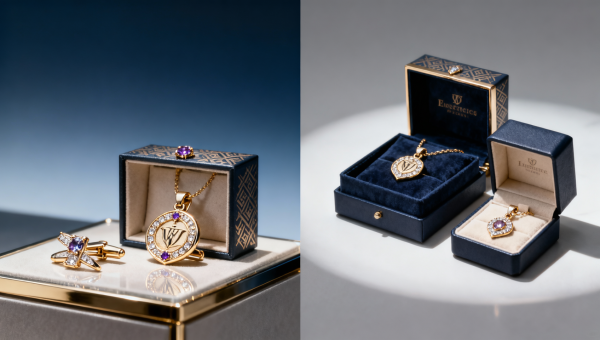
- Packaging quality that matches product value
Also assess “repeatability.” A beautiful prototype is not enough if the supplier cannot maintain that standard across larger production runs. For distributors and procurement teams, consistency matters more than isolated excellence.
Request duplicate samples from different production moments if possible. This helps reveal variation in finish, color, and assembly quality.
Luxury Jewelry Wholesale vs Custom Manufacturing: Which Model Fits Better?
There is no universal answer. The best model depends on the buyer’s timeline, risk appetite, branding needs, and sales structure.
Luxury jewelry wholesale is often the better fit if you need:
- Fast product onboarding
- Lower development complexity
- Broader SKU testing
- Lower initial design investment
Custom manufacturing is often the better fit if you need:
- Exclusive products
- Better control of brand identity
- Higher differentiation in competitive markets
- Longer-term margin protection through proprietary designs
Many successful buyers use a hybrid model: they source selected wholesale pieces to test demand while developing custom luxury jewelry for hero products or premium capsule collections. This reduces launch risk without giving up strategic differentiation.
Questions Procurement Teams Should Ask Before Signing Any Supplier
For business buyers, the right questions can prevent costly supplier misalignment. Beyond product design and price, procurement teams should examine business mechanics.
- What are the MOQ requirements for samples, first orders, and repeat orders?
- What payment terms are available for new and established clients?
- Can the supplier support barcoding, retailer labeling, or private packaging?
- What is the average on-time delivery rate?
- How are delays, defects, and claim resolutions handled?
- Can they scale if demand increases after a successful launch?
- Do they offer regional exclusivity or design protection terms?
This is also where commercial evaluators should compare total sourcing cost, not just unit price. The cheapest quote can become the most expensive option if defect rates, delays, or repackaging needs are high.
Common Sourcing Risks and How to Reduce Them
Luxury accessory sourcing carries several predictable risks, but most can be reduced through a more disciplined buying process.
Common risks:
- Sample quality does not match production quality
- Plating durability is weaker than promised
- Stone color or size varies across batches
- Custom packaging arrives below luxury standard
- Lead times slip during peak seasons
- Communication gaps cause approval errors
Risk reduction tactics:
- Approve sealed reference samples before bulk production
- Use written technical sheets for every SKU
- Define defect tolerance and inspection criteria in advance
- Schedule pre-shipment inspection for first orders
- Confirm packaging standards with physical mockups
- Start with a pilot order before scaling volume
For high-value women’s accessories, a controlled first order is usually more valuable than chasing the fastest large-volume deal.
What Makes a Supplier Valuable Beyond Price
In premium categories, long-term supplier value comes from more than manufacturing. The best partners improve speed, product quality, brand perception, and sourcing resilience over time.
A strong supplier relationship can deliver:
- Faster seasonal development cycles
- Better market adaptation through shared design insight
- Lower defect and return rates
- More dependable replenishment planning
- Higher perceived value through refined packaging and finishing
This is particularly important for distributors, specialty retailers, hotel gifting programs, and premium project buyers who need products that perform both visually and commercially. A supplier that understands luxury positioning helps protect your downstream reputation.
Conclusion: Source for Brand Fit, Operational Reliability, and Repeatable Quality
To source luxury accessories for women effectively, buyers need to move beyond catalog browsing and focus on supplier fit. The right partner should align with your product strategy, support your preferred sourcing model, and prove quality through transparent materials, disciplined sampling, and reliable production control. Whether you are exploring custom jewelry design, comparing a custom jewelry manufacturer, or building a luxury jewelry wholesale assortment, the smartest sourcing decision is the one that combines premium aesthetics with repeatable commercial performance.
In this market, beautiful products matter—but verified execution matters more. Buyers who evaluate both will make stronger, lower-risk decisions and build more durable luxury accessory programs.
Search News
Hot Articles
- Pro Stage AudioFIFA Adopts Chinese Mini-LED Displays for 2026 World Cup VAR SystemApr 24, 2026
- Outdoor RidesChina FA Warns Nanjing City Over Fan Conduct; ISO 20785 Compliance AcceleratesApr 24, 2026
- Pro Stage AudioFan Zhendong Visits Silicon Valley as MLTT Investor, AI Ping-Pong Tech Draws US InterestApr 24, 2026
Popular Tags
Need ExpertConsultation?
Connect with our specialized leisureengineering team for procurementstrategies.
Recommended News
 Apr 23, 2026Texas Launches PFAS Probe Against Lululemon, Export Compliance Risks RisePFAS probe against Lululemon in Texas escalates export compliance risks for sportswear ODMs, testing labs & chemical suppliers — act now.● Luxury Retail Analyst
 Apr 21, 2026FDA Proposes Chinese Label Translation Requirement for Sports SupplementsFDA proposes Chinese label translation requirements for sports supplements—learn how protein powders, BCAAs & creatine brands can prepare for Q3 2026 compliance.● Luxury Retail Analyst
 Apr 21, 2026CPSC Urgent Alert: PFAS in Fitness Apparel Risks US Import DelaysPFAS in fitness apparel triggers CPSC alerts—avoid US import delays! Get CPSC-recognized PFAS testing, compliance tips & port detention prevention now.● Luxury Retail Analyst
 Apr 20, 2026US CPSC Alert: PFAS in Fitness Apparel May Delay US Import ClearancePFAS in fitness apparel may delay US import clearance—learn how the Texas AG probe & CPSC alert impact compliance, testing, and supply chains now.● Luxury Retail Analyst
 Apr 15, 2026FDA Updates Guidelines for Sports Nutrition Supplement Labels: Chinese Translations Must Be FDA-CertifiedFDA now requires Chinese translations on sports nutrition supplement labels to be FDA-certified. Learn how this impacts manufacturers, importers, and compliance timelines for US market access.● Luxury Retail Analyst
 Apr 14, 2026Japan Updates Jewelry Labeling Rules: Mandatory China Factory Codes from April 2026Japan's new jewelry labeling rules mandate 'Country of Origin + China Factory Code' (CN-FAC-XXXXX) from April 2026. Learn how this impacts Chinese exporters and Japanese importers in the $2.1B precious metals market.● Luxury Retail Analyst
 Apr 14, 2026RCEP Tariff Cuts Boost China's Optical Lens Exports to ASEANRCEP tariff cuts boost China's optical lens exports to ASEAN with 0% duties on CR-39 & polycarbonate lenses. Learn how this + faster logistics create new trade opportunities.● Luxury Retail Analyst
 Apr 14, 2026US CPSC Proposes Stricter Lead Limits in Children's Jewelry, Impacting Chinese ExportersUS CPSC proposes stricter lead limits (40ppm) in children's jewelry, impacting Chinese exporters with new compliance challenges. Learn how this 2026 regulation affects manufacturers & supply chains.● Luxury Retail Analyst
 Apr 14, 2026EU's Revised EN 14138:2026 Eyewear Nickel Standard Takes Effect, Impacting Chinese ExportersEU's EN 14138:2026 eyewear standard tightens nickel limits to 0.2μg/cm²/week, impacting Chinese exporters. Learn compliance strategies for EU market access.● Luxury Retail Analyst
 Apr 25, 2026Luxury Jewelry B2B in 2026: What Changes?Luxury jewelry B2B in 2026: explore custom jewelry design, custom jewelry manufacturer trends, luxury jewelry wholesale shifts, and how custom luxury jewelry drives faster, safer growth.● Luxury Retail Analyst
 Apr 25, 2026How to Grow a Luxury Accessories Online StoreLearn how to grow a luxury accessories online store with custom jewelry design, a trusted custom jewelry manufacturer, luxury accessories wholesale strategy, and high-end luxury jewelry that converts.● Luxury Retail Analyst
 Apr 25, 2026Custom Jewelry for Corporate Gifts That LastCustom jewelry for corporate gifts from a trusted custom jewelry manufacturer—discover custom jewelry design, high-end luxury jewelry, and scalable luxury jewelry B2B solutions.● Luxury Retail Analyst
 Apr 25, 2026What a Good Luxury Accessories Catalog IncludesLuxury accessories catalog guide covering custom jewelry design, high-end luxury jewelry, luxury accessories for men and women, and trusted luxury jewelry B2B sourcing insights.● Luxury Retail Analyst
 Apr 26, 2026Custom Jewelry for Weddings: Where to Start?Custom jewelry for weddings starts with strategy. Explore custom jewelry design, choosing a custom jewelry manufacturer, and sourcing high-end luxury jewelry that balances quality, scalability, and profit.● Luxury Retail Analyst
 Apr 26, 2026Luxury Jewelry Wholesale: MOQ, Margin, Lead TimeLuxury jewelry wholesale guide: compare MOQ, margin, and lead time for custom jewelry design, custom jewelry manufacturer selection, and profitable luxury jewelry B2B sourcing.● Luxury Retail Analyst
 Apr 26, 2026What Buyers Miss in Custom Luxury Jewelry OrdersCustom luxury jewelry buyers often overlook sourcing, compliance, and production risks. Learn how a custom jewelry manufacturer secures quality, repeatability, and B2B value.● Luxury Retail Analyst
 Apr 26, 2026High-End Luxury Jewelry: Is It Worth the Price?High-end luxury jewelry explained: compare custom jewelry design, luxury jewelry wholesale, and the right custom jewelry manufacturer to judge ROI, quality, and B2B sourcing value.● Luxury Retail Analyst
 Apr 26, 2026How to Source Luxury Accessories for WomenSource luxury accessories for women with confidence. Compare custom jewelry manufacturers, luxury jewelry wholesale options, and high-end luxury jewelry strategies for scalable B2B growth.● Luxury Retail Analyst
 Apr 26, 2026Which Luxury Accessories for Men Sell Best?Luxury accessories for men sell best in watches, eyewear, and custom jewelry design. Explore luxury jewelry wholesale trends, top B2B sourcing tips, and winning premium categories.● Luxury Retail Analyst
 Apr 26, 2026Custom Jewelry Manufacturer vs Trading CompanyCompare a custom jewelry manufacturer vs trading company for custom jewelry design, custom luxury jewelry, and luxury jewelry B2B sourcing—improve quality, pricing, and lead times.● Luxury Retail Analyst
 Apr 26, 2026What Makes a Reliable Custom Jewelry Manufacturer?Custom jewelry manufacturer guide: learn how custom jewelry design, quality control, lead times, and compliance shape reliable custom luxury jewelry sourcing for B2B buyers.● Luxury Retail Analyst
 Apr 26, 2026Custom Jewelry Design: What Impacts Cost Most?Custom jewelry design cost depends most on materials, craftsmanship, and MOQ. Compare custom jewelry manufacturer options for custom luxury jewelry and smarter luxury jewelry B2B sourcing.● Luxury Retail Analyst
 Apr 26, 2026How to Choose a Custom Jewelry Design PartnerCustom jewelry design starts with the right partner. Learn how to choose a custom jewelry manufacturer for high-end luxury jewelry, B2B sourcing, weddings, and corporate gifts.● Luxury Retail Analyst
 Apr 22, 2026Why Some Luxury Jewelry Collections Lose Value in DisplayLuxury jewelry in a trampoline park, indoor playground, arcade games or musical instruments venue can lose value fast. Discover smarter display strategies that protect premium appeal and buyer confidence.● Luxury Retail Analyst