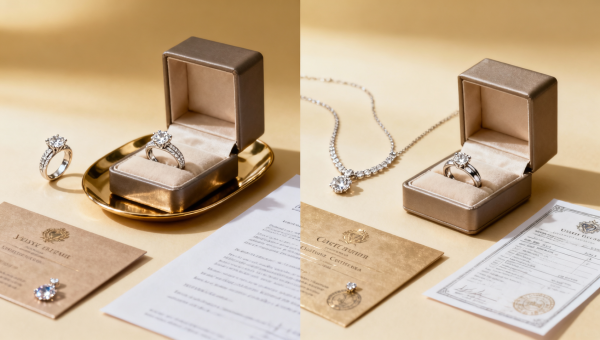
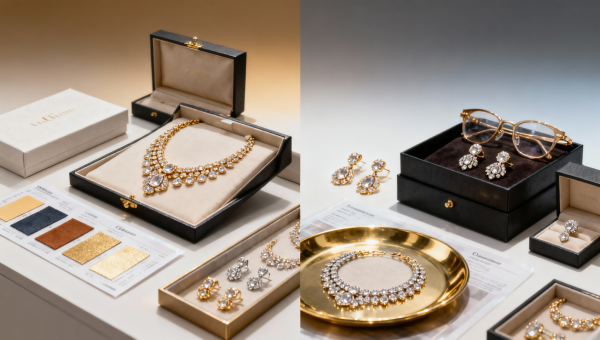
Custom Jewelry Design: What Impacts Cost Most?
The cost of custom jewelry design can vary dramatically depending on materials, craftsmanship, branding, and production scale. For buyers comparing a custom jewelry manufacturer, sourcing custom luxury jewelry, or evaluating high-end luxury jewelry for weddings, hotels, corporate gifts, or luxury brands, understanding the biggest cost drivers is essential. This guide breaks down what matters most for smarter B2B and wholesale decisions.
What really drives custom jewelry design cost in B2B sourcing?
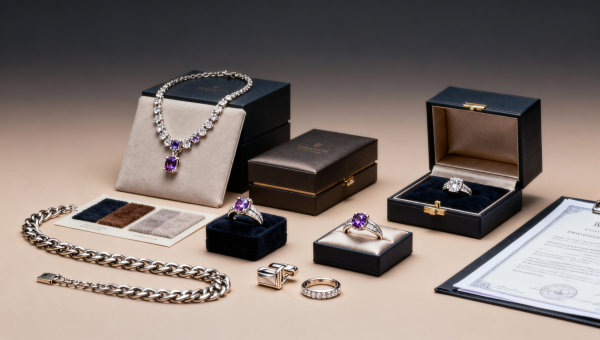
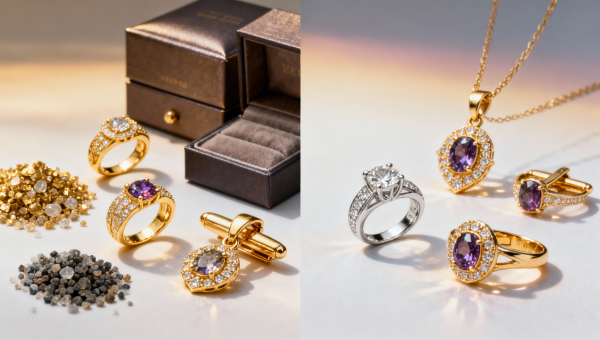
In commercial buying, the price of custom jewelry design is rarely determined by one factor alone. A ring, pendant, brooch, cufflink, or branded jewelry set may look similar in photos, yet the landed cost can shift significantly once you compare metal purity, stone specifications, labor intensity, packaging, and order size. For procurement teams and distributors, the key is to separate visible luxury from hidden production cost.
Most projects can be understood through 5 core cost layers: design development, raw materials, stone setting or decorative components, manufacturing complexity, and compliance or packaging requirements. In small-batch development, design and sampling often account for a larger share. In medium- to high-volume programs, material pricing and labor efficiency become more influential over a 30–90 day production cycle.
For buyers in hospitality, bridal, premium gifting, and specialty retail, custom luxury jewelry is not only a product but also a brand asset. That means cost evaluation should include visual consistency, repeatability, and defect tolerance. A piece intended for hotel VIP gifting or luxury brand collaboration must maintain stable finish, plating color, and logo precision across multiple batches, sometimes within a ±0.1mm to ±0.3mm tolerance on key visual details.
This is where Global Commercial Trade adds value for sourcing teams. GCT focuses on commercial-grade supplier discovery and decision support, helping buyers compare not just quotations, but also factory capability, sampling logic, compliance readiness, and delivery reliability. That is especially relevant when custom jewelry design moves from concept presentation to wholesale execution.
The 5 cost layers buyers should review first
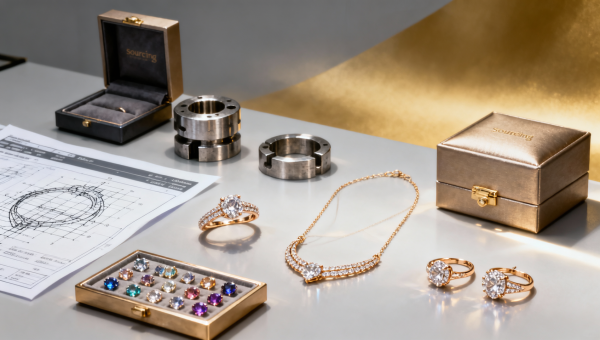
- Design and CAD development: new sketches, 3D modeling, mold creation, and revision rounds can add cost before production begins, especially when there are 2–4 approval stages.
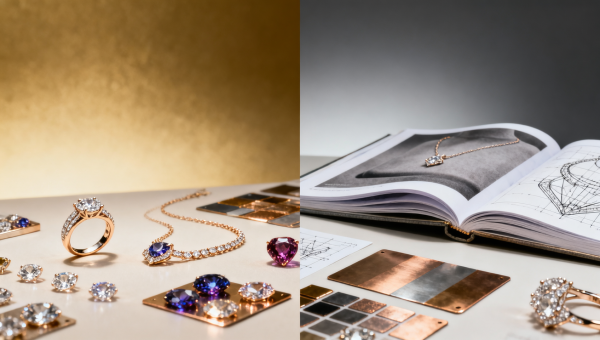
- Material selection: 925 silver, brass, stainless steel, gold vermeil, solid gold, natural stones, lab-grown stones, and enamel each change the budget structure.
- Craftsmanship intensity: hand setting, micro-pavé, engraving, polishing, and multi-layer plating demand more labor hours per unit.
- Order volume and yield: a 50-piece trial order often has a much higher unit price than a 500-piece or 2,000-piece run.
- Presentation and compliance: custom gift boxes, logo tags, barcode labeling, metal content declaration, and destination-market documentation all affect total cost.
If a quotation appears unusually low, buyers should verify what has been excluded. Common omissions include mold charges, plating thickness, stone grade consistency, spare parts, packaging inserts, and pre-shipment inspection. These items often create the gap between an attractive sample quote and the true commercial order value.
Which materials increase cost the most?
Materials usually represent the most visible cost driver in custom jewelry design, but not always the largest risk. Precious metals fluctuate with market conditions, while decorative materials affect both look and durability. For wholesale buyers, the smart question is not only “Which material is cheaper?” but “Which material delivers the right positioning, wear performance, and replenishment stability?”
In many commercial programs, the cost difference between brass, sterling silver, and solid gold is obvious, yet the finishing process may create an equally important pricing shift. A brass base with quality gold plating can support fashion jewelry or premium gifting at a lower entry cost. Sterling silver may be preferred for mid-range luxury retail. Solid gold or high precious-metal content is typically reserved for fine jewelry collections, wedding programs, or high-net-worth clientele.
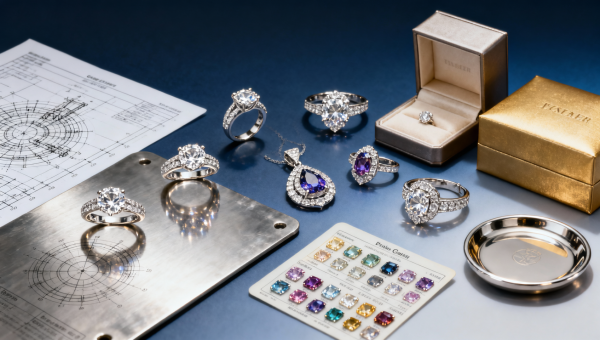
Stone choice also matters. Natural diamonds, sapphires, rubies, emeralds, and high-clarity colored gemstones increase budget quickly, but so can the labor required to sort, match, and set them. Lab-grown stones, cubic zirconia, moissanite, crystal, or pearl alternatives can create a more controlled price structure for B2B buyers needing design impact across 100–1,000 units.
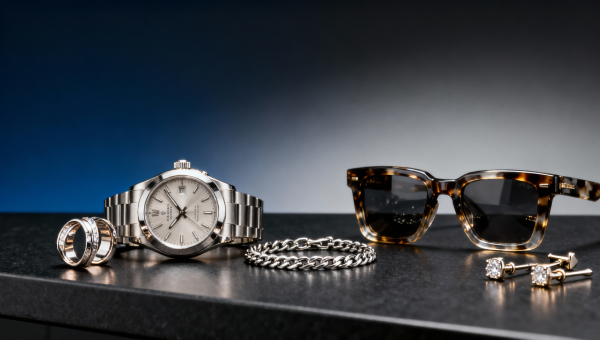
For watch-jewelry accessories, branded eyewear jewelry accents, or coordinated hospitality gift sets, many buyers also evaluate corrosion resistance, tarnish behavior, and skin-contact suitability. Material decisions should therefore be tied to channel use: event gifting, resale distribution, luxury boutique, or uniform accessory program.
Material comparison for cost and positioning
The table below helps procurement and commercial evaluation teams compare common custom jewelry materials by cost level, positioning, and sourcing impact. It is especially useful when reviewing options with a custom jewelry manufacturer for branded collections or wholesale luxury accessories.
For many B2B buyers, the best-value route is not the cheapest raw material. It is the material system that aligns with target margin, expected wear life, and reorder capability. A hotel group buying 300 VIP gift pendants may choose plated silver for brand perception, while a distributor may prefer brass-based custom jewelry design to protect retail markups in multiple regions.
How stone selection changes budget
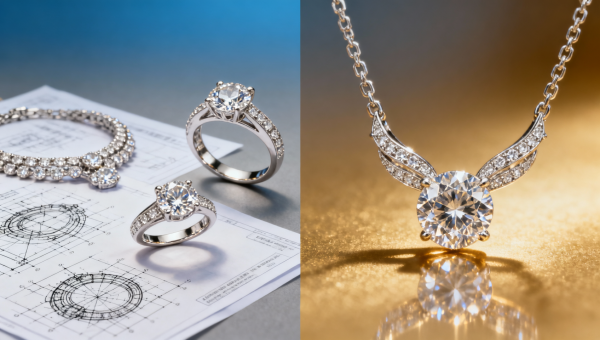
Stone cost is shaped by 3 variables: unit price, matching consistency, and setting labor. A large center stone may seem expensive, but a pavé pattern with dozens of small stones can consume more labor and raise defect risk. When comparing high-end luxury jewelry for weddings or branded retail, buyers should ask whether the quote reflects hand setting, machine-assisted setting, or glue-based decorative mounting.
If visual impact matters more than resale gem value, alternatives such as lab-grown stones, moissanite, or quality cubic zirconia may reduce volatility and improve batch consistency. This can be important when programs require repeat orders every quarter or annual replenishment for multi-market distributors.
Why craftsmanship and complexity often cost more than materials
A common sourcing mistake is to focus too heavily on metal and stone while underestimating labor. In custom jewelry design, craftsmanship can be the biggest cost escalator when the product includes fine detailing, hidden clasps, articulated components, intricate engraving, or multi-part assembly. The more human skill involved, the more sensitive the quote becomes to workshop capability and production yield.
For example, a plain polished pendant in 925 silver may be straightforward. But add hand engraving, pavé stone setting, two-tone plating, custom logo embossing, and a gift-ready branded box, and the cost profile changes sharply. The piece now requires more process steps, more inspection points, and potentially a longer lead time of 4–8 weeks instead of 2–4 weeks.
This matters in commercial environments where consistency is non-negotiable. Procurement teams ordering for luxury retail, resort boutiques, or bridal networks should ask not only how the item is made, but how many process checkpoints exist. In practice, more complex designs may involve 6 or more control stages: CAD approval, master sample confirmation, mold verification, casting or forming review, finishing inspection, and final packaging check.
GCT helps buyers read these hidden production signals more clearly. Instead of evaluating suppliers only by showroom images, sourcing teams can compare whether a manufacturer is better suited to hand-finished jewelry, OEM replenishment, small-batch luxury launches, or scalable ODM programs.
Production features that raise unit cost
- Micro-pavé or invisible setting, because alignment and stone security require skilled labor and more inspection time.
- Complex hinges, moving parts, or detachable modules, which increase assembly steps and reject risk.
- Dual finishes such as matte plus mirror polish, or two-tone plating, because each finish adds process handling.
- Hand-applied enamel, resin inlay, or custom color matching, especially when visual consistency must be maintained across 200–500 units.
- Deep logo engraving or highly precise brand marks, which demand tighter quality thresholds for luxury presentation.
If price control is important, buyers can often simplify shape geometry, reduce the number of separate components, standardize chain options, or replace labor-intensive setting with cleaner focal-stone layouts. These choices often protect design impact while reducing manufacturing pressure.
Cost impact of complexity by project type
Before finalizing a custom jewelry manufacturer, it helps to compare how design complexity affects tooling, labor, and lead time. The following table gives a practical sourcing view for wholesale and private label projects.
The main lesson is simple: complexity compounds cost. A lower-cost material does not guarantee a lower-cost project if the design requires too many manual steps. For commercial buyers, the most efficient design is often the one that balances signature appearance with repeatable manufacturing.
How order quantity, packaging, and compliance change the final quote
Unit price becomes more competitive when development cost is spread across larger quantities, but quantity planning should be realistic. A 30-piece sample-style run, a 200-piece market launch, and a 2,000-piece distributor order all behave differently. In many custom jewelry design projects, the first batch absorbs mold fees, sampling labor, and approval revisions. Repeat orders often improve cost if no material or logo changes are introduced.
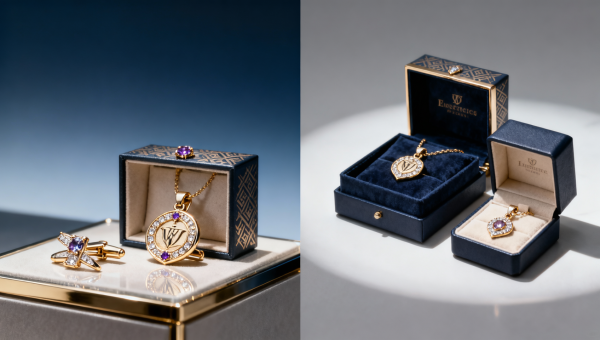
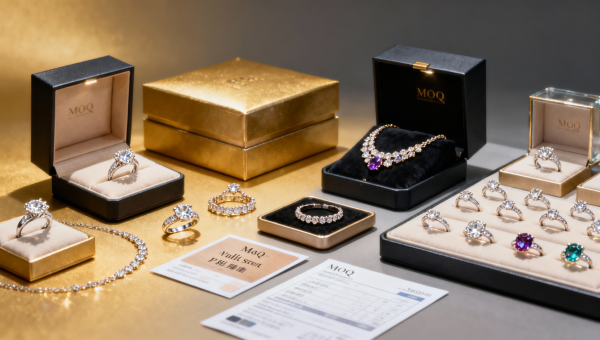
Packaging is another underestimated variable. In luxury jewelry, the box, pouch, certificate card, care guide, barcode label, and shipping carton can materially affect the landed cost. For hotel, wedding, or corporate gift programs, presentation is part of the buying decision. Buyers should compare whether packaging is standard, semi-custom, or fully branded, because the difference can be meaningful across 500 or more units.
Compliance also matters, especially for export markets and skin-contact products. Depending on destination and material system, buyers may need to review declarations related to metal composition, nickel release concerns, plating chemistry, labeling, or packaging material requirements. While not every custom jewelry manufacturer provides identical documentation support, buyers should clarify this early, ideally before the sample approval stage.
For commercial sourcing teams, this is where a platform like GCT is useful. It helps narrow down suppliers that understand project documentation, product positioning, and cross-border trade communication, reducing the risk of surprise charges late in the process.
4 checks before approving a quote
- Confirm whether tooling, CAD, and sample fees are one-time charges or repeated in each order.
- Check MOQ structure by item, color, finish, and packaging version, because mixed variants often affect price.
- Review whether the quotation includes branded box, insert card, polybag, carton marking, and spare components.
- Ask about compliance support, inspection method, and rework policy for plating, stones, clasps, or engraving issues.
Buyers seeking high-end luxury jewelry for weddings or premium gifting should also align timing with event schedules. It is common to allow 7–15 days for sample development, another 3–7 days for revision feedback, and 3–6 weeks for mass production depending on complexity. If custom packaging is involved, an extra 1–2 weeks may be needed.
How should buyers compare suppliers and control cost without lowering brand value?
The best procurement strategy is not aggressive price cutting. It is controlled specification management. Buyers who define the right technical and commercial details early usually achieve better pricing and fewer disputes. This includes metal grade, plating color, stone type, closure structure, logo method, acceptable tolerance, packaging standard, inspection scope, and target delivery window.
For distributors, agents, and private label teams, supplier comparison should combine 3 dimensions: design capability, production stability, and communication discipline. A vendor may create beautiful samples yet struggle with volume consistency. Another may offer strong factory output but limited support for branding, retail packaging, or custom modifications. Cost control only works when these dimensions are reviewed together.
A practical method is to request parallel quotations in 2 or 3 specification tiers. For example, one version in brass with plated finish, one in sterling silver, and one in a premium precious-metal option. This allows business evaluation teams to compare not just unit price but also market positioning, margin potential, and reorder risk. It is especially useful for launching a custom luxury jewelry program across multiple channels.
GCT supports this decision process by connecting commercial buyers with sourcing intelligence tailored to luxury accessories and specialty retail. That means buyers can evaluate a supplier based on business fit, not just catalog appeal.
Supplier evaluation checklist for custom jewelry manufacturer selection
- Can the supplier handle your order profile: 50-piece pilot, 300-piece event order, or 1,000-plus wholesale run?
- Do they provide clear sample timing, revision rounds, and bulk lead-time estimates in writing?
- Can they explain plating, setting, polishing, and inspection methods in practical terms?
- Are packaging, labeling, and export documents discussed before final confirmation?
- Do they understand your end use: bridal retail, hotel gifting, distributor resale, or luxury collaboration?
Common cost-control alternatives
If budget pressure is high, there are several ways to protect presentation while moderating cost. Buyers can replace solid gold with vermeil or plated silver, reduce the number of accent stones, shift from hand-finished texture to polished cast detail, or standardize packaging across multiple SKUs. These adjustments often preserve brand image while making wholesale economics more workable.
Another smart move is to simplify the first production batch and hold advanced variants for phase two. Launching with 3 core designs instead of 8 can reduce inventory risk, improve approval speed, and make it easier to compare sell-through before expanding the collection.
FAQ: what do procurement teams ask most about custom jewelry cost?
How long does custom jewelry design usually take?
For many projects, concept review and CAD development take about 7–15 days, depending on how complete the buyer brief is. Sample production may take another 1–3 weeks. Bulk production commonly ranges from 3–6 weeks after sample approval, but stone-heavy or hand-finished high-end luxury jewelry may take longer. If custom boxes, inserts, or multilingual retail packaging are included, timelines should be checked separately.
What is usually more expensive: materials or labor?
For fine jewelry with precious metals, materials can dominate. For fashion-luxury or branded accessory programs, labor and process complexity may be the bigger driver. A simple silver pendant may cost less than a plated brass item if the brass item requires multiple manual operations, intricate enamel work, or heavy stone setting. That is why cost comparison must look at the complete manufacturing route, not only the base material.
What should buyers prepare before asking for a quotation?
A useful RFQ normally includes 6 items: product image or sketch, target material, size range, expected quantity, packaging requirement, and delivery market. If possible, also provide logo format, finish preference, and target price band. Clear input reduces revision cycles and helps a custom jewelry manufacturer quote more accurately from the start.
Is low MOQ always better for testing the market?
Not always. Low MOQ reduces inventory pressure, but unit cost can become too high to support distributor margin or retail pricing. In some cases, a slightly larger opening order creates better commercial balance because packaging, tooling, and labor are spread more efficiently. Buyers should compare pilot quantity against expected channel pricing and replenishment speed.
Why choose us for commercial jewelry sourcing and what can you discuss with GCT?
Global Commercial Trade is built for buyers who need more than product listings. In custom jewelry design, successful sourcing depends on aligning aesthetics, manufacturing practicality, compliance awareness, and delivery planning. GCT helps information researchers, procurement teams, commercial evaluators, and distributors move from broad market search to more confident supplier shortlisting.
If you are assessing a custom jewelry manufacturer, exploring custom luxury jewelry for hospitality or weddings, or building a wholesale high-end luxury jewelry line, you can discuss concrete project details instead of general catalog claims. That includes material options, order-volume strategy, sample timing, packaging structure, private label requirements, and cross-border sourcing considerations.
You can also consult on 5 practical areas: parameter confirmation, product selection, delivery cycle planning, custom development routes, and documentation needs for target markets. For buyers comparing multiple suppliers, GCT can support a more structured evaluation approach based on use case, complexity, and commercial fit.
If your next project involves jewelry for branded retail, luxury gifting, wedding programs, resort boutiques, or distributor channels, start with a clear sourcing brief. Share your target material, estimated quantity, required lead time, packaging level, and sample expectations. That makes it easier to evaluate realistic quotations, identify cost drivers early, and build a supply plan that supports both presentation and profitability.
Search News
Hot Articles
- Pro Stage AudioFIFA Adopts Chinese Mini-LED Displays for 2026 World Cup VAR SystemApr 24, 2026
- Outdoor RidesChina FA Warns Nanjing City Over Fan Conduct; ISO 20785 Compliance AcceleratesApr 24, 2026
- Pro Stage AudioFan Zhendong Visits Silicon Valley as MLTT Investor, AI Ping-Pong Tech Draws US InterestApr 24, 2026
Popular Tags
Need ExpertConsultation?
Connect with our specialized leisureengineering team for procurementstrategies.
Recommended News
 Apr 23, 2026Texas Launches PFAS Probe Against Lululemon, Export Compliance Risks RisePFAS probe against Lululemon in Texas escalates export compliance risks for sportswear ODMs, testing labs & chemical suppliers — act now.● Luxury Retail Analyst
 Apr 21, 2026FDA Proposes Chinese Label Translation Requirement for Sports SupplementsFDA proposes Chinese label translation requirements for sports supplements—learn how protein powders, BCAAs & creatine brands can prepare for Q3 2026 compliance.● Luxury Retail Analyst
 Apr 21, 2026CPSC Urgent Alert: PFAS in Fitness Apparel Risks US Import DelaysPFAS in fitness apparel triggers CPSC alerts—avoid US import delays! Get CPSC-recognized PFAS testing, compliance tips & port detention prevention now.● Luxury Retail Analyst
 Apr 20, 2026US CPSC Alert: PFAS in Fitness Apparel May Delay US Import ClearancePFAS in fitness apparel may delay US import clearance—learn how the Texas AG probe & CPSC alert impact compliance, testing, and supply chains now.● Luxury Retail Analyst
 Apr 15, 2026FDA Updates Guidelines for Sports Nutrition Supplement Labels: Chinese Translations Must Be FDA-CertifiedFDA now requires Chinese translations on sports nutrition supplement labels to be FDA-certified. Learn how this impacts manufacturers, importers, and compliance timelines for US market access.● Luxury Retail Analyst
 Apr 14, 2026Japan Updates Jewelry Labeling Rules: Mandatory China Factory Codes from April 2026Japan's new jewelry labeling rules mandate 'Country of Origin + China Factory Code' (CN-FAC-XXXXX) from April 2026. Learn how this impacts Chinese exporters and Japanese importers in the $2.1B precious metals market.● Luxury Retail Analyst
 Apr 14, 2026RCEP Tariff Cuts Boost China's Optical Lens Exports to ASEANRCEP tariff cuts boost China's optical lens exports to ASEAN with 0% duties on CR-39 & polycarbonate lenses. Learn how this + faster logistics create new trade opportunities.● Luxury Retail Analyst
 Apr 14, 2026US CPSC Proposes Stricter Lead Limits in Children's Jewelry, Impacting Chinese ExportersUS CPSC proposes stricter lead limits (40ppm) in children's jewelry, impacting Chinese exporters with new compliance challenges. Learn how this 2026 regulation affects manufacturers & supply chains.● Luxury Retail Analyst
 Apr 14, 2026EU's Revised EN 14138:2026 Eyewear Nickel Standard Takes Effect, Impacting Chinese ExportersEU's EN 14138:2026 eyewear standard tightens nickel limits to 0.2μg/cm²/week, impacting Chinese exporters. Learn compliance strategies for EU market access.● Luxury Retail Analyst
 Apr 25, 2026Luxury Jewelry B2B in 2026: What Changes?Luxury jewelry B2B in 2026: explore custom jewelry design, custom jewelry manufacturer trends, luxury jewelry wholesale shifts, and how custom luxury jewelry drives faster, safer growth.● Luxury Retail Analyst
 Apr 25, 2026How to Grow a Luxury Accessories Online StoreLearn how to grow a luxury accessories online store with custom jewelry design, a trusted custom jewelry manufacturer, luxury accessories wholesale strategy, and high-end luxury jewelry that converts.● Luxury Retail Analyst
 Apr 25, 2026Custom Jewelry for Corporate Gifts That LastCustom jewelry for corporate gifts from a trusted custom jewelry manufacturer—discover custom jewelry design, high-end luxury jewelry, and scalable luxury jewelry B2B solutions.● Luxury Retail Analyst
 Apr 25, 2026What a Good Luxury Accessories Catalog IncludesLuxury accessories catalog guide covering custom jewelry design, high-end luxury jewelry, luxury accessories for men and women, and trusted luxury jewelry B2B sourcing insights.● Luxury Retail Analyst
 Apr 26, 2026Custom Jewelry for Weddings: Where to Start?Custom jewelry for weddings starts with strategy. Explore custom jewelry design, choosing a custom jewelry manufacturer, and sourcing high-end luxury jewelry that balances quality, scalability, and profit.● Luxury Retail Analyst
 Apr 26, 2026Luxury Jewelry Wholesale: MOQ, Margin, Lead TimeLuxury jewelry wholesale guide: compare MOQ, margin, and lead time for custom jewelry design, custom jewelry manufacturer selection, and profitable luxury jewelry B2B sourcing.● Luxury Retail Analyst
 Apr 26, 2026What Buyers Miss in Custom Luxury Jewelry OrdersCustom luxury jewelry buyers often overlook sourcing, compliance, and production risks. Learn how a custom jewelry manufacturer secures quality, repeatability, and B2B value.● Luxury Retail Analyst
 Apr 26, 2026High-End Luxury Jewelry: Is It Worth the Price?High-end luxury jewelry explained: compare custom jewelry design, luxury jewelry wholesale, and the right custom jewelry manufacturer to judge ROI, quality, and B2B sourcing value.● Luxury Retail Analyst
 Apr 26, 2026How to Source Luxury Accessories for WomenSource luxury accessories for women with confidence. Compare custom jewelry manufacturers, luxury jewelry wholesale options, and high-end luxury jewelry strategies for scalable B2B growth.● Luxury Retail Analyst
 Apr 26, 2026Which Luxury Accessories for Men Sell Best?Luxury accessories for men sell best in watches, eyewear, and custom jewelry design. Explore luxury jewelry wholesale trends, top B2B sourcing tips, and winning premium categories.● Luxury Retail Analyst
 Apr 26, 2026Custom Jewelry Manufacturer vs Trading CompanyCompare a custom jewelry manufacturer vs trading company for custom jewelry design, custom luxury jewelry, and luxury jewelry B2B sourcing—improve quality, pricing, and lead times.● Luxury Retail Analyst
 Apr 26, 2026What Makes a Reliable Custom Jewelry Manufacturer?Custom jewelry manufacturer guide: learn how custom jewelry design, quality control, lead times, and compliance shape reliable custom luxury jewelry sourcing for B2B buyers.● Luxury Retail Analyst
 Apr 26, 2026Custom Jewelry Design: What Impacts Cost Most?Custom jewelry design cost depends most on materials, craftsmanship, and MOQ. Compare custom jewelry manufacturer options for custom luxury jewelry and smarter luxury jewelry B2B sourcing.● Luxury Retail Analyst
 Apr 26, 2026How to Choose a Custom Jewelry Design PartnerCustom jewelry design starts with the right partner. Learn how to choose a custom jewelry manufacturer for high-end luxury jewelry, B2B sourcing, weddings, and corporate gifts.● Luxury Retail Analyst
 Apr 22, 2026Why Some Luxury Jewelry Collections Lose Value in DisplayLuxury jewelry in a trampoline park, indoor playground, arcade games or musical instruments venue can lose value fast. Discover smarter display strategies that protect premium appeal and buyer confidence.● Luxury Retail Analyst