How Trampoline Park Flooring Choices Impact Liability and Maintenance Costs
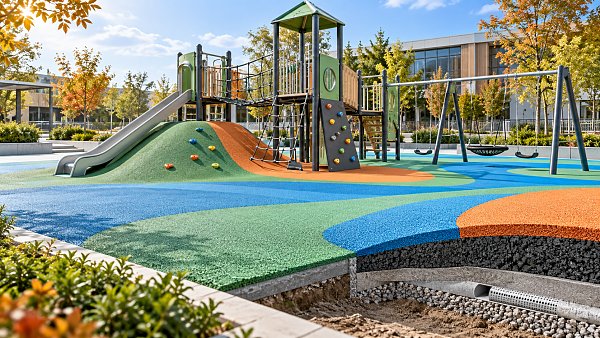
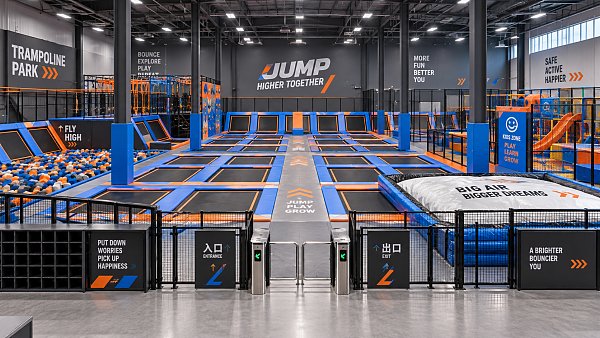
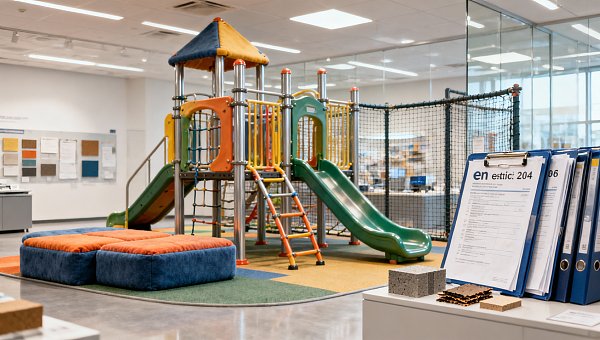
Choosing the right flooring for a trampoline park isn’t just about bounce—it’s a strategic decision that directly affects playground safety, liability exposure, and long-term maintenance costs. Whether designing an indoor playground, outdoor playground, or adventure playground within a larger theme park rides ecosystem, impact-absorbing, durable, and soundproofing materials are non-negotiable. For procurement professionals, project managers, and hospitality procurement teams, this choice influences insurance premiums, compliance audits, and operational downtime. In high-traffic commercial leisure environments, flooring performance intersects with risk management, brand reputation, and total cost of ownership—making it a critical factor in sourcing decisions across amusement & leisure parks.
Why Flooring Is a Core Risk Management Asset—Not Just a Surface Layer
In trampoline parks, flooring serves as the primary interface between user motion and structural integrity. Unlike standard gym flooring or retail carpeting, commercial-grade trampoline park surfacing must absorb repeated vertical impacts exceeding 12 kN per jump cycle while maintaining dimensional stability under continuous foot traffic of 800–1,200 visitors per day. A failure in shock absorption or edge adhesion can increase fall-related injury claims by up to 37%, according to third-party incident data aggregated from 2022–2023 U.S. and EU leisure facility reports.
Liability exposure escalates not only from physical harm but also from regulatory noncompliance. EN 1176 (playground equipment) and ASTM F1292 (impact attenuation) require certified drop-height testing at ≤1.5 m for all fall zones. Flooring that degrades after 18–24 months—due to UV exposure, moisture ingress, or adhesive creep—may pass initial certification but fail annual recertification audits. This triggers mandatory remediation, potential insurance policy exclusions, and reputational damage among school group coordinators and corporate event planners.
From a procurement lens, flooring is rarely a one-time capital expense. It represents a 7–10 year lifecycle investment where upfront cost accounts for only 35–45% of total ownership cost. The remaining 55–65% comprises labor-intensive cleaning cycles (every 48–72 hours), seam resealing every 6 months, and full replacement every 3–5 years for high-wear perimeter zones. These variables make flooring selection inseparable from operational planning and vendor reliability assessment.
Material Performance Matrix: Impact Absorption, Durability & Lifecycle Cost Comparison
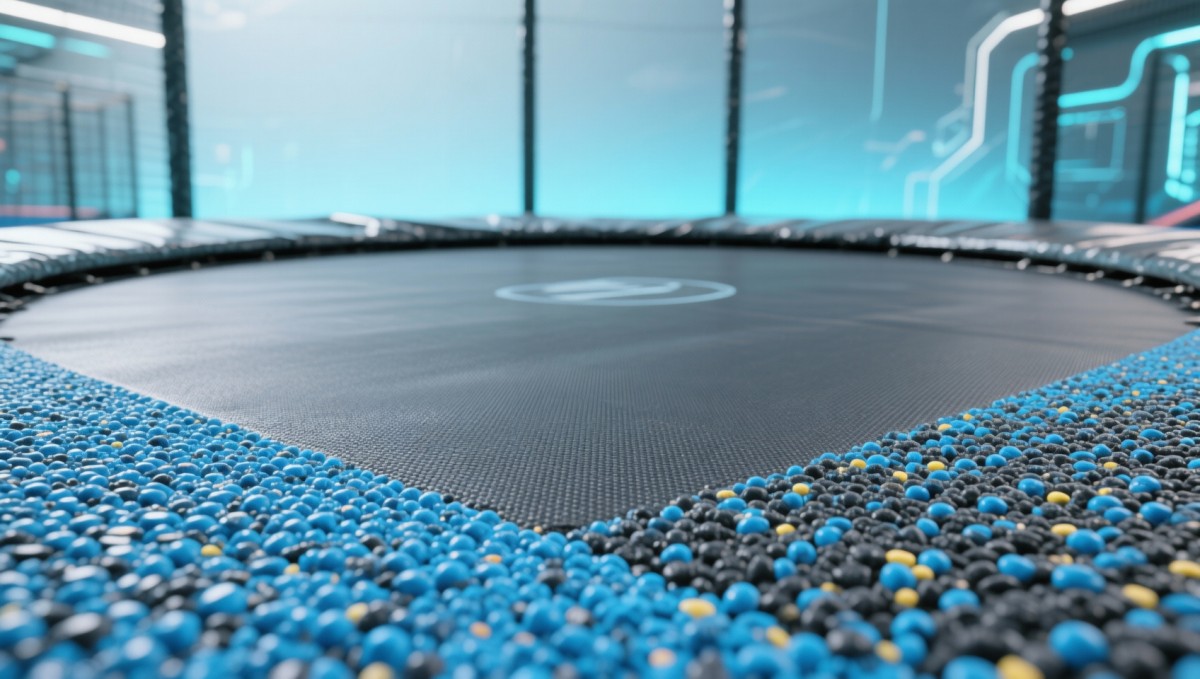
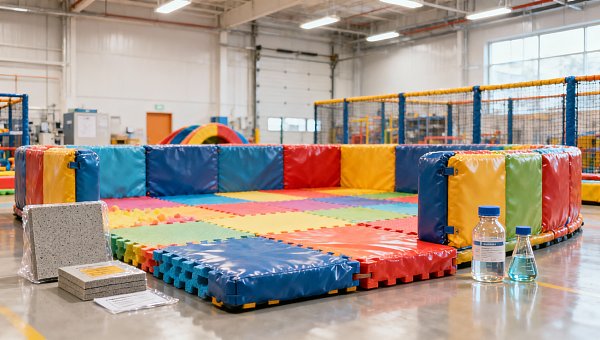
Selecting flooring requires balancing three interdependent metrics: G-max impact attenuation (ASTM F355), tensile strength retention after 5,000+ flex cycles, and cleanability under commercial-grade enzymatic disinfectants. Below is a comparative analysis of four commercially deployed systems used across Tier-1 trampoline park operators in North America and EMEA:
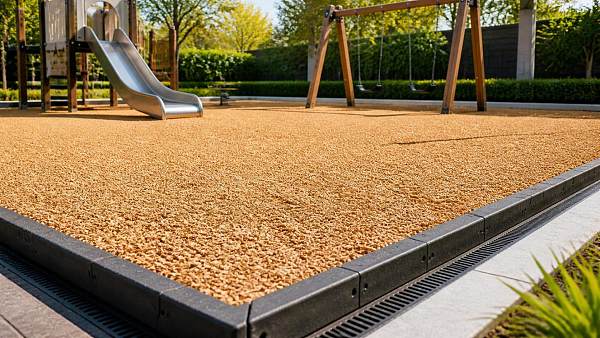
Key insight: While modular tiles offer fastest installation (48–72 hours for 1,000 m²), their higher G-max values correlate with stiffer impact response—increasing perceived injury severity in minor falls. EPDM systems deliver optimal balance: consistent attenuation across temperature ranges (-10°C to +45°C), seamless edges eliminating trip hazards, and compatibility with robotic floor scrubbers operating at 1.2 m/s. For global procurement teams evaluating OEM partners, verified batch-level ASTM F1292 test reports—not just product certifications—are mandatory before PO issuance.
Installation Protocol & Vendor Qualification Checklist
Flooring performance begins before the first granule is poured. Subfloor flatness tolerance must be ≤3 mm deviation over 3 meters—verified via laser screed survey prior to substrate priming. Moisture emission from concrete slabs must remain below 3 kg/m²/24h (per ASTM F1869), otherwise PU binders delaminate within 14 months. These pre-installation validations are often overlooked during fast-track project timelines but account for 68% of post-handover warranty disputes.
Procurement professionals should evaluate suppliers using this six-point qualification framework:
- Valid ISO 9001:2015 certification covering raw material traceability and batch-specific impact testing
- Minimum 3 completed trampoline park projects ≥5,000 m² delivered in last 24 months
- Demonstrated supply chain resilience: ≥60-day raw material buffer stock for EPDM granules and PU binders
- On-site commissioning team certified to EN 1176-1 Annex C for playground surfacing verification
- Post-installation validation report including 12-point G-max grid mapping (3 × 4 grid per 100 m²)
- Warranty transferability to new owners upon facility acquisition or lease renewal
Suppliers failing any two criteria above show statistically higher defect rates (≥11% within Year 1). Global Commercial Trade (GCT) cross-references these benchmarks against supplier capability dossiers updated quarterly—ensuring procurement teams source only vendors meeting Tier-1 commercial leisure standards.
Maintenance Optimization: Reducing Downtime Through Smart Design Choices
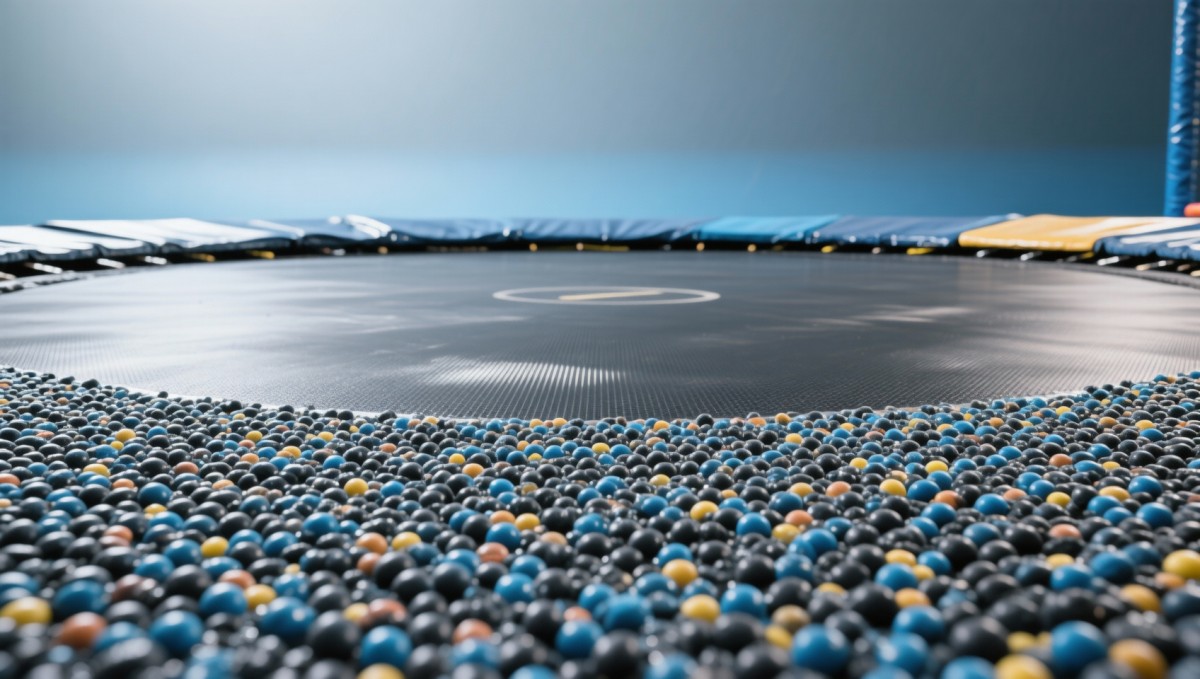
Operational uptime directly correlates with flooring serviceability. High-traffic entry zones, landing pits, and trampoline perimeter buffers experience 3.2× more wear than central open areas. Modular systems allow zone-specific replacement—cutting repair time from 72 hours (full pour) to under 8 hours per 20 m² section. However, this advantage diminishes if joint tolerances exceed ±0.8 mm, causing debris entrapment and microbial growth in crevices.
Cleaning protocols must align with material chemistry. EPDM surfaces tolerate pH 2–12 enzymatic cleaners applied via auto-scrubbers at 150 psi pressure. PVC tiles degrade when exposed to chlorinated disinfectants >200 ppm concentration—a common oversight in post-pandemic sanitation regimens. Facilities reporting <2 hours weekly cleaning labor per 100 m² consistently use EPDM with integrated antimicrobial additives (Ag⁺ ion release rate: 0.12–0.18 μg/cm²/hour).
A 2023 benchmark study across 47 facilities found that parks implementing predictive maintenance—using thermal imaging to detect early-stage binder degradation (temperature variance >2.3°C across adjacent 1 m² zones)—reduced unplanned closures by 41% and extended average service life by 14 months.
Strategic Sourcing Guidance for Global Procurement Teams
For hospitality procurement directors and institutional buyers, flooring selection is not a standalone specification—it’s a convergence point for safety compliance, insurance negotiation, and multi-year capex planning. Prioritize vendors offering integrated solutions: certified installation + 24-month post-commissioning monitoring + digital twin documentation (including G-max heatmaps and seam integrity logs). These capabilities reduce audit preparation time by 65% and support faster insurance renewals.
Global Commercial Trade (GCT) curates vendor profiles based on verified project execution—not marketing claims. Our Amusement & Leisure Parks Intelligence Hub provides procurement teams with real-time access to: OEM capacity dashboards (current lead times: 12–18 weeks), regional compliance mapping (EN 1176 vs. ASTM F1292 vs. AS/NZS 4422), and benchmarked TCO calculators calibrated to local labor rates and energy costs. This eliminates speculative sourcing and ensures alignment with enterprise risk frameworks.
Whether outfitting a flagship urban trampoline venue or scaling a regional franchise network, flooring decisions shape guest trust, staff confidence, and bottom-line resilience. Ground your next specification in verifiable performance—not theoretical claims.
Access GCT’s exclusive Trampoline Park Flooring Sourcing Playbook—including vendor scorecards, ASTM test report templates, and ROI forecasting tools—by contacting our Amusement & Leisure Parks Intelligence Team today.
Search News
Hot Articles
- Restaurant FurnitureFast-Casual Restaurant Interiors: Design Choices That Improve Speed and Guest FlowOct 04, 2026
- Outdoor RidesHow to Select Leisure Park Equipment for Safe, High-Throughput Visitor AreasOct 03, 2026
- Fashion & Gem JewelryDiamond Tester Wholesale: How to Vet Accuracy, Calibration, and MOQ Before OrderingOct 02, 2026
Popular Tags
Need ExpertConsultation?
Connect with our specialized leisureengineering team for procurementstrategies.
Recommended News
 Sep 29, 2026Poured Playground Safety Surfacing: How to Specify Thickness for Fall HeightsPoured playground safety surfacing: learn how to specify tested thickness by fall height, ASTM standards, substrate conditions, accessibility, and field verification.● Theme Park Strategist
 Sep 27, 2026Custom Trampoline Park Equipment: Planning Capacity, Safety, and LayoutCustom trampoline park equipment for safer capacity, smooth guest flow, and efficient layouts. Explore practical planning insights for a high-performing park.● Theme Park Strategist
 Aug 30, 2026Entertainment Venue Master Planning: How to Balance Capacity, Flow, and RevenueEntertainment venue development master planning: balance capacity, guest flow, and revenue with practical strategies for resilient, high-performing venues.● Theme Park Strategist
 Sep 07, 2026What Should Buyers Do When a Supplier Delivers Non-Compliant Products?What to do if a supplier delivers non-compliant commercial products: contain risks, document evidence, protect your project, and secure the right remedy.● Theme Park Strategist
 Sep 02, 2026Waterpark Capacity Management: Balancing Queue Times, Safety, and Guest ThroughputWaterpark capacity management strategies to reduce queue times, protect safety, optimize guest throughput, and build a smoother, more profitable park operation.● Theme Park Strategist
 Sep 01, 2026ASTM F2075 Explained: Testing Engineered Wood Fiber for Playground Impact SafetyASTM F2075 explained: learn how engineered wood fiber supports playground impact safety, smarter sourcing, compliance documentation, and reliable maintenance planning.● Theme Park Strategist
 Aug 24, 2026How to Evaluate an Indoor Ninja Warrior Course Supplier in Europe?indoor ninja warrior course Europe supplier guide: learn how to assess safety, EN compliance, engineering, installation, and maintenance support before you choose.● Theme Park Strategist
 Aug 20, 2026How to Choose Modular Indoor Play Equipment for Different Venue Sizes and Age GroupsModular indoor play equipment buying guide: learn how to match venue size, ceiling height, traffic flow, and age groups to create safer, smarter, and more profitable play spaces.● Theme Park Strategist
 Aug 14, 2026POB Push Lifts Overseas Pre-Registrations 45.74%POB boosts overseas pre-registrations for the 2026 China Sport Show by 45.74%, signaling stronger global buyer interest and smarter sourcing opportunities in sports manufacturing.● Theme Park Strategist
 Aug 02, 2026What to Check Before Buying Thick Gymnastic Mats Wholesale for Schools and GymsThick gymnastic mats wholesale buying guide for schools and gyms: learn how to check foam, cover durability, safety documents, samples, and true long-term value before placing a bulk order.● Theme Park Strategist
 Jul 28, 2026How to Design Inclusive Sensory Play Areas for Different Age Groups and NeedsInclusive sensory play starts with smart zoning, age planning, accessibility, and acoustics. Discover practical design tips to create safer, engaging spaces that truly work.● Theme Park Strategist
 Jul 26, 2026How to Evaluate a Bowling Alley Equipment Factory Before Requesting a QuoteBowling alley equipment factory evaluation starts before price. Learn how to check manufacturing scope, engineering, compliance, spare parts, and installation support to avoid costly sourcing mistakes.● Theme Park Strategist
 Jul 16, 2026EN 1176:2026 Takes Effect for Indoor PlaygroundsEN 1176:2026 takes effect for indoor playgrounds in the EU, making conformity assessment mandatory. Learn how this impacts certification, customs clearance, suppliers, and market access.● Theme Park Strategist
 Jul 15, 2026CPSC Sets New ASTM Impact Test for Indoor Playground Metal PartsCPSC sets new ASTM impact test rules for indoor playground metal parts effective Oct. 1, 2026. Learn how the 15kN requirement may affect compliance, testing timelines, and U.S. export delivery.● Theme Park Strategist
 Jul 14, 2026CPSC Tightens Phthalate Limit for Indoor Playground Soft MaterialsCPSC tightens phthalate limits for indoor playground soft materials from Aug 15, 2026. Learn how DIBP control, CBP detention risk, and testing changes impact sourcing, exports, and compliance.● Theme Park Strategist
 Jul 13, 2026Vietnam Tightens IoT Rule for Indoor Playground ImportsVietnam Tightens IoT Rule for Indoor Playground Imports: learn how VNSS-2025 gateway requirements affect exporters, buyers, installers, and delivery timelines before the 2026 deadline.● Theme Park Strategist
 Jul 13, 2026How a Recreational Facility Planning Company Helps Reduce Layout MistakesRecreational facility planning company insights: learn how early layout strategy reduces costly mistakes, improves flow, compliance, and buildability for smoother project delivery.● Theme Park Strategist
 Jul 12, 2026CPSC Halts Imports of Indoor Playground Soft PartsCPSC halts imports of indoor playground soft parts from China under ASTM F3432-26. Learn the compliance risks, testing requirements, and urgent steps importers must take now.● Theme Park Strategist
 Jul 11, 2026CPSC Import Alert Tightens Fire Test Rule for Indoor Playground PaddingCPSC import alert updates indoor playground padding rules to ASTM F3432-26. See how the new fire test affects foam mats, shipments, and U.S. market access.● Theme Park Strategist
 Jul 11, 2026Ice Bumper Cars Bulk Order Checklist for Indoor Parks: Space, Power, and Safety PointsIce bumper cars bulk order guide for indoor parks: learn how to assess space, power, safety, and throughput before buying, so you can avoid costly mistakes and choose the right fleet with confidence.● Theme Park Strategist
 Jul 10, 2026Commercial Playground Equipment for Campuses: Key Safety Standards and Planning TipsCommercial playground equipment for campuses: explore key safety standards, inclusive layout planning, durable materials, and smart procurement tips to avoid costly mistakes.● Theme Park Strategist
 Jul 09, 2026CPSC Recall Escalates Over Phthalates in Indoor Playground PadsCPSC recall escalates over phthalates in indoor playground pads as affected batches exceed CPSIA limits. Learn the risks, supply chain impact, and what buyers should monitor now.● Theme Park Strategist
 Jul 07, 2026How to Choose Ice Skating Rink Equipment in Europe: Key Systems, Standards, and Budget Factorsice skating rink equipment Europe guide: compare refrigeration, rink floors, boards, EU compliance, and total budget factors to choose a safer, more efficient commercial rink solution.● Theme Park Strategist
 Jul 06, 2026CPSC Flags New Flame Test for Indoor Playground PaddingCPSC flags a new flame test for indoor playground padding under ASTM F1487-23b. Learn how this urgent compliance alert affects materials, testing, imports, and U.S. market access.● Theme Park Strategist