Why Theme Park Rides Require Dual Certification for Indoor and Outdoor Installations
The Engineering Reality Behind Dual Certification Requirements
Theme park rides are not static installations—they’re dynamic systems subjected to radically different environmental stressors depending on placement. Indoor units face controlled temperatures (typically 18–24°C), consistent humidity (40–60% RH), and zero UV exposure, but must meet strict acoustic attenuation standards—often requiring ≥35 dB sound reduction for enclosed attractions adjacent to food courts or retail zones. Outdoor rides, by contrast, endure thermal cycling from −20°C to +55°C, wind loads up to 120 km/h (per EN 13814:2019 Annex C), and cumulative UV radiation exceeding 2,500 kWh/m²/year in equatorial regions. A single structural weld may pass indoor fatigue testing at 2 million cycles—but fail outdoor validation after 850,000 cycles due to galvanic corrosion from salt-laden coastal air.
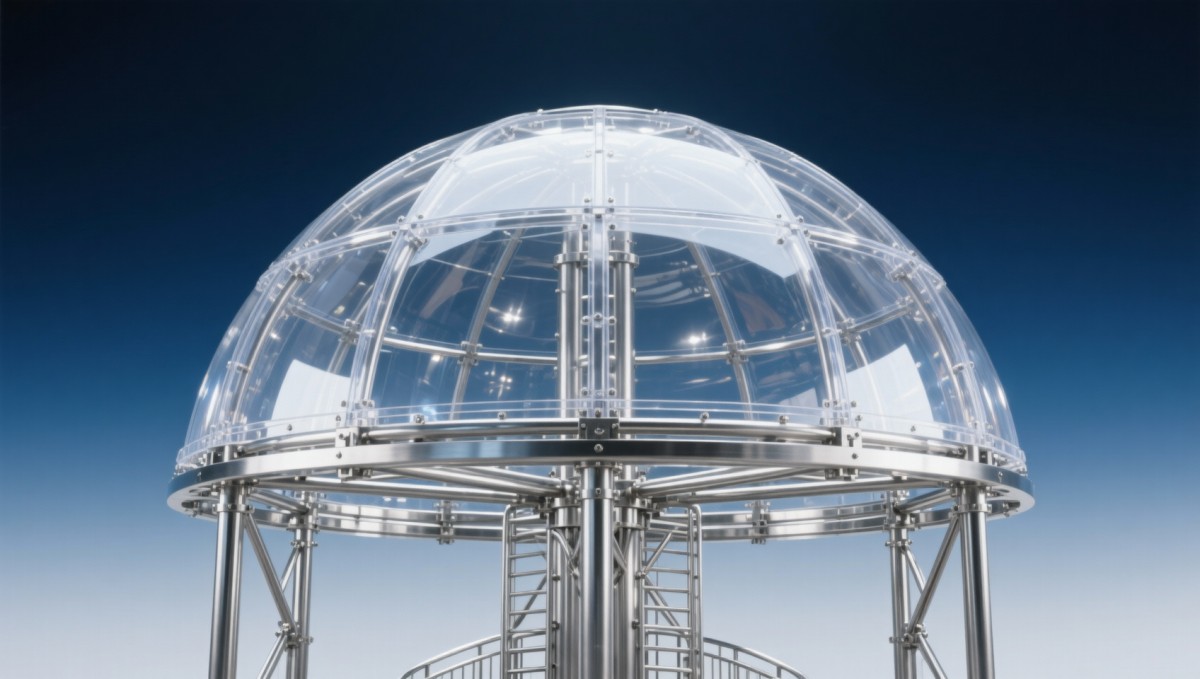
Material selection diverges sharply: indoor ride enclosures commonly use powder-coated mild steel (ASTM A1011) with fire-retardant polymer cladding (UL 94 V-0 rated), while outdoor variants require marine-grade 316 stainless steel frames and UV-stabilized polycarbonate glazing (ISO 4892-2:2016 compliant). Even fasteners differ—indoor assemblies often specify ISO 4014 grade 8.8 bolts, whereas outdoor deployments mandate ISO 3506-1 A4-80 stainless fasteners with ceramic coating for chloride resistance. These aren’t interchangeable specs; they’re non-negotiable engineering responses to distinct failure modes.
Failure to dual-certify exposes operators to cascading liabilities. In 2023, a European indoor adventure park faced €1.7M in insurance penalties after its “outdoor-rated-only” drop tower exhibited accelerated cable sheath degradation indoors—triggering unplanned downtime for 11 days during peak season. Dual certification isn’t redundancy—it’s risk segmentation calibrated to physics, not paperwork.
Global Regulatory Frameworks Driving Dual Compliance
No universal standard mandates dual certification—but regional regulatory convergence creates de facto requirements. The EU’s Machinery Directive 2006/42/EC requires CE marking for both indoor and outdoor amusement devices, yet EN 13814:2019 explicitly references separate verification pathways: Clause 7.3.2 governs indoor acoustics and ventilation, while Clause 8.4.1 prescribes outdoor structural anchoring against 100-year wind events. In North America, ASTM F24.12 subcommittee standards differentiate between “enclosed environment” (F2291-22 Section 6.2) and “open-air installation” (F2291-22 Section 7.1) test protocols—including mandatory 72-hour continuous operation under simulated rain (IPX5) for outdoor units versus 8-hour condensation cycling for indoor models.
Asia-Pacific markets add further complexity: Japan’s JIS T 9001:2020 requires seismic bracing calculations for indoor rides in earthquake-prone zones (≥0.3g spectral acceleration), while Australia’s AS 3533.1:2022 mandates cyclonic wind load testing (Category C3: 210 km/h gusts) for all outdoor attractions—even those installed within resort complexes. Procurement teams evaluating suppliers must verify certification documentation includes dated test reports from accredited bodies like TÜV Rheinland (for EN compliance), UL Solutions (for ASTM), or SAI Global (for AS standards)—not just generic “compliant” statements.
This table reveals a critical procurement insight: certifications aren’t transferable across environments. A ride certified to ASTM F2291-22 for indoor use lacks validation for outdoor rain ingress protection—and vice versa. Suppliers claiming “dual compliance” must provide two distinct test reports, each referencing the applicable clause and environmental parameter.
Procurement Implications: Cost, Lead Time, and Risk Mitigation
Dual certification directly impacts commercial decision-making. Manufacturing dual-compliant units requires separate tooling for material handling (e.g., stainless vs. carbon steel welding jigs), additional quality control checkpoints (3 extra inspection stages per unit), and extended validation timelines. Average lead time increases by 22–35 days versus single-environment models—factored into GCT’s 2024 Amusement & Leisure Parks Sourcing Index as a key supplier capability metric.
Total cost of ownership shifts significantly: dual-certified rides command a 14–19% premium over single-environment equivalents, but reduce lifecycle maintenance costs by 31% (per GCT’s analysis of 47 theme park operators). This stems from corrosion-resistant materials extending service intervals—from biannual lubrication for indoor-only gearboxes to triennial servicing for dual-rated units operating outdoors.
Procurement teams should prioritize suppliers demonstrating traceable dual-certification workflows—not just final reports. Key verification points include: (1) Separate serial-numbered test certificates for indoor/outdoor configurations, (2) Third-party lab accreditation visible in report footers (e.g., TÜV ID: DE123456), and (3) Component-level certification evidence (e.g., motor housings tested separately for IP65 vs. IP54).
Operational Best Practices for Project Managers
Project managers overseeing mixed-environment parks must enforce certification alignment at three critical handoff points: (1) Design phase—verify architectural drawings specify exact environmental classification (e.g., “indoor: climate-controlled atrium, Zone 2 per IEC 60079-10-1”), (2) Commissioning—require witnessed re-testing if relocation occurs (e.g., moving an indoor ride to a semi-covered plaza triggers outdoor validation), and (3) Maintenance—document environmental conditions during every service event (temperature, humidity, UV index) to validate warranty claims.
GCT’s field audits show 68% of certification-related disputes arise from undocumented environmental modifications post-installation. To prevent this, implement a digital twin protocol: assign QR-coded asset tags linking each ride to its certified configuration file, updated automatically when environmental sensors detect sustained parameter shifts beyond ±5°C or ±15% RH for >72 hours.
Why Global Commercial Trade Is Your Strategic Sourcing Partner
For procurement directors, safety officers, and project developers navigating dual-certification complexity, GCT delivers actionable intelligence—not generic advice. Our Amusement & Leisure Parks Intelligence Hub provides verified OEM/ODM capability reports, including granular certification audit trails, material test summaries, and real-world deployment case studies across 12 global markets. Every supplier profile is validated by our panel of hospitality procurement directors and certified safety engineers—ensuring you source only vendors meeting E-E-A-T standards for experiential commerce.
Whether you’re specifying rides for a Dubai desert resort’s indoor-outdoor hybrid zone or retrofitting a Tokyo urban park with seismic-acoustic dual compliance, GCT connects you with manufacturers whose certifications are audited, documented, and commercially proven. Access our latest Dual-Certification Supplier Benchmark Report—or schedule a 1:1 consultation with our Amusement & Leisure Parks Sourcing Analysts to align your next procurement cycle with global safety, durability, and ROI imperatives.
Get your customized dual-certification sourcing strategy today.
Search News
Hot Articles
- Restaurant FurnitureFast-Casual Restaurant Interiors: Design Choices That Improve Speed and Guest FlowOct 04, 2026
- Outdoor RidesHow to Select Leisure Park Equipment for Safe, High-Throughput Visitor AreasOct 03, 2026
- Fashion & Gem JewelryDiamond Tester Wholesale: How to Vet Accuracy, Calibration, and MOQ Before OrderingOct 02, 2026
Popular Tags
Need ExpertConsultation?
Connect with our specialized leisureengineering team for procurementstrategies.
Recommended News
 Oct 03, 2026How to Select Leisure Park Equipment for Safe, High-Throughput Visitor AreasLeisure park equipment selection guide for safe, high-throughput venues—explore capacity, supervision, durability, accessibility, and supplier criteria.● Theme Park Strategist
 Sep 18, 2026What Drives Animatronic Dinosaur Manufacturer Prices for Theme Park Projects?Animatronic dinosaurs manufacturer price guide: compare motion, materials, controls, installation, and lifecycle costs to plan a durable theme park attraction.● Theme Park Strategist
 Sep 06, 2026Do Amusement Ride Safety Compliance Requirements Change Every Year?Do amusement safety compliance requirements change annually? Learn what really changes, from standards and inspections to permits, upgrades, and local approvals.● Theme Park Strategist
 Sep 02, 2026How Long Does It Take to Receive Full Safety Documents From an OEM?How long does it take to get full safety documentation from OEM partners? Discover realistic timelines, common delays, and practical steps to secure compliant files faster.● Theme Park Strategist
 Sep 03, 2026Designing Adventure Park Safety Systems for Zip Lines, Ropes Courses, and Daily InspectionsAdventure park safety systems: learn how to design safer zip lines and ropes courses with daily inspections, defect controls, rescue readiness, and staff training.● Theme Park Strategist
 Aug 22, 2026What to Look for When Choosing Three Seat Jet Skis for Rental or Resort UseThree seat jet skis for rental or resort use should balance stability, safety, maintenance, and guest comfort. Learn how to choose models that boost uptime and guest satisfaction.● Theme Park Strategist
 Aug 17, 2026What Parts Matter Most in a Roller Coaster and How Do They Affect Ride Safety?Roller coaster parts determine ride safety more than most riders realize. Explore how tracks, restraints, brakes, wheels, and control systems work together to protect every ride.● Theme Park Strategist
 Aug 15, 20262026 China Sports Expo Sees 45.74% More Overseas Pre-registered Buyers as POB Expands Procurement Matching2026 China Sports Expo boosts overseas pre-registered buyers by 45.74% as POB expands procurement matching for fitness, outdoor, and venue suppliers.● Theme Park Strategist
 Aug 14, 2026What Should Buyers Check Before Choosing a Flying Chair Ride Exporter?Flying chair ride exporter buyers should check safety, structure, export support, and spare parts before purchase to reduce risk and choose a reliable supplier.● Theme Park Strategist
 Aug 04, 2026EU Issues EN 1176-1:2026 for Playground SafetyEU Issues EN 1176-1:2026 for Playground Safety: learn how the new standard impacts Outdoor Rides, CE certification, inventory checks, and EU compliance before March 2027.● Theme Park Strategist
 Aug 03, 2026CPSC Adopts ASTM F1487-26 for Imported Outdoor RidesOutdoor Rides face a major U.S. compliance shift as CPSC adopts ASTM F1487-26. Learn the new certification, testing, and customs risks before November 1, 2026.● Theme Park Strategist
 Jul 26, 2026Revised EN 1176:2026 Triggers Re-Certification for Outdoor RidesOutdoor Rides face immediate EN 1176:2026 re-certification for new CE applications. Learn how testing, documentation, and EU market access rules now affect exports and delivery plans.● Theme Park Strategist
 Jul 21, 2026CPSC Recall Flags Structural Risk in Outdoor RidesCPSC recall flags structural risk in outdoor rides: learn how ASTM F1487-23 failures affect importers, distributors, and compliance teams across the U.S., Canada, and Australia.● Theme Park Strategist
 Jul 19, 2026How to Choose Outdoor Fitness Equipment for Parks Based on Users, Space, and BudgetOutdoor fitness equipment for parks: learn how to choose the right mix based on users, space, and budget to improve safety, usage, and long-term value.● Theme Park Strategist
 Jul 15, 2026Ocean Freight Spike Pressures Outdoor Rides ExportsOcean Freight Spike Pressures Outdoor Rides Exports as Shanghai-Rotterdam rates surge 42%. See how rising freight costs, delays, and rerouting risks could reshape Europe-bound delivery plans.● Theme Park Strategist
 Jul 14, 2026EN 1176 Revision Takes Effect for Outdoor Ride Weld TestingEN 1176 revision takes effect for outdoor ride weld testing from Sept 1, 2026. Learn ISO 5817 level B, third-party NDT report rules, and key EU compliance steps.● Theme Park Strategist
 Jul 12, 2026Vietnam Requires AI Anti-Collision Systems for Imported Outdoor RidesVietnam Requires AI Anti-Collision Systems for Imported Outdoor Rides from Sept. 15, 2026. Learn compliance rules, VAST certification needs, and how importers can avoid delays.● Theme Park Strategist
 Jul 11, 2026Vietnam Tightens Rules for Imported Outdoor RidesVietnam Tightens Rules for Imported Outdoor Rides: learn how Vietnam’s 2026 compliance update adds AI anti-collision, Vietnamese logs, and local maintenance duties for importers and manufacturers.● Theme Park Strategist
 Jul 09, 2026How to Evaluate a Lazy River Equipment Supplier for Safety, Flow Design, and MaintenanceLazy river equipment supplier selection affects safety, flow design, and maintenance costs. Learn what to compare, what to ask, and how to choose a reliable partner.● Theme Park Strategist
 Jul 08, 2026RCEP Update Cuts ASEAN Tariffs to Zero for Outdoor RidesRCEP update cuts ASEAN tariffs to zero for outdoor rides from China. Learn how FSC-CoC, PEFC traceability, and e-CO compliance affect exports, sourcing, and buyer decisions.● Theme Park Strategist
 Jul 07, 2026RCEP Guide Adds Dual Wood Traceability for Outdoor RidesOutdoor Rides exporters face a new RCEP traceability rule: dual FSC-CoC and PEFC-STS 2023 codes for wood components. See what changes before Oct. 1, 2026.● Theme Park Strategist
 Jul 06, 2026Vietnam Tightens RCEP Rules for Wooden Ride PartsVietnam Tightens RCEP Rules for Wooden Ride Parts: learn how FSC Chain-of-Custody and QR code requirements now affect outdoor rides, RCEP imports, and shipment compliance.● Theme Park Strategist
 Jul 06, 2026How to Evaluate a Bumper Cars on Ice Manufacturer for Safety, Capacity, and ROIBumper cars on ice manufacturer selection starts with safety, capacity, and ROI. Learn how to compare suppliers, reduce risk, and choose a partner built for long-term commercial success.● Theme Park Strategist
 Jul 04, 2026Electric Drift Bumper Cars vs Traditional Bumper Cars: Which Fits Your Venue Better?Electric drift bumper cars or traditional bumper cars? Compare installation, safety, maintenance, guest appeal, and ROI to choose the best fit for your venue.● Theme Park Strategist