SASO Tightens Requirements: IEC 62368-1:2023 Ed.3 Mandatory for Pro Stage Audio Power Adapters in Saudi Arabia
Saudi Arabia’s Standards, Metrology and Quality Organization (SASO) announced on 24 May 2026 a significant update to safety compliance requirements for power adapters used with professional stage audio equipment — effective 1 July 2026. This regulatory shift directly impacts exporters, manufacturers, and certification bodies engaged in the Middle East audio hardware supply chain.
Regulatory Update: New Safety Standard Enforcement
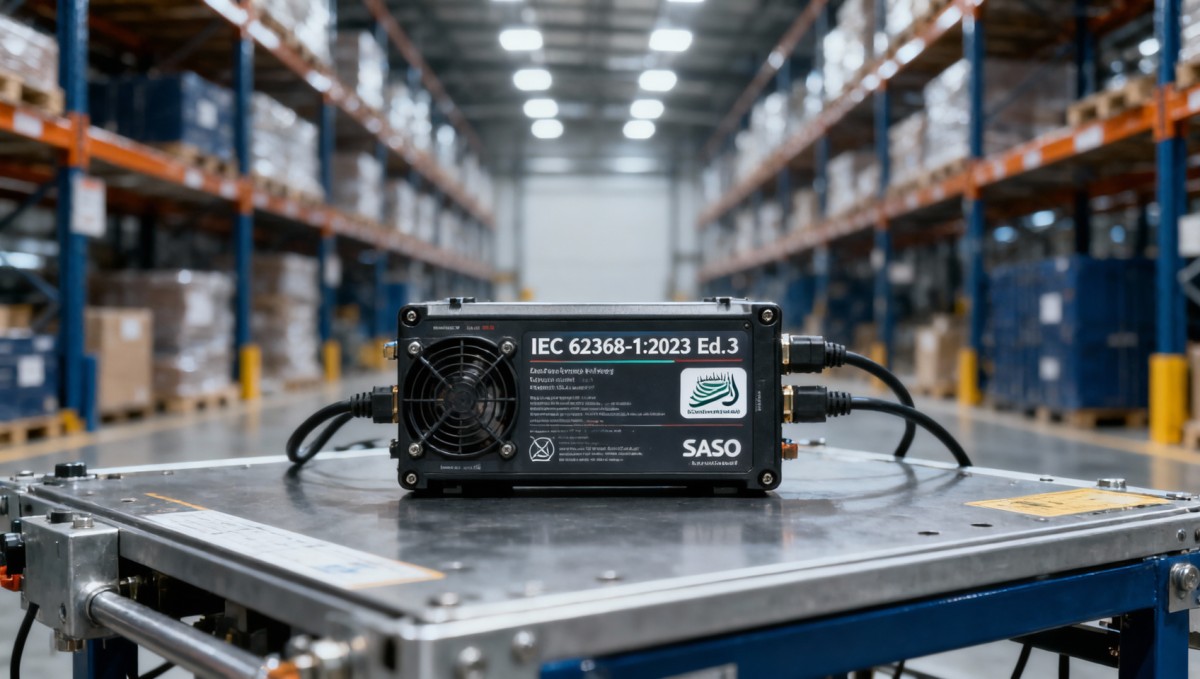
On 24 May 2026, SASO issued an official notice mandating that all power adapters supplied with Pro Stage Audio equipment imported into Saudi Arabia must comply with IEC 62368-1:2023 Ed.3 and obtain a valid SASO Certificate of Conformity (CoC). Compliance is required for customs clearance starting 1 July 2026. Products previously certified to IEC 62368-1:2018 Ed.2 will no longer be accepted at Saudi ports.
Impact Across the Supply Chain
Exporters and Direct Trading Companies
These entities face immediate shipment delays if existing inventory lacks updated CoC documentation aligned with Ed.3. Customs rejection risk rises sharply post-July, affecting delivery timelines, contractual penalties, and customer trust — especially where audio equipment deployments are time-bound (e.g., festivals, venue installations).
Component Sourcing and Procurement Firms
Procurement teams must now verify supplier capability to meet Ed.3-specific construction requirements — including revised creepage/clearance distances, energy source classification, and fire enclosure testing. Legacy component datasheets or test reports referencing Ed.2 are insufficient for new orders.
Manufacturers and OEMs
Design and production lines require re-evaluation: Ed.3 introduces stricter hazard-based safety principles, particularly for high-power density adapters common in touring-grade audio systems. Re-testing, design modifications, and updated technical files are essential before CoC application.
Supply Chain Service Providers
Third-party certification agencies, local SASO representatives, and logistics partners must adjust service scopes — including pre-submission technical review, Ed.3-specific test coordination with accredited labs, and real-time CoC status tracking to prevent clearance bottlenecks.
Key Actions for Affected Businesses
Immediate Certification Gap Assessment
Verify whether current CoC certificates reference IEC 62368-1:2023 Ed.3. If not, initiate re-certification with SASO-accredited bodies — noting that Ed.3 testing may require additional lab time due to updated abnormal operating condition evaluations.
Technical Documentation and Test Report Review
Update all supporting documents — including schematics, BOMs, safety critical component declarations, and type test reports — to explicitly cite Ed.3 clauses and test conditions. SASO now requires traceable alignment between report findings and Ed.3 Annexes A–F.
Supplier Qualification and Component Traceability
Confirm that upstream adapter suppliers have completed Ed.3 validation and can provide updated declarations of conformity. Where adapters are integrated into larger audio units, ensure OEMs maintain full bill-of-materials traceability for each Ed.3-compliant subassembly.
Revised Shipment Planning and Cut-off Timelines
Adjust export schedules to accommodate extended CoC processing windows (typically 5–10 working days under Ed.3), and align with Saudi importers’ updated declaration deadlines. Shipments scheduled for June 2026 should carry Ed.3-ready documentation to avoid port hold-ups.
Industry Perspective: Beyond Compliance, Toward Systemic Readiness
Analysis shows this change reflects a broader regional trend: Gulf Cooperation Council (GCC) markets are increasingly adopting the latest IEC editions as de facto entry thresholds — even ahead of formal GCC Standardization Organization (GSO) harmonization. From an industry perspective, the Ed.3 transition is less about incremental revision and more about reinforcing hazard-based design thinking across the entire power delivery architecture. What deserves closer attention is the compressed timeline: only six weeks between announcement and enforcement leaves minimal buffer for technical recalibration — suggesting growing emphasis on proactive, standards-integrated product development rather than reactive certification.
Strategic Implication for Global Audio Hardware Suppliers
This requirement signals that compliance is evolving from a document submission exercise into a continuous design discipline. For manufacturers serving global live sound markets, aligning with IEC 62368-1:2023 Ed.3 early not only secures Saudi access but also strengthens readiness for parallel updates in UAE ESMA, Qatar GSO, and EU CE/UKCA frameworks. The core takeaway is not urgency alone — but the need to embed next-generation safety standards into R&D roadmaps, not just compliance checklists.
Source Information and Verification Notes
This article is generated exclusively from the provided input: title, event date (24 May 2026), and summary statement. Specific official source links were not provided in the input and should be verified continuously. Stakeholders are advised to monitor SASO’s official portal for implementation guidelines, interpretation notes on Ed.3 applicability scope, and any transitional arrangements that may be issued prior to 1 July 2026. Ongoing observation is recommended for updates on CoC issuance procedures, accredited laboratory listings, and industry feedback on testing accessibility.
Search News
Hot Articles
- Indoor PlaygroundHow to Choose Animatronic Haunted House Props for High-Throughput AttractionsOct 08, 2026
- Fashion & Gem JewelryThermal Diamond Testers: How They Work and When They Can Misidentify StonesOct 07, 2026
- Commercial KitchenWhat Is Driving Demand for Commercial Hospitality Projects Across the GCC?Oct 06, 2026
Popular Tags
Need ExpertConsultation?
Connect with our specialized leisureengineering team for procurementstrategies.
Recommended News
 Oct 08, 2026How to Choose Animatronic Haunted House Props for High-Throughput AttractionsAnimatronic haunted house props for high-throughput attractions: compare motion, triggers, safety, and maintenance to create reliable scares that keep guests moving.● Theme Park Strategist
 Oct 07, 2026Thermal Diamond Testers: How They Work and When They Can Misidentify StonesThermal diamond tester guide: learn how it works, spot false positives from moissanite, and choose reliable verification methods for jewelry trade and retail.● Luxury Retail Analyst
 Oct 06, 2026What Is Driving Demand for Commercial Hospitality Projects Across the GCC?Commercial hospitality GCC demand is rising through destination-led tourism, mixed-use development, and premium operational standards. Explore the procurement strategies shaping resilient projects.● Hospitality Sourcing Dir
 Oct 05, 2026How to Select Hotel Hair Dryers That Balance Guest Safety, Durability, and CostHair dryer for hotels: learn how to select safe, durable, cost-efficient models with the right certifications, performance, maintenance, and supplier support.● Hospitality Sourcing Dir
 Oct 04, 2026Fast-Casual Restaurant Interiors: Design Choices That Improve Speed and Guest FlowRestaurant interiors for fast casual brands: discover design choices that improve guest flow, speed service, streamline pickup, and elevate every visit.● Hospitality Sourcing Dir
 Oct 03, 2026How to Select Leisure Park Equipment for Safe, High-Throughput Visitor AreasLeisure park equipment selection guide for safe, high-throughput venues—explore capacity, supervision, durability, accessibility, and supplier criteria.● Theme Park Strategist
 Oct 02, 2026Diamond Tester Wholesale: How to Vet Accuracy, Calibration, and MOQ Before OrderingDiamond tester wholesale guide: verify accuracy, calibration records, supplier quality controls, and MOQ terms before ordering. Source reliable testers with confidence.● Luxury Retail Analyst
 Oct 01, 2026How Hotels Can Choose Amenity Bottles That Balance Brand Image and Refill CostsHotel amenity bottles: learn how to balance premium brand presentation, refill costs, hygiene, durability, and efficient housekeeping workflows.● Hospitality Sourcing Dir
 Sep 30, 2026How to Choose an Aluminum Projector Ceiling Mount for Load, Drop, and Ceiling TypeChoose an aluminum projector ceiling mount with confidence. Learn how load capacity, drop length, ceiling structure, safety retention, and service access shape a reliable commercial AV installation.● Pro Audio Engineer
 Sep 29, 2026Poured Playground Safety Surfacing: How to Specify Thickness for Fall HeightsPoured playground safety surfacing: learn how to specify tested thickness by fall height, ASTM standards, substrate conditions, accessibility, and field verification.● Theme Park Strategist
 Sep 28, 2026How U.S. Schools Can Choose Laboratory Equipment for Safe, Compliant Science LabsSchool laboratory equipment USA: learn how to select safe, compliant lab furniture, ventilation, emergency systems, and durable tools for K–12 science labs.● Institutional Buyer
 Sep 27, 2026Custom Trampoline Park Equipment: Planning Capacity, Safety, and LayoutCustom trampoline park equipment for safer capacity, smooth guest flow, and efficient layouts. Explore practical planning insights for a high-performing park.● Theme Park Strategist
 Sep 26, 2026How to Choose Dynamic Microphones for Vocals in Live Stage SettingsDynamic microphones for vocals: learn how to match polar patterns, feedback control, durability, and clarity to live stage needs for reliable, professional sound.● Pro Audio Engineer
 Sep 25, 2026How to Evaluate a Wall-Mounted Hotel Hair Dryer Manufacturer for Bulk ProjectsHotel hair dryers wall mounted manufacturer evaluation guide: compare safety, durability, installation fit, OEM options, total cost, and reliable bulk-project support.● Hospitality Sourcing Dir
 Sep 24, 2026Conveyor Pizza Oven Price: What Buyers Should Budget for Capacity and FeaturesConveyor pizza oven price guide: compare capacity, features, installation costs, and quote factors to choose the right commercial oven for your operation.● Hospitality Sourcing Dir
 Sep 23, 2026How Restaurant Buyers Can Source Hospitality Supplies Without OverorderingHospitality supplies for restaurants: learn practical sourcing strategies to cut excess inventory, protect cash flow, improve supplier reliability, and keep every service running smoothly.● Hospitality Sourcing Dir
 Sep 22, 2026Commercial Kitchen Design Price: Budgeting by Layout, Equipment, and MEP ScopeCommercial kitchen design price explained: budget smarter for layout, equipment, MEP scope, compliance, installation, and long-term operational performance.● Hospitality Sourcing Dir
 Sep 21, 2026How Schools Can Cut Printing Costs When Buying Ink Cartridges in BulkSchool ink cartridges wholesale made smarter: cut printing costs with fleet planning, cost-per-page comparisons, reliable suppliers, and inventory controls.● Institutional Buyer
 Sep 20, 2026How to Evaluate a Luxury Retail Packaging Supplier for Premium Brand ConsistencyLuxury retail packaging supplier evaluation guide: protect premium brand consistency with proven quality control, material expertise, scalable production, and supply reliability.● Luxury Retail Analyst
 Sep 19, 2026How to Select a Spiral Dough Mixer for Bakery Batch Size and Dough HydrationSpiral dough mixer bakery guide: match batch size, flour load, and hydration to select reliable torque, temperature control, and consistent dough results.● Hospitality Sourcing Dir
 Sep 18, 2026What Drives Animatronic Dinosaur Manufacturer Prices for Theme Park Projects?Animatronic dinosaurs manufacturer price guide: compare motion, materials, controls, installation, and lifecycle costs to plan a durable theme park attraction.● Theme Park Strategist
 Sep 17, 2026How to Source Wholesale Packing Tape Without Compromising Carton Seal StrengthWholesale packing tape sourcing guide: compare adhesive, backing, carton conditions, and real-world trials to reduce costs while maintaining reliable carton seal strength.● Institutional Buyer
 Sep 16, 2026How to Source Educational Furniture Worldwide for Safe, Flexible Learning SpacesEducational furniture worldwide: learn how to source safe, flexible, durable learning-space solutions while controlling compliance, logistics, and lifecycle costs.● Institutional Buyer
 Sep 15, 2026How to Choose Coin-Operated Pool Tables for Bars, Hotels, and Arcade VenuesCoin operated pool tables for bars, hotels, and arcades: compare sizes, payment systems, durability, service access, and revenue potential.● Theme Park Strategist