CPSC Alert: Chinese-Made Pro Stage Audio Cables Fail UL 1277 Flame Test
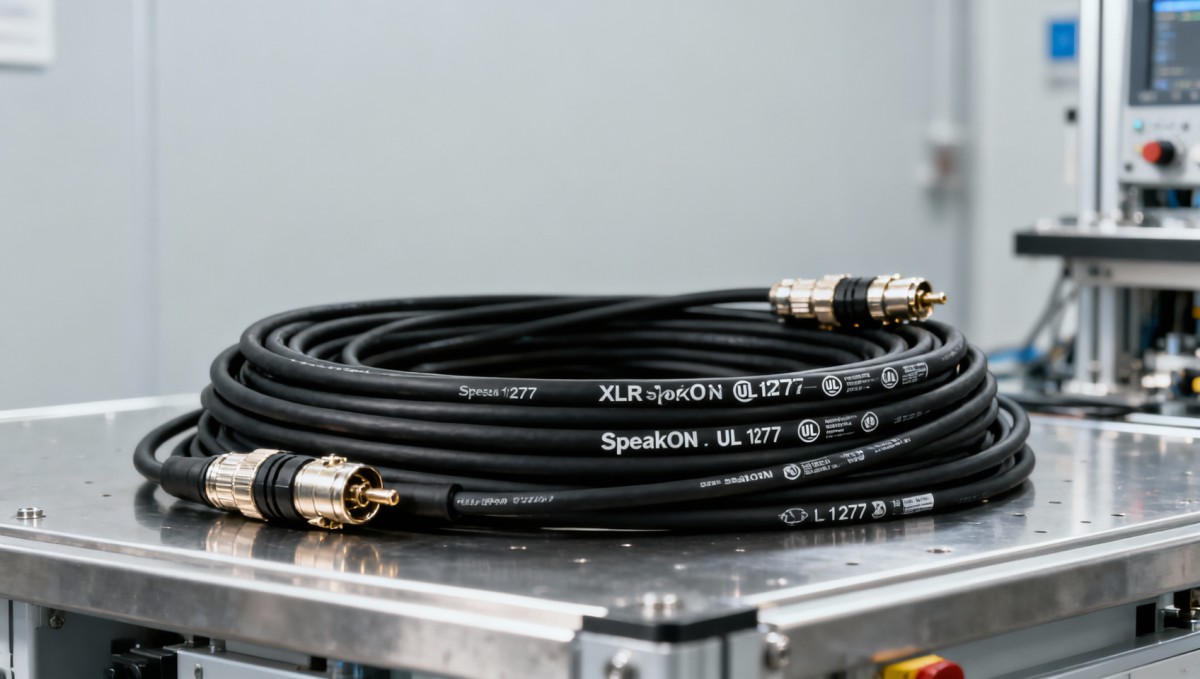
On May 26, 2026, the U.S. Consumer Product Safety Commission (CPSC) issued an urgent safety alert concerning seven batches of China-manufactured professional stage audio cables — specifically XLR and SpeakON interface cables — that failed mandatory UL 1277 flame-resistance testing. This development directly affects North American event production rental companies and distribution partners, triggering customs holds on affected imports. With new requirements mandating third-party UL laboratory full-scope test reports (original hard copies) for all imported audio cables effective Q3 2026, stakeholders across the pro audio supply chain must reassess compliance readiness and import workflows.
Event Overview
The U.S. Consumer Product Safety Commission (CPSC) published a safety warning on May 26, 2026, identifying seven shipments of China-originated Pro Stage Audio cables as non-compliant with UL 1277 flame-retardant performance requirements. The CPSC has initiated import clearance interception for these shipments. Affected products include XLR and SpeakON interface cables. As of the announcement date, no injuries or incidents have been reported. A new regulatory requirement — effective in Q3 2026 — stipulates that all imported audio cables destined for the U.S. market must be accompanied by original, full-scope UL 1277 test reports issued by accredited third-party laboratories.
Impact on Specific Industry Segments
Direct Exporters & Trading Companies
Exporters shipping Pro Stage Audio cables from China to the U.S. face immediate customs delays and potential shipment rejection. Since CPSC’s action targets specific batches, but signals broader enforcement intent, companies may experience increased scrutiny across similar SKUs — even those not explicitly named. Impact manifests as extended lead times, added documentation overhead, and potential liability if downstream customers incur inventory or scheduling losses.
Distribution & Rental Companies (North America)
U.S.-based audio equipment distributors and live-event rental firms holding existing inventory of affected cable models risk operational disruption. These entities rely on rapid turnover and just-in-time deployment; blocked imports or recalls could constrain availability ahead of peak summer festival season. Inventory valuation, warranty exposure, and customer contract fulfillment timelines are now subject to heightened review.
Contract Manufacturers & OEMs
Manufacturers producing cables under private labels or OEM agreements for U.S.-bound brands must verify whether their current UL 1277 test protocols cover all materials, constructions, and production lots — not just initial certification samples. Failure to maintain ongoing compliance evidence per lot or batch may invalidate prior certifications and expose both manufacturer and brand owner to joint liability.
Supply Chain & Compliance Service Providers
Third-party testing labs, certification consultants, and customs compliance specialists are seeing rising demand for UL 1277 retesting, documentation audits, and pre-shipment verification support. However, capacity constraints at accredited UL labs — particularly for full-scope testing — may delay report issuance, making early engagement critical for Q3 2026 deadline alignment.
What Stakeholders Should Monitor and Do Now
Track official CPSC updates and UL policy clarifications
The CPSC notice names specific batches but does not publish full product identifiers (e.g., model numbers, batch codes, or factory names). Stakeholders should monitor CPSC’s official portal and UL’s published guidance for updates on scope expansion, acceptable test report formats, and whether retrospective validation of past shipments will be required.
Verify applicability to current and upcoming SKUs — especially XLR and SpeakON lines
UL 1277 applies specifically to audio signal and loudspeaker cables used in commercial installations and touring environments. Companies should isolate all XLR and SpeakON cable SKUs intended for U.S. import and confirm whether each has undergone full-scope UL 1277 testing — including jacket material, conductor insulation, and assembled cable assembly — not just component-level evaluation.
Distinguish between regulatory signal and enforceable requirement
The May 26 alert is an enforcement action targeting non-compliant goods, not a formal rulemaking. However, the stated Q3 2026 requirement for third-party UL lab reports signals imminent procedural codification. Businesses should treat this as a de facto deadline — not a tentative suggestion — while awaiting formal Federal Register notice.
Initiate documentation and lab coordination now, not later
Securing original UL test reports requires sample submission, lab scheduling, and report generation — a process taking 4–8 weeks depending on lab backlog. Companies with pending or planned Q3 shipments should submit samples immediately and retain physical copies of reports for customs presentation. Digital-only reports may not satisfy CPSC’s ‘original’ requirement.
Editorial Perspective / Industry Observation
Observably, this CPSC action functions less as an isolated incident and more as a calibrated escalation in enforcement focus on passive electrical components within the pro audio sector. While UL 1277 has long existed as a standard, its operational enforcement at the point of entry — backed by physical detention — marks a shift toward accountability at the importer-of-record level. Analysis shows the timing aligns with broader U.S. efforts to strengthen supply chain due diligence for fire-safety-critical infrastructure products. It is not yet a systemic ban, but it is a clear signal: UL 1277 compliance is transitioning from a technical recommendation to a prerequisite for market access. Continued monitoring is warranted, especially for how CPSC defines ‘full-scope’ testing and whether enforcement expands beyond the initial seven batches.
In summary, the CPSC’s May 2026 alert underscores a tightening of fire-safety compliance expectations for professional audio cabling entering the U.S. market. Its significance lies not only in the immediate shipment holds but in the precedent it sets for documentation rigor and third-party verification. For industry participants, this is best understood not as a one-off recall, but as an early indicator of normalized, evidence-based enforcement — where verifiable test data, not self-declaration, becomes the baseline for U.S. market access.
Source: U.S. Consumer Product Safety Commission (CPSC) public safety alert, issued May 26, 2026. Note: UL’s official interpretation of ‘full-scope’ reporting requirements and CPSC’s enforcement scope remain under active observation and may be updated in subsequent guidance.
Search News
Hot Articles
- Musical InstrumentsA Practical Guide to Identifying Wooden Orchestral Instruments by Family and ToneOct 10, 2026
- Indoor PlaygroundHow to Choose Animatronic Haunted House Props for High-Throughput AttractionsOct 08, 2026
- Fashion & Gem JewelryThermal Diamond Testers: How They Work and When They Can Misidentify StonesOct 07, 2026
Popular Tags
Need ExpertConsultation?
Connect with our specialized leisureengineering team for procurementstrategies.
Recommended News
 Oct 10, 2026A Practical Guide to Identifying Wooden Orchestral Instruments by Family and ToneWooden orchestral instruments made simple: identify strings, flutes, clarinets, oboes, and bassoons by sound source, design, and tone.● Pro Audio Engineer
 Oct 08, 2026How to Choose Animatronic Haunted House Props for High-Throughput AttractionsAnimatronic haunted house props for high-throughput attractions: compare motion, triggers, safety, and maintenance to create reliable scares that keep guests moving.● Theme Park Strategist
 Oct 07, 2026Thermal Diamond Testers: How They Work and When They Can Misidentify StonesThermal diamond tester guide: learn how it works, spot false positives from moissanite, and choose reliable verification methods for jewelry trade and retail.● Luxury Retail Analyst
 Oct 06, 2026What Is Driving Demand for Commercial Hospitality Projects Across the GCC?Commercial hospitality GCC demand is rising through destination-led tourism, mixed-use development, and premium operational standards. Explore the procurement strategies shaping resilient projects.● Hospitality Sourcing Dir
 Oct 05, 2026How to Select Hotel Hair Dryers That Balance Guest Safety, Durability, and CostHair dryer for hotels: learn how to select safe, durable, cost-efficient models with the right certifications, performance, maintenance, and supplier support.● Hospitality Sourcing Dir
 Oct 04, 2026Fast-Casual Restaurant Interiors: Design Choices That Improve Speed and Guest FlowRestaurant interiors for fast casual brands: discover design choices that improve guest flow, speed service, streamline pickup, and elevate every visit.● Hospitality Sourcing Dir
 Oct 03, 2026How to Select Leisure Park Equipment for Safe, High-Throughput Visitor AreasLeisure park equipment selection guide for safe, high-throughput venues—explore capacity, supervision, durability, accessibility, and supplier criteria.● Theme Park Strategist
 Oct 02, 2026Diamond Tester Wholesale: How to Vet Accuracy, Calibration, and MOQ Before OrderingDiamond tester wholesale guide: verify accuracy, calibration records, supplier quality controls, and MOQ terms before ordering. Source reliable testers with confidence.● Luxury Retail Analyst
 Oct 01, 2026How Hotels Can Choose Amenity Bottles That Balance Brand Image and Refill CostsHotel amenity bottles: learn how to balance premium brand presentation, refill costs, hygiene, durability, and efficient housekeeping workflows.● Hospitality Sourcing Dir
 Sep 30, 2026How to Choose an Aluminum Projector Ceiling Mount for Load, Drop, and Ceiling TypeChoose an aluminum projector ceiling mount with confidence. Learn how load capacity, drop length, ceiling structure, safety retention, and service access shape a reliable commercial AV installation.● Pro Audio Engineer
 Sep 29, 2026Poured Playground Safety Surfacing: How to Specify Thickness for Fall HeightsPoured playground safety surfacing: learn how to specify tested thickness by fall height, ASTM standards, substrate conditions, accessibility, and field verification.● Theme Park Strategist
 Sep 28, 2026How U.S. Schools Can Choose Laboratory Equipment for Safe, Compliant Science LabsSchool laboratory equipment USA: learn how to select safe, compliant lab furniture, ventilation, emergency systems, and durable tools for K–12 science labs.● Institutional Buyer
 Sep 27, 2026Custom Trampoline Park Equipment: Planning Capacity, Safety, and LayoutCustom trampoline park equipment for safer capacity, smooth guest flow, and efficient layouts. Explore practical planning insights for a high-performing park.● Theme Park Strategist
 Sep 26, 2026How to Choose Dynamic Microphones for Vocals in Live Stage SettingsDynamic microphones for vocals: learn how to match polar patterns, feedback control, durability, and clarity to live stage needs for reliable, professional sound.● Pro Audio Engineer
 Sep 25, 2026How to Evaluate a Wall-Mounted Hotel Hair Dryer Manufacturer for Bulk ProjectsHotel hair dryers wall mounted manufacturer evaluation guide: compare safety, durability, installation fit, OEM options, total cost, and reliable bulk-project support.● Hospitality Sourcing Dir
 Sep 24, 2026Conveyor Pizza Oven Price: What Buyers Should Budget for Capacity and FeaturesConveyor pizza oven price guide: compare capacity, features, installation costs, and quote factors to choose the right commercial oven for your operation.● Hospitality Sourcing Dir
 Sep 23, 2026How Restaurant Buyers Can Source Hospitality Supplies Without OverorderingHospitality supplies for restaurants: learn practical sourcing strategies to cut excess inventory, protect cash flow, improve supplier reliability, and keep every service running smoothly.● Hospitality Sourcing Dir
 Sep 22, 2026Commercial Kitchen Design Price: Budgeting by Layout, Equipment, and MEP ScopeCommercial kitchen design price explained: budget smarter for layout, equipment, MEP scope, compliance, installation, and long-term operational performance.● Hospitality Sourcing Dir
 Sep 21, 2026How Schools Can Cut Printing Costs When Buying Ink Cartridges in BulkSchool ink cartridges wholesale made smarter: cut printing costs with fleet planning, cost-per-page comparisons, reliable suppliers, and inventory controls.● Institutional Buyer
 Sep 20, 2026How to Evaluate a Luxury Retail Packaging Supplier for Premium Brand ConsistencyLuxury retail packaging supplier evaluation guide: protect premium brand consistency with proven quality control, material expertise, scalable production, and supply reliability.● Luxury Retail Analyst
 Sep 19, 2026How to Select a Spiral Dough Mixer for Bakery Batch Size and Dough HydrationSpiral dough mixer bakery guide: match batch size, flour load, and hydration to select reliable torque, temperature control, and consistent dough results.● Hospitality Sourcing Dir
 Sep 18, 2026What Drives Animatronic Dinosaur Manufacturer Prices for Theme Park Projects?Animatronic dinosaurs manufacturer price guide: compare motion, materials, controls, installation, and lifecycle costs to plan a durable theme park attraction.● Theme Park Strategist
 Sep 17, 2026How to Source Wholesale Packing Tape Without Compromising Carton Seal StrengthWholesale packing tape sourcing guide: compare adhesive, backing, carton conditions, and real-world trials to reduce costs while maintaining reliable carton seal strength.● Institutional Buyer
 Sep 16, 2026How to Source Educational Furniture Worldwide for Safe, Flexible Learning SpacesEducational furniture worldwide: learn how to source safe, flexible, durable learning-space solutions while controlling compliance, logistics, and lifecycle costs.● Institutional Buyer