Wall mount speakers or ceiling models for cleaner coverage?
Choosing between wall mount speakers and ceiling models shapes coverage quality, visual integration, and service efficiency across commercial environments.
In hotels, campuses, retail floors, and leisure venues, speaker placement affects speech clarity, music consistency, and zoning control.
This comparison explains when wall mount speakers create cleaner direct coverage and when ceiling speakers deliver better spatial uniformity.
The decision rarely depends on appearance alone.
It depends on ceiling height, room shape, listener position, mounting restrictions, and long-term maintenance access.
A well-matched layout reduces dead zones, limits reflections, and improves the overall commercial experience.
Core definitions and acoustic differences
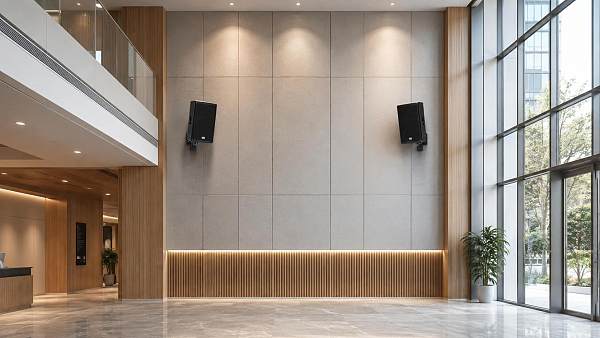
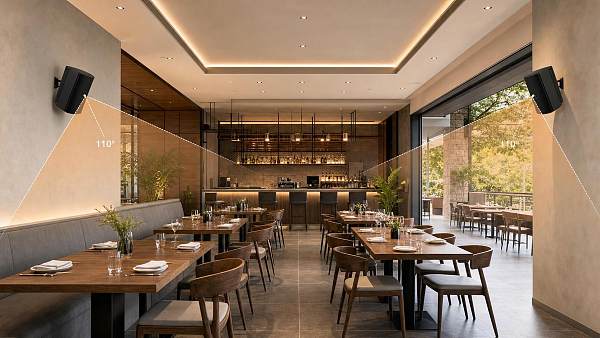
Wall mount speakers are installed on vertical surfaces and aim sound toward the listening area.
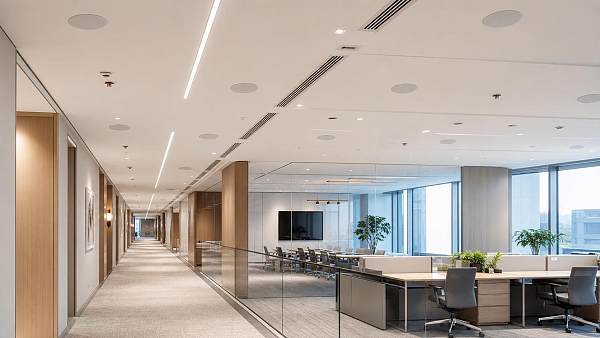
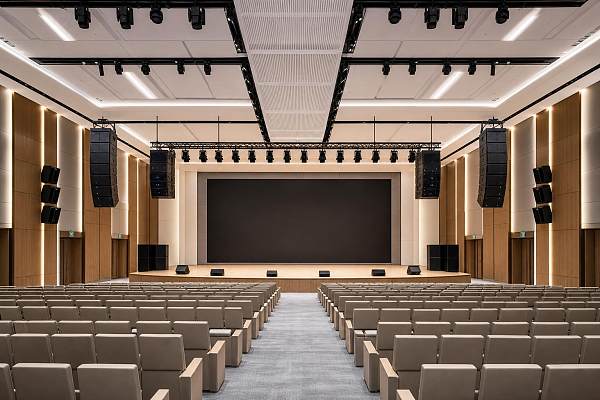
Ceiling speakers are recessed or surface-mounted overhead and usually radiate downward in wider coverage patterns.
The main distinction is directionality.
Wall mount speakers often provide stronger targeting, better edge control, and more predictable coverage over distance.
Ceiling models usually create a more discreet appearance and broad background sound for distributed audio systems.
In practical design, cleaner coverage means even sound pressure, stable tonal balance, and fewer hot spots or weak zones.
That outcome depends on dispersion angle, mounting height, boundary reflections, and how many loudspeakers are required.
Why directivity matters
Wall mount speakers can be angled horizontally and vertically.
This allows designers to avoid glass, hard ceilings, and other reflective surfaces that blur speech intelligibility.
Ceiling models have less aiming flexibility unless they use directional baffles or adjustable tweeters.
For paging, announcements, and mixed-use zones, that difference can be significant.
Current industry considerations in commercial projects
Commercial audio design now sits between acoustic performance, architectural restraint, and operating cost control.
Projects across hospitality, education, retail, and entertainment increasingly require systems that are visually quiet but technically precise.
Another growing concern is service continuity.
Facilities teams increasingly evaluate replacement access, grille cleaning, and the ability to re-aim or rezone audio over time.
In that context, wall mount speakers often simplify inspections and hardware adjustments.
Coverage performance and business value
Cleaner coverage is not only an acoustic benefit.
It supports brand atmosphere, message audibility, dwell time, and lower complaint rates in public areas.
Wall mount speakers can produce better front-to-back control in long rooms, corridors, and perimeter seating areas.
They are also useful where ceiling height is excessive.
High ceilings increase throw distance and can weaken direct energy from overhead speakers.
By lowering the acoustic origin, wall mount speakers often improve intelligibility with fewer units.
Where ceiling models add value
Ceiling speakers excel in background music applications with regular listener distribution.
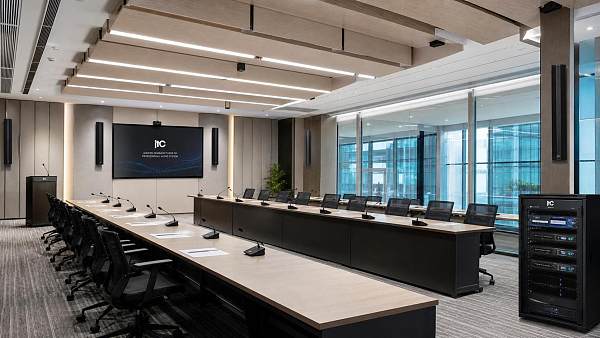
Reception areas, boutiques, meeting breakouts, and classrooms often benefit from their discreet overhead layout.
They can reduce visual clutter and preserve wall space for displays, mirrors, shelving, or signage.
- Wall mount speakers usually offer stronger aiming control.
- Ceiling speakers usually offer cleaner visual integration.
- Wall mount speakers often suit speech-heavy environments.
- Ceiling models often suit low-level distributed music.
The right choice can also reduce amplifier channel waste and unnecessary loudspeaker density.
That improves capital efficiency without sacrificing user experience.
Typical commercial scenarios and layout selection
No single speaker type wins every project.
Selection should follow room function, ceiling architecture, and desired listener focus.
Hybrid systems are increasingly common.
They combine ceiling speakers for ambient fill and wall mount speakers for speech zones, entrances, or acoustically difficult corners.
This approach can deliver cleaner coverage than using one speaker type everywhere.
Installation, maintenance, and compliance factors
Acoustic quality is only part of the decision.
Commercial projects must also consider installation speed, structural limitations, and code alignment.
Wall mount speakers may require brackets, seismic restraints, and careful sightline coordination.
Ceiling speakers often depend on plenum conditions, tile strength, back cans, and above-ceiling access.
Maintenance realities
Wall mount speakers are generally easier to inspect from ladders or lifts.
A technician can often replace a unit without disturbing ceiling finishes.
Ceiling speakers may look cleaner day to day, but service access can be slower in finished interiors.
That issue matters in venues with continuous occupancy and limited shutdown windows.
- Check fire, safety, and local mounting requirements early.
- Confirm cable routes before selecting ceiling or wall locations.
- Review future access for cleaning, replacement, and retuning.
- Coordinate speaker finish with lighting, HVAC, and interior materials.
Practical specification guidance for better outcomes
Start with the listening task.
If speech clarity leads the brief, wall mount speakers often deserve first consideration.
If visual minimalism and broad ambient playback lead, ceiling models may fit better.
Then evaluate room geometry.
Long rooms, double-height spaces, and reflective sidewalls usually benefit from the control of wall mount speakers.
Compact rooms with standard ceiling heights usually support ceiling layouts efficiently.
- Map listener areas, not just room boundaries.
- Match dispersion to mounting height and coverage distance.
- Avoid over-density that creates comb filtering and cost waste.
- Use modeling tools for intelligibility and SPL consistency.
- Plan for maintenance access before finalizing finish details.
Where uncertainty remains, a pilot zone or acoustic simulation can prevent expensive revisions later.
That is especially important in premium hospitality, education, and mixed-use commercial interiors.
Decision summary and next-step planning
Wall mount speakers are often the stronger choice for directional control, higher ceilings, and speech-driven spaces.
Ceiling speakers are often the stronger choice for discreet appearance and evenly distributed background audio.
For many commercial environments, the best answer is not either-or.
It is a balanced combination shaped by architecture, usage pattern, and maintenance reality.
When comparing wall mount speakers with ceiling models, prioritize coverage behavior before cosmetic preference.
That sequence usually leads to cleaner coverage, better operational value, and fewer post-installation corrections.
A structured site review, acoustic model, and access plan will help identify the most efficient speaker layout for the project.
Search News
Hot Articles
- Restaurant FurnitureFast-Casual Restaurant Interiors: Design Choices That Improve Speed and Guest FlowOct 04, 2026
- Outdoor RidesHow to Select Leisure Park Equipment for Safe, High-Throughput Visitor AreasOct 03, 2026
- Fashion & Gem JewelryDiamond Tester Wholesale: How to Vet Accuracy, Calibration, and MOQ Before OrderingOct 02, 2026
Popular Tags
Need ExpertConsultation?
Connect with our specialized leisureengineering team for procurementstrategies.
Recommended News
 Sep 30, 2026How to Choose an Aluminum Projector Ceiling Mount for Load, Drop, and Ceiling TypeChoose an aluminum projector ceiling mount with confidence. Learn how load capacity, drop length, ceiling structure, safety retention, and service access shape a reliable commercial AV installation.● Pro Audio Engineer
 Sep 26, 2026How to Choose Dynamic Microphones for Vocals in Live Stage SettingsDynamic microphones for vocals: learn how to match polar patterns, feedback control, durability, and clarity to live stage needs for reliable, professional sound.● Pro Audio Engineer
 Sep 07, 2026How to Choose Wall Mount Speakers for Clear Audio in Commercial SpacesWall mount speakers for commercial spaces: learn how to optimize coverage, SPL, directivity, installation, and system design for clear, reliable audio.● Pro Audio Engineer
 Sep 03, 2026How to Choose Locking Speakon Speaker Cables for Reliable Live Sound ConnectionsLocking Speakon speaker cables: learn how to select the right gauge, connector pinout, strain relief, and durable construction for reliable live sound connections.● Pro Audio Engineer
 Sep 08, 2026Is It Worth Upgrading a Stage Sound System Mid-Project?Is it worth upgrading stage sound systems mid-project? Discover how to assess performance gaps, costs, compatibility, and long-term venue value.● Pro Audio Engineer
 Sep 04, 2026Can AV Systems Be Retrofitted Into Older Commercial Buildings?Can AV integration be retrofitted into older commercial buildings? Discover practical strategies for reliable, code-aware AV upgrades with minimal disruption.● Pro Audio Engineer
 Jul 17, 2026How to Choose a Crossover Networks Supplier: Key Specs, Quality Checks, and OEM FactorsFind the right crossover networks supplier with this practical guide to key specs, quality checks, OEM factors, and supply chain risks for better audio performance and sourcing confidence.● Pro Audio Engineer
 Jul 16, 2026How to Evaluate ODM Services for Pro Audio: Design, Certification, and Production CapabilitiesODM services for pro audio: learn how to assess design depth, certification readiness, and production strength to choose a reliable partner and launch better audio products with less risk.● Pro Audio Engineer
 Jul 15, 2026JETRO Flags Modular, Low-Power Shift in Pro Stage AudioPro Stage Audio buyers in Japan are shifting fast: JETRO flags modular amplifiers, IP65 line arrays, low standby power, and JIS compliance as key to channel entry.● Pro Audio Engineer
 Jul 15, 2026Paper Speaker Cones Explained: How Cone Weight and Stiffness Affect SoundPaper speaker cones explained: discover how cone weight and stiffness shape sensitivity, clarity, breakup control, and real-world speaker performance for smarter audio sourcing.● Pro Audio Engineer
 Jul 15, 2026Performance Venues Compliance Checklist: Fire Safety, Accessibility, and Crowd RulesPerformance venues compliance checklist covering fire safety, accessibility, and crowd rules. Learn how to reduce delays, improve approvals, and open safer, more resilient venues.● Pro Audio Engineer
 Jul 14, 2026Japan Adds EMC Immunity Test for Stage AmplifiersJapan Adds EMC Immunity Test for Stage Amplifiers: learn how Japan’s 2026 JIS update affects EMC testing, JIS marking, certification timing, and market access for exporters.● Pro Audio Engineer
 Jul 13, 2026CISCE 2026 Adds Pro Stage Audio ZoneCISCE 2026 Adds Pro Stage Audio Zone as free overseas pre-registration opens. Explore key updates for pro audio suppliers, distributors, and system integrators before the Shanghai expo.● Pro Audio Engineer
 Jul 12, 2026Japan Tightens Pro Stage Audio Efficiency Limits Under JIS C 8105-2026Japan Tightens Pro Stage Audio Efficiency Limits Under JIS C 8105-2026: learn how new PSE compliance rules reshape market access, product eligibility, and shipment planning in Japan.● Pro Audio Engineer
 Jul 12, 2026How to Choose Low Profile Ceiling Speakers for Hotels, Offices, and Retrofit ProjectsLow profile ceiling speakers for hotels, offices, and retrofit projects: learn how to compare depth, coverage, compliance, and installation factors to choose the right fit.● Pro Audio Engineer
 Jul 11, 2026Japan Tightens JIS C 8105-2026 for Pro AudioJapan Tightens JIS C 8105-2026 for Pro Audio: learn how stricter standby power, PSE diamond mark rules, and the 2026 deadline impact exports, compliance, and market access.● Pro Audio Engineer
 Jul 10, 2026JETRO Q2 Outlook Signals Higher Stage Audio DemandJETRO Q2 Outlook signals higher stage audio demand in Japan, with 37% procurement growth and stricter PSE Annex D compliance. See what importers, manufacturers, and rental channels must act on now.● Pro Audio Engineer
 Jul 10, 2026How to Choose Wall Mount Speakers for Restaurants by Layout, Coverage, and SPLWall mount speakers for restaurants should match layout, coverage, and SPL. Learn how to choose the right setup for even sound, guest comfort, and reliable performance.● Pro Audio Engineer
 Jul 09, 2026JIS T 9001:2026 Adds Mandatory AI Noise LabelsJIS T 9001:2026 adds mandatory AI noise labels for pro audio gear from October 2026. Learn how it impacts compliance, testing, exports, and product launches.● Pro Audio Engineer
 Jul 06, 2026Improving Sound Reinforcement Speech Clarity: Key Causes of Muddiness and How to Fix ThemSound reinforcement speech clarity starts with identifying reverberation, coverage, noise, and timing issues. Discover practical fixes that make announcements clearer and commercial spaces perform better.● Pro Audio Engineer
 Jul 05, 2026Saudi Rule Adds Arabic UI Requirement for Pro Audio ImportsSaudi Rule Adds Arabic UI Requirement for Pro Audio Imports: learn how SASO’s new Arabic UI mandate affects digital amplifiers, DSP processors, and network audio interfaces before Sept. 1, 2026.● Pro Audio Engineer
 Jul 02, 2026How to Choose Audio Mixing Consoles for Live Venues: Channels, Buses, and I/O ExplainedAudio mixing consoles explained for live venues: learn how to choose the right channels, buses, and I/O to improve workflow, support growth, and avoid costly mistakes.● Pro Audio Engineer
 Jul 01, 2026UL 62368-3:2026 Adds EMC Rules for Pro Stage AudioUL 62368-3:2026 adds EMC rules for Pro Stage Audio, requiring Level 4 immunity and manual labeling by Oct 1, 2026. See what exporters, makers, and buyers must do now.● Pro Audio Engineer
 Jun 30, 2026Sound Reinforcement Design Basics: How to Plan Coverage, SPL, and Speaker PlacementSound reinforcement design starts with smarter coverage, target SPL, and speaker placement. Learn how to plan clearer, more reliable audio performance for commercial spaces.● Pro Audio Engineer