Passive Subwoofers Wholesale: Where Freight Costs Change the Deal
When passive subwoofers wholesale becomes a freight decision
In passive subwoofers wholesale, the quoted unit price is only the opening number.
Freight, carton size, loading efficiency, and destination handling can quickly change the final competitiveness of a deal.
That matters across commercial audio projects, from hospitality venues to education campuses and entertainment spaces.
A lower factory price may still produce a higher landed cost if packaging wastes container space.
A slightly higher unit cost may win if cabinet dimensions improve pallet density and reduce damage claims.
For buyers comparing passive subwoofers wholesale options, freight is not an afterthought.
It is a deal variable that affects margin, installation schedules, and long-term sourcing confidence.
Why project context changes the value equation
Different application settings create different freight tolerances.
A nightclub retrofit may prioritize output and accept heavier cabinets.
A hotel chain rollout may value repeatable packing dimensions more than maximum low-end extension.
A campus installation may require mixed shipments with amplifiers, brackets, and classroom audio products.
In each case, passive subwoofers wholesale sourcing should be judged by landed system cost, not single-item pricing.
This is especially true when fuel surcharges, port congestion, and inland delivery rates remain volatile.
Freight-sensitive buying also supports broader commercial goals.
It reduces budgeting surprises, protects installation timelines, and improves total project predictability.
Scenario one: hospitality projects where aesthetics and repeatability matter
Hotels, lounges, and resort venues often buy in phased volumes.
The first order may be modest, while later replenishment follows property expansion or seasonal renovation.
In this setting, passive subwoofers wholesale decisions should examine cabinet footprint, packaging consistency, and visual finish durability.
Freight becomes critical because premium interiors often require clean, damage-free delivery.
A scratched enclosure or crushed corner creates replacement cost far beyond the original shipping estimate.
Core judgment points include stackability, carton protection, and whether mixed-SKU loading can preserve finish quality.
Best-fit freight questions for hospitality
- Can cartons be palletized without overhang?
- Does the grille or veneer need reinforced corner protection?
- Will repeat orders keep the same outer carton dimensions?
- Can one container combine subwoofers with other venue audio products?
Scenario two: entertainment venues where performance density drives freight trade-offs
Bars, clubs, cinemas, and leisure venues often demand higher SPL and deeper extension.
That usually means larger enclosures, thicker wood panels, and stronger internal bracing.
Here, passive subwoofers wholesale selection often becomes a choice between acoustic output and shipping efficiency.
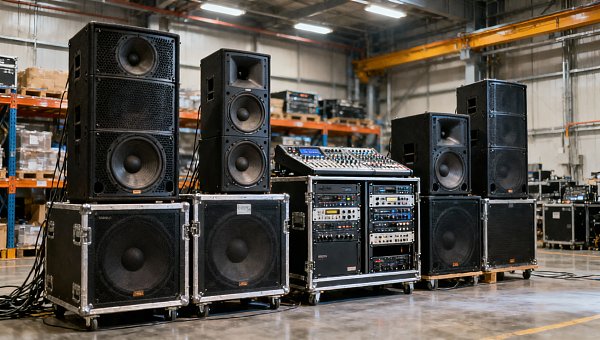
A dual-driver cabinet may reduce installation count but consume more cubic volume in transit.
A compact model may ship more efficiently but require more units, more rigging, and more amplifier channels.
The right answer depends on whether freight cost per delivered decibel remains favorable.
This is where technical and logistics analysis must work together, not separately.
Core judgment points for entertainment projects
- Net internal volume versus external shipping volume
- Units required per venue and amplifier pairing
- Local delivery constraints for heavy cabinets
- Damage risk during multi-stop inland transportation
Scenario three: education and institutional orders where standardization reduces cost
Schools, auditoriums, training centers, and public venues often value standardization.
They may place larger scheduled orders and expect simple maintenance over many years.
In passive subwoofers wholesale, this scenario benefits from rational packaging, stable model lifecycles, and predictable freight planning.
Even a small carton redesign can improve pallet count and lower annual logistics cost across multiple deliveries.
Because institutional budgets are closely reviewed, landed cost transparency becomes a major sourcing advantage.
Documentation also matters.
Clear packing lists, harmonized codes, and loading plans reduce customs delays and receiving errors.
How freight variables differ across passive subwoofers wholesale scenarios
What to check before comparing supplier quotes
A strong passive subwoofers wholesale comparison starts with data beyond price sheets.
Ask for gross weight, carton size, loading quantity, pallet pattern, and packaging material details.
Then calculate landed cost using the intended route, not a generic freight assumption.
Useful checks include the following:
- Cost per container, not only cost per unit
- Delivered cost per venue or room package
- Freight impact of spare units and warranty stock
- Pallet and carton compliance for destination warehouses
- Lead time impact of custom packaging requests
These checks turn passive subwoofers wholesale evaluation into a practical sourcing decision.
Scenario-based sourcing suggestions that improve landed value
- For hospitality rollouts, prioritize packaging tests and finish-safe loading plans.
- For entertainment builds, compare freight cost against total system count and output needs.
- For education projects, favor models with long lifecycle stability and simple replenishment planning.
- For mixed commercial orders, consolidate compatible audio items to improve container utilization.
- For cross-border projects, confirm carton labels, export documentation, and local handling requirements early.
In passive subwoofers wholesale, small logistics improvements often outperform aggressive unit-price negotiation.
Common mistakes that distort passive subwoofers wholesale decisions
One common mistake is buying by driver size alone.
A 15-inch or 18-inch label does not reveal transport efficiency, usable output, or installation count.
Another mistake is ignoring volumetric weight for sample shipments or urgent replenishment orders.
Airfreight or express replacement can erase any savings from the original bulk order.
A third mistake is assuming every factory carton is optimized.
Some packaging protects well but wastes container space.
Others save space but increase dent, grille, or cabinet edge damage.
The strongest passive subwoofers wholesale strategy balances protection, density, and route realities.
A practical next step for freight-smart buying
Start every passive subwoofers wholesale review with a landed-cost worksheet.
List unit price, gross weight, carton dimensions, container load quantity, destination charges, and damage allowance.
Then compare suppliers by scenario, not by headline discount.
This approach supports better decisions for hotels, campuses, leisure venues, and broader commercial audio projects.
For organizations navigating global sourcing complexity, disciplined logistics analysis creates measurable commercial value.
In passive subwoofers wholesale, freight does not merely add cost.
It changes which deal is truly the better deal.
Search News
Hot Articles
- Restaurant FurnitureFast-Casual Restaurant Interiors: Design Choices That Improve Speed and Guest FlowOct 04, 2026
- Outdoor RidesHow to Select Leisure Park Equipment for Safe, High-Throughput Visitor AreasOct 03, 2026
- Fashion & Gem JewelryDiamond Tester Wholesale: How to Vet Accuracy, Calibration, and MOQ Before OrderingOct 02, 2026
Popular Tags
Need ExpertConsultation?
Connect with our specialized leisureengineering team for procurementstrategies.
Recommended News
 Sep 30, 2026How to Choose an Aluminum Projector Ceiling Mount for Load, Drop, and Ceiling TypeChoose an aluminum projector ceiling mount with confidence. Learn how load capacity, drop length, ceiling structure, safety retention, and service access shape a reliable commercial AV installation.● Pro Audio Engineer
 Sep 26, 2026How to Choose Dynamic Microphones for Vocals in Live Stage SettingsDynamic microphones for vocals: learn how to match polar patterns, feedback control, durability, and clarity to live stage needs for reliable, professional sound.● Pro Audio Engineer
 Sep 07, 2026How to Choose Wall Mount Speakers for Clear Audio in Commercial SpacesWall mount speakers for commercial spaces: learn how to optimize coverage, SPL, directivity, installation, and system design for clear, reliable audio.● Pro Audio Engineer
 Sep 03, 2026How to Choose Locking Speakon Speaker Cables for Reliable Live Sound ConnectionsLocking Speakon speaker cables: learn how to select the right gauge, connector pinout, strain relief, and durable construction for reliable live sound connections.● Pro Audio Engineer
 Sep 08, 2026Is It Worth Upgrading a Stage Sound System Mid-Project?Is it worth upgrading stage sound systems mid-project? Discover how to assess performance gaps, costs, compatibility, and long-term venue value.● Pro Audio Engineer
 Sep 04, 2026Can AV Systems Be Retrofitted Into Older Commercial Buildings?Can AV integration be retrofitted into older commercial buildings? Discover practical strategies for reliable, code-aware AV upgrades with minimal disruption.● Pro Audio Engineer
 Jul 17, 2026How to Choose a Crossover Networks Supplier: Key Specs, Quality Checks, and OEM FactorsFind the right crossover networks supplier with this practical guide to key specs, quality checks, OEM factors, and supply chain risks for better audio performance and sourcing confidence.● Pro Audio Engineer
 Jul 16, 2026How to Evaluate ODM Services for Pro Audio: Design, Certification, and Production CapabilitiesODM services for pro audio: learn how to assess design depth, certification readiness, and production strength to choose a reliable partner and launch better audio products with less risk.● Pro Audio Engineer
 Jul 15, 2026JETRO Flags Modular, Low-Power Shift in Pro Stage AudioPro Stage Audio buyers in Japan are shifting fast: JETRO flags modular amplifiers, IP65 line arrays, low standby power, and JIS compliance as key to channel entry.● Pro Audio Engineer
 Jul 15, 2026Paper Speaker Cones Explained: How Cone Weight and Stiffness Affect SoundPaper speaker cones explained: discover how cone weight and stiffness shape sensitivity, clarity, breakup control, and real-world speaker performance for smarter audio sourcing.● Pro Audio Engineer
 Jul 15, 2026Performance Venues Compliance Checklist: Fire Safety, Accessibility, and Crowd RulesPerformance venues compliance checklist covering fire safety, accessibility, and crowd rules. Learn how to reduce delays, improve approvals, and open safer, more resilient venues.● Pro Audio Engineer
 Jul 14, 2026Japan Adds EMC Immunity Test for Stage AmplifiersJapan Adds EMC Immunity Test for Stage Amplifiers: learn how Japan’s 2026 JIS update affects EMC testing, JIS marking, certification timing, and market access for exporters.● Pro Audio Engineer
 Jul 13, 2026CISCE 2026 Adds Pro Stage Audio ZoneCISCE 2026 Adds Pro Stage Audio Zone as free overseas pre-registration opens. Explore key updates for pro audio suppliers, distributors, and system integrators before the Shanghai expo.● Pro Audio Engineer
 Jul 12, 2026Japan Tightens Pro Stage Audio Efficiency Limits Under JIS C 8105-2026Japan Tightens Pro Stage Audio Efficiency Limits Under JIS C 8105-2026: learn how new PSE compliance rules reshape market access, product eligibility, and shipment planning in Japan.● Pro Audio Engineer
 Jul 12, 2026How to Choose Low Profile Ceiling Speakers for Hotels, Offices, and Retrofit ProjectsLow profile ceiling speakers for hotels, offices, and retrofit projects: learn how to compare depth, coverage, compliance, and installation factors to choose the right fit.● Pro Audio Engineer
 Jul 11, 2026Japan Tightens JIS C 8105-2026 for Pro AudioJapan Tightens JIS C 8105-2026 for Pro Audio: learn how stricter standby power, PSE diamond mark rules, and the 2026 deadline impact exports, compliance, and market access.● Pro Audio Engineer
 Jul 10, 2026JETRO Q2 Outlook Signals Higher Stage Audio DemandJETRO Q2 Outlook signals higher stage audio demand in Japan, with 37% procurement growth and stricter PSE Annex D compliance. See what importers, manufacturers, and rental channels must act on now.● Pro Audio Engineer
 Jul 10, 2026How to Choose Wall Mount Speakers for Restaurants by Layout, Coverage, and SPLWall mount speakers for restaurants should match layout, coverage, and SPL. Learn how to choose the right setup for even sound, guest comfort, and reliable performance.● Pro Audio Engineer
 Jul 09, 2026JIS T 9001:2026 Adds Mandatory AI Noise LabelsJIS T 9001:2026 adds mandatory AI noise labels for pro audio gear from October 2026. Learn how it impacts compliance, testing, exports, and product launches.● Pro Audio Engineer
 Jul 06, 2026Improving Sound Reinforcement Speech Clarity: Key Causes of Muddiness and How to Fix ThemSound reinforcement speech clarity starts with identifying reverberation, coverage, noise, and timing issues. Discover practical fixes that make announcements clearer and commercial spaces perform better.● Pro Audio Engineer
 Jul 05, 2026Saudi Rule Adds Arabic UI Requirement for Pro Audio ImportsSaudi Rule Adds Arabic UI Requirement for Pro Audio Imports: learn how SASO’s new Arabic UI mandate affects digital amplifiers, DSP processors, and network audio interfaces before Sept. 1, 2026.● Pro Audio Engineer
 Jul 02, 2026How to Choose Audio Mixing Consoles for Live Venues: Channels, Buses, and I/O ExplainedAudio mixing consoles explained for live venues: learn how to choose the right channels, buses, and I/O to improve workflow, support growth, and avoid costly mistakes.● Pro Audio Engineer
 Jul 01, 2026UL 62368-3:2026 Adds EMC Rules for Pro Stage AudioUL 62368-3:2026 adds EMC rules for Pro Stage Audio, requiring Level 4 immunity and manual labeling by Oct 1, 2026. See what exporters, makers, and buyers must do now.● Pro Audio Engineer
 Jun 30, 2026Sound Reinforcement Design Basics: How to Plan Coverage, SPL, and Speaker PlacementSound reinforcement design starts with smarter coverage, target SPL, and speaker placement. Learn how to plan clearer, more reliable audio performance for commercial spaces.● Pro Audio Engineer