Stage Monitors OEM: Which Specs Matter in Real Use?
When evaluating stage monitors OEM options, spec sheets rarely tell the whole story. For technical assessors, the real question is which performance indicators actually matter under live conditions—SPL, coverage, DSP tuning, thermal stability, impedance, or cabinet design. This guide focuses on the specifications that influence reliability, intelligibility, and deployment efficiency in practical use, helping buyers separate marketing claims from field-proven value.
What does a stage monitors OEM assessment really need to measure?
A useful stage monitors OEM review starts with the job, not the brochure. Technical assessors usually work under pressure from venue deadlines, mixed-use performance requirements, and strict import or safety expectations. In real projects, a stage monitor is rarely judged by one headline number.
For hotels, event halls, educational auditoriums, amusement venues, and touring installations, monitor performance affects artist confidence, speech clarity, feedback margin, and setup speed. That is why a sourcing decision must connect acoustical data with enclosure durability, amplifier behavior, serviceability, and documentation quality.
Within GCT’s commercial sourcing perspective, the strongest suppliers are not simply those offering many SKUs. They are the ones able to explain application logic, provide consistent production capability, support regional compliance needs, and adapt monitor configurations for practical deployment across global projects.
- Is the rated SPL usable without harshness, compression, or unstable thermal behavior during long sets?
- Does the coverage pattern match the performer position, or does it create spill into vocal microphones?
- Can the OEM provide DSP presets, crossover data, and amplifier matching information that reduce commissioning time?
- Are connectors, cabinet angles, finish, and grille strength suitable for repeated transport and commercial use?
Why spec-sheet reading often leads to weak purchase decisions
Many stage monitors OEM comparisons fail because the listed values are not presented under identical test conditions. Peak SPL can look impressive but reveal little about long-duration output. Frequency response may appear flat on paper while off-axis performance causes uneven monitoring on stage.
Technical buyers should also watch for missing details. If an OEM does not clearly define test distance, impedance conditions, amplifier recommendations, or protection behavior, the risk moves downstream to installers, rental companies, and end users.
Which specifications matter most in real use?
The most practical way to compare stage monitors OEM capability is to rank specifications by their effect on live operation. The table below highlights which parameters deserve the closest attention during technical evaluation and sample review.
The key takeaway is simple: technical value comes from the interaction of these specifications, not from any single line item. A monitor with slightly lower advertised SPL may perform better if its voicing, dispersion, and thermal control remain stable across an entire event schedule.
SPL: useful output matters more than headline output
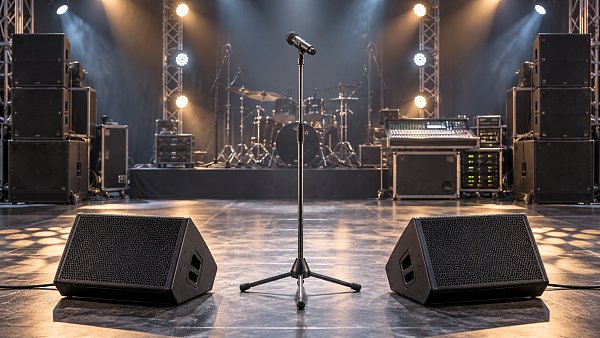
Stage wedges are often pushed hard by drummers, vocalists, and presenters who need precise self-monitoring in noisy environments. Technical assessors should prioritize continuous output behavior, not just peak values. If protection circuits engage too early or too aggressively, performers hear inconsistency before the system technically clips.
Ask a stage monitors OEM how the system behaves over a full rehearsal or two-hour set. Does the tonal balance shift with heat? Does the HF section become brittle at high level? These are more useful questions than simply comparing maximum dB claims.
Coverage: the right pattern reduces feedback and wasted energy
Coverage is not only about wide versus narrow. It is about where the energy goes when the enclosure sits on the floor at a given angle, in front of a singer, keyboardist, or side-fill position. Uneven response across the listening zone forces performers to move excessively or request more level.
In hospitality ballrooms and multi-purpose venues, pattern control matters even more because stage volume can spill into audience areas or reflective walls. A well-controlled horn design can improve both monitor clarity and front-of-house gain before feedback.
DSP and voicing: deployment speed is a specification too
For technical evaluation teams, good DSP support saves labor. An OEM that provides dependable presets, limiter thresholds, and recommended processing chains reduces setup variability between projects. This matters for integrators serving schools, theme venues, and event spaces where staff may not be the same at every show.
Request practical information: default EQ curves, high-pass recommendations with subwoofers, latency considerations, and available tuning files. These details reveal whether the supplier understands field operation or only product listing.
How should stage monitors OEM options be compared by application?
A strong sourcing decision depends on where the monitor will work. The same wedge may behave acceptably in a school auditorium but fail expectations on a touring stage or in a premium hotel event venue with strict aesthetic and noise-control demands.
The following comparison table helps technical assessors connect application scenarios with specification priorities when evaluating stage monitors OEM proposals.
This comparison shows why generic shortlist methods often fail. The best stage monitors OEM for one sector may not be the best for another. GCT’s cross-sector sourcing perspective is useful here because commercial buyers often manage venues with overlapping music, speech, education, and hospitality functions.
Scenario-based checks before approving samples
- For vocal-heavy stages, test upper-mid clarity at realistic monitor levels and confirm that EQ cuts do not destroy intelligibility.
- For rental use, inspect hardware strength, paint resilience, grille fastening, and handle position during repeated load-in cycles.
- For institutional installations, verify connector protection, replacement part planning, and documentation for non-specialist maintenance teams.
- For hospitality venues, check that cabinet appearance, stage footprint, and cable routing suit premium interior standards.
What procurement risks do technical assessors often overlook?
The biggest errors in stage monitors OEM sourcing often happen outside acoustics. A monitor may sound acceptable in a short demo but create problems in logistics, compliance, consistency, or after-sales support. Technical assessment should therefore include manufacturing discipline and commercial execution.
Common hidden risks
- Inconsistent batch performance. If driver sourcing, crossover parts, or DSP files change without notice, tuned results may not carry over between production lots.
- Weak documentation. Missing wiring diagrams, preset files, or packing specifications slow projects and increase installation mistakes.
- Underdefined compliance planning. Commercial buyers may need confirmation on electrical safety, materials, labeling, and shipping requirements depending on market destination.
- Poor serviceability. If grille access, driver replacement, or connector repair is difficult, maintenance cost rises over the product life cycle.
A practical evaluation workflow
Technical assessors can reduce decision risk by using a staged review process rather than accepting a one-time demo. This is especially important for global procurement teams handling multi-venue rollouts or mixed-use commercial developments.
- Start with application mapping: define performer type, venue size, expected monitor level, and amplifier ecosystem.
- Request technical files: response charts, impedance data, DSP recommendations, cabinet drawings, and packing details.
- Run sample checks under load: evaluate tonal consistency after extended playback, not only during first power-on.
- Confirm supply capability: ask about lead time logic, spare parts planning, finish options, and carton or pallet standardization.
- Review compliance path: identify target markets and required documentation before placing production orders.
How do cost, alternatives, and standardization affect the final decision?
Lowest purchase price does not always produce the lowest project cost. With stage monitors OEM sourcing, small differences in monitor angle, DSP readiness, connector choice, or cabinet durability can influence freight efficiency, setup time, maintenance frequency, and spare inventory planning.
Technical assessors should compare total deployment value across at least three paths: an entry-level standard wedge, a better-controlled premium passive wedge, and an active monitor with integrated processing. Each has a valid role depending on site complexity and service resources.
When alternatives make sense
- Choose passive designs when the venue already has a reliable amplifier and DSP platform, and the team wants easier amplifier-room management.
- Choose active designs when fast deployment, preset consistency, and reduced external rack complexity are more important than module-level repair simplicity.
- Choose common cabinet platforms across multiple monitor sizes when spare handling, visual uniformity, and training efficiency matter across venue groups.
For commercial buyers managing hotels, campuses, entertainment zones, and specialty venues, standardization often matters as much as peak performance. A sourcing hub such as GCT adds value by helping procurement teams compare not only products, but also supplier readiness across documentation, customization, and long-term rollout suitability.
FAQ: practical questions about stage monitors OEM selection
How should I verify a stage monitors OEM beyond the catalog?
Ask for application-specific files and sample testing support. The best verification mix includes response data, impedance behavior, preset information, cabinet drawings, connector details, and a controlled listening session at realistic working level. Also review packing logic and spare part planning, because those affect commercial execution.
Which spec is usually overvalued during monitor procurement?
Peak SPL is often overvalued. It attracts quick attention, but it does not reveal how stable the monitor remains over time. Continuous headroom, coverage consistency, and DSP behavior usually have more impact on user satisfaction and feedback control.
Are stage monitors OEM solutions suitable for premium hospitality venues?
Yes, if the OEM can balance acoustics with finish quality, deployment speed, and discreet visual integration. In hotel and event environments, monitor systems must support both speech and music while maintaining a polished appearance and manageable stage footprint.
What documentation should technical assessors request before placing an order?
Request technical datasheets, impedance information, crossover or DSP guidance, cabinet dimensions, packing details, connector specifications, and any market-specific compliance documentation relevant to the destination. Clear documentation reduces installation errors and speeds internal approval.
Why work with us on stage monitors OEM sourcing?
GCT supports technical assessors who need more than a product list. Our value is in connecting specification review with real commercial sourcing logic across pro audio, hospitality, education, leisure, and other experience-driven sectors. That means sharper supplier screening, better-fit shortlist building, and fewer surprises after sample approval.
If you are comparing stage monitors OEM options, we can help you move faster on the points that matter: parameter confirmation, scenario-based model selection, amplifier and DSP matching, expected delivery windows, customization scope, target-market compliance questions, sample planning, and quotation alignment.
For teams managing new venue builds, renovation projects, rental inventory updates, or cross-border commercial procurement, contact us with your monitor application, target price band, quantity range, and technical requirements. We can help structure the decision around usable specifications, sourcing risk, and deployment practicality rather than brochure claims alone.
Search News
Hot Articles
- Restaurant FurnitureFast-Casual Restaurant Interiors: Design Choices That Improve Speed and Guest FlowOct 04, 2026
- Outdoor RidesHow to Select Leisure Park Equipment for Safe, High-Throughput Visitor AreasOct 03, 2026
- Fashion & Gem JewelryDiamond Tester Wholesale: How to Vet Accuracy, Calibration, and MOQ Before OrderingOct 02, 2026
Popular Tags
Need ExpertConsultation?
Connect with our specialized leisureengineering team for procurementstrategies.
Recommended News
 Sep 30, 2026How to Choose an Aluminum Projector Ceiling Mount for Load, Drop, and Ceiling TypeChoose an aluminum projector ceiling mount with confidence. Learn how load capacity, drop length, ceiling structure, safety retention, and service access shape a reliable commercial AV installation.● Pro Audio Engineer
 Sep 26, 2026How to Choose Dynamic Microphones for Vocals in Live Stage SettingsDynamic microphones for vocals: learn how to match polar patterns, feedback control, durability, and clarity to live stage needs for reliable, professional sound.● Pro Audio Engineer
 Sep 07, 2026How to Choose Wall Mount Speakers for Clear Audio in Commercial SpacesWall mount speakers for commercial spaces: learn how to optimize coverage, SPL, directivity, installation, and system design for clear, reliable audio.● Pro Audio Engineer
 Sep 03, 2026How to Choose Locking Speakon Speaker Cables for Reliable Live Sound ConnectionsLocking Speakon speaker cables: learn how to select the right gauge, connector pinout, strain relief, and durable construction for reliable live sound connections.● Pro Audio Engineer
 Sep 08, 2026Is It Worth Upgrading a Stage Sound System Mid-Project?Is it worth upgrading stage sound systems mid-project? Discover how to assess performance gaps, costs, compatibility, and long-term venue value.● Pro Audio Engineer
 Sep 04, 2026Can AV Systems Be Retrofitted Into Older Commercial Buildings?Can AV integration be retrofitted into older commercial buildings? Discover practical strategies for reliable, code-aware AV upgrades with minimal disruption.● Pro Audio Engineer
 Jul 17, 2026How to Choose a Crossover Networks Supplier: Key Specs, Quality Checks, and OEM FactorsFind the right crossover networks supplier with this practical guide to key specs, quality checks, OEM factors, and supply chain risks for better audio performance and sourcing confidence.● Pro Audio Engineer
 Jul 16, 2026How to Evaluate ODM Services for Pro Audio: Design, Certification, and Production CapabilitiesODM services for pro audio: learn how to assess design depth, certification readiness, and production strength to choose a reliable partner and launch better audio products with less risk.● Pro Audio Engineer
 Jul 15, 2026JETRO Flags Modular, Low-Power Shift in Pro Stage AudioPro Stage Audio buyers in Japan are shifting fast: JETRO flags modular amplifiers, IP65 line arrays, low standby power, and JIS compliance as key to channel entry.● Pro Audio Engineer
 Jul 15, 2026Paper Speaker Cones Explained: How Cone Weight and Stiffness Affect SoundPaper speaker cones explained: discover how cone weight and stiffness shape sensitivity, clarity, breakup control, and real-world speaker performance for smarter audio sourcing.● Pro Audio Engineer
 Jul 15, 2026Performance Venues Compliance Checklist: Fire Safety, Accessibility, and Crowd RulesPerformance venues compliance checklist covering fire safety, accessibility, and crowd rules. Learn how to reduce delays, improve approvals, and open safer, more resilient venues.● Pro Audio Engineer
 Jul 14, 2026Japan Adds EMC Immunity Test for Stage AmplifiersJapan Adds EMC Immunity Test for Stage Amplifiers: learn how Japan’s 2026 JIS update affects EMC testing, JIS marking, certification timing, and market access for exporters.● Pro Audio Engineer
 Jul 13, 2026CISCE 2026 Adds Pro Stage Audio ZoneCISCE 2026 Adds Pro Stage Audio Zone as free overseas pre-registration opens. Explore key updates for pro audio suppliers, distributors, and system integrators before the Shanghai expo.● Pro Audio Engineer
 Jul 12, 2026Japan Tightens Pro Stage Audio Efficiency Limits Under JIS C 8105-2026Japan Tightens Pro Stage Audio Efficiency Limits Under JIS C 8105-2026: learn how new PSE compliance rules reshape market access, product eligibility, and shipment planning in Japan.● Pro Audio Engineer
 Jul 12, 2026How to Choose Low Profile Ceiling Speakers for Hotels, Offices, and Retrofit ProjectsLow profile ceiling speakers for hotels, offices, and retrofit projects: learn how to compare depth, coverage, compliance, and installation factors to choose the right fit.● Pro Audio Engineer
 Jul 11, 2026Japan Tightens JIS C 8105-2026 for Pro AudioJapan Tightens JIS C 8105-2026 for Pro Audio: learn how stricter standby power, PSE diamond mark rules, and the 2026 deadline impact exports, compliance, and market access.● Pro Audio Engineer
 Jul 10, 2026JETRO Q2 Outlook Signals Higher Stage Audio DemandJETRO Q2 Outlook signals higher stage audio demand in Japan, with 37% procurement growth and stricter PSE Annex D compliance. See what importers, manufacturers, and rental channels must act on now.● Pro Audio Engineer
 Jul 10, 2026How to Choose Wall Mount Speakers for Restaurants by Layout, Coverage, and SPLWall mount speakers for restaurants should match layout, coverage, and SPL. Learn how to choose the right setup for even sound, guest comfort, and reliable performance.● Pro Audio Engineer
 Jul 09, 2026JIS T 9001:2026 Adds Mandatory AI Noise LabelsJIS T 9001:2026 adds mandatory AI noise labels for pro audio gear from October 2026. Learn how it impacts compliance, testing, exports, and product launches.● Pro Audio Engineer
 Jul 06, 2026Improving Sound Reinforcement Speech Clarity: Key Causes of Muddiness and How to Fix ThemSound reinforcement speech clarity starts with identifying reverberation, coverage, noise, and timing issues. Discover practical fixes that make announcements clearer and commercial spaces perform better.● Pro Audio Engineer
 Jul 05, 2026Saudi Rule Adds Arabic UI Requirement for Pro Audio ImportsSaudi Rule Adds Arabic UI Requirement for Pro Audio Imports: learn how SASO’s new Arabic UI mandate affects digital amplifiers, DSP processors, and network audio interfaces before Sept. 1, 2026.● Pro Audio Engineer
 Jul 02, 2026How to Choose Audio Mixing Consoles for Live Venues: Channels, Buses, and I/O ExplainedAudio mixing consoles explained for live venues: learn how to choose the right channels, buses, and I/O to improve workflow, support growth, and avoid costly mistakes.● Pro Audio Engineer
 Jul 01, 2026UL 62368-3:2026 Adds EMC Rules for Pro Stage AudioUL 62368-3:2026 adds EMC rules for Pro Stage Audio, requiring Level 4 immunity and manual labeling by Oct 1, 2026. See what exporters, makers, and buyers must do now.● Pro Audio Engineer
 Jun 30, 2026Sound Reinforcement Design Basics: How to Plan Coverage, SPL, and Speaker PlacementSound reinforcement design starts with smarter coverage, target SPL, and speaker placement. Learn how to plan clearer, more reliable audio performance for commercial spaces.● Pro Audio Engineer