EU Tightens REACH Limits for Phthalates in VR Wearables
On 7 May 2026, the European Chemicals Agency (ECHA) published a draft revision to the REACH Regulation (Ref: ECHA-26-05-001), proposing stricter limits on phthalates in wearable motion-sensing apparel — a category increasingly encompassing VR haptic suits and smart athletic wear. This update directly affects Chinese ODM manufacturers of intelligent sportswear exporting to the EU, triggering a wave of mandatory SVHC retesting under REACH.
Event Overview
On 7 May 2026, ECHA released draft amendment ECHA-26-05-001 to the REACH Regulation. It proposes lowering the maximum allowable concentration of DEHP, DBP, and BBP in ‘wearable motion-sensing clothing’ from 0.1% to 0.01% by weight, and adding DIBP as a newly restricted substance. The draft is open for public consultation; no final adoption date has been announced. Affected products include VR fitness suits and smart yoga apparel incorporating conductive yarns or embedded sensors. Chinese ODM suppliers are required to complete full-range REACH SVHC retesting — covering all fabrics and conductive yarns — via accredited labs such as SGS or ITS by Q3 2026 to retain eligibility for listing on EU e-commerce platforms.
Industries Impacted
Direct Exporters & ODM Manufacturers
Chinese ODM firms producing VR haptic suits and smart athletic wear face direct compliance pressure. Their ability to maintain EU market access hinges on timely retesting — not just of finished garments, but of every constituent material, including proprietary conductive yarns. Failure to meet the Q3 2026 deadline risks delisting from major EU online marketplaces, with no grandfathering clause indicated in the draft.
Raw Material Suppliers
Suppliers of functional textiles, stretchable conductive yarns, and sensor-integrated laminates are indirectly affected. Since the restriction applies at the article level and covers all components, downstream buyers are likely to demand updated SVHC declarations and test reports — even for materials previously certified under the 0.1% threshold. This may trigger renegotiation of technical specifications and supply agreements.
Testing & Certification Service Providers
Laboratories accredited for REACH SVHC testing (e.g., SGS, ITS) are seeing rising inquiry volume from Chinese sportswear exporters. The draft’s emphasis on full-range retesting — across fabric types and conductive elements — implies increased demand for multi-material test packages and faster turnaround times, particularly for composite materials where extraction protocols remain technically challenging.
What Enterprises Should Monitor & Do Now
Track official consultation outcomes and timeline clarity
The draft remains under consultation; its final scope, effective date, and transitional provisions are not yet confirmed. Companies should monitor ECHA’s official updates and national competent authority notifications — especially whether the definition of ‘wearable motion-sensing clothing’ will be further clarified or expanded beyond current VR/fitness use cases.
Prioritise testing for high-risk material combinations
Not all fabrics and conductive yarns carry equal phthalate risk. Firms should first identify materials historically containing plasticisers (e.g., PVC-coated knits, TPU-laminated spandex, certain elastane blends) and prioritise those for immediate SVHC screening — rather than initiating blanket retesting across entire product lines.
Distinguish between regulatory signal and enforceable requirement
This is a draft proposal, not an adopted regulation. While preparation is prudent, procurement decisions or supply chain overhauls based solely on this draft carry uncertainty. Current action should focus on internal inventory mapping and lab engagement — not irreversible material substitutions or contract amendments — until final text is published.
Prepare documentation for platform compliance workflows
EU e-commerce platforms (e.g., Amazon DE, Zalando) are expected to require updated REACH declarations and lab reports as part of seller onboarding or product listing. Exporters should begin compiling traceable documentation — including lot-specific test reports, material declarations, and supplier affidavits — aligned with the new 0.01% threshold and DIBP inclusion.
Editorial Observation / Industry Perspective
Observably, this draft signals a strategic shift in EU chemical policy: extending SVHC restrictions beyond traditional children’s products and electronics into emerging wearable tech categories. Analysis shows it reflects growing regulatory attention on ‘intimate contact’ textiles with dynamic functionality — where prolonged skin exposure and mechanical stress may increase migration risk. From an industry perspective, it is more accurately understood as an early-stage compliance signal than an immediate operational mandate. Its significance lies less in near-term enforcement and more in its indication of tightening thresholds for next-generation smart apparel — suggesting that future revisions may target additional substances or lower limits further. Continuous monitoring is warranted, particularly as ECHA begins evaluating responses to this consultation.
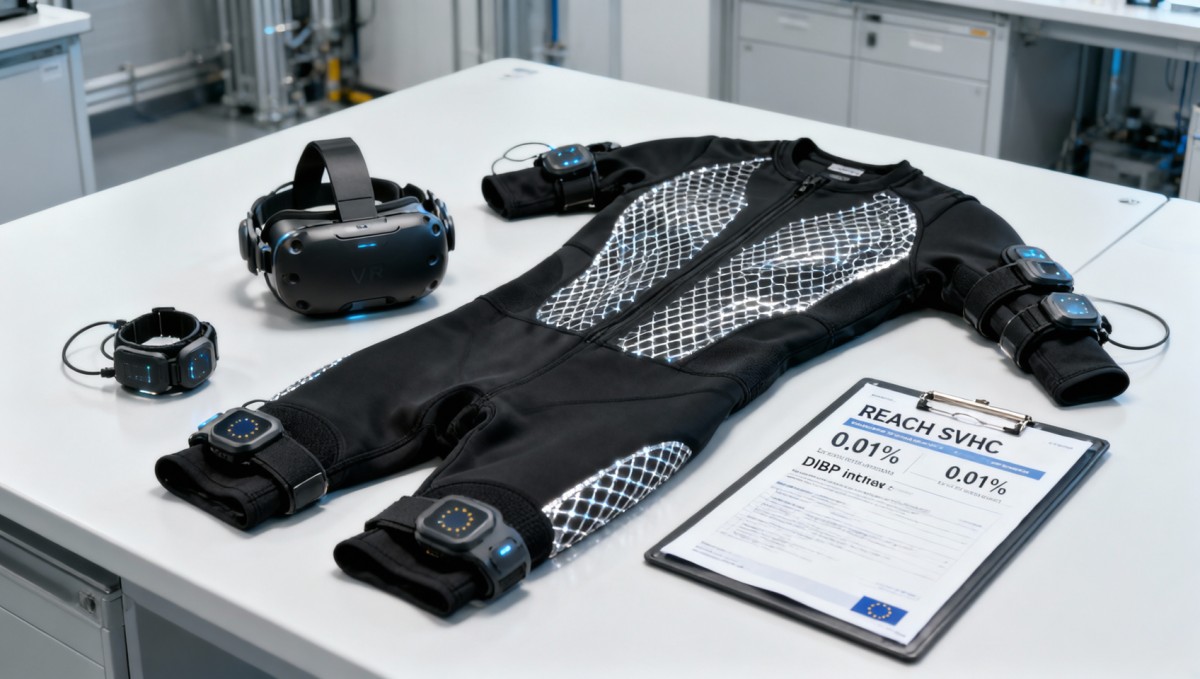
In summary, the ECHA draft represents a targeted regulatory development — not a broad-based disruption — with clear implications for specific segments of the intelligent sportswear value chain. It underscores the increasing convergence of chemical compliance and wearable technology standards. Currently, it is best understood as a preparatory milestone: one requiring focused assessment and phased readiness, rather than urgent overhaul.
Source: European Chemicals Agency (ECHA), Draft REACH Amendment Ref: ECHA-26-05-001, published 7 May 2026. Note: Final adoption status, effective date, and scope details remain pending; ongoing observation recommended.
Search News
Hot Articles
- Stationery & UniformsHow Schools Can Cut Printing Costs When Buying Ink Cartridges in BulkSep 21, 2026
- Jewelry Packaging & DisplayHow to Evaluate a Luxury Retail Packaging Supplier for Premium Brand ConsistencySep 20, 2026
- Commercial KitchenHow to Select a Spiral Dough Mixer for Bakery Batch Size and Dough HydrationSep 19, 2026
Popular Tags
Need ExpertConsultation?
Connect with our specialized leisureengineering team for procurementstrategies.
Recommended News
 Sep 15, 2026How to Choose Coin-Operated Pool Tables for Bars, Hotels, and Arcade VenuesCoin operated pool tables for bars, hotels, and arcades: compare sizes, payment systems, durability, service access, and revenue potential.● Theme Park Strategist
 Sep 08, 2026What to Look for in a Flight Simulator Chair Manufacturer for Commercial VR CentersChoose a flight simulator chair manufacturer that delivers durable, safe, customizable seating for commercial VR centers. Explore key sourcing criteria now.● Theme Park Strategist
 Aug 25, 2026What to Evaluate Before Buying Commercial Self Service Photo Booths for VenuesCommercial self service photo booths for venues: learn how to evaluate durability, software stability, branding flexibility, support, and total ROI before you buy.● Theme Park Strategist
 Aug 23, 2026How to Evaluate Wholesale Vending Machines for Multi-Location Business DeploymentWholesale vending machines for multi-location deployment require more than low unit cost. Learn how to compare reliability, payments, telemetry, and supplier support to scale smarter.● Theme Park Strategist
 Aug 17, 2026U.S. CPSC Urges Bilingual Warnings for Arcade and VR MachinesU.S. CPSC urges bilingual safety warnings for Arcade & VR Machines—learn what exporters, importers, and distributors must do now to avoid delays and returns.● Theme Park Strategist
 Aug 16, 2026EU Enforces EN IEC 62368-1:2026 Certification for Arcade and VR MachinesEU Enforces EN IEC 62368-1:2026 certification for arcade and VR machines, reshaping EU market access, customs clearance, and compliance planning for exporters and distributors.● Theme Park Strategist
 Aug 13, 2026UFLPA’s new guidelines take effect: Exports of Arcade and VR equipment face full-link labor compliance requirementsUFLPA’s new guide takes effect: Arcade and VR machine exports to the U.S. now face full-chain labor compliance checks. Discover key risks and action steps.● Theme Park Strategist
 Aug 12, 2026EU PPWR takes effect, Arcade and VR packaging incorporate heavy metal and PFAS restrictionsEU PPWR now applies to Arcade and VR packaging, tightening heavy metal and PFAS compliance. Learn how exporters can avoid delays, fines, and customs risks.● Theme Park Strategist
 Aug 11, 2026CPSC Sets Bilingual Labels for Arcade and VR ImportsCPSC bilingual labels for arcade and VR imports become mandatory on October 1, 2026. Learn the new English-Spanish warning rules, customs risks, and key compliance steps now.● Theme Park Strategist
 Aug 10, 2026EU Rule Takes Effect for Arcade & VR Machine ClearanceArcade & VR Machine clearance in the EU now depends on EN IEC 62368-1:2026+A11:2026 compliance. Learn what changed, who is affected, and how to avoid customs delays.● Theme Park Strategist
 Aug 09, 2026CPSC Requires New Labels for Arcade and VR ImportsCPSC requires new labels for Arcade and VR imports starting Oct 1, 2026. Learn the multilingual warning rules, compliance risks, and key steps exporters and buyers must take now.● Theme Park Strategist
 Aug 08, 2026EU Entry Rule Tightens for Arcade & VR MachinesArcade & VR Machines entering the EU now face stricter CE compliance under EN IEC 62368-1:2026+A11:2026. Learn the new rule, risks, and what exporters must do now.● Theme Park Strategist
 Aug 07, 2026CPSC Notice Tightens U.S. Entry Rules for Arcade and VR MachinesCPSC Notice Tightens U.S. Entry Rules for Arcade and VR Machines: learn the new labeling, FCC, UN38.3, and compliance document requirements before October 1, 2026.● Theme Park Strategist
 Aug 06, 2026EU Rule Takes Effect for CE-UKCA Labels on Arcade & VR MachinesArcade & VR Machines face new CE-UKCA label and ECPD filing rules in the EU and UK. Learn what manufacturers, importers, and distributors must do now to avoid delays.● Theme Park Strategist
 Aug 05, 2026CPSC Recalls Arcade and VR Machines Over UL 62368-1CPSC recalls arcade and VR machines over UL 62368-1 non-compliance. Learn how this 2026 safety action may affect imports, distribution, customs clearance, and market access.● Theme Park Strategist
 Aug 02, 2026EU Sets New Certification Rule for Arcade and VR MachinesArcade and VR Machines face a new EU certification rule from Oct 1, 2026. Learn how EN IEC 62368-1:2026+A11:2026 affects CE marking, customs clearance, and market access.● Theme Park Strategist
 Aug 01, 2026CPSC Moves to Require Bilingual Warnings on Arcade and VR MachinesCPSC bilingual warnings for Arcade and VR Machines may reshape U.S. import compliance. Learn how English-Spanish labels affect packaging, customs risk, and shipment readiness.● Theme Park Strategist
 Jul 31, 2026EU Sets EN IEC 62368-1:2025 Rule for Arcade and VR MachinesEU Sets EN IEC 62368-1:2025 Rule for Arcade and VR Machines. Learn the new EU compliance deadlines, safety updates, and key actions for manufacturers, OEMs, and distributors.● Theme Park Strategist
 Jul 30, 2026CPSC Sets New Warning Label Rule for Arcade & VR MachinesCPSC sets a new warning label rule for Arcade & VR Machines effective August 15, 2026. Learn key compliance risks, multilingual label requirements, and shipment actions now.● Theme Park Strategist
 Jul 29, 2026EU Enforces New Safety Standard for Arcade and VR MachinesEU Enforces New Safety Standard for Arcade and VR Machines: learn how EN IEC 62368-1 affects CE compliance, customs clearance, and EU market access for exporters and buyers.● Theme Park Strategist
 Jul 28, 2026CPSC Sets ASTM F3472-26 Rule for Arcade & VR ImportsCPSC ASTM F3472-26 rule reshapes Arcade & VR imports to the U.S. Learn key compliance deadlines, certification risks, and what exporters, OEM/ODM suppliers, and buyers should do now.● Theme Park Strategist
 Jul 27, 2026EU Rule Takes Effect for Arcade & VR Machine CybersecurityEU Rule Takes Effect for Arcade & VR Machine Cybersecurity: learn how EN IEC 62443-3-3:2025 affects compliance, customs clearance, sales continuity, and supplier planning in the EU market.● Theme Park Strategist
 Jul 25, 2026CPSC Sets Bilingual Warning Rule for Arcade and VR ImportsCPSC bilingual warning rule for arcade and VR imports takes effect August 1, 2026. Learn how OEM/ODM exporters can avoid CBP delays, relabel shipments, and protect U.S. delivery timelines.● Theme Park Strategist
 Jul 24, 2026EU Enforces New Safety Standard for Arcade and VR MachinesEU Enforces New Safety Standard for Arcade and VR Machines: learn how EN IEC 62368-1:2026+A11:2026 reshapes EU compliance, CE documentation, testing timelines, and export readiness.● Theme Park Strategist