Where Musical Instruments Wholesale Prices Vary the Most
Musical instruments wholesale prices vary the most where three factors overlap: labor intensity, material sensitivity, and inconsistent supplier capability. In practical terms, the biggest price swings usually appear in acoustic pianos, string instruments, school-band instruments, and mid-to-high-end guitars, especially when buyers compare sourcing across China, Southeast Asia, Europe, and the United States. For procurement teams, distributors, and project evaluators, the real issue is not simply finding the lowest quote. It is identifying where price differences reflect genuine differences in build quality, compliance, consistency, and after-sales reliability.
For buyers evaluating a musical instruments manufacturer, regional price variation can create opportunity or risk. A lower unit cost may improve margin, but hidden costs in tuning stability, packaging damage, certification gaps, or delayed replenishment can quickly erase that advantage. This guide explains where musical instruments wholesale prices vary the most, why those gaps exist, and how to assess suppliers with greater confidence.
What Buyers Really Need to Know About Wholesale Price Variation
The core search intent behind this topic is commercial decision-making. Readers are usually not looking for a general overview of the music industry. They want to know which instrument categories show the largest wholesale price differences, which sourcing markets are typically more cost-competitive, and how to judge whether a price gap is justified.
That matters because wholesale pricing in musical instruments is rarely uniform. Two products that look similar on a quotation sheet may differ significantly in material grade, finish tolerance, intonation accuracy, durability, certification status, and packaging quality. For retailers, schools, entertainment venues, and distributors, these differences directly affect return rates, customer satisfaction, and long-term procurement cost.
In short, the most useful way to analyze wholesale prices is not by asking, “Which country is cheapest?” but by asking, “In which categories do regional supplier differences have the biggest impact on total value?”
Where Musical Instruments Wholesale Prices Usually Vary the Most
Not all instrument types fluctuate equally. The largest wholesale price gaps tend to appear in products where craftsmanship, raw materials, and setup precision strongly affect final performance.
1. Acoustic pianos and upright pianos
Pianos often show some of the widest price dispersion in the wholesale market. This is because pricing reflects far more than appearance. Soundboard material, action components, hammer quality, cabinet finishing, humidity resistance, and tuning stability all influence cost. A low-price factory model may be acceptable for basic institutional use, while a higher-priced instrument may offer better tonal consistency and longer service life. Shipping and installation also heavily influence landed cost for this category.
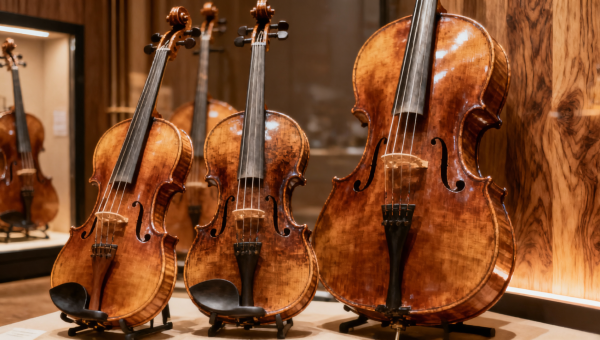
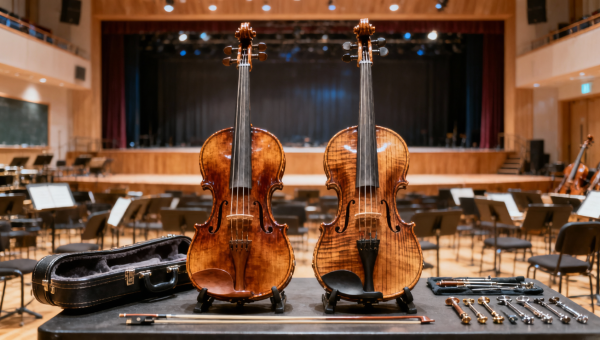
2. Violins, cellos, and other bowed strings
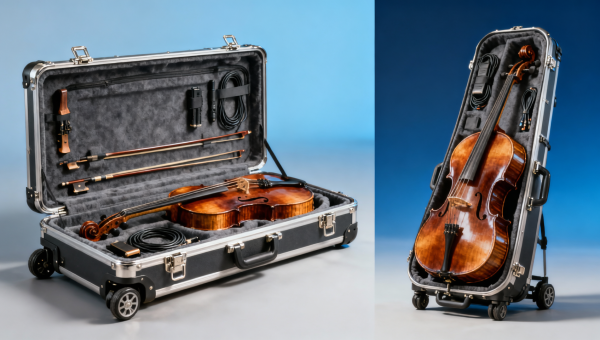
String instruments vary widely because wood selection, carving skill, varnish method, and setup quality differ dramatically across suppliers. Entry-level student instruments may be aggressively priced, but bridge fitting, fingerboard quality, peg performance, and bow durability often separate low-cost supply from dependable commercial stock. For importers and school suppliers, these differences can determine how much post-delivery adjustment is required.
3. Brass and woodwind instruments
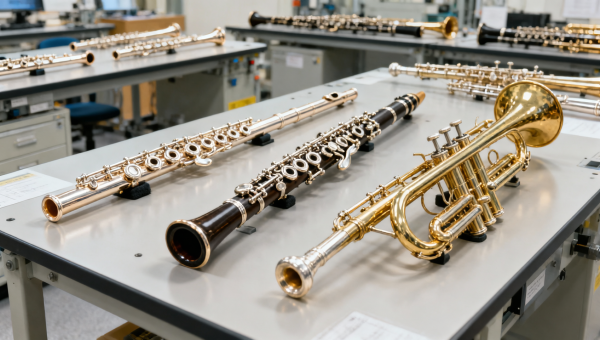
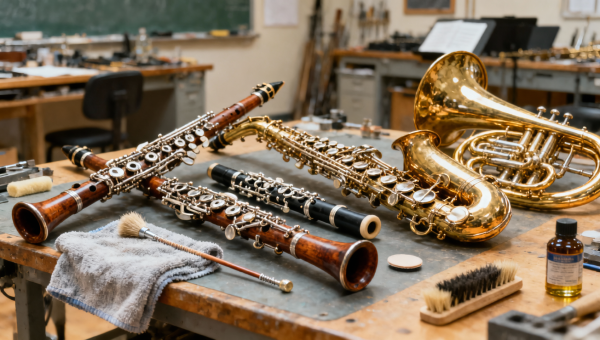
Wholesale prices in school-band categories can swing substantially, especially between basic OEM production and better-controlled manufacturing lines. The key cost drivers include metal thickness, pad quality, valve or key mechanism precision, plating consistency, and leak testing. Buyers sourcing for education projects should pay particular attention here, because repair frequency can make an initially cheap instrument more expensive over time.
4. Mid-range and premium guitars
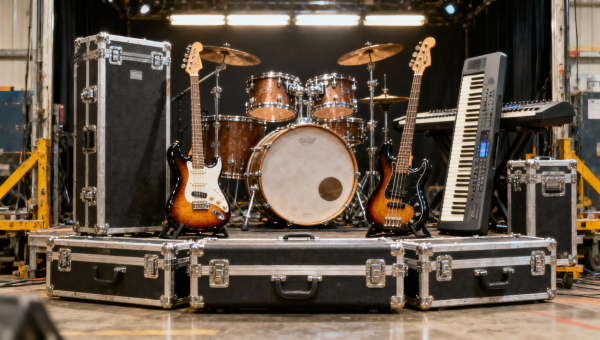
Guitars, especially acoustic and electric models beyond the entry level, often show major regional and supplier-based price variation. Tonewoods, electronics, fretwork precision, neck stability, finishing labor, and branding all affect cost. A musical instruments manufacturer offering OEM guitars at a low price may still differ greatly from a supplier with stronger QC and better consistency in neck alignment and fret finishing.
5. Percussion and accessories
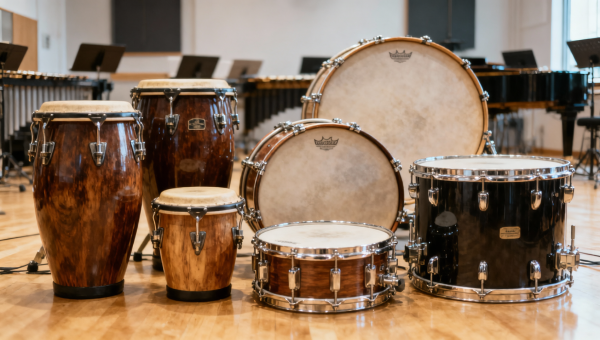
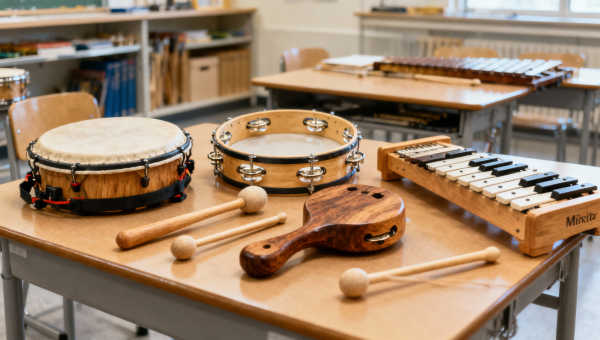
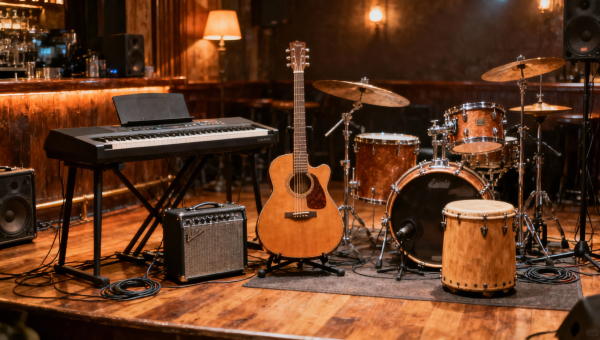
This category can also vary, but usually with less dramatic spread than pianos or strings unless custom materials or branded components are involved. For basic percussion, packaging efficiency and scale production often matter more than craftsmanship. As a result, buyers may find more predictable pricing in standard drum hardware, stands, or school percussion sets than in handcrafted melodic instruments.
Which Regions Show the Biggest Pricing Differences
Regional wholesale differences are most visible when buyers compare manufacturing ecosystems rather than individual factories.
China
China remains one of the broadest and most price-diverse sourcing markets for musical instruments wholesale. Buyers can find very low-cost entry-level production as well as increasingly capable mid-range and premium OEM/ODM suppliers. The advantage is supplier depth and manufacturing scale. The challenge is that factory capability varies sharply, so quotation differences may reflect major quality differences rather than simple margin adjustments.
Southeast Asia
Vietnam, Indonesia, and nearby markets are often competitive in labor-intensive categories, particularly guitars and selected wooden instruments. In some segments, these countries offer an attractive balance between price and craftsmanship. However, component sourcing, production capacity, and lead-time reliability may differ from China, especially for highly customized orders.
Europe
European instruments typically command higher wholesale pricing, especially in orchestral strings, premium pianos, and specialist brass or woodwinds. These prices often reflect heritage manufacturing, stricter production standards, stronger brand value, and perceived tonal quality. For distributors targeting premium retail or conservatory-level use, the higher cost may be commercially justified. For budget-led institutional procurement, it may not be.
United States
US-made instruments often show higher pricing due to labor cost, domestic compliance expectations, and brand positioning. In categories such as guitars, boutique percussion, and selected brass instruments, buyers may see significant premiums tied to reputation and market demand. These products can make sense where branding and resale value matter, but they are less likely to fit cost-sensitive volume procurement.
Why the Same Instrument Category Can Have Extremely Different Quotes
One of the biggest mistakes in sourcing is assuming all wholesale quotations are directly comparable. In reality, the quoted price may include or exclude several important variables.
Material grade
Wood species, metal composition, electronics quality, felt, strings, pads, and finishing materials all affect price. A cheaper quote may use substitute materials that reduce durability or tonal performance.
Manufacturing process
Hand-finishing, precision machining, seasoning time for wood, polishing, assembly inspection, and final setup all add labor cost. This is why labor-intensive instruments often show the largest price spread.
Quality control standards
Factories with stronger QC procedures usually have lower defect rates and better batch consistency. Their unit prices may be higher, but their total commercial value is often stronger for distributors and institutional buyers.
Certification and compliance
Depending on the destination market, buyers may require chemical compliance, wood documentation, safety labeling, or packaging standards. A quote that excludes these requirements may seem competitive but create import or distribution risk later.
OEM/ODM customization
Private label work, custom finishes, logo application, packaging design, accessory bundles, and special specifications all influence price. Distributors comparing suppliers should always separate standard catalog pricing from customized project pricing.
Order volume and replenishment model
MOQ levels, container optimization, spare-part support, and replenishment speed can influence actual procurement economics. A lower initial quote is less attractive if it comes with unstable future supply.
How Procurement Teams Should Judge Whether a Lower Price Is Actually Better
For business buyers, the right comparison framework is total sourcing value, not headline unit cost. The following questions are usually more useful than chasing the cheapest offer.
Will the instrument perform consistently across batches?
This matters especially for school programs, chain retail, and distributor networks. Inconsistent quality creates operational issues, customer complaints, and warranty burden.
How much post-delivery adjustment is needed?
Low-cost violins may require setup work. Budget wind instruments may need repairs before deployment. Cheap guitars may need fret correction or neck adjustment. These hidden costs should be built into the evaluation.
What is the real landed cost?
Freight, import duties, packaging protection, breakage risk, and warehousing can significantly change the apparent price advantage of one sourcing region over another.
Can the supplier support scaling?
A distributor may start with one test order, but long-term success depends on whether the supplier can maintain consistency, documentation, and lead times as volume increases.
Does the price align with target market positioning?
A budget institutional project and a premium retail line should not use the same supplier logic. A higher-priced manufacturer may be the smarter choice if your customers expect better appearance, tuning, finish quality, or brand presentation.
High-Variation Categories Need More Careful Supplier Audits
When price variation is large, supplier verification becomes more important. This is particularly true in pianos, strings, guitars, and school-band instruments.
Buyers should request detailed specifications rather than broad product names. For example, asking for a “student violin” is not enough. Request the wood type, varnish approach, fingerboard material, bridge setup, included accessories, and packaging standard. The same logic applies to guitars, brass instruments, and pianos.
It is also wise to review:
- Factory specialization by instrument category
- Quality control checkpoints and defect handling process
- Experience with export markets and compliance documentation
- Sample consistency across repeat orders
- After-sales support and spare-part availability
- OEM/ODM project management capability
For distributors and procurement teams, this level of review often explains why one musical instruments manufacturer quotes 20% to 40% above another. The difference may reflect stronger process control rather than excessive pricing.
Best Use Cases for Low-Cost vs Higher-Cost Wholesale Sourcing
Not every buying scenario requires premium manufacturing. The right sourcing choice depends on commercial goals.
Low-cost sourcing is often suitable for:
- Entry-level promotional retail lines
- Short-cycle seasonal inventory
- Basic beginner products with limited performance expectations
- Price-sensitive emerging markets
Higher-cost sourcing is often more suitable for:
- Institutional procurement where durability matters
- Premium retail channels
- Music education projects needing consistent playability
- Brand-building private label programs
- Long-term distributor partnerships with lower return tolerance
The key takeaway is that wide wholesale price variation is not automatically a problem. It creates choice. But buyers need to match the price level with the intended application and expected total cost of ownership.
How to Compare Musical Instruments Wholesale Offers More Accurately
To make better decisions, procurement teams should standardize comparison criteria. A simple like-for-like evaluation can prevent costly misunderstandings.
- Define the exact commercial use case: school, retail, hospitality, project installation, or distribution.
- List the required specifications in detail, including materials, finish, setup, accessories, and packaging.
- Separate standard product quotes from OEM/ODM quotes.
- Ask for compliance documentation relevant to the destination market.
- Evaluate sample quality before comparing final price.
- Estimate landed cost, not just factory price.
- Review supplier capacity for repeat orders and after-sales support.
This process is especially important in categories where wholesale prices vary the most. A disciplined comparison method helps buyers avoid false savings and negotiate with more confidence.
Conclusion
Musical instruments wholesale prices vary most in categories where craftsmanship, material quality, and setup precision shape performance and durability. In real sourcing terms, the biggest differences are usually found in pianos, bowed strings, brass and woodwinds, and mid-range to premium guitars. Regional gaps between China, Southeast Asia, Europe, and the United States can be substantial, but the lowest quote is not always the best commercial choice.
For information researchers, procurement professionals, business evaluators, and distributors, the smartest approach is to treat price variation as a signal. It often reveals differences in quality control, supplier maturity, compliance readiness, and long-term reliability. When buyers compare suppliers through total value rather than unit price alone, they are far more likely to select a musical instruments manufacturer that supports margin, consistency, and sustainable growth.
Search News
Hot Articles
- Pro Stage AudioFIFA Adopts Chinese Mini-LED Displays for 2026 World Cup VAR SystemApr 24, 2026
- Outdoor RidesChina FA Warns Nanjing City Over Fan Conduct; ISO 20785 Compliance AcceleratesApr 24, 2026
- Pro Stage AudioFan Zhendong Visits Silicon Valley as MLTT Investor, AI Ping-Pong Tech Draws US InterestApr 24, 2026
Popular Tags
Need ExpertConsultation?
Connect with our specialized leisureengineering team for procurementstrategies.
Recommended News
 Apr 23, 2026Music Accessories Buyers Should Compare FirstMusic accessories buyers should compare quality, compatibility, and compliance first. Explore sourcing tips for hotel equipment, educational supplies, amusement equipment, and sensory playground projects.● Pro Audio Engineer
 Apr 23, 2026How to Source Reliable Music AccessoriesMusic accessories sourcing guide for buyers in commercial furniture, hotel equipment, educational supplies, and amusement equipment—learn how to verify quality, compliance, and reliable suppliers.● Pro Audio Engineer
 Apr 23, 2026Cheap Music Accessories Often Cost More LaterMusic accessories may seem cheap, but hidden costs rise fast. Explore smarter sourcing for hotel equipment, educational supplies, amusement equipment, sensory playground and playground safety.● Pro Audio Engineer
 Apr 23, 2026Music Accessories That Improve Classroom Sound SetupMusic accessories improve classroom sound setup with safer cable control, clearer audio, and durable solutions that pair with educational supplies, commercial furniture, and playground safety planning.● Pro Audio Engineer
 Apr 25, 2026Instrument Cables That Reduce Signal LossInstrument cables that reduce signal loss for live venues, leisure park and theme park rides. Explore durable specs for clear audio, plus sourcing insights on custom furniture, catering equipment, soundproofing materials and inclusive playground projects.● Pro Audio Engineer
 Apr 22, 2026Which Instrument Cables Sound BestWhich instrument cables sound best? Discover how capacitance, shielding, and durability affect performance, plus sourcing tips for instrument cables and related commercial needs.● Pro Audio Engineer
 Apr 22, 2026Why String Instruments Can Look Similar but Sound Very DifferentString instruments may look alike yet sound vastly different. Explore sourcing insights across musical instruments, plus comparisons with wind instruments and percussion instruments.● Pro Audio Engineer
 Apr 22, 2026String Instruments: Solid Wood or Laminate for Long-Term Use?String instruments guide: compare solid wood vs laminate for long-term use, durability, tone, and sourcing value across musical instruments. Click for smarter B2B buying insights.● Pro Audio Engineer
 Apr 22, 2026What Affects Tone Consistency in Student Wind Instruments?Wind instruments buying guide: discover what affects tone consistency in student musical instruments, with insights comparing percussion instruments and string instruments for smarter school sourcing.● Pro Audio Engineer
 Apr 22, 2026Wind Instruments That Need More Maintenance Than ExpectedWind instruments maintenance guide for buyers: compare musical instruments, string instruments and percussion instruments to reduce service costs and source smarter.● Pro Audio Engineer
 Apr 22, 2026Common Tuning Problems in Percussion Instruments and Their CausesPercussion instruments tuning problems explained for buyers of musical instruments, with practical tips on comparing percussion instruments, string instruments, and wind instruments for reliable commercial sourcing.● Pro Audio Engineer
 Apr 22, 2026Percussion Instruments That Handle Heavy Use Better in ClassroomsPercussion instruments built for classrooms: compare durable musical instruments, from percussion instruments to wind instruments and string instruments, for safer, longer-lasting school use.● Pro Audio Engineer
 Apr 22, 2026What Shortens the Lifespan of Musical Instruments in Daily Use?Musical instruments wear out faster from humidity, poor storage, and rough handling. Learn how string instruments, wind instruments, and percussion instruments last longer with smarter B2B care.● Pro Audio Engineer
 Apr 22, 2026Musical Instruments With the Strongest School Market DemandMusical instruments with strong school demand: compare percussion instruments, wind instruments, and string instruments to find durable, curriculum-ready solutions for smarter school sourcing.● Pro Audio Engineer
 Apr 25, 2026How to Compare a Musical Instruments Manufacturer FairlyCompare a musical instruments manufacturer fairly with practical tips on musical instruments wholesale, musical instruments for schools, quality, compliance, lead times, and service.● Pro Audio Engineer
 Apr 25, 2026Why Lead Time Matters When Choosing a Musical Instruments ManufacturerLearn why lead time is critical when choosing a musical instruments manufacturer. Discover smarter sourcing for musical instruments wholesale and musical instruments for schools.● Pro Audio Engineer
 Apr 25, 2026Musical Instruments for Schools: What Lasts in Daily Use?Musical instruments for schools: discover what lasts in daily use, how a trusted musical instruments manufacturer and musical instruments wholesale partner help schools cut costs and buy smarter.● Pro Audio Engineer
 Apr 25, 2026Should Schools Rent or Buy Musical Instruments Today?Musical instruments for schools: learn when to rent or buy, compare total costs, and choose a trusted musical instruments manufacturer or musical instruments wholesale partner today.● Pro Audio Engineer
 Apr 25, 2026Where Musical Instruments Wholesale Prices Vary the MostMusical instruments wholesale prices vary most by region, quality, and supplier strength. Compare a musical instruments manufacturer, school instruments, and sourcing risks before you buy.● Pro Audio Engineer
 Apr 25, 2026Low MOQ or Better Margins? A Real Look at Musical Instruments WholesaleMusical instruments wholesale explained: compare low MOQ vs better margins, choose the right musical instruments manufacturer, and source musical instruments for schools with smarter profits.● Pro Audio Engineer
 Apr 21, 2026Choosing musical instruments for bands in small venuesMusical instruments for bands in small venues: learn how buyers choose compact, durable setups with better sound control, lower costs, and stronger audience appeal.● Pro Audio Engineer
 Apr 24, 2026Musical instruments for bands that hold tuning on the roadMusical instruments for bands that hold tuning on the road: compare road-ready gear, supplier credibility, and total cost. Ideal for buyers, distributors, and entertainment procurement teams.● Pro Audio Engineer
 Apr 20, 2026Music Accessories Often Overlooked Until They Start Causing ProblemsMusic accessories often cause hidden issues across musical instruments, percussion instruments, wind instruments, string instruments, keyboard instruments, orchestral instruments, music stands, instrument cables, and pro audio equipment.● Pro Audio Engineer
 Apr 20, 2026When Orchestral Instruments Need Custom Cases and Why It MattersMusical instruments and orchestral instruments need custom cases to protect string instruments, wind instruments, percussion instruments, and keyboard instruments during transport. Learn when buyers should upgrade for safer logistics.● Pro Audio Engineer