When do speakon cables bulk orders cut costs?
When do speakon cables bulk orders cut costs?
For procurement teams managing venues, rental fleets, schools, or commercial audio projects, the decision to place speakon cables bulk orders often comes down to timing, volume, and supplier reliability.
Cost savings are not only about a lower unit price. They also depend on freight efficiency, consistent specifications, reduced downtime, and long-term inventory planning.
This guide explains when bulk purchasing becomes financially advantageous, and how buyers can evaluate quality, compliance, and total landed cost before committing to larger orders.
Basic definition and cost logic
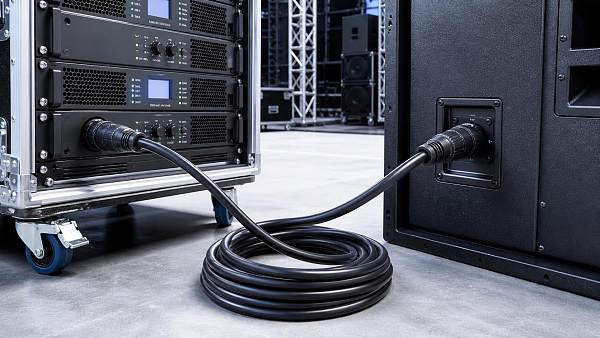
Speakon cables are locking speaker cables used for professional audio systems. They connect power amplifiers to passive loudspeakers in secure, high-current applications.
A speakon cables bulk order usually means consolidated purchasing across multiple lengths, gauges, connector types, and jacket specifications.
The order may include 2-core, 4-core, or 8-core cables, depending on amplifier channels, speaker arrays, and installation layouts.
Bulk buying cuts costs when fixed expenses are spread across more units. These expenses include tooling, testing, packaging, documentation, and international freight.
The real savings appear when unit price reductions do not compromise conductor quality, connector durability, or electrical safety.
For commercial audio, failed cables can cost more than the original purchase. A lower invoice price is not always a lower operating cost.
That is why speakon cables bulk decisions should be assessed through total landed cost, not only factory price.
Industry background and current buying signals
Commercial audio demand is shaped by live events, hospitality venues, education facilities, worship spaces, theme parks, and entertainment retail.
These environments require repeatable cable performance. Standardized cable inventory supports faster deployment, simpler maintenance, and fewer mismatched components.
The global sourcing environment has also changed. Freight volatility, copper pricing, and lead-time uncertainty make planned buying more valuable.
In this context, speakon cables bulk purchasing becomes attractive when usage is predictable and specifications are stable.
The strongest buying signal is repeated consumption. If replacement orders occur every quarter, bulk planning deserves financial review.
Another signal is project standardization. When a site design is duplicated, cable requirements become easier to forecast.
Volume thresholds that usually create savings
There is no universal quantity where speakon cables bulk orders become cheaper. The threshold depends on cable length, connector grade, and shipping mode.
However, savings often appear when the order moves from parcel shipment to consolidated carton, pallet, or sea freight.
Short cables may need higher quantities to justify bulk pricing. Longer cables use more copper, so price breaks can appear earlier.
Custom labeling, branded packaging, and special jackets also influence minimum order quantities. These costs become efficient only at scale.
- Small replenishment: useful for urgent gaps, but usually weaker on freight efficiency.
- Medium batch: often suitable for standardized venues, schools, or service inventories.
- Large batch: effective when multiple sites share one cable specification.
- Annual program: best when demand, packaging, and lead times are predictable.
A speakon cables bulk program should avoid excessive variety. Too many lengths reduce manufacturing efficiency and complicate inventory control.
A practical approach is to standardize around several core lengths, such as 1.5 m, 3 m, 5 m, 10 m, and 20 m.
This reduces dead stock and helps suppliers quote more accurately.
Where the main cost reductions come from
Bulk savings are usually built from several smaller advantages. The combined effect can be meaningful across a commercial audio operation.
The first advantage is material planning. Suppliers can purchase cable, connectors, sleeves, and packaging with better forecasting.
The second advantage is production efficiency. Repeated cable lengths reduce changeover time and inspection complexity.
The third advantage is logistics. Freight per cable drops when cartons are consolidated and loading space is used efficiently.
The fourth advantage is administration. One planned order can replace many small purchase cycles and repeated approval processes.
For many operations, the largest hidden gain is fewer emergency purchases. Rush buying often removes negotiation leverage.
A planned speakon cables bulk order replaces reactive spending with structured inventory control.
Quality factors that must not be traded away
Cost reduction only matters if the cables remain suitable for demanding audio use. Cheap failure is expensive in commercial spaces.
Conductor material is a primary factor. Oxygen-free copper is often preferred for lower resistance and stable current transfer.
Copper-clad aluminum may reduce price, but it can affect durability, resistance, and long-run performance.
Cable gauge must match power load and distance. Long runs usually need thicker conductors to reduce power loss.
Connector quality also matters. Genuine or high-grade compatible locking connectors should fit securely and withstand repeated handling.
Jacket material should match the environment. Touring applications need flexibility, abrasion resistance, and good strain relief.
- Check conductor material, strand count, and gauge tolerance.
- Confirm connector pin configuration, such as NL2 or NL4 style wiring.
- Review pull strength, bend performance, and jacket flexibility.
- Request continuity testing and polarity verification for each batch.
- Confirm packaging labels show length, core count, and gauge clearly.
A reliable speakon cables bulk supplier should provide samples before mass production. Samples should represent the final batch configuration.
Approval should include physical handling, amplifier testing, and connector mating checks.
Typical applications and purchasing patterns
Different audio environments justify different order structures. The best speakon cables bulk plan matches usage intensity and storage capacity.
Rental environments often consume more cables because handling is rough and equipment moves constantly.
Installed systems may buy less frequently, but they need precise specifications and dependable replacement compatibility.
For multi-location projects, speakon cables bulk purchasing can align cable appearance, labeling, and technical standards.
Total landed cost evaluation
Factory price is only one line in the buying equation. Total landed cost gives a clearer picture.
It includes product price, packaging, testing, freight, duties, payment fees, warehousing, and possible replacement costs.
A speakon cables bulk quote should separate these cost elements whenever possible. Transparent quotes make supplier comparison more accurate.
Payment terms also affect cost. Large orders may require deposits, milestone payments, or credit arrangements.
Storage should not be ignored. Overstock can tie up capital and increase handling damage if cartons are poorly managed.
- Compare unit cost after freight, not before freight.
- Estimate annual consumption using past replacement records.
- Include failure rates and warranty response in cost modeling.
- Check whether mixed lengths affect the quoted price break.
- Confirm customs codes and documentation before shipment.
The best result occurs when product savings, freight savings, and operational savings all appear together.
Supplier reliability and compliance checks
Supplier capability determines whether speakon cables bulk ordering stays efficient after the first shipment.
A capable supplier should document specifications clearly. Drawings, wiring diagrams, labels, tolerances, and test procedures should be available.
Compliance requirements vary by market. Common checks may involve RoHS, REACH, CE-related documentation, and fire performance where relevant.
For public venues, cable materials may need additional review. Local regulations should guide final acceptance.
Batch traceability is valuable. It helps identify production dates, component lots, and any corrective action needs.
- Ask for a pre-production sample before confirming mass output.
- Request batch inspection reports with continuity and polarity results.
- Define acceptable length tolerance and connector orientation.
- Set packaging rules for cartons, inner bags, and cable ties.
- Agree on replacement handling before defects occur.
A speakon cables bulk order should not proceed on price alone. Technical clarity protects both delivery quality and long-term usability.
Practical timing for bulk purchasing
Timing is often the difference between savings and excess inventory. Bulk buying works best before predictable demand peaks.
Seasonal events, academic terms, exhibition calendars, and hotel renovation phases can all guide order timing.
Ordering too late may force air shipment. Ordering too early may create storage costs and specification changes.
A rolling forecast is useful. It can split annual demand into scheduled releases instead of one oversized delivery.
For large projects, speakon cables bulk purchasing can be tied to installation phases. This reduces site clutter and inventory confusion.
For rental fleets, reorder points should consider losses, repairs, and peak event density.
Risks to avoid before committing
Bulk purchasing creates leverage, but it also magnifies mistakes. A wrong specification can leave hundreds of unusable cables.
Avoid unverified connector substitutions. Slight dimensional differences may cause poor locking or unreliable contact.
Avoid unclear conductor descriptions. Terms like “copper color” or “premium material” are not enough for technical purchasing.
Avoid over-ordering unusual lengths. Specialized cables are harder to reuse across different systems.
Avoid accepting vague lead times. Commercial audio schedules often leave little room for late accessories.
A speakon cables bulk contract should define specifications, shipment dates, inspection rights, packaging, and after-sales responsibilities.
Actionable next steps
Start with a cable consumption audit. Review past purchases, failure records, lost inventory, and upcoming project schedules.
Then build a standard cable matrix. Include length, gauge, core count, connector type, jacket color, labeling, and packaging.
Request quotes in tiers. Compare small, medium, and large quantities using total landed cost.
Approve samples before confirming production. Keep one approved sample as a reference for future inspections.
Finally, negotiate scheduled releases if storage is limited. This keeps the benefit of speakon cables bulk pricing while reducing inventory pressure.
Bulk orders cut costs when demand is repeatable, specifications are controlled, and suppliers can prove consistent production quality.
For global commercial sourcing, the strongest decision is not simply buying more. It is buying the right specification at the right scale.
GCT supports structured sourcing decisions by connecting technical requirements, supplier capability, and commercial cost analysis across professional audio supply chains.
Search News
Hot Articles
Popular Tags
Need ExpertConsultation?
Connect with our specialized leisureengineering team for procurementstrategies.
Recommended News
 Oct 15, 2026Designing Theater Sound Systems for Clear Dialogue and Even Audience CoverageOptimize stage sound for theaters with practical tips on acoustics, speaker placement, and tuning. Discover how to deliver clear dialogue and consistent coverage across audience seating.● Pro Audio Engineer
 Oct 16, 2026Are Standard Acoustic Panels Enough for Performance Venues?Are standard acoustic panels enough for performance venues? Discover their limits, explore bass control and diffusion, and learn how to choose treatments that improve sound without wasting budget.● Pro Audio Engineer
 Sep 30, 2026How to Choose an Aluminum Projector Ceiling Mount for Load, Drop, and Ceiling TypeChoose an aluminum projector ceiling mount with confidence. Learn how load capacity, drop length, ceiling structure, safety retention, and service access shape a reliable commercial AV installation.● Pro Audio Engineer
 Sep 26, 2026How to Choose Dynamic Microphones for Vocals in Live Stage SettingsDynamic microphones for vocals: learn how to match polar patterns, feedback control, durability, and clarity to live stage needs for reliable, professional sound.● Pro Audio Engineer
 Sep 07, 2026How to Choose Wall Mount Speakers for Clear Audio in Commercial SpacesWall mount speakers for commercial spaces: learn how to optimize coverage, SPL, directivity, installation, and system design for clear, reliable audio.● Pro Audio Engineer
 Sep 03, 2026How to Choose Locking Speakon Speaker Cables for Reliable Live Sound ConnectionsLocking Speakon speaker cables: learn how to select the right gauge, connector pinout, strain relief, and durable construction for reliable live sound connections.● Pro Audio Engineer
 Sep 08, 2026Is It Worth Upgrading a Stage Sound System Mid-Project?Is it worth upgrading stage sound systems mid-project? Discover how to assess performance gaps, costs, compatibility, and long-term venue value.● Pro Audio Engineer
 Sep 04, 2026Can AV Systems Be Retrofitted Into Older Commercial Buildings?Can AV integration be retrofitted into older commercial buildings? Discover practical strategies for reliable, code-aware AV upgrades with minimal disruption.● Pro Audio Engineer
 Jul 17, 2026How to Choose a Crossover Networks Supplier: Key Specs, Quality Checks, and OEM FactorsFind the right crossover networks supplier with this practical guide to key specs, quality checks, OEM factors, and supply chain risks for better audio performance and sourcing confidence.● Pro Audio Engineer
 Jul 16, 2026How to Evaluate ODM Services for Pro Audio: Design, Certification, and Production CapabilitiesODM services for pro audio: learn how to assess design depth, certification readiness, and production strength to choose a reliable partner and launch better audio products with less risk.● Pro Audio Engineer
 Jul 15, 2026JETRO Flags Modular, Low-Power Shift in Pro Stage AudioPro Stage Audio buyers in Japan are shifting fast: JETRO flags modular amplifiers, IP65 line arrays, low standby power, and JIS compliance as key to channel entry.● Pro Audio Engineer
 Jul 15, 2026Paper Speaker Cones Explained: How Cone Weight and Stiffness Affect SoundPaper speaker cones explained: discover how cone weight and stiffness shape sensitivity, clarity, breakup control, and real-world speaker performance for smarter audio sourcing.● Pro Audio Engineer
 Jul 15, 2026Performance Venues Compliance Checklist: Fire Safety, Accessibility, and Crowd RulesPerformance venues compliance checklist covering fire safety, accessibility, and crowd rules. Learn how to reduce delays, improve approvals, and open safer, more resilient venues.● Pro Audio Engineer
 Jul 14, 2026Japan Adds EMC Immunity Test for Stage AmplifiersJapan Adds EMC Immunity Test for Stage Amplifiers: learn how Japan’s 2026 JIS update affects EMC testing, JIS marking, certification timing, and market access for exporters.● Pro Audio Engineer
 Jul 13, 2026CISCE 2026 Adds Pro Stage Audio ZoneCISCE 2026 Adds Pro Stage Audio Zone as free overseas pre-registration opens. Explore key updates for pro audio suppliers, distributors, and system integrators before the Shanghai expo.● Pro Audio Engineer
 Jul 12, 2026Japan Tightens Pro Stage Audio Efficiency Limits Under JIS C 8105-2026Japan Tightens Pro Stage Audio Efficiency Limits Under JIS C 8105-2026: learn how new PSE compliance rules reshape market access, product eligibility, and shipment planning in Japan.● Pro Audio Engineer
 Jul 12, 2026How to Choose Low Profile Ceiling Speakers for Hotels, Offices, and Retrofit ProjectsLow profile ceiling speakers for hotels, offices, and retrofit projects: learn how to compare depth, coverage, compliance, and installation factors to choose the right fit.● Pro Audio Engineer
 Jul 11, 2026Japan Tightens JIS C 8105-2026 for Pro AudioJapan Tightens JIS C 8105-2026 for Pro Audio: learn how stricter standby power, PSE diamond mark rules, and the 2026 deadline impact exports, compliance, and market access.● Pro Audio Engineer
 Jul 10, 2026JETRO Q2 Outlook Signals Higher Stage Audio DemandJETRO Q2 Outlook signals higher stage audio demand in Japan, with 37% procurement growth and stricter PSE Annex D compliance. See what importers, manufacturers, and rental channels must act on now.● Pro Audio Engineer
 Jul 10, 2026How to Choose Wall Mount Speakers for Restaurants by Layout, Coverage, and SPLWall mount speakers for restaurants should match layout, coverage, and SPL. Learn how to choose the right setup for even sound, guest comfort, and reliable performance.● Pro Audio Engineer
 Jul 09, 2026JIS T 9001:2026 Adds Mandatory AI Noise LabelsJIS T 9001:2026 adds mandatory AI noise labels for pro audio gear from October 2026. Learn how it impacts compliance, testing, exports, and product launches.● Pro Audio Engineer
 Jul 06, 2026Improving Sound Reinforcement Speech Clarity: Key Causes of Muddiness and How to Fix ThemSound reinforcement speech clarity starts with identifying reverberation, coverage, noise, and timing issues. Discover practical fixes that make announcements clearer and commercial spaces perform better.● Pro Audio Engineer
 Jul 05, 2026Saudi Rule Adds Arabic UI Requirement for Pro Audio ImportsSaudi Rule Adds Arabic UI Requirement for Pro Audio Imports: learn how SASO’s new Arabic UI mandate affects digital amplifiers, DSP processors, and network audio interfaces before Sept. 1, 2026.● Pro Audio Engineer
 Jul 02, 2026How to Choose Audio Mixing Consoles for Live Venues: Channels, Buses, and I/O ExplainedAudio mixing consoles explained for live venues: learn how to choose the right channels, buses, and I/O to improve workflow, support growth, and avoid costly mistakes.● Pro Audio Engineer