Are playground swings safe for busy outdoor parks?
For project managers overseeing high-traffic outdoor parks, the safety of playground swings is not just a design detail. It is a core risk, compliance, and user-experience concern.
Busy public spaces require equipment that can withstand continuous use, changing weather, diverse age groups, and strict inspection standards.
This guide explores what makes playground swings suitable for commercial environments, from structural durability to safer surfacing, maintenance planning, and supplier evaluation.
Safety Foundations for Commercial Playground Swings
Playground swings are among the most familiar attractions in outdoor parks, yet they create unique movement risks.
Unlike static play structures, swings generate repeated arcs, speed, impact potential, and shared-space conflicts.
In busy parks, safe design begins with recognizing that playground swings are dynamic systems, not isolated seats hanging from chains.
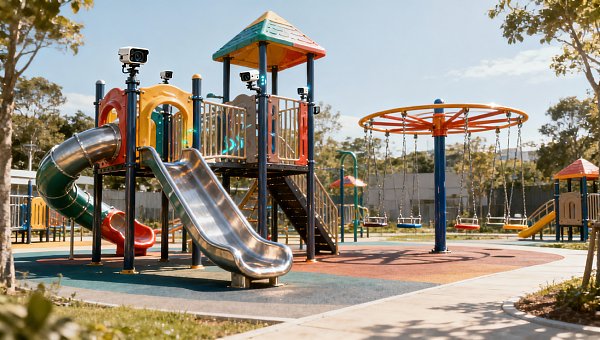
A complete swing area includes the frame, seats, connectors, suspension parts, protective surfacing, use zones, signage, and maintenance records.
Each element affects whether playground swings remain safe during daily operation, seasonal weather, and peak visitor periods.
Commercial installations usually require stronger materials than residential products. Steel frames, corrosion-resistant coatings, and tamper-resistant hardware are common priorities.
Seat selection also matters. Belt seats, toddler seats, inclusive seats, and basket-style seats each support different age groups and body control levels.
Safe playground swings should match intended users, expected capacity, local climate, and the surrounding park layout.
Industry Standards and Current Safety Concerns
Outdoor play safety is increasingly shaped by formal standards, insurance expectations, and public accountability.
Relevant references may include ASTM F1487, EN 1176, ISO standards, local building codes, and accessibility guidance.
These standards help define fall zones, entrapment limits, structural integrity, surfacing performance, and inspection procedures.
For playground swings, compliance is not limited to the product certificate. Installation quality and ongoing maintenance are equally important.
Current concerns also include extreme weather, vandalism, inclusive access, and higher utilization during holidays or community events.
In dense urban parks, playground swings must be evaluated for both product safety and traffic flow around the play area.
Structural Durability in High-Traffic Outdoor Parks
Durability is a safety issue because fatigue, corrosion, and loosened connections can appear before visible failure.
High-quality playground swings should be engineered for repeated loading and lateral movement, not only static weight.
Frame materials usually include galvanized steel, powder-coated steel, stainless steel, or heavy-duty timber with verified treatment.
For coastal parks, corrosion resistance becomes critical. Salt air can shorten the life of chains, fasteners, and frame joints.
For hot climates, UV stability matters. Seats and coatings should resist cracking, fading, and surface degradation.
For cold climates, materials should tolerate freeze-thaw cycles without becoming brittle or loosening at anchor points.
Commercial playground swings should include load data, material specifications, coating details, and installation instructions from the supplier.
Reliable documentation supports better inspections, faster repairs, and stronger accountability across the equipment lifecycle.
Surfacing, Layout, and Fall Protection
Even well-built playground swings become unsafe when installed over inadequate surfaces or crowded layouts.
Impact-absorbing surfacing should extend through the required use zone, including forward and backward swing travel areas.
Common commercial surfaces include poured-in-place rubber, engineered wood fiber, rubber tiles, and loose-fill rubber mulch.
Each option requires different maintenance. Loose-fill materials need depth checks, displacement correction, and edge containment.
Unitary rubber surfaces offer accessibility and clean appearance, but they require proper installation and periodic condition reviews.
The layout should discourage running through active swing paths. Fencing, planting, paving direction, or visual borders can guide movement.
Spacing between playground swings also matters. Seats should not collide with each other, supports, or nearby equipment.
Inclusive seats may need extra transfer space, stable approaches, and layouts that support supervision without crowding.
Application Value for Commercial Park Planning
Safe playground swings contribute more than compliance. They influence dwell time, family satisfaction, brand perception, and asset longevity.
In commercial leisure environments, visible safety quality can strengthen trust before visitors read any policy statement.
A well-planned swing zone reduces operational disruption because fewer emergency repairs, complaints, and closures are likely.
Playground swings also help balance a park’s activity mix. They offer rhythmic motion, independent play, and social interaction.
When selected carefully, playground swings can serve toddlers, school-age children, teenagers, and users needing additional support.
This broader usability improves the business value of a limited outdoor footprint.
- Lower long-term replacement risk through durable commercial specifications.
- Improved safety perception through clean layouts and visible maintenance.
- Better visitor flow through separated active and passive play zones.
- Stronger procurement control through certificates and technical documentation.
For global sourcing, these benefits depend on matching product claims with verified test reports and proven installation practices.
Typical Swing Types and Suitable Park Scenarios
Different playground swings serve different needs. A single swing type rarely fits every public park environment.
The safest approach is to classify expected users, traffic level, supervision patterns, and accessibility goals before product selection.
Large parks may combine several playground swings, but they should not be crowded into one compact bay.
Separating toddler, inclusive, and high-motion swings helps reduce conflicts and improves overall supervision.
Maintenance Planning and Inspection Discipline
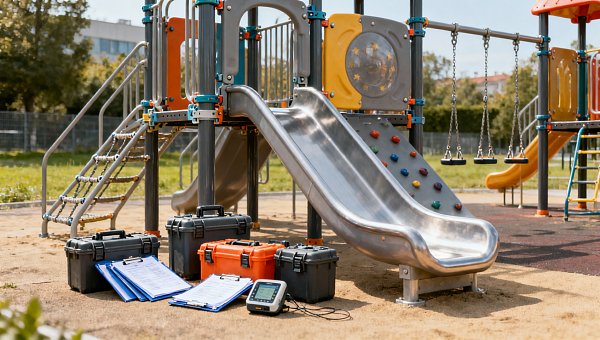
No swing system remains safe without inspection. Playground swings experience constant wear at moving points.
The most vulnerable parts are chains, shackles, hangers, bearings, bolts, seats, surfacing edges, and anchor foundations.
A practical inspection program should include daily visual checks, scheduled operational reviews, and periodic professional assessments.
Daily checks can identify broken seats, exposed foundations, vandalism, sharp edges, and displaced surfacing.
Monthly reviews should verify chain wear, connector security, frame stability, corrosion, and surfacing depth or resilience.
Annual assessments should compare actual conditions with standards, supplier instructions, and local compliance obligations.
- Keep a written inspection log with dates, findings, and corrective actions.
- Replace worn parts with compatible commercial-grade components.
- Close affected playground swings immediately when critical defects appear.
- Review maintenance frequency after storms, events, or unusual crowding.
Documentation is valuable because it proves that safety management is systematic, not reactive.
Supplier Evaluation for Safer Sourcing Decisions
The safety of playground swings depends heavily on supplier capability, not only product appearance.
A reliable supplier should provide test reports, compliance statements, material data, installation guidance, and spare-part availability.
For international sourcing, documentation should be reviewed against the destination market’s standards, language requirements, and inspection expectations.
Manufacturing consistency is also essential. Playground swings supplied across multiple batches should maintain the same dimensions, coatings, and hardware quality.
Factory quality systems, welding controls, coating processes, and packaging methods all influence final field performance.
Project references are useful when they show outdoor installations in comparable climates and traffic conditions.
GCT’s sourcing intelligence approach supports structured comparison across amusement, leisure, education, hospitality, and commercial space categories.
For playground swings, that means looking beyond catalog images and examining compliance, durability, delivery reliability, and after-sales support.
Practical Checklist Before Installation
Before installing playground swings, a structured review can prevent costly adjustments after opening.
- Confirm the applicable safety standard for the project location.
- Verify swing type, age range, load rating, and intended user group.
- Check required use zones against the final site layout.
- Specify impact-absorbing surfacing based on fall height and accessibility.
- Review drainage, sun exposure, nearby paths, and visibility.
- Require installation instructions, anchor details, and torque specifications.
- Plan spare parts, inspection intervals, and closure procedures.
The checklist should be completed before procurement is finalized, not after equipment arrives on site.
Early coordination helps align playground swings with civil works, landscaping, surfacing contractors, and long-term operations.
Conclusion and Next Steps
Playground swings can be safe for busy outdoor parks when they are designed, sourced, installed, and maintained as commercial systems.
Safety depends on more than strong frames. It requires suitable seats, certified surfacing, correct spacing, clear signage, and disciplined inspections.
The best results come from aligning standards, user needs, climate exposure, maintenance capacity, and supplier evidence before purchase.
For new projects or upgrades, begin with a site risk review and a compliance-based specification for playground swings.
Then compare suppliers using test documentation, project references, manufacturing controls, and spare-part support.
A careful sourcing process creates safer parks, longer-lasting assets, and better visitor experiences across high-traffic outdoor environments.
Search News
Hot Articles
- Arcade & VR MachinesChoosing a Racing Simulator Cockpit for an FEC: Durability and Guest FitOct 14, 2026
- Office Furniture & EquipChoosing Commercial Air Conditioners for Offices: Capacity, Zoning, and NoiseOct 13, 2026
- Fashion & Gem JewelryHow to Choose Designer Eyewear That Fits Your Store’s Customer ProfileOct 12, 2026
Popular Tags
Need ExpertConsultation?
Connect with our specialized leisureengineering team for procurementstrategies.
Recommended News
 Oct 03, 2026How to Select Leisure Park Equipment for Safe, High-Throughput Visitor AreasLeisure park equipment selection guide for safe, high-throughput venues—explore capacity, supervision, durability, accessibility, and supplier criteria.● Theme Park Strategist
 Sep 18, 2026What Drives Animatronic Dinosaur Manufacturer Prices for Theme Park Projects?Animatronic dinosaurs manufacturer price guide: compare motion, materials, controls, installation, and lifecycle costs to plan a durable theme park attraction.● Theme Park Strategist
 Sep 06, 2026Do Amusement Ride Safety Compliance Requirements Change Every Year?Do amusement safety compliance requirements change annually? Learn what really changes, from standards and inspections to permits, upgrades, and local approvals.● Theme Park Strategist
 Sep 02, 2026How Long Does It Take to Receive Full Safety Documents From an OEM?How long does it take to get full safety documentation from OEM partners? Discover realistic timelines, common delays, and practical steps to secure compliant files faster.● Theme Park Strategist
 Sep 03, 2026Designing Adventure Park Safety Systems for Zip Lines, Ropes Courses, and Daily InspectionsAdventure park safety systems: learn how to design safer zip lines and ropes courses with daily inspections, defect controls, rescue readiness, and staff training.● Theme Park Strategist
 Aug 22, 2026What to Look for When Choosing Three Seat Jet Skis for Rental or Resort UseThree seat jet skis for rental or resort use should balance stability, safety, maintenance, and guest comfort. Learn how to choose models that boost uptime and guest satisfaction.● Theme Park Strategist
 Aug 17, 2026What Parts Matter Most in a Roller Coaster and How Do They Affect Ride Safety?Roller coaster parts determine ride safety more than most riders realize. Explore how tracks, restraints, brakes, wheels, and control systems work together to protect every ride.● Theme Park Strategist
 Aug 15, 20262026 China Sports Expo Sees 45.74% More Overseas Pre-registered Buyers as POB Expands Procurement Matching2026 China Sports Expo boosts overseas pre-registered buyers by 45.74% as POB expands procurement matching for fitness, outdoor, and venue suppliers.● Theme Park Strategist
 Aug 14, 2026What Should Buyers Check Before Choosing a Flying Chair Ride Exporter?Flying chair ride exporter buyers should check safety, structure, export support, and spare parts before purchase to reduce risk and choose a reliable supplier.● Theme Park Strategist
 Aug 04, 2026EU Issues EN 1176-1:2026 for Playground SafetyEU Issues EN 1176-1:2026 for Playground Safety: learn how the new standard impacts Outdoor Rides, CE certification, inventory checks, and EU compliance before March 2027.● Theme Park Strategist
 Aug 03, 2026CPSC Adopts ASTM F1487-26 for Imported Outdoor RidesOutdoor Rides face a major U.S. compliance shift as CPSC adopts ASTM F1487-26. Learn the new certification, testing, and customs risks before November 1, 2026.● Theme Park Strategist
 Jul 26, 2026Revised EN 1176:2026 Triggers Re-Certification for Outdoor RidesOutdoor Rides face immediate EN 1176:2026 re-certification for new CE applications. Learn how testing, documentation, and EU market access rules now affect exports and delivery plans.● Theme Park Strategist
 Jul 21, 2026CPSC Recall Flags Structural Risk in Outdoor RidesCPSC recall flags structural risk in outdoor rides: learn how ASTM F1487-23 failures affect importers, distributors, and compliance teams across the U.S., Canada, and Australia.● Theme Park Strategist
 Jul 19, 2026How to Choose Outdoor Fitness Equipment for Parks Based on Users, Space, and BudgetOutdoor fitness equipment for parks: learn how to choose the right mix based on users, space, and budget to improve safety, usage, and long-term value.● Theme Park Strategist
 Jul 15, 2026Ocean Freight Spike Pressures Outdoor Rides ExportsOcean Freight Spike Pressures Outdoor Rides Exports as Shanghai-Rotterdam rates surge 42%. See how rising freight costs, delays, and rerouting risks could reshape Europe-bound delivery plans.● Theme Park Strategist
 Jul 14, 2026EN 1176 Revision Takes Effect for Outdoor Ride Weld TestingEN 1176 revision takes effect for outdoor ride weld testing from Sept 1, 2026. Learn ISO 5817 level B, third-party NDT report rules, and key EU compliance steps.● Theme Park Strategist
 Jul 12, 2026Vietnam Requires AI Anti-Collision Systems for Imported Outdoor RidesVietnam Requires AI Anti-Collision Systems for Imported Outdoor Rides from Sept. 15, 2026. Learn compliance rules, VAST certification needs, and how importers can avoid delays.● Theme Park Strategist
 Jul 11, 2026Vietnam Tightens Rules for Imported Outdoor RidesVietnam Tightens Rules for Imported Outdoor Rides: learn how Vietnam’s 2026 compliance update adds AI anti-collision, Vietnamese logs, and local maintenance duties for importers and manufacturers.● Theme Park Strategist
 Jul 09, 2026How to Evaluate a Lazy River Equipment Supplier for Safety, Flow Design, and MaintenanceLazy river equipment supplier selection affects safety, flow design, and maintenance costs. Learn what to compare, what to ask, and how to choose a reliable partner.● Theme Park Strategist
 Jul 08, 2026RCEP Update Cuts ASEAN Tariffs to Zero for Outdoor RidesRCEP update cuts ASEAN tariffs to zero for outdoor rides from China. Learn how FSC-CoC, PEFC traceability, and e-CO compliance affect exports, sourcing, and buyer decisions.● Theme Park Strategist
 Jul 07, 2026RCEP Guide Adds Dual Wood Traceability for Outdoor RidesOutdoor Rides exporters face a new RCEP traceability rule: dual FSC-CoC and PEFC-STS 2023 codes for wood components. See what changes before Oct. 1, 2026.● Theme Park Strategist
 Jul 06, 2026Vietnam Tightens RCEP Rules for Wooden Ride PartsVietnam Tightens RCEP Rules for Wooden Ride Parts: learn how FSC Chain-of-Custody and QR code requirements now affect outdoor rides, RCEP imports, and shipment compliance.● Theme Park Strategist
 Jul 06, 2026How to Evaluate a Bumper Cars on Ice Manufacturer for Safety, Capacity, and ROIBumper cars on ice manufacturer selection starts with safety, capacity, and ROI. Learn how to compare suppliers, reduce risk, and choose a partner built for long-term commercial success.● Theme Park Strategist
 Jul 04, 2026Electric Drift Bumper Cars vs Traditional Bumper Cars: Which Fits Your Venue Better?Electric drift bumper cars or traditional bumper cars? Compare installation, safety, maintenance, guest appeal, and ROI to choose the best fit for your venue.● Theme Park Strategist