Which arcade games still earn well in 2026?
In 2026, the most profitable arcade games are not simply the newest machines—they are the titles that combine replay value, compact footprint, strong revenue per square meter, and reliable maintenance performance. For operators, mall developers, family entertainment centers, and sourcing teams, understanding which arcade games still earn well is essential for smarter procurement and long-term ROI. This guide explores the game categories that continue to attract players, support repeat spending, and fit evolving commercial entertainment spaces.
What Makes Arcade Games Profitable in 2026?
The earning power of arcade games depends on more than player traffic. A machine must convert attention into repeat spending without creating frequent downtime.
For commercial buyers, the key question is not “Which cabinet looks exciting?” but “Which machine earns consistently across seasons, age groups, and operating locations?”
Core Revenue Drivers Operators Should Track
- Replay value: arcade games with short rounds, visible scoring, and skill improvement encourage repeat plays from both casual and competitive users.
- Footprint efficiency: compact machines that earn well per square meter often outperform larger attractions in malls and compact FEC layouts.
- Maintenance predictability: machines with accessible parts, stable software, and clear service documentation reduce operational disruption.
- Audience flexibility: titles that appeal to children, teens, families, and adults lower the risk of narrow demographic dependence.
Global Commercial Trade evaluates amusement sourcing through commercial space planning, procurement practicality, and supplier reliability, not only entertainment trends.
Which Arcade Games Still Earn Well Across Commercial Venues?
Profitable arcade games in 2026 usually fall into categories with proven demand. These machines work because they support quick decisions and repeatable experiences.
The table below summarizes common revenue performers for sourcing teams comparing machines across family entertainment centers, hotels, cinemas, and retail destinations.
No single category wins everywhere. The strongest arcade games are selected according to venue traffic, player dwell time, staffing model, and local spending habits.
Why Skill-Based and Competitive Machines Remain Strong
Skill-based arcade games continue to earn because players believe performance can improve. That perception matters in markets where entertainment budgets are selective.
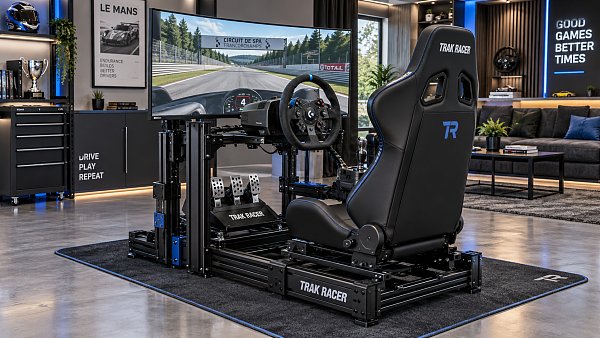
Basketball, boxing, shooting galleries, air hockey, and racing cabinets create visible competition. Spectators can understand the action immediately and join quickly.
Where Competitive Arcade Games Work Best
- High-traffic retail spaces where visitors decide within seconds whether a machine looks worth trying.
- Family entertainment centers that need machines supporting tournaments, birthday parties, and group visits.
- Hotel and resort activity areas where guests prefer short entertainment sessions between dining, shopping, or events.
For procurement teams, the strongest sign is not first-day excitement. It is whether players still compete after the machine becomes familiar.
How Do Prize and Redemption Arcade Games Protect Repeat Spending?
Prize-driven arcade games remain resilient because they combine entertainment with visible value. The reward creates emotional motivation beyond the game itself.
Claw machines, capsule machines, pushers, ticket games, and merchandise-based attractions can perform well when prize cost and payout logic are controlled.
Key Operating Controls for Prize-Based Machines
- Define prize cost ratios before installation, including seasonal merchandise, replenishment frequency, and target gross margin.
- Use transparent settings that maintain excitement without creating player frustration or local compliance concerns.
- Place high-visibility machines near waiting zones, entrances, and family circulation paths to trigger impulse play.
These arcade games are especially useful in mixed-use commercial spaces because they monetize waiting time without requiring complex staff supervision.
Which Arcade Games Fit Different Venue Types?
Venue context changes the revenue logic. The best arcade games for a resort lobby may not suit a dense mall or indoor park.
Before comparing suppliers, buyers should map machine categories to foot traffic, noise tolerance, operating hours, and supervision capacity.
This venue-based selection approach helps prevent overbuying large machines that look impressive but underperform in limited or poorly matched spaces.
Procurement Checklist: What Should Buyers Verify Before Ordering?
Sourcing arcade games in 2026 requires more discipline than comparing cabinet photos. Buyers need data, documentation, and realistic operating assumptions.
For international procurement, GCT encourages buyers to evaluate machines through lifecycle cost, safety compliance, after-sales readiness, and space integration.
Supplier and Machine Evaluation Points
- Request electrical specifications, packing dimensions, spare parts lists, and installation requirements before confirming container planning.
- Confirm payment system compatibility, including coin mechanisms, card readers, QR payment modules, or venue management software.
- Ask for maintenance intervals, consumable part details, and troubleshooting documentation in the language your operations team uses.
- Review applicable safety expectations, such as CE marking, low-voltage requirements, EMC considerations, and destination-market documentation.
When the procurement file is complete, arcade games are easier to compare across suppliers and easier to deploy after customs clearance.
Cost and ROI: Where Do Operators Often Miscalculate?
Many operators focus on purchase price, then underestimate delivery, installation, spare parts, prize inventory, and downtime exposure.
A lower-cost machine can be sensible, but only if the arcade games match expected traffic, technical support capacity, and local payment behavior.
A realistic ROI model considers both revenue potential and operational friction. The most profitable arcade games are rarely the cheapest machines on paper.
Trends Shaping Profitable Arcade Games in 2026
Arcade demand is shifting toward hybrid experiences. Physical controls still matter, but digital scoring, cashless payment, and social sharing now influence earnings.
Operators should watch machines that combine simple rules with modern presentation. A familiar format can earn more when lighting, audio, and payment are upgraded.
Commercial Trends Worth Considering
- Cashless and card-based operation helps venues analyze play frequency, peak hours, and machine-level performance.
- Compact multiplayer designs support higher social engagement without requiring the footprint of major attractions.
- Premium cabinet aesthetics matter more in hotels, retail destinations, and mixed-use commercial spaces.
- Modular service access reduces downtime, especially for international operators with limited technical staff.
These trends do not replace operational basics. They enhance arcade games that already have strong play mechanics and suitable venue placement.
FAQ: Practical Questions About Arcade Games Procurement
Are classic arcade games still worth buying in 2026?
Yes, if they match the venue and are supported by reliable parts. Basketball, air hockey, racing, and prize machines remain commercially relevant.
Classic formats work because players understand them immediately. The risk appears when buyers choose outdated cabinets with poor sensors or weak support.
How many arcade games should a new venue start with?
The starting number depends on floor area, traffic, and staffing. A small mall corner may start with several compact prize and skill machines.
A full FEC requires a balanced mix of redemption, competitive, simulator, and children’s arcade games to cover different age groups.
What documents should international buyers request?
Buyers should request commercial invoices, packing lists, electrical specifications, safety documentation, user manuals, spare parts references, and after-sales procedures.
For destination markets with stricter requirements, clarify CE, EMC, low-voltage, plug type, labeling, and local inspection expectations before shipment.
Do VR arcade games still earn well?
VR can perform well in premium venues, but it usually requires more supervision, hygiene control, software management, and staff training.
For many operators, VR is better treated as a featured attraction, while traditional arcade games provide steadier daily revenue.
Why Choose GCT for Arcade Games Sourcing Intelligence?
Global Commercial Trade helps commercial buyers move from broad research to structured sourcing decisions across amusement, leisure, hospitality, and specialty retail environments.
For arcade games procurement, GCT can support information review around venue fit, category selection, supplier capability, documentation readiness, and commercial layout logic.
What You Can Consult Before Making a Purchase
- Parameter confirmation for power, dimensions, packing volume, payment systems, and installation conditions.
- Product selection guidance for FECs, malls, hotels, cinema zones, resorts, and mixed-use commercial projects.
- Supplier comparison support covering manufacturing capability, spare parts readiness, delivery schedule, and documentation completeness.
- Customization discussion for cabinet appearance, branding, prize configuration, payment interface, and language settings.
- Quotation communication and sample support planning where buyers need clearer budget ranges before placing orders.
If you are researching which arcade games still earn well in 2026, use GCT to compare options with procurement discipline, not guesswork.
Contact GCT to discuss venue goals, certification expectations, delivery timing, and sourcing priorities before finalizing your arcade equipment shortlist.
Search News
Hot Articles
- Arcade & VR MachinesChoosing a Racing Simulator Cockpit for an FEC: Durability and Guest FitOct 14, 2026
- Office Furniture & EquipChoosing Commercial Air Conditioners for Offices: Capacity, Zoning, and NoiseOct 13, 2026
- Fashion & Gem JewelryHow to Choose Designer Eyewear That Fits Your Store’s Customer ProfileOct 12, 2026
Popular Tags
Need ExpertConsultation?
Connect with our specialized leisureengineering team for procurementstrategies.
Recommended News
 Oct 14, 2026Choosing a Racing Simulator Cockpit for an FEC: Durability and Guest FitChoosing a racing simulator cockpit for FEC? Discover how to assess durability, guest fit, and maintenance to reduce downtime and select a cockpit built for busy venues.● Theme Park Strategist
 Sep 15, 2026How to Choose Coin-Operated Pool Tables for Bars, Hotels, and Arcade VenuesCoin operated pool tables for bars, hotels, and arcades: compare sizes, payment systems, durability, service access, and revenue potential.● Theme Park Strategist
 Sep 08, 2026What to Look for in a Flight Simulator Chair Manufacturer for Commercial VR CentersChoose a flight simulator chair manufacturer that delivers durable, safe, customizable seating for commercial VR centers. Explore key sourcing criteria now.● Theme Park Strategist
 Aug 25, 2026What to Evaluate Before Buying Commercial Self Service Photo Booths for VenuesCommercial self service photo booths for venues: learn how to evaluate durability, software stability, branding flexibility, support, and total ROI before you buy.● Theme Park Strategist
 Aug 23, 2026How to Evaluate Wholesale Vending Machines for Multi-Location Business DeploymentWholesale vending machines for multi-location deployment require more than low unit cost. Learn how to compare reliability, payments, telemetry, and supplier support to scale smarter.● Theme Park Strategist
 Aug 17, 2026U.S. CPSC Urges Bilingual Warnings for Arcade and VR MachinesU.S. CPSC urges bilingual safety warnings for Arcade & VR Machines—learn what exporters, importers, and distributors must do now to avoid delays and returns.● Theme Park Strategist
 Aug 16, 2026EU Enforces EN IEC 62368-1:2026 Certification for Arcade and VR MachinesEU Enforces EN IEC 62368-1:2026 certification for arcade and VR machines, reshaping EU market access, customs clearance, and compliance planning for exporters and distributors.● Theme Park Strategist
 Aug 13, 2026UFLPA’s new guidelines take effect: Exports of Arcade and VR equipment face full-link labor compliance requirementsUFLPA’s new guide takes effect: Arcade and VR machine exports to the U.S. now face full-chain labor compliance checks. Discover key risks and action steps.● Theme Park Strategist
 Aug 12, 2026EU PPWR takes effect, Arcade and VR packaging incorporate heavy metal and PFAS restrictionsEU PPWR now applies to Arcade and VR packaging, tightening heavy metal and PFAS compliance. Learn how exporters can avoid delays, fines, and customs risks.● Theme Park Strategist
 Aug 11, 2026CPSC Sets Bilingual Labels for Arcade and VR ImportsCPSC bilingual labels for arcade and VR imports become mandatory on October 1, 2026. Learn the new English-Spanish warning rules, customs risks, and key compliance steps now.● Theme Park Strategist
 Aug 10, 2026EU Rule Takes Effect for Arcade & VR Machine ClearanceArcade & VR Machine clearance in the EU now depends on EN IEC 62368-1:2026+A11:2026 compliance. Learn what changed, who is affected, and how to avoid customs delays.● Theme Park Strategist
 Aug 09, 2026CPSC Requires New Labels for Arcade and VR ImportsCPSC requires new labels for Arcade and VR imports starting Oct 1, 2026. Learn the multilingual warning rules, compliance risks, and key steps exporters and buyers must take now.● Theme Park Strategist
 Aug 08, 2026EU Entry Rule Tightens for Arcade & VR MachinesArcade & VR Machines entering the EU now face stricter CE compliance under EN IEC 62368-1:2026+A11:2026. Learn the new rule, risks, and what exporters must do now.● Theme Park Strategist
 Aug 07, 2026CPSC Notice Tightens U.S. Entry Rules for Arcade and VR MachinesCPSC Notice Tightens U.S. Entry Rules for Arcade and VR Machines: learn the new labeling, FCC, UN38.3, and compliance document requirements before October 1, 2026.● Theme Park Strategist
 Aug 06, 2026EU Rule Takes Effect for CE-UKCA Labels on Arcade & VR MachinesArcade & VR Machines face new CE-UKCA label and ECPD filing rules in the EU and UK. Learn what manufacturers, importers, and distributors must do now to avoid delays.● Theme Park Strategist
 Aug 05, 2026CPSC Recalls Arcade and VR Machines Over UL 62368-1CPSC recalls arcade and VR machines over UL 62368-1 non-compliance. Learn how this 2026 safety action may affect imports, distribution, customs clearance, and market access.● Theme Park Strategist
 Aug 02, 2026EU Sets New Certification Rule for Arcade and VR MachinesArcade and VR Machines face a new EU certification rule from Oct 1, 2026. Learn how EN IEC 62368-1:2026+A11:2026 affects CE marking, customs clearance, and market access.● Theme Park Strategist
 Aug 01, 2026CPSC Moves to Require Bilingual Warnings on Arcade and VR MachinesCPSC bilingual warnings for Arcade and VR Machines may reshape U.S. import compliance. Learn how English-Spanish labels affect packaging, customs risk, and shipment readiness.● Theme Park Strategist
 Jul 31, 2026EU Sets EN IEC 62368-1:2025 Rule for Arcade and VR MachinesEU Sets EN IEC 62368-1:2025 Rule for Arcade and VR Machines. Learn the new EU compliance deadlines, safety updates, and key actions for manufacturers, OEMs, and distributors.● Theme Park Strategist
 Jul 30, 2026CPSC Sets New Warning Label Rule for Arcade & VR MachinesCPSC sets a new warning label rule for Arcade & VR Machines effective August 15, 2026. Learn key compliance risks, multilingual label requirements, and shipment actions now.● Theme Park Strategist
 Jul 29, 2026EU Enforces New Safety Standard for Arcade and VR MachinesEU Enforces New Safety Standard for Arcade and VR Machines: learn how EN IEC 62368-1 affects CE compliance, customs clearance, and EU market access for exporters and buyers.● Theme Park Strategist
 Jul 28, 2026CPSC Sets ASTM F3472-26 Rule for Arcade & VR ImportsCPSC ASTM F3472-26 rule reshapes Arcade & VR imports to the U.S. Learn key compliance deadlines, certification risks, and what exporters, OEM/ODM suppliers, and buyers should do now.● Theme Park Strategist
 Jul 27, 2026EU Rule Takes Effect for Arcade & VR Machine CybersecurityEU Rule Takes Effect for Arcade & VR Machine Cybersecurity: learn how EN IEC 62443-3-3:2025 affects compliance, customs clearance, sales continuity, and supplier planning in the EU market.● Theme Park Strategist
 Jul 25, 2026CPSC Sets Bilingual Warning Rule for Arcade and VR ImportsCPSC bilingual warning rule for arcade and VR imports takes effect August 1, 2026. Learn how OEM/ODM exporters can avoid CBP delays, relabel shipments, and protect U.S. delivery timelines.● Theme Park Strategist