Choosing a Racing Simulator Cockpit for an FEC: Durability and Guest Fit
A racing simulator can look convincing on a showroom floor and still struggle through a busy Saturday at a family entertainment center. One guest pulls on the wheel to climb out. The next needs the seat moved forward. A staff member reaches underneath to find a release lever while the queue waits. These ordinary moments reveal more about commercial suitability than a polished demonstration lap.
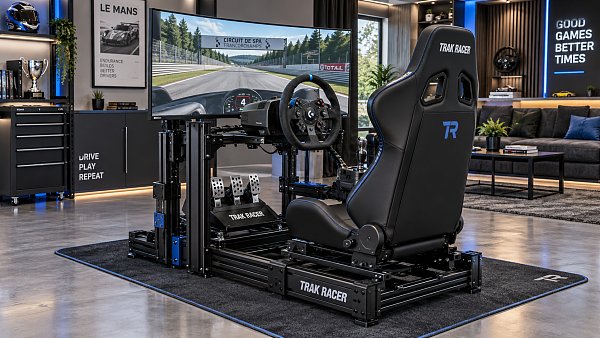
Choosing a racing simulator cockpit for FEC operations means evaluating a working attraction, not simply buying a gaming frame. Procurement teams need to consider repeated loading, guest fit, adjustment speed, cleaning, equipment compatibility, and repair access together. The strongest purchase is not necessarily the heaviest cockpit or the one with the most adjustment options. It is the one that remains stable, accommodates the intended audience, and can be returned to service without unnecessary delay.
Start with the operating brief, not the supplier catalog
Before comparing quotations, define how the attraction will operate. A cockpit intended for occasional adult use has a different assignment from one handling short, staff-assisted sessions for families throughout the day.
A useful purchasing brief should state:
- Intended guests: age groups, anticipated body-size range, and any participation restrictions.
- Session format: short arcade races, longer simulation experiences, or organized competitions.
- Control package: wheelbase, pedals, shifter, handbrake, display, and any planned upgrades.
- Staffing model: supervised fitting, guest-operated adjustments, or a combination.
- Installation conditions: available floor area, access routes, flooring, power, and cleaning requirements.
- Maintenance arrangements: on-site technical capability, service coverage, and acceptable repair downtime.
Specify whether the purchase covers a passive cockpit, an integrated simulator station, or a motion-based system. These are not interchangeable categories. Motion introduces additional dynamic loads, clearance requirements, control safeguards, and servicing needs that cannot be assessed from a static frame specification alone.
Durability is a load-path question
“Commercial grade” is a description, not proof. Ask the supplier how forces travel through the seat, rails, pedal platform, wheel mount, frame joints, and floor supports. A substantial-looking chassis can still have a flexible wheel deck or a seat slider that loosens under frequent adjustment.
Frame construction: compare execution, not just material
Welded steel frames can provide a straightforward, rigid structure with fewer adjustable joints. Their limitations may include shipping weight, less flexibility for future equipment changes, and more difficult repair if a welded bracket fails.
Aluminum-profile cockpits can offer configurable mounting and replaceable structural components. In an FEC, however, exposed channels, brackets, and fasteners deserve attention: they may complicate cleaning or require covers where guests can make contact. Joint design, fastening methods, and maintenance access matter more than a broad steel-versus-aluminum verdict.
For either construction, examine weld consistency, bracket thickness, unsupported spans, sharp edges, protective finishes, and joint accessibility. Ask for documented load ratings and the conditions behind them. A maximum user-weight rating does not, by itself, establish resistance to repeated side loading during entry and exit.
Inspect the places guests will unintentionally stress
Guests do not always use a cockpit as its designer intended. They may brace against the wheel, step onto the pedal platform, or lean on a display support. The installation should provide a clear, suitable way to enter and leave, rather than relying on staff reminders alone.
Request a demonstration using the proposed equipment. Watch the wheel mount under force feedback, the pedal deck under firm braking, and the seat during entry and adjustment. Visible movement can undermine confidence and may indicate a mounting issue. Ask the supplier to explain acceptable movement, inspection points, and corrective actions rather than making judgments from appearance alone.
Also establish which wear components are replaceable: seat rails, adjustment handles, pedal hinges, bushings, leveling feet, and mounting plates. A small broken lever should not force the replacement of an entire cockpit.
Guest fit: reach matters as much as seat travel
A seat that slides forward and backward does not automatically make a simulator suitable for different guests. Fit depends on the relationship between the seat, pedals, steering wheel, and display.
A smaller guest may reach the pedals only by sitting too close to the wheel. A taller guest may have adequate legroom but insufficient knee clearance beneath the steering support. A deep bucket seat can feel immersive while making entry, exit, or comfortable seating difficult for some users.
Ask suppliers to define their supported guest range using practical fit criteria, not height alone. Guests should be able to reach and operate the controls without awkward stretching, maintain a supported seated position, and enter and leave safely. Age guidance should be considered alongside equipment instructions and the venue’s operating rules.
Do not assume that an adult cockpit becomes child-suitable through an improvised cushion or pedal extender. Any accommodation should be approved for the intended installation and should not compromise stability, control access, or safe exit. If one design cannot reasonably serve the intended audience, separate station configurations may be more practical than excessive adjustment.
Test the changeover between guests
The most revealing supplier demonstration is often the handover, not the race. Have an operator fit one user, reset the station, and fit another user with different reach requirements. Repeat the sequence using the same steps staff would follow during service.
Look for adjustment controls that are visible, intuitive, and securely lockable. A mechanism that requires tools for routine guest fitting will slow operations. Equally, a quick-release device that guests can accidentally operate during play may create another problem. Clarify which settings are staff-only and how unauthorized adjustment is prevented.
Check for finger traps around sliders and hinges, cable tension at the ends of adjustment travel, and whether staff must reach beneath occupied equipment. Ask what happens if a lock is only partially engaged and how operators confirm correct engagement before starting a session.
There is no universal changeover-time target. Set one that suits your session length and staffing model, then test it. Saving a little time has limited value if the operator cannot confidently verify that the guest is fitted and the cockpit is secure.
Compatibility should be confirmed in writing
“Fits most racing hardware” leaves too much uncertainty for commercial procurement. Give bidders the exact wheelbase, pedal set, accessories, and display arrangement, including mounting details where available. Require confirmation that the quoted cockpit supports that configuration without unapproved modifications.
For high-torque direct-drive wheelbases, check both mechanical mounting and the operating configuration. A compatible bolt pattern does not establish that a wheel deck is suitable for the loads involved. Force-feedback settings, operating limits, and guest procedures should follow the equipment manufacturer’s guidance and the venue’s risk assessment.
Pedals also deserve careful review. A firm brake can place substantial demand on the pedal platform and seat supports. Test the combined system rather than evaluating each component separately.
Finally, inspect cable routing throughout the full adjustment range. Cables need protection from snagging, abrasion, pinching, and guest contact, while remaining accessible for replacement. Include display supports and electronics enclosures in the stability assessment; do not treat them as incidental accessories.
Cleaning, access, and safety belong in the specification
Seats and contact surfaces must tolerate the venue’s cleaning routine. Ask for upholstery specifications, approved cleaning products, and instructions for seams, perforations, and removable covers. Household-style cushioning may be comfortable initially but difficult to clean or replace after heavy use.
Consider the installed footprint, not only the frame dimensions. Include space for entry, staff assistance, maintenance, and any moving components. Adjacent stations, barriers, and queues must not obstruct circulation or required escape routes.
Accessibility should be assessed at venue level. A cockpit with high side rails may present transfer difficulties, and seat adjustability alone does not establish accessibility. Review options with the supplier and relevant local advisers, including whether an alternative station configuration is needed.
Safety documentation should match the actual equipment and destination market. Ask which requirements apply to the passive frame, electrical components, and any motion system, and request relevant documentation. A certificate covering one component should not be treated as evidence for the complete installed attraction.
Compare lifecycle cost, not just the delivered price
A lower-priced cockpit can become expensive if a failed seat slider takes a station out of service while an overseas replacement is sourced. For commercial buyers, serviceability is part of product quality.
Compare total ownership cost over a common period, including purchase, freight, import charges, installation, routine inspection, replacement parts, maintenance labor, and expected downtime. Use your own operating assumptions rather than supplier revenue projections. Where failure history is unavailable, compare plausible maintenance scenarios without presenting them as forecasts.
Request a parts list with pricing, lead times, and identification codes. Confirm warranty coverage for commercial use, exclusions, responsibility for labor and freight, and the process for technical support. Ask whether ordinary wear parts can be replaced locally and whether future component revisions will remain compatible.
This is where a sourcing platform such as Global Commercial Trade can support supplier discovery and structured comparison. Procurement teams should still verify model-specific claims, service arrangements, and supporting documents directly; broad market visibility does not replace technical due diligence.
Make acceptance a purchasing condition
Before issuing the order, agree on acceptance checks for the delivered configuration. A sample or pilot station is particularly useful when several units are planned. It lets operations staff evaluate the cockpit under realistic fitting, cleaning, and maintenance conditions before the full installation is committed.
- Confirm the supplied hardware matches the approved specification and mounting arrangement.
- Test guest fit across the agreed user range and verify all adjustment locks.
- Check stability, clearances, cable routing, and entry and exit arrangements.
- Inspect accessible fasteners, finishes, contact surfaces, and replaceable parts.
- Verify delivery of operating instructions, maintenance schedules, and applicable documentation.
- Record defects and agree on correction responsibilities before final acceptance.
The right racing simulator cockpit for an FEC should make both driving and daily operation feel straightforward. Guests should settle in without a struggle; staff should be able to adjust and inspect the station with confidence. When durability, fit, and serviceability are established through evidence rather than sales language, procurement teams have a much stronger basis for choosing equipment that earns its place on the attraction floor.
Search News
Hot Articles
- Arcade & VR MachinesChoosing a Racing Simulator Cockpit for an FEC: Durability and Guest FitOct 14, 2026
- Office Furniture & EquipChoosing Commercial Air Conditioners for Offices: Capacity, Zoning, and NoiseOct 13, 2026
- Fashion & Gem JewelryHow to Choose Designer Eyewear That Fits Your Store’s Customer ProfileOct 12, 2026
Popular Tags
Need ExpertConsultation?
Connect with our specialized leisureengineering team for procurementstrategies.
Recommended News
 Oct 14, 2026Choosing a Racing Simulator Cockpit for an FEC: Durability and Guest FitChoosing a racing simulator cockpit for FEC? Discover how to assess durability, guest fit, and maintenance to reduce downtime and select a cockpit built for busy venues.● Theme Park Strategist
 Sep 15, 2026How to Choose Coin-Operated Pool Tables for Bars, Hotels, and Arcade VenuesCoin operated pool tables for bars, hotels, and arcades: compare sizes, payment systems, durability, service access, and revenue potential.● Theme Park Strategist
 Sep 08, 2026What to Look for in a Flight Simulator Chair Manufacturer for Commercial VR CentersChoose a flight simulator chair manufacturer that delivers durable, safe, customizable seating for commercial VR centers. Explore key sourcing criteria now.● Theme Park Strategist
 Aug 25, 2026What to Evaluate Before Buying Commercial Self Service Photo Booths for VenuesCommercial self service photo booths for venues: learn how to evaluate durability, software stability, branding flexibility, support, and total ROI before you buy.● Theme Park Strategist
 Aug 23, 2026How to Evaluate Wholesale Vending Machines for Multi-Location Business DeploymentWholesale vending machines for multi-location deployment require more than low unit cost. Learn how to compare reliability, payments, telemetry, and supplier support to scale smarter.● Theme Park Strategist
 Aug 17, 2026U.S. CPSC Urges Bilingual Warnings for Arcade and VR MachinesU.S. CPSC urges bilingual safety warnings for Arcade & VR Machines—learn what exporters, importers, and distributors must do now to avoid delays and returns.● Theme Park Strategist
 Aug 16, 2026EU Enforces EN IEC 62368-1:2026 Certification for Arcade and VR MachinesEU Enforces EN IEC 62368-1:2026 certification for arcade and VR machines, reshaping EU market access, customs clearance, and compliance planning for exporters and distributors.● Theme Park Strategist
 Aug 13, 2026UFLPA’s new guidelines take effect: Exports of Arcade and VR equipment face full-link labor compliance requirementsUFLPA’s new guide takes effect: Arcade and VR machine exports to the U.S. now face full-chain labor compliance checks. Discover key risks and action steps.● Theme Park Strategist
 Aug 12, 2026EU PPWR takes effect, Arcade and VR packaging incorporate heavy metal and PFAS restrictionsEU PPWR now applies to Arcade and VR packaging, tightening heavy metal and PFAS compliance. Learn how exporters can avoid delays, fines, and customs risks.● Theme Park Strategist
 Aug 11, 2026CPSC Sets Bilingual Labels for Arcade and VR ImportsCPSC bilingual labels for arcade and VR imports become mandatory on October 1, 2026. Learn the new English-Spanish warning rules, customs risks, and key compliance steps now.● Theme Park Strategist
 Aug 10, 2026EU Rule Takes Effect for Arcade & VR Machine ClearanceArcade & VR Machine clearance in the EU now depends on EN IEC 62368-1:2026+A11:2026 compliance. Learn what changed, who is affected, and how to avoid customs delays.● Theme Park Strategist
 Aug 09, 2026CPSC Requires New Labels for Arcade and VR ImportsCPSC requires new labels for Arcade and VR imports starting Oct 1, 2026. Learn the multilingual warning rules, compliance risks, and key steps exporters and buyers must take now.● Theme Park Strategist
 Aug 08, 2026EU Entry Rule Tightens for Arcade & VR MachinesArcade & VR Machines entering the EU now face stricter CE compliance under EN IEC 62368-1:2026+A11:2026. Learn the new rule, risks, and what exporters must do now.● Theme Park Strategist
 Aug 07, 2026CPSC Notice Tightens U.S. Entry Rules for Arcade and VR MachinesCPSC Notice Tightens U.S. Entry Rules for Arcade and VR Machines: learn the new labeling, FCC, UN38.3, and compliance document requirements before October 1, 2026.● Theme Park Strategist
 Aug 06, 2026EU Rule Takes Effect for CE-UKCA Labels on Arcade & VR MachinesArcade & VR Machines face new CE-UKCA label and ECPD filing rules in the EU and UK. Learn what manufacturers, importers, and distributors must do now to avoid delays.● Theme Park Strategist
 Aug 05, 2026CPSC Recalls Arcade and VR Machines Over UL 62368-1CPSC recalls arcade and VR machines over UL 62368-1 non-compliance. Learn how this 2026 safety action may affect imports, distribution, customs clearance, and market access.● Theme Park Strategist
 Aug 02, 2026EU Sets New Certification Rule for Arcade and VR MachinesArcade and VR Machines face a new EU certification rule from Oct 1, 2026. Learn how EN IEC 62368-1:2026+A11:2026 affects CE marking, customs clearance, and market access.● Theme Park Strategist
 Aug 01, 2026CPSC Moves to Require Bilingual Warnings on Arcade and VR MachinesCPSC bilingual warnings for Arcade and VR Machines may reshape U.S. import compliance. Learn how English-Spanish labels affect packaging, customs risk, and shipment readiness.● Theme Park Strategist
 Jul 31, 2026EU Sets EN IEC 62368-1:2025 Rule for Arcade and VR MachinesEU Sets EN IEC 62368-1:2025 Rule for Arcade and VR Machines. Learn the new EU compliance deadlines, safety updates, and key actions for manufacturers, OEMs, and distributors.● Theme Park Strategist
 Jul 30, 2026CPSC Sets New Warning Label Rule for Arcade & VR MachinesCPSC sets a new warning label rule for Arcade & VR Machines effective August 15, 2026. Learn key compliance risks, multilingual label requirements, and shipment actions now.● Theme Park Strategist
 Jul 29, 2026EU Enforces New Safety Standard for Arcade and VR MachinesEU Enforces New Safety Standard for Arcade and VR Machines: learn how EN IEC 62368-1 affects CE compliance, customs clearance, and EU market access for exporters and buyers.● Theme Park Strategist
 Jul 28, 2026CPSC Sets ASTM F3472-26 Rule for Arcade & VR ImportsCPSC ASTM F3472-26 rule reshapes Arcade & VR imports to the U.S. Learn key compliance deadlines, certification risks, and what exporters, OEM/ODM suppliers, and buyers should do now.● Theme Park Strategist
 Jul 27, 2026EU Rule Takes Effect for Arcade & VR Machine CybersecurityEU Rule Takes Effect for Arcade & VR Machine Cybersecurity: learn how EN IEC 62443-3-3:2025 affects compliance, customs clearance, sales continuity, and supplier planning in the EU market.● Theme Park Strategist
 Jul 25, 2026CPSC Sets Bilingual Warning Rule for Arcade and VR ImportsCPSC bilingual warning rule for arcade and VR imports takes effect August 1, 2026. Learn how OEM/ODM exporters can avoid CBP delays, relabel shipments, and protect U.S. delivery timelines.● Theme Park Strategist