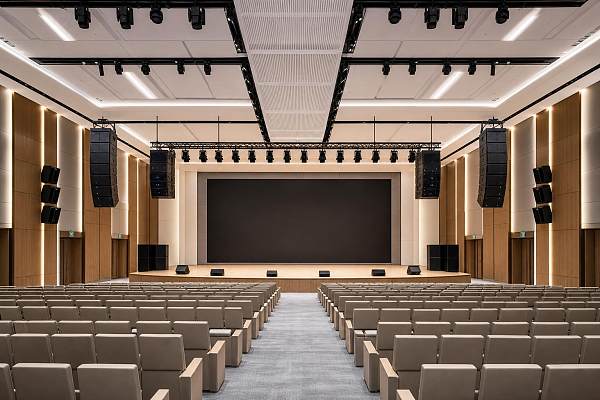
2026 China Sports Expo Closes: Pro Stage Audio Export Orders Up 41%
On May 24, 2026, the 2026 China International Sports Products Expo (Xiamen) concluded, reporting a 41% year-on-year increase in export orders for professional stage audio equipment. The event drew concentrated attention from procurement delegations in Saudi Arabia and the UAE — which signed contracts totaling over RMB 120 million on-site — and signaled accelerated due diligence timelines for Middle Eastern buyers. This development warrants close attention from manufacturers and suppliers in professional audio, certified electronics, and international trade logistics.
Event Overview
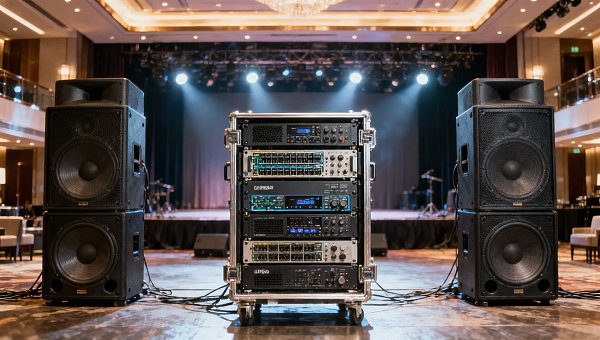
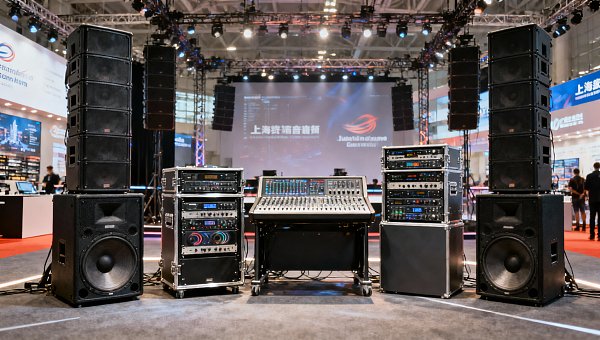
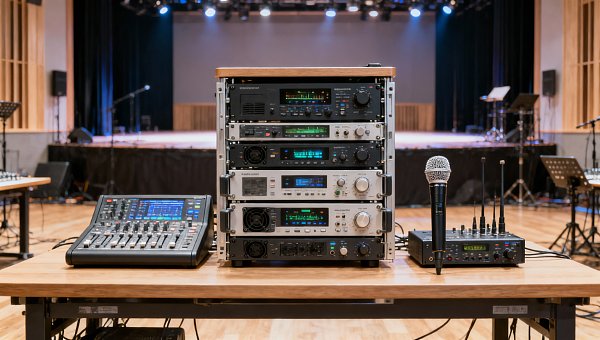
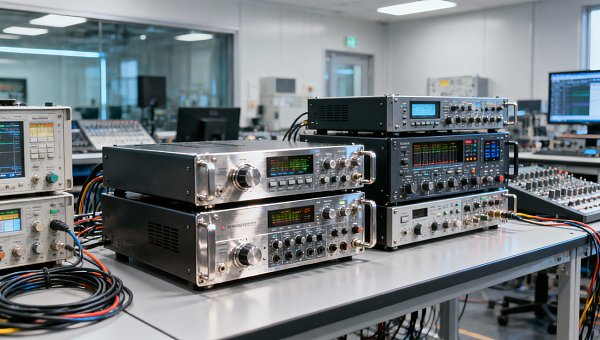
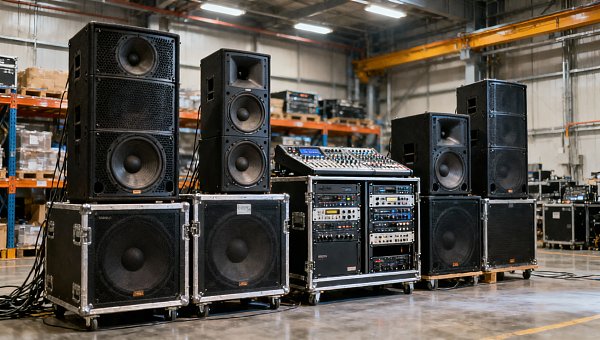
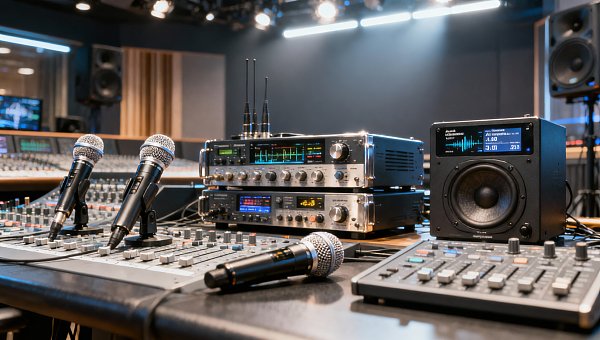
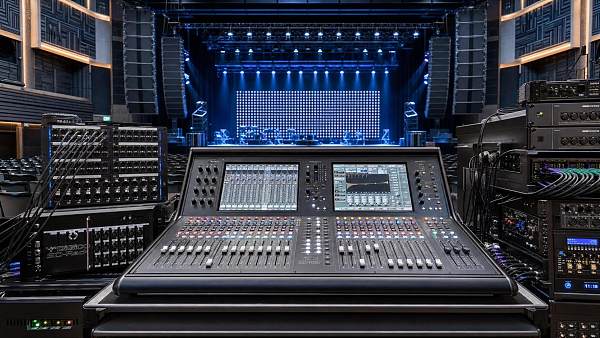
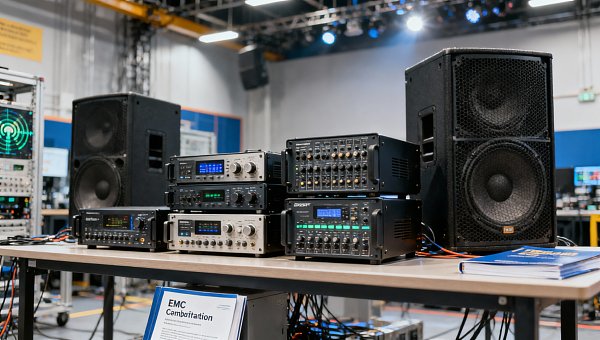
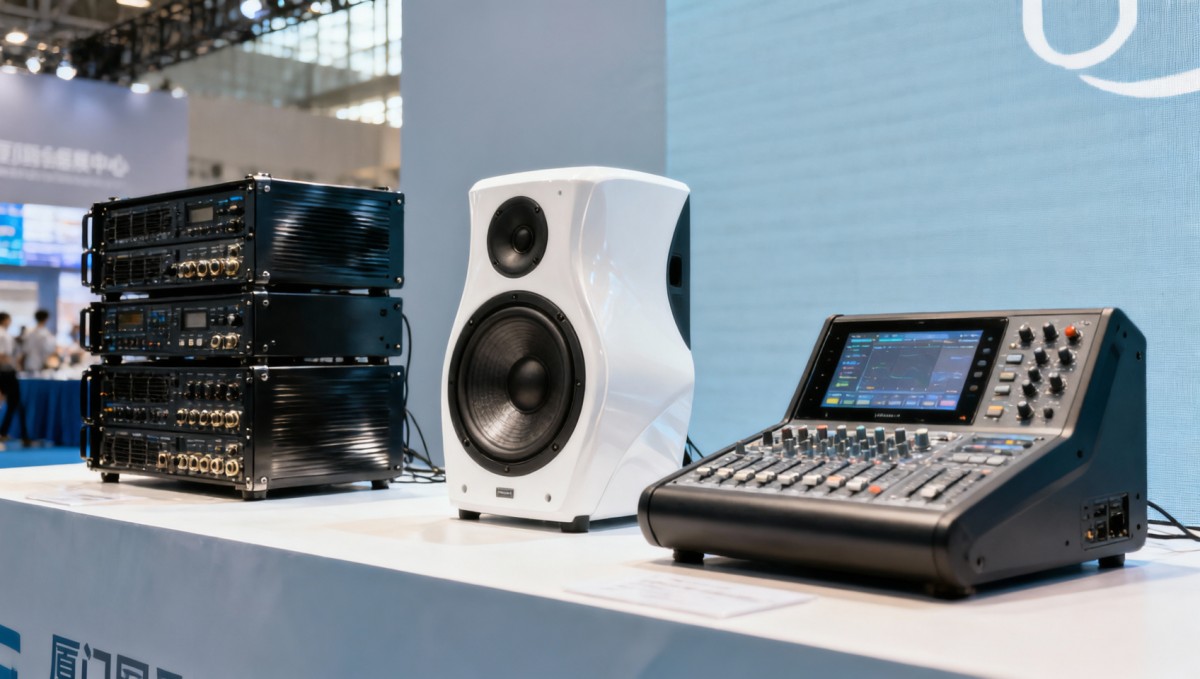
The 2026 China International Sports Products Expo took place in Xiamen and closed on May 24, 2026. According to publicly reported outcomes, export orders for Pro Stage Audio products rose by 41% year-on-year. Saudi and UAE procurement delegations placed on-site contracts exceeding RMB 120 million. These delegations specifically assessed compliance with EMC, CE, and IEC 60950-1 standards, as well as production capacity stability, focusing on power amplifiers, line array loudspeakers, and digital mixing consoles. Multiple exhibitors confirmed that Middle Eastern clients have initiated a streamlined vendor qualification process requiring factory audits and sample testing to be completed within 30 days.
Industries Affected
Direct Export Trading Enterprises
These enterprises face intensified demand for rapid compliance verification and shipment readiness. The 30-day audit-and-test window compresses typical lead times for documentation preparation, third-party certification alignment, and logistics coordination — especially for products requiring EMC/CE/IEC 60950-1 evidence.
Electronics Manufacturing & Assembly Firms (Stage Audio Segment)
Firms producing power amplifiers, line array systems, or digital mixing consoles are directly impacted by heightened scrutiny of regulatory conformance and production consistency. Clients’ focus on IEC 60950-1 — a legacy safety standard largely superseded by IEC 62368-1 for new designs — suggests some Middle Eastern importers may still reference older technical baselines or rely on existing certification pathways.
Supply Chain Certification & Testing Service Providers
Testing labs and certification consultants specializing in EMC, CE marking, and electrical safety standards are likely to see increased short-cycle requests for pre-audit gap assessments, test report generation, and factory audit support — particularly for clients targeting Gulf Cooperation Council (GCC) markets.
International Logistics & Trade Compliance Coordinators
With compressed vendor qualification cycles, logistics providers supporting export documentation, customs classification (e.g., HS codes for professional audio gear), and GCC-specific conformity assessment (e.g., SASO IECEE, Emirates Authority for Standardization and Metrology requirements) must align closely with manufacturing partners to avoid delays.
What Relevant Enterprises or Practitioners Should Monitor and Act On
Track evolving conformity expectations for GCC markets
Current client emphasis on IEC 60950-1 does not necessarily reflect formal regulatory mandates but may indicate internal procurement policies or reliance on legacy certifications. Enterprises should verify whether updated standards (e.g., IEC 62368-1) or local GCC requirements (e.g., SASO COC, G-Mark) apply to their target shipments — rather than assuming equivalence across standards.
Prepare for accelerated factory audit readiness
Given the ‘30-day audit + sample test’ timeline, manufacturers should ensure technical files, test reports, production records, and quality control documentation are up to date and readily accessible. Pre-audit checklists aligned with ISO 9001 and GCC-specific supplier evaluation criteria are advisable.
Validate product categorization and market-specific labeling
Power amplifiers, line arrays, and digital mixers may fall under distinct regulatory categories depending on voltage, power rating, and intended use. Misclassification could delay certification or trigger retesting. Confirming correct labeling (e.g., CE marking placement, Arabic language user manuals for GCC) ahead of audit is operationally critical.
Assess capacity buffer for concurrent sample production and compliance testing
Rapid turnaround demands may require dedicated sample units, parallel test scheduling, and contingency plans for rework. Firms should evaluate whether current lab partnerships offer priority slots or GCC-focused test protocols — rather than relying solely on general-purpose EMC/EMI facilities.
Editorial Perspective / Industry Observation
Observably, this outcome reflects growing buyer-side discipline in emerging procurement hubs — not just higher demand, but more structured, time-bound evaluation of supplier capability. Analysis shows the 41% order growth is tied not only to volume but to procedural rigor: clients are shifting from transactional sourcing to integrated supplier vetting. From an industry perspective, this is less a one-off trade show result and more an early indicator of tightening operational thresholds for export into select high-potential regions. It is currently better understood as a signal of evolving buyer expectations — not yet a standardized regional requirement — and therefore merits monitoring rather than immediate policy overhaul.
Conclusion: The 2026 China Sports Expo results highlight a measurable uptick in export momentum for professional stage audio, coupled with more disciplined, time-sensitive vendor assessment practices among Middle Eastern buyers. This signals a shift toward compliance-aware, capacity-verified sourcing — not merely price- or feature-driven procurement. For stakeholders, the data point is best interpreted as an early benchmark in regional qualification maturity, warranting targeted readiness actions rather than broad strategic pivots.
Source: Official post-event summary released by the 2026 China International Sports Products Expo organizing committee (Xiamen, May 2026). Note: Ongoing verification of GCC market-specific regulatory alignment — including updates to SASO, ESMA, and UAE National Accreditation Authority requirements — remains recommended beyond the scope of this report.
Search News
Hot Articles
- Indoor PlaygroundHow to Choose Animatronic Haunted House Props for High-Throughput AttractionsOct 08, 2026
- Fashion & Gem JewelryThermal Diamond Testers: How They Work and When They Can Misidentify StonesOct 07, 2026
- Commercial KitchenWhat Is Driving Demand for Commercial Hospitality Projects Across the GCC?Oct 06, 2026
Popular Tags
Need ExpertConsultation?
Connect with our specialized leisureengineering team for procurementstrategies.
Recommended News
 Sep 30, 2026How to Choose an Aluminum Projector Ceiling Mount for Load, Drop, and Ceiling TypeChoose an aluminum projector ceiling mount with confidence. Learn how load capacity, drop length, ceiling structure, safety retention, and service access shape a reliable commercial AV installation.● Pro Audio Engineer
 Sep 26, 2026How to Choose Dynamic Microphones for Vocals in Live Stage SettingsDynamic microphones for vocals: learn how to match polar patterns, feedback control, durability, and clarity to live stage needs for reliable, professional sound.● Pro Audio Engineer
 Sep 07, 2026How to Choose Wall Mount Speakers for Clear Audio in Commercial SpacesWall mount speakers for commercial spaces: learn how to optimize coverage, SPL, directivity, installation, and system design for clear, reliable audio.● Pro Audio Engineer
 Sep 03, 2026How to Choose Locking Speakon Speaker Cables for Reliable Live Sound ConnectionsLocking Speakon speaker cables: learn how to select the right gauge, connector pinout, strain relief, and durable construction for reliable live sound connections.● Pro Audio Engineer
 Sep 08, 2026Is It Worth Upgrading a Stage Sound System Mid-Project?Is it worth upgrading stage sound systems mid-project? Discover how to assess performance gaps, costs, compatibility, and long-term venue value.● Pro Audio Engineer
 Sep 04, 2026Can AV Systems Be Retrofitted Into Older Commercial Buildings?Can AV integration be retrofitted into older commercial buildings? Discover practical strategies for reliable, code-aware AV upgrades with minimal disruption.● Pro Audio Engineer
 Jul 17, 2026How to Choose a Crossover Networks Supplier: Key Specs, Quality Checks, and OEM FactorsFind the right crossover networks supplier with this practical guide to key specs, quality checks, OEM factors, and supply chain risks for better audio performance and sourcing confidence.● Pro Audio Engineer
 Jul 16, 2026How to Evaluate ODM Services for Pro Audio: Design, Certification, and Production CapabilitiesODM services for pro audio: learn how to assess design depth, certification readiness, and production strength to choose a reliable partner and launch better audio products with less risk.● Pro Audio Engineer
 Jul 15, 2026JETRO Flags Modular, Low-Power Shift in Pro Stage AudioPro Stage Audio buyers in Japan are shifting fast: JETRO flags modular amplifiers, IP65 line arrays, low standby power, and JIS compliance as key to channel entry.● Pro Audio Engineer
 Jul 15, 2026Paper Speaker Cones Explained: How Cone Weight and Stiffness Affect SoundPaper speaker cones explained: discover how cone weight and stiffness shape sensitivity, clarity, breakup control, and real-world speaker performance for smarter audio sourcing.● Pro Audio Engineer
 Jul 15, 2026Performance Venues Compliance Checklist: Fire Safety, Accessibility, and Crowd RulesPerformance venues compliance checklist covering fire safety, accessibility, and crowd rules. Learn how to reduce delays, improve approvals, and open safer, more resilient venues.● Pro Audio Engineer
 Jul 14, 2026Japan Adds EMC Immunity Test for Stage AmplifiersJapan Adds EMC Immunity Test for Stage Amplifiers: learn how Japan’s 2026 JIS update affects EMC testing, JIS marking, certification timing, and market access for exporters.● Pro Audio Engineer
 Jul 13, 2026CISCE 2026 Adds Pro Stage Audio ZoneCISCE 2026 Adds Pro Stage Audio Zone as free overseas pre-registration opens. Explore key updates for pro audio suppliers, distributors, and system integrators before the Shanghai expo.● Pro Audio Engineer
 Jul 12, 2026Japan Tightens Pro Stage Audio Efficiency Limits Under JIS C 8105-2026Japan Tightens Pro Stage Audio Efficiency Limits Under JIS C 8105-2026: learn how new PSE compliance rules reshape market access, product eligibility, and shipment planning in Japan.● Pro Audio Engineer
 Jul 12, 2026How to Choose Low Profile Ceiling Speakers for Hotels, Offices, and Retrofit ProjectsLow profile ceiling speakers for hotels, offices, and retrofit projects: learn how to compare depth, coverage, compliance, and installation factors to choose the right fit.● Pro Audio Engineer
 Jul 11, 2026Japan Tightens JIS C 8105-2026 for Pro AudioJapan Tightens JIS C 8105-2026 for Pro Audio: learn how stricter standby power, PSE diamond mark rules, and the 2026 deadline impact exports, compliance, and market access.● Pro Audio Engineer
 Jul 10, 2026JETRO Q2 Outlook Signals Higher Stage Audio DemandJETRO Q2 Outlook signals higher stage audio demand in Japan, with 37% procurement growth and stricter PSE Annex D compliance. See what importers, manufacturers, and rental channels must act on now.● Pro Audio Engineer
 Jul 10, 2026How to Choose Wall Mount Speakers for Restaurants by Layout, Coverage, and SPLWall mount speakers for restaurants should match layout, coverage, and SPL. Learn how to choose the right setup for even sound, guest comfort, and reliable performance.● Pro Audio Engineer
 Jul 09, 2026JIS T 9001:2026 Adds Mandatory AI Noise LabelsJIS T 9001:2026 adds mandatory AI noise labels for pro audio gear from October 2026. Learn how it impacts compliance, testing, exports, and product launches.● Pro Audio Engineer
 Jul 06, 2026Improving Sound Reinforcement Speech Clarity: Key Causes of Muddiness and How to Fix ThemSound reinforcement speech clarity starts with identifying reverberation, coverage, noise, and timing issues. Discover practical fixes that make announcements clearer and commercial spaces perform better.● Pro Audio Engineer
 Jul 05, 2026Saudi Rule Adds Arabic UI Requirement for Pro Audio ImportsSaudi Rule Adds Arabic UI Requirement for Pro Audio Imports: learn how SASO’s new Arabic UI mandate affects digital amplifiers, DSP processors, and network audio interfaces before Sept. 1, 2026.● Pro Audio Engineer
 Jul 02, 2026How to Choose Audio Mixing Consoles for Live Venues: Channels, Buses, and I/O ExplainedAudio mixing consoles explained for live venues: learn how to choose the right channels, buses, and I/O to improve workflow, support growth, and avoid costly mistakes.● Pro Audio Engineer
 Jul 01, 2026UL 62368-3:2026 Adds EMC Rules for Pro Stage AudioUL 62368-3:2026 adds EMC rules for Pro Stage Audio, requiring Level 4 immunity and manual labeling by Oct 1, 2026. See what exporters, makers, and buyers must do now.● Pro Audio Engineer
 Jun 30, 2026Sound Reinforcement Design Basics: How to Plan Coverage, SPL, and Speaker PlacementSound reinforcement design starts with smarter coverage, target SPL, and speaker placement. Learn how to plan clearer, more reliable audio performance for commercial spaces.● Pro Audio Engineer