Vietnam Enforces CNCA Certification for Arcade & VR Machines
Effective July 1, 2026, Vietnam will require all imported arcade and virtual reality (VR) machines to hold a Vietnam Safety & EMC Certificate issued by China’s Certification and Accreditation Administration (CNCA)-accredited bodies — a new regulatory requirement that directly impacts China-based exporters, particularly those concentrated in South China’s Guangdong and Shenzhen hubs.
Event Overview
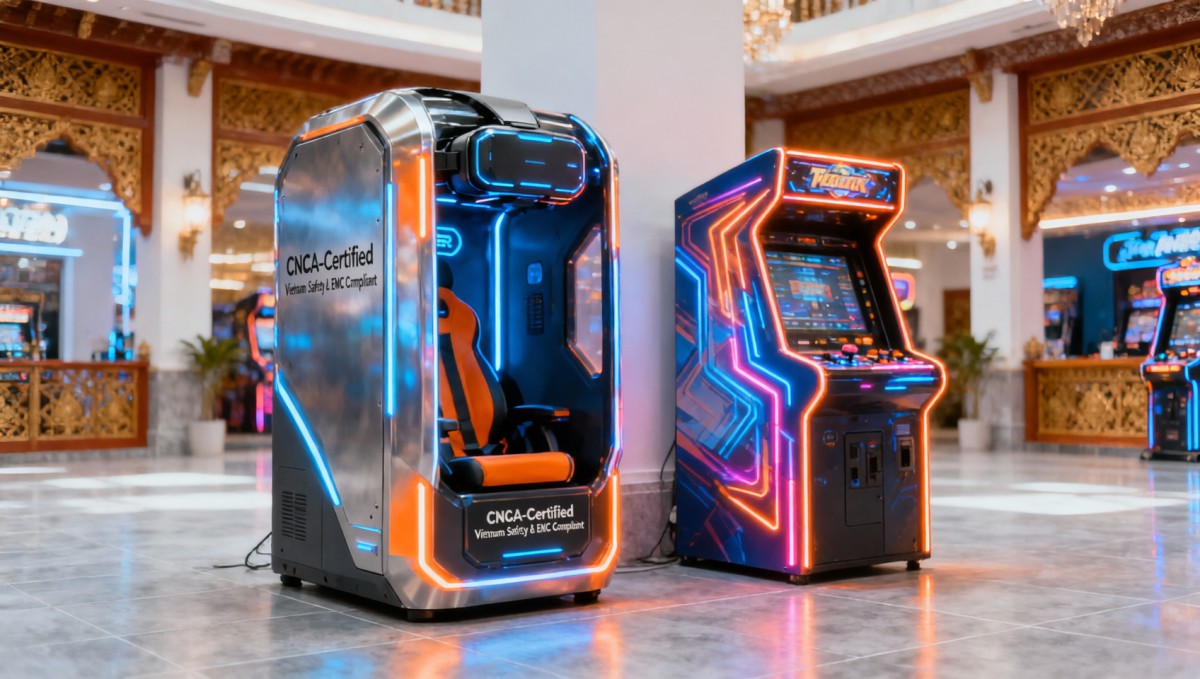
Vietnam’s Ministry of Industry and Trade (MOIT) issued Circular No. 28/2026/TT-BCT on May 24, 2026. The circular mandates that, starting July 1, 2026, all arcade and VR machines imported into Vietnam must be accompanied by a ‘Vietnam Safety & EMC Certificate’ issued by CNCA-recognized certification bodies. The certificate must be registered with Vietnam’s General Department of Standards, Metrology and Quality (STAMEQ).
Industries Affected
Direct trading enterprises: Exporters engaged in cross-border sales of arcade and VR equipment face immediate compliance pressure. Certification lead times (typically 6–10 weeks), associated fees (estimated USD 3,500–7,200 per model family), and STAMEQ registration delays are expected to extend average shipment cycles by 8–12 weeks. Over 60% of such exporters based in South China lack pre-existing CNCA-accredited safety certification for these product categories.
Raw material procurement enterprises: Suppliers of core components — including motion platforms, haptic feedback modules, and VR headset sub-assemblies — may experience revised order patterns. Buyers are increasingly requesting component-level conformity documentation to support final device certification, shifting due diligence upstream and raising traceability requirements beyond typical commercial agreements.
Contract manufacturing enterprises: OEM/ODM factories producing under foreign brand labels now bear greater technical responsibility. They must provide full technical documentation (including schematics, BOMs, test reports, and firmware architecture summaries) to certification bodies — a step previously managed solely by the brand owner. This expands liability exposure and increases internal coordination overhead.
Supply chain service enterprises: Customs brokers, certification consultants, and logistics integrators specializing in China–Vietnam trade report rising client inquiries about CNCA-accredited pathways and STAMEQ filing procedures. Demand is surging for bilingual (Chinese–Vietnamese) technical liaison services and expedited STAMEQ registration support — capabilities currently limited among mid-tier providers.
Key Focus Areas & Recommended Actions
Verify CNCA accreditation scope before engaging any certification body
Not all CNCA-recognized institutions are authorized for ‘entertainment electronic equipment’ under Vietnam’s updated classification. Enterprises must confirm that the selected body holds valid scope extension for IEC 62368-1 (Safety) and IEC 61000-6-3/6-4 (EMC) as applied to arcade/VR systems — not just generic IT or audiovisual categories.
Initiate STAMEQ pre-filing consultation by June 15, 2026
STAMEQ does not accept certificates without prior notification of intended importation timelines and model variants. Early engagement helps avoid bottlenecks during the first quarter of enforcement, especially for multi-model portfolios requiring batch registration.
Review labeling and user manual compliance against TCVN 7322:2023
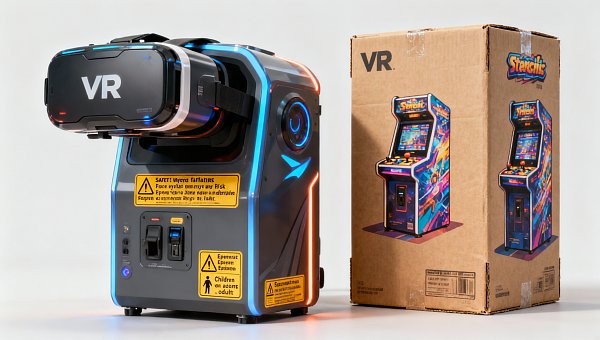
The new requirement explicitly references Vietnam’s national standard TCVN 7322:2023 (equivalent to IEC 62368-1). Labels must include Vietnamese-language safety warnings, manufacturer address in Vietnam (or local representative), and certificate number visibly printed on the device or packaging — deviations trigger customs rejection, regardless of certificate validity.
Editorial Perspective / Industry Observation
Analysis shows this measure is less a standalone safety reform and more a strategic calibration of Vietnam’s import control framework — aligning with broader ASEAN harmonization efforts while tightening oversight on high-interaction consumer electronics. Observably, MOIT has prioritized rapid implementation over phased rollout, suggesting strong domestic pressure from consumer protection agencies and local manufacturers seeking level-playing-field safeguards. From an industry perspective, the timing coincides with Vietnam’s projected 22% YoY growth in immersive entertainment infrastructure investment through 2027 — making compliance not just mandatory but commercially consequential.
Conclusion
This regulation marks a structural shift in how Vietnam governs emerging tech hardware imports. It signals growing regulatory maturity — one that rewards proactive technical alignment over reactive compliance. For Chinese exporters, success hinges less on speed of response and more on depth of system-level understanding: integrating certification readiness into R&D, sourcing, and documentation workflows — not treating it as a final shipping checkpoint.
Source Attribution & Ongoing Monitoring
Official source: Vietnam Ministry of Industry and Trade, Circular No. 28/2026/TT-BCT (May 24, 2026); STAMEQ Public Notice No. 17/2026 (June 3, 2026).
Items under observation: (1) Potential expansion to include VR software platforms under ‘integrated system’ interpretation; (2) Possible bilateral recognition talks between CNCA and STAMEQ post-July 2026; (3) Updates to TCVN 7322 amendment drafts expected Q3 2026.
Search News
Hot Articles
- Indoor PlaygroundHow to Choose Animatronic Haunted House Props for High-Throughput AttractionsOct 08, 2026
- Fashion & Gem JewelryThermal Diamond Testers: How They Work and When They Can Misidentify StonesOct 07, 2026
- Commercial KitchenWhat Is Driving Demand for Commercial Hospitality Projects Across the GCC?Oct 06, 2026
Popular Tags
Need ExpertConsultation?
Connect with our specialized leisureengineering team for procurementstrategies.
Recommended News
 Sep 15, 2026How to Choose Coin-Operated Pool Tables for Bars, Hotels, and Arcade VenuesCoin operated pool tables for bars, hotels, and arcades: compare sizes, payment systems, durability, service access, and revenue potential.● Theme Park Strategist
 Sep 08, 2026What to Look for in a Flight Simulator Chair Manufacturer for Commercial VR CentersChoose a flight simulator chair manufacturer that delivers durable, safe, customizable seating for commercial VR centers. Explore key sourcing criteria now.● Theme Park Strategist
 Aug 25, 2026What to Evaluate Before Buying Commercial Self Service Photo Booths for VenuesCommercial self service photo booths for venues: learn how to evaluate durability, software stability, branding flexibility, support, and total ROI before you buy.● Theme Park Strategist
 Aug 23, 2026How to Evaluate Wholesale Vending Machines for Multi-Location Business DeploymentWholesale vending machines for multi-location deployment require more than low unit cost. Learn how to compare reliability, payments, telemetry, and supplier support to scale smarter.● Theme Park Strategist
 Aug 17, 2026U.S. CPSC Urges Bilingual Warnings for Arcade and VR MachinesU.S. CPSC urges bilingual safety warnings for Arcade & VR Machines—learn what exporters, importers, and distributors must do now to avoid delays and returns.● Theme Park Strategist
 Aug 16, 2026EU Enforces EN IEC 62368-1:2026 Certification for Arcade and VR MachinesEU Enforces EN IEC 62368-1:2026 certification for arcade and VR machines, reshaping EU market access, customs clearance, and compliance planning for exporters and distributors.● Theme Park Strategist
 Aug 13, 2026UFLPA’s new guidelines take effect: Exports of Arcade and VR equipment face full-link labor compliance requirementsUFLPA’s new guide takes effect: Arcade and VR machine exports to the U.S. now face full-chain labor compliance checks. Discover key risks and action steps.● Theme Park Strategist
 Aug 12, 2026EU PPWR takes effect, Arcade and VR packaging incorporate heavy metal and PFAS restrictionsEU PPWR now applies to Arcade and VR packaging, tightening heavy metal and PFAS compliance. Learn how exporters can avoid delays, fines, and customs risks.● Theme Park Strategist
 Aug 11, 2026CPSC Sets Bilingual Labels for Arcade and VR ImportsCPSC bilingual labels for arcade and VR imports become mandatory on October 1, 2026. Learn the new English-Spanish warning rules, customs risks, and key compliance steps now.● Theme Park Strategist
 Aug 10, 2026EU Rule Takes Effect for Arcade & VR Machine ClearanceArcade & VR Machine clearance in the EU now depends on EN IEC 62368-1:2026+A11:2026 compliance. Learn what changed, who is affected, and how to avoid customs delays.● Theme Park Strategist
 Aug 09, 2026CPSC Requires New Labels for Arcade and VR ImportsCPSC requires new labels for Arcade and VR imports starting Oct 1, 2026. Learn the multilingual warning rules, compliance risks, and key steps exporters and buyers must take now.● Theme Park Strategist
 Aug 08, 2026EU Entry Rule Tightens for Arcade & VR MachinesArcade & VR Machines entering the EU now face stricter CE compliance under EN IEC 62368-1:2026+A11:2026. Learn the new rule, risks, and what exporters must do now.● Theme Park Strategist
 Aug 07, 2026CPSC Notice Tightens U.S. Entry Rules for Arcade and VR MachinesCPSC Notice Tightens U.S. Entry Rules for Arcade and VR Machines: learn the new labeling, FCC, UN38.3, and compliance document requirements before October 1, 2026.● Theme Park Strategist
 Aug 06, 2026EU Rule Takes Effect for CE-UKCA Labels on Arcade & VR MachinesArcade & VR Machines face new CE-UKCA label and ECPD filing rules in the EU and UK. Learn what manufacturers, importers, and distributors must do now to avoid delays.● Theme Park Strategist
 Aug 05, 2026CPSC Recalls Arcade and VR Machines Over UL 62368-1CPSC recalls arcade and VR machines over UL 62368-1 non-compliance. Learn how this 2026 safety action may affect imports, distribution, customs clearance, and market access.● Theme Park Strategist
 Aug 02, 2026EU Sets New Certification Rule for Arcade and VR MachinesArcade and VR Machines face a new EU certification rule from Oct 1, 2026. Learn how EN IEC 62368-1:2026+A11:2026 affects CE marking, customs clearance, and market access.● Theme Park Strategist
 Aug 01, 2026CPSC Moves to Require Bilingual Warnings on Arcade and VR MachinesCPSC bilingual warnings for Arcade and VR Machines may reshape U.S. import compliance. Learn how English-Spanish labels affect packaging, customs risk, and shipment readiness.● Theme Park Strategist
 Jul 31, 2026EU Sets EN IEC 62368-1:2025 Rule for Arcade and VR MachinesEU Sets EN IEC 62368-1:2025 Rule for Arcade and VR Machines. Learn the new EU compliance deadlines, safety updates, and key actions for manufacturers, OEMs, and distributors.● Theme Park Strategist
 Jul 30, 2026CPSC Sets New Warning Label Rule for Arcade & VR MachinesCPSC sets a new warning label rule for Arcade & VR Machines effective August 15, 2026. Learn key compliance risks, multilingual label requirements, and shipment actions now.● Theme Park Strategist
 Jul 29, 2026EU Enforces New Safety Standard for Arcade and VR MachinesEU Enforces New Safety Standard for Arcade and VR Machines: learn how EN IEC 62368-1 affects CE compliance, customs clearance, and EU market access for exporters and buyers.● Theme Park Strategist
 Jul 28, 2026CPSC Sets ASTM F3472-26 Rule for Arcade & VR ImportsCPSC ASTM F3472-26 rule reshapes Arcade & VR imports to the U.S. Learn key compliance deadlines, certification risks, and what exporters, OEM/ODM suppliers, and buyers should do now.● Theme Park Strategist
 Jul 27, 2026EU Rule Takes Effect for Arcade & VR Machine CybersecurityEU Rule Takes Effect for Arcade & VR Machine Cybersecurity: learn how EN IEC 62443-3-3:2025 affects compliance, customs clearance, sales continuity, and supplier planning in the EU market.● Theme Park Strategist
 Jul 25, 2026CPSC Sets Bilingual Warning Rule for Arcade and VR ImportsCPSC bilingual warning rule for arcade and VR imports takes effect August 1, 2026. Learn how OEM/ODM exporters can avoid CBP delays, relabel shipments, and protect U.S. delivery timelines.● Theme Park Strategist
 Jul 24, 2026EU Enforces New Safety Standard for Arcade and VR MachinesEU Enforces New Safety Standard for Arcade and VR Machines: learn how EN IEC 62368-1:2026+A11:2026 reshapes EU compliance, CE documentation, testing timelines, and export readiness.● Theme Park Strategist