China's UWB Timing System Gains ITU Certification at Haiwan Event
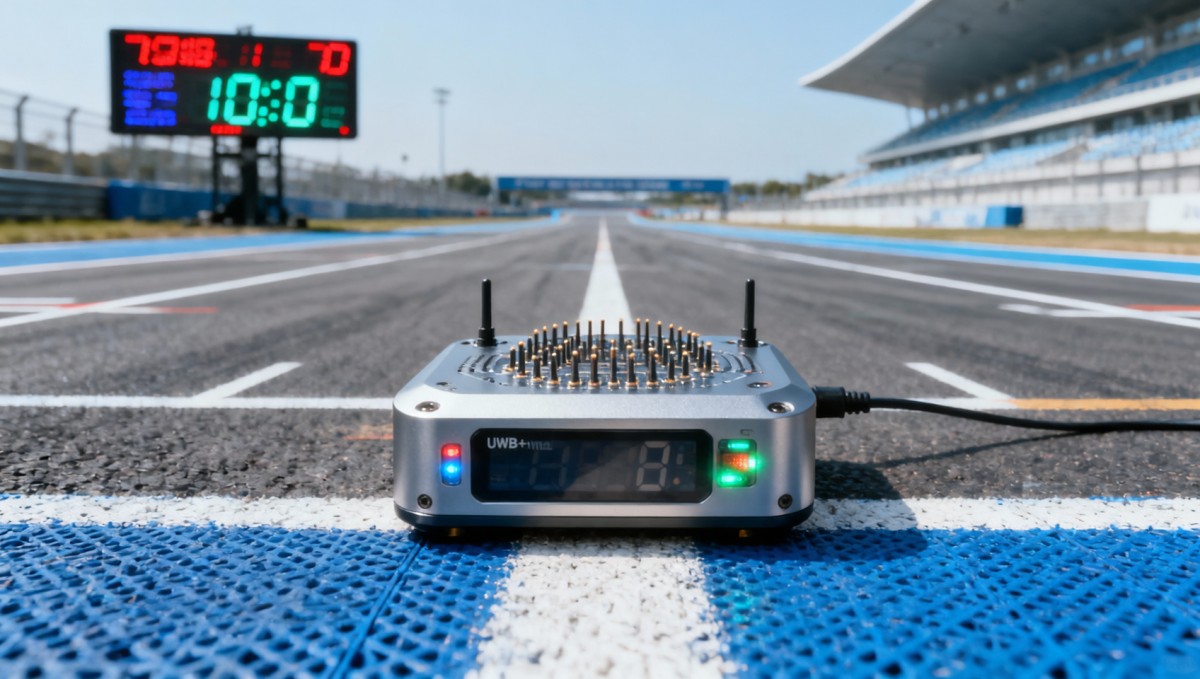
On April 20, 2026, a domestically developed ultra-wideband (UWB) + inertial measurement unit (IMU) fused timing system achieved millisecond-level synchronization accuracy during the National University Intelligent Vehicle Competition (Fengxian Station), earning formal ITU-T Y.3506 international certification. This development is relevant to sports technology providers, intelligent infrastructure integrators, export-oriented timing equipment manufacturers, and stadium project contractors—particularly those engaged in Middle Eastern and African sports venue tenders where this certification is now a mandatory requirement for ‘competition-grade timing systems’.
Event Overview
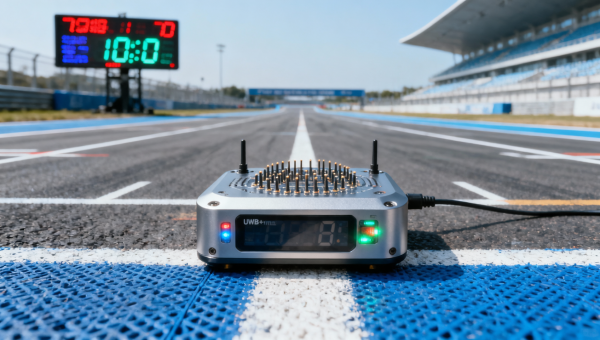
On April 20, 2026, the National University Intelligent Vehicle Competition was held in Haiwan, Fengxian District, Shanghai. A total of 29 university teams participated. The event deployed a Chinese-made intelligent timing system integrating high-precision UWB and IMU modules, which demonstrated millisecond-level synchronization error performance. The system has received ITU-T Y.3506 international certification—the same standard now cited as a compulsory entry condition in public tenders for sports venues in the United Arab Emirates, Saudi Arabia, and South Africa.
Which Subsectors Are Affected
Export-Oriented Timing Equipment Manufacturers
These companies may face revised technical eligibility criteria when bidding for international sports infrastructure projects—especially in Gulf Cooperation Council (GCC) and Southern African Development Community (SADC) markets. The ITU-T Y.3506 certification is now explicitly required in tender documents for ‘competition-grade timing systems’, shifting procurement evaluation from functional compliance toward standardized, internationally recognized verification.
Sports Venue Integrators & EPC Contractors
Contractors delivering turnkey stadium or arena projects in emerging markets must now verify whether their selected timing subsystems hold ITU-T Y.3506 certification. Absence of this certification may disqualify otherwise technically suitable solutions during prequalification or bid evaluation stages—even if local standards or prior project experience were previously accepted.
Smart Infrastructure Supply Chain Service Providers
Firms offering logistics, customs clearance, or conformity assessment support for sports-tech exports may see increased demand for ITU-related documentation preparation—including test reports, traceable calibration records, and certified translation of compliance statements. The certification’s linkage to tender requirements implies tighter alignment between supply chain documentation and procurement timelines.
What Relevant Enterprises or Practitioners Should Monitor and Do Now
Track official tender language updates in priority markets
From industry角度看, UAE and Saudi sports authority tender portals have begun referencing ITU-T Y.3506 verbatim in recent RFPs. Companies should monitor changes in procurement clauses—not just for new stadiums, but also for legacy venue upgrades where timing system replacement is part of broader digitalization packages.
Verify certification scope against actual product configurations
Current more appropriate to understand that ITU-T Y.3506 certification applies specifically to the integrated UWB+IMU timing system validated at the Fengxian event—not to all UWB modules or timing hardware generically. Exporters must confirm whether their own products fall under the certified configuration or require separate validation.
Distinguish between policy signal and operational readiness
Analysis来看, the inclusion of ITU-T Y.3506 in tenders reflects an emerging regulatory signal—not yet universal enforcement. However, early adopters are already using it as a differentiator. Firms should assess whether internal testing capacity, third-party lab partnerships, or documentation templates are aligned with the test methodology outlined in Recommendation Y.3506 before committing to bids.
Prepare cross-functional coordination for certification-linked procurement cycles
Observation shows that tender deadlines in GCC markets now often include fixed windows for submission of ITU compliance evidence—typically 10–14 days post-RFP release. Engineering, legal, and export departments should jointly map internal review and notarization workflows to meet such compressed timelines without compromising auditability.
Editor Perspective / Industry Observation
This milestone is best interpreted as a procedural inflection point—not yet a market-wide shift, but a clear signal that international sports infrastructure procurement is formalizing around globally harmonized technical benchmarks. From industry角度, ITU-T Y.3506 is gaining traction not because it introduces novel metrology, but because it offers a vendor-neutral, test-repeatable framework for verifying timing integrity under dynamic conditions—a capability increasingly critical for AI-augmented sports analytics and multi-sensor fusion deployments. Its adoption in Gulf and Southern African tenders suggests growing reliance on ITU standards as de facto technical gatekeepers where national metrology frameworks remain under development. Continued monitoring is warranted, particularly as additional countries reference Y.3506 in draft sports facility guidelines.
In summary, the ITU-T Y.3506 certification awarded to a Chinese intelligent timing system marks a procedural milestone in global sports infrastructure procurement—not a standalone commercial breakthrough, but a newly activated technical checkpoint for exporters and integrators operating in select emerging markets. It signals increasing convergence between international telecom-derived standards and sports technology deployment, reinforcing the need for upstream alignment between product design, certification planning, and tender-specific compliance execution.
Source: Publicly announced results of the National University Intelligent Vehicle Competition (Fengxian Station), April 20, 2026; publicly available tender notices issued by UAE General Sports Authority and South African Department of Sport, Arts and Culture (Q1 2026).
Note: Ongoing observation is recommended regarding expansion of Y.3506 references beyond current GCC and SADC tenders, and potential alignment with ISO/IEC JTC 1 standards for smart venue systems.
Search News
Hot Articles
- Stage Lighting & TrussCCTV5 Snooker Broadcast Drives 37% Surge in Stage Lighting Export InquiriesApr 21, 2026
- Indoor PlaygroundVietnam Mandates Child Finger-Trap Sensors for Indoor Play EquipmentApr 21, 2026
- Stage Lighting & TrussGuangdong vs. Shanxi CBA Game Highlights Domestic Smart Arena LightingApr 21, 2026
Popular Tags
Need ExpertConsultation?
Connect with our specialized leisureengineering team for procurementstrategies.
Recommended News
 Apr 20, 2026Snooker World Championship: Xiao Guodong Secures Third Chinese SpotSnooker World Championship: Xiao Guodong secures third Chinese spot amid AI officiating & 4K HDR broadcast — tech and talent converge in elite cue sports.● Pro Audio Engineer
 Apr 20, 2026FDA Proposes Chinese Label Translation Requirements for Sports SupplementsFDA proposes Chinese label translation requirements for sports supplements—key for importers, manufacturers & global brands. Act now to ensure compliance by Jan 2027.● Pro Audio Engineer
 Apr 17, 2026FDA Drafts New Labeling Rule for Chinese-Labeled Sports SupplementsFDA's new draft rule for Chinese-labeled sports supplements mandates certified English translations—key for brands, CMOs & importers navigating U.S. market entry.● Pro Audio Engineer
 Apr 16, 20262026 Yangtze River Delta Triathlon Uses Certified Chinese Timing System2026 Yangtze River Delta Triathlon uses certified Chinese timing system — ChronoLink Pro, ITU-approved RFID+GPS dual-mode solution for global race organizers.● Pro Audio Engineer
 Apr 13, 2026Asian University Basketball League Secures Funding, Launches Smart Venue ProgramThe Asian University Basketball League (AUBL) secures Series A funding and launches its Smart Venue Program, partnering with tech firms for sustainable sports infrastructure. A key opportunity for sports tech exporters with ISO 50001 certification.● Pro Audio Engineer
 Apr 22, 2026China's UWB Timing System Gains ITU Certification at Haiwan EventChina's UWB timing system wins ITU-T Y.3506 certification—key for sports tech exporters targeting GCC & SADC stadium tenders.● Pro Audio Engineer
 Apr 19, 20262026 Shanghai Sailing Open Adopts ITU-Certified Chinese Timing System2026 Shanghai Sailing Open adopts ITU-certified Chinese timing system — a breakthrough for precision sports tech exporters, certifiers & event organizers.● Pro Audio Engineer
 Apr 20, 2026What Causes Early Failure in Pro Audio Equipment?Pro audio equipment fails early due to heat, dust, unstable power, and weak components. Learn how musical instruments, instrument cables, music accessories, and sourcing choices affect reliability.● Pro Audio Engineer
 Apr 20, 2026Instrument Cables: Shielding, Durability, and the Price Gap ExplainedInstrument cables guide for buyers of pro audio equipment and music accessories across musical instruments, string instruments, keyboard instruments, percussion instruments, wind instruments, and orchestral instruments.● Pro Audio Engineer
 Apr 20, 2026Pro Audio Equipment Upgrades That Improve Sound Without OverspendingPro audio equipment upgrades for musical instruments: improve sound with instrument cables, music stands, and music accessories for keyboard, percussion, wind, string, and orchestral instruments—without overspending.● Pro Audio Engineer
 Apr 20, 2026Instrument Cables: Why Cheap Options Often Fail During Live UseInstrument cables for musical instruments often fail live when cheap builds meet pro audio equipment demands. Compare smarter options for string, wind, percussion, and keyboard instruments.● Pro Audio Engineer
 Apr 18, 2026Instrument cables with gold-plated connectors: Do they improve tone—or just resale value?Instrument cables with gold-plated connectors boost reliability & resale value in theme parks, leisure parks, and hotels—proven for soundproofing, playground structures, and catering equipment.● Pro Audio Engineer
 Apr 18, 2026Instrument cables that degrade mid-show—what causes sudden signal drop?Instrument cables failing mid-show? Discover why—bending fatigue, EMI, corrosion & thermal stress—in theme parks, hotels, playgrounds & leisure venues.● Pro Audio Engineer
 Apr 17, 2026Pro stage audio setups where music accessories become acoustic liabilitiesDiscover how commercial furniture, playground borders, sensory playground gear & music accessories impact acoustic safety—avoid liability in pro audio environments.● Pro Audio Engineer
 Apr 16, 2026Pro stage audio gear warranties: What ‘lifetime’ really covers when used in hospitality venuesPro audio equipment & designer eyewear warranties decoded for hotels. See what ‘lifetime’ really covers—OEM manufacturing, custom fabrication, supply chain solutions & more.● Pro Audio Engineer
 Apr 16, 2026Recording studio gear sourcing: Why local compliance often overrides ‘best-in-class’ specsRecording studio gear sourcing for luxury spaces: compliance-first pro audio equipment, designer eyewear integration, and OEM manufacturing solutions—avoid costly delays.● Pro Audio Engineer
 Apr 16, 2026Pro audio equipment for boutique hotels: Why studio-grade gear doesn’t always translate to lobby soundPro audio equipment for boutique hotels must integrate with hotel furniture, designer eyewear & jewelry displays—discover why studio gear fails and how custom fabrication + supply chain solutions deliver sonic & material harmony.● Pro Audio Engineer
 Apr 16, 2026DJ equipment brands prioritizing repairability over replacementDJ equipment brands leading in repairability—trusted alongside luxury furniture, orchestral instruments, music stands & park benches for sustainable, high-ROI commercial procurement.● Pro Audio Engineer
 Apr 15, 2026DJ equipment setups that scale from club nights to festivalsDiscover scalable DJ equipment for clubs & festivals—engineered like luxury furniture, orchestral instruments & music stands. Premium, certified, ready to grow with your venue.● Pro Audio Engineer
 Apr 15, 2026Pro stage audio cabinets tested for 90dB+ continuous playback — not just peaksCommercial furniture & amusement equipment: Pro audio cabinets tested for 90dB+ continuous playback—ideal for sensory playgrounds, hotels, and educational supplies.● Pro Audio Engineer
 Apr 13, 2026Microphone systems for multi-room venues: why one-size-fits-all doesn’t workMicrophone systems for multi-room venues—optimized for hotel desks, commercial playgrounds, trampoline park manufacturer needs & hospitality furniture integration.● Pro Audio Engineer
 Apr 13, 2026Microphone systems for outdoor stages: wind noise reduction that actually worksMicrophone systems engineered for outdoor stages—wind noise reduction that works. Trusted by trampoline park manufacturers, commercial playground & hospitality venues.● Pro Audio Engineer
 Apr 13, 2026Recording studio gear service networks: Why local support beats global warranty claimsRecording studio gear, pro audio equipment & indoor playground equipment demand local service—not global warranties. Faster repairs, OEM manufacturing alignment, and supply chain solutions ensure zero downtime for hotels, studios & leisure venues.● Pro Audio Engineer
 Apr 13, 2026Custom fabrication for studio control rooms: When millwork delays derail your launchCustom fabrication for studio control rooms—critical for pro audio equipment, hotel furniture & indoor playground equipment. Discover supply chain solutions that prevent costly launch delays.● Pro Audio Engineer