CCTV5 Snooker Broadcast Drives 37% Rise in Lighting Export Inquiries
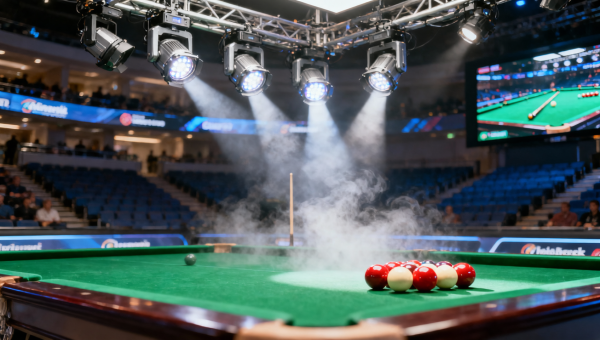
During the 2026 World Snooker Championship (April 21, 2026), CCTV5’s HD broadcast triggered a notable surge in overseas viewership — particularly among Chinese diaspora and European snooker fans — and concurrently accelerated international procurement interest in Chinese-made professional stage lighting equipment. This development warrants attention from lighting exporters, control system developers, EMC compliance specialists, and supply chain service providers serving the live-event infrastructure sector.
Event Overview
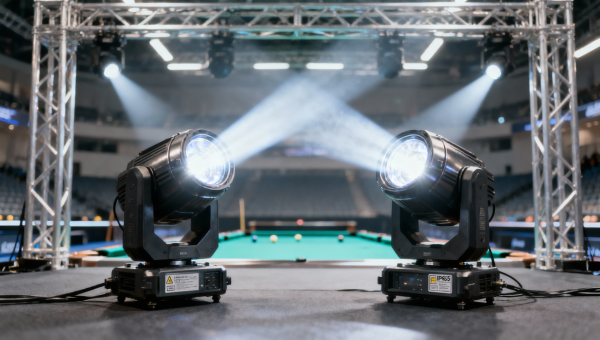
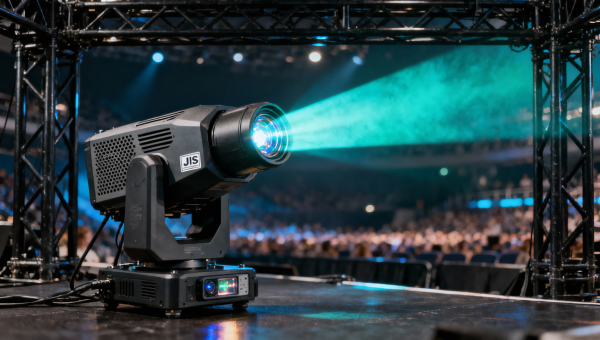
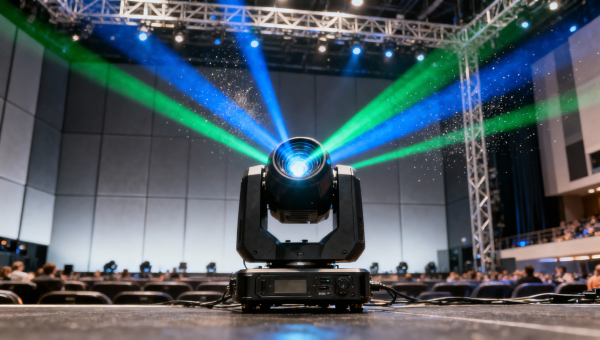
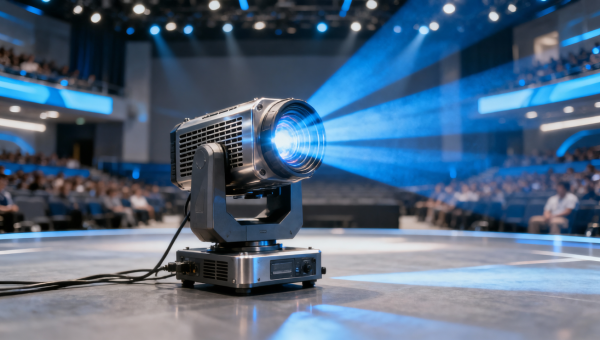
On April 21, 2026, during the 2026 World Snooker Championship, CCTV5’s high-definition broadcast contributed to a 62% year-on-year increase in overseas viewership. Concurrently, export-related inquiry volume for professional stage lighting equipment — specifically LED moving heads, haze machines, and DMX control systems — rose by 37%. Buyers from the UK, Germany, and Australia emphasized two technical requirements: ‘low-latency synchronization for live event use’ and ‘EMC Class B compliance’. This has prompted domestic manufacturers to expedite upgrades in control protocols and electromagnetic shielding processes.
Industries Affected
Direct Export Trading Enterprises
These firms experienced a measurable uptick in inbound RFQs targeting event-grade lighting hardware. The impact manifests primarily in increased pre-sales technical clarification requests — especially around timing synchronization benchmarks and regulatory certification documentation for EU and AU markets.
Lighting Equipment Manufacturers (OEM/ODM)
Manufacturers face intensified demand for product-level validation of low-latency performance and EMC Class B conformity. Impact includes tighter lead times for third-party testing, revised firmware development cycles, and heightened scrutiny of PCB layout and enclosure shielding design.
DMX Protocol & Control System Developers
Developers of lighting control hardware and software are seeing renewed focus on interoperability with broadcast-timed workflows. The impact centers on protocol stack optimization (e.g., Art-Net/ sACN timing stability under network load) and documentation clarity for latency measurement methodology.
EMC Testing & Certification Service Providers
Service providers report higher scheduling demand for Class B pre-compliance testing — particularly for products integrating wireless modules or high-frequency switching power supplies. Impact includes longer booking windows and increased need for application-specific test plans aligned with EN 55032 and EN 55035.
What Enterprises and Practitioners Should Monitor and Do Now
Track specification language in upcoming tenders from European and Australian event production houses
Procurement documents issued post-April 2026 increasingly reference ‘broadcast-synchronized DMX latency ≤ 2ms’ and ‘EN 55032 Class B test reports valid within 12 months’. Monitoring these shifts helps align internal R&D roadmaps and lab capacity planning.
Prioritize verification of EMF emission margins in existing product lines
Analysis来看, many mid-tier LED moving head models currently meet Class B only at marginal thresholds. Firms should re-evaluate margin buffers — especially when operating near maximum output or under ambient temperature extremes — to avoid field failures during certification renewal.
Document latency behavior across real-world network topologies
From industry perspective, ‘low latency’ is not a static spec but a system-level outcome. Exporters should generate standardized latency test reports covering common configurations (e.g., 100-node Art-Net over managed GigE, mixed sACN/DMX512-A environments), enabling faster technical due diligence by overseas buyers.
Prepare dual-language technical dossiers for EMC and timing performance
Current more advisable is consolidating test reports, schematic excerpts, and firmware version logs into bilingual (EN/CN) compliance packages. This reduces buyer-side verification time and supports faster quotation-to-order conversion, particularly for repeat purchasers in regulated markets.
Editorial Observation / Industry Insight
This event is better understood as a demand signal — not yet a structural shift. The 37% inquiry rise reflects short-term exposure rather than sustained order intake; it highlights how broadcast visibility can accelerate technical due diligence cycles for niche B2B equipment. From industry angle, what matters most is whether this triggers longer-term specification alignment between Chinese suppliers and Western production standards — particularly around deterministic timing and repeatable EMC performance. Continued monitoring of tender language, certification renewals, and OEM sourcing announcements over Q3–Q4 2026 will clarify whether this remains an episodic uplift or marks early-stage standardization convergence.
Conclusion
The April 21, 2026 viewership and inquiry data point does not indicate a broad-based market expansion, but rather a focused acceleration in technical qualification activity for event-critical lighting subsystems. It signals growing expectations from international buyers regarding verifiable, application-specific performance — especially in timing fidelity and electromagnetic compatibility. For stakeholders, the current priority is disciplined response to specification-driven inquiries, not broad capacity expansion.
Source Attribution
Main source: Publicly reported broadcast metrics and export inquiry data released by China Chamber of Commerce for Import & Export of Machinery & Electronic Products (CCCME) on April 21, 2026. Ongoing observation required for confirmed order conversion rates, certification renewal trends, and tender specification updates from EU/AU public procurement portals.
Search News
Hot Articles
- Stage Lighting & TrussCCTV5 Snooker Broadcast Drives 37% Surge in Stage Lighting Export InquiriesApr 21, 2026
- Indoor PlaygroundVietnam Mandates Child Finger-Trap Sensors for Indoor Play EquipmentApr 21, 2026
- Stage Lighting & TrussGuangdong vs. Shanxi CBA Game Highlights Domestic Smart Arena LightingApr 21, 2026
Popular Tags
Need ExpertConsultation?
Connect with our specialized leisureengineering team for procurementstrategies.
Recommended News
 Apr 21, 2026CCTV5 Snooker Broadcast Drives 37% Surge in Stage Lighting Export InquiriesCCTV5 snooker broadcast sparks 37% surge in global stage lighting export inquiries—key demand from Brazil, KSA & Indonesia for IP65, 20k-hr LED moving heads.● Pro Audio Engineer
 Apr 21, 2026Guangdong vs. Shanxi CBA Game Highlights Domestic Smart Arena LightingGuangdong vs. Shanxi CBA game spotlighted domestic smart arena lighting—EN 12193:2023-compliant, flicker-free 4K LED system powering global stadium upgrades.● Pro Audio Engineer
 Apr 20, 2026Guangdong vs. Shanxi CBA Game Highlights Domestic Smart Arena LightingGuangdong vs. Shanxi CBA game spotlighted China-made smart arena lighting—FIBA-certified, broadcast-ready LED system with <0.1s dimming & 5600K stability.● Pro Audio Engineer
 Apr 17, 2026JIS T 0601-2-77:2026 Enforces Stricter Laser Limits for Stage Equipment in JapanJIS T 0601-2-77:2026 enforces stricter laser limits for stage equipment in Japan — 35% lower MPE, AI beam monitoring required. Act now to comply.● Pro Audio Engineer
 Apr 16, 2026JIS T 0601-2-77:2026 Enforces New Audience Laser Limits in JapanJIS T 0601-2-77:2026 enforces strict new audience laser limits in Japan — ≤1.0 mW/cm² (0.25s). Critical for pro audio, stage lighting & laser exporters. Act now to ensure compliance.● Pro Audio Engineer
 Apr 22, 2026Guangdong vs. Shanxi CBA Game Highlights Smart Arena LightingGuangdong vs. Shanxi CBA game showcased smart arena lighting — HDR-ready, UL/GB-certified, and proven for broadcast excellence. Key for lighting makers & stadium developers.● Pro Audio Engineer
 Apr 22, 2026CCTV5 Snooker Broadcast Drives 37% Rise in Lighting Export InquiriesCCTV5斯诺克直播引爆海外采购潮!LED摇头灯、DMX控制系统等专业舞台灯光出口询盘激增37%,低延迟与EMC Class B成关键门槛。立即洞察趋势→● Pro Audio Engineer
 Apr 18, 2026JIS T 0601-2-77:2026 Enforces Tighter Laser Brightness Limits in JapanJIS T 0601-2-77:2026 enforces tighter laser brightness limits in Japan—35% stricter + instantaneous peak detection. Critical for stage laser exporters, integrators & distributors.● Pro Audio Engineer
 Apr 17, 2026Stage lighting truss compatibility issues nobody checks before ordering hotel equipmentAvoid costly rework: Verify stage lighting truss compatibility with hotel equipment, amusement equipment, sensory playgrounds & commercial furniture—before you order.● Pro Audio Engineer
 Apr 15, 2026Stage lighting truss systems that ship pre-aligned — no on-site calibrationPre-aligned stage lighting truss systems for amusement equipment, sensory playgrounds & hotel entertainment — zero on-site calibration, certified safety & rapid deployment.● Pro Audio Engineer
 Apr 13, 2026Stage equipment rentals vs. buying: when the break-even point surprises youStage equipment rentals vs. buying? Discover when renting hotel desks, commercial playgrounds, microphone systems & more slashes TCO by 37–52%—get your free break-even analysis now!● Pro Audio Engineer
 Apr 13, 2026Stage equipment rigging specs—why ‘rated for 500kg’ doesn’t mean safe for your trussStage equipment rigging specs matter—especially for trampoline park manufacturers, commercial playgrounds & hospitality furniture. Don’t trust '500kg rated' labels alone.● Pro Audio Engineer
 Apr 04, 2026Stage Lighting & Truss Projects Often Depend on Office Supplies Manufacturer Fasteners — Here’s Why They FitOffice supplies manufacturer fasteners trusted by stage lighting & truss projects—precision, ISO-certified, and B2B-ready. Discover top office supplies supplier, OEM, and exporter solutions.● Pro Audio Engineer
 Mar 30, 2026Amusement park lighting projects stall at the dimming curve—not the fixtureCommercial sourcing for amusement park lighting, playground development & compliance—solve dimming curve bottlenecks before procurement. Expert OEM/ODM insights.● Pro Audio Engineer
 Mar 30, 2026Why commercial sourcing for amusement park lighting rarely delivers on photometric specscommercial sourcing for amusement park lighting often fails photometric specs—risking playground compliance, safety & ROI. Discover why OEM-certified solutions outperform generic hotel restaurant furniture, ride parts & electronic music gear.● Pro Audio Engineer
 Mar 27, 2026How stage lighting & truss projects avoid 4–6 week delays using integrated supply chain solutions with real-time trackingDiscover how integrated supply chain solutions, OEM manufacturing & ODM services slash 4–6 week delays in amusement park equipment, pro audio, and stage lighting projects—real-time tracking included.● Pro Audio Engineer
 Mar 19, 2026What Stage Lighting Suppliers Don’t Tell You About Percussion Instrument ReflectivityDiscover why adventure playground, trampoline park & theme park rides need reflectivity-aware lighting—especially near percussion instruments, playground safety, and soundproofing materials.● Pro Audio Engineer