Electric Trackless Trains or Road Trains for Large Venues?
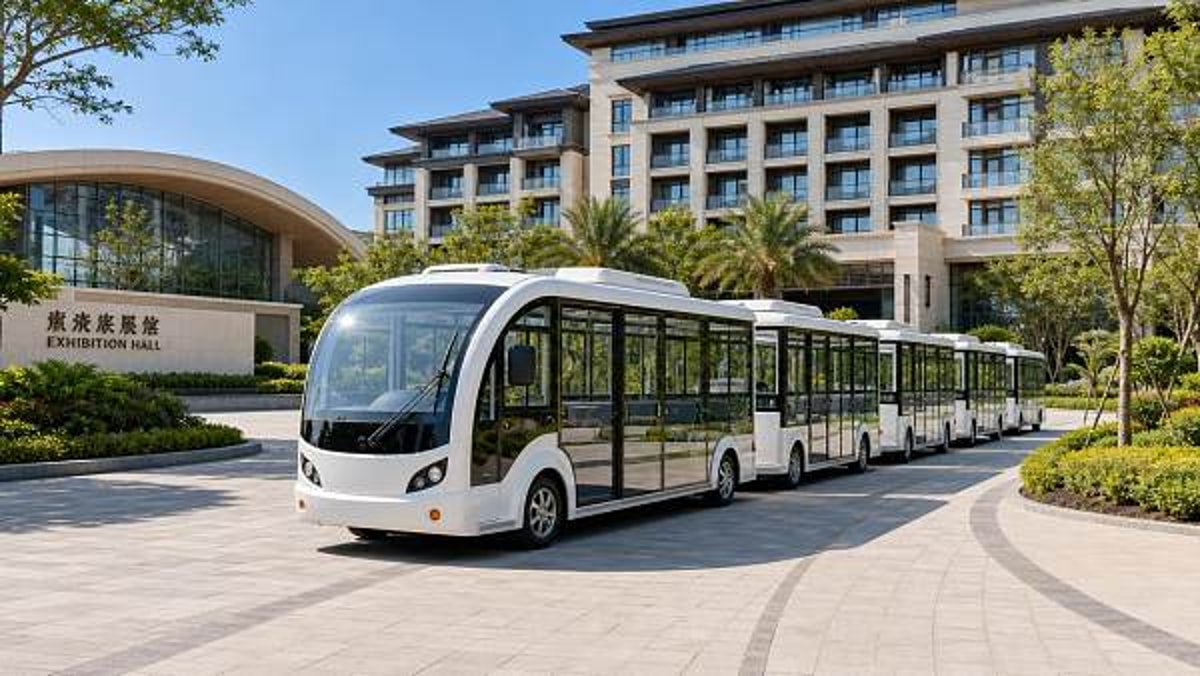
Choosing between electric trackless trains and road trains for large venues is more than a transport decision—it affects guest flow, safety, branding, and operating costs. For buyers comparing solutions for theme parks, resorts, campuses, or event spaces, understanding the strengths of electric trackless trains is the first step toward a smarter, future-ready investment.
Why the conversation is shifting now
Across large venues, the transport discussion has changed. Operators are no longer evaluating internal mobility only by seat count or route length. They are now weighing sustainability targets, visitor expectations, labor efficiency, local emissions rules, and the need for flexible circulation inside multi-use spaces. In that context, electric trackless trains have moved from a niche attraction product to a serious mobility solution for commercial environments.
This change is especially visible in theme parks, destination resorts, shopping districts, zoos, campuses, exhibition centers, and heritage sites. These venues are under pressure to move more people with less noise, lower energy use, and stronger visual consistency. Traditional road trains still serve many applications well, especially where towing power and rugged outdoor performance matter. But the market signal is clear: buyers increasingly want vehicles that support cleaner operations, smoother guest experiences, and more adaptable routing.
For information researchers and sourcing teams, the key question is no longer simply “Which vehicle is cheaper to buy?” It is “Which transport format matches where the venue industry is heading?” That is why electric trackless trains deserve closer attention in forward-looking procurement discussions.
The strongest trend signals behind electric trackless trains
Several practical signals explain why electric trackless trains are gaining momentum in large venues. The first is the experience economy. Venues now compete on comfort, atmosphere, and shareable moments. A quiet, low-vibration ride with themed design value supports that goal better than a purely utilitarian shuttle in many settings.
The second signal is operational flexibility. Unlike fixed rail systems, electric trackless trains can be rerouted for seasonal events, crowd surges, construction changes, or temporary closures. That matters in venues where circulation patterns evolve throughout the year. The third signal is electrification itself. Many venue operators have internal environmental targets or face external pressure from regulators, investors, and guests to reduce fuel consumption and visible exhaust.
A fourth signal is procurement maturity. Buyers are becoming more sophisticated. They increasingly ask about battery range, charging strategy, passenger accessibility, safety systems, turning radius, maintenance cycles, and spare parts support. In other words, electric trackless trains are no longer being reviewed only as novelty transport; they are being examined as long-term commercial assets.
Trend change snapshot for venue transport
What is driving this shift in demand
The rise of electric trackless trains is not driven by one factor alone. It comes from the intersection of technology upgrades and changes in venue management. Battery systems have improved, making electric operation more practical for internal routes. Vehicle design has also advanced, with better braking systems, improved ride stability, and stronger customization options for themed environments.
At the same time, operators are under pressure to use space more efficiently. Large venues often need transport that can function as both a mobility tool and a visual attraction. Electric trackless trains fit that dual purpose well. They can support guided circulation, reduce walking fatigue, assist family groups and elderly visitors, and reinforce a premium environment without the infrastructure burden of fixed rail.
Another major driver is compliance thinking. Buyers increasingly care about safety documentation, battery certification, accessibility features, fire risk management, and after-sales support. In many projects, the winning supplier is not the one with the lowest quote but the one that can prove manufacturing consistency, documentation quality, and reliable global service capability.
Key drivers shaping buyer interest
How electric trackless trains compare with road trains in real venue strategy
For many buyers, the comparison is not about declaring one category universally better. It is about fit. Road trains remain relevant when heavy towing, long outdoor duty cycles, or simpler mechanical service structures are top priorities. They may be a practical choice for some open-air destinations, municipal routes, or mixed-terrain operations.
However, electric trackless trains stand out where branding, indoor-outdoor flexibility, visitor comfort, and low-noise operation matter most. They are especially attractive in venues where transport routes pass restaurants, hotel zones, educational spaces, retail areas, or premium attraction zones. In these settings, noise and exhaust are not minor concerns; they directly influence the commercial atmosphere.
Another important distinction is perception. Electric trackless trains often signal modernity, environmental responsibility, and investment in guest well-being. For venues trying to position themselves as innovative or family-friendly, that perception has real business value. It can support broader messaging around sustainability, accessible design, and seamless visitor journeys.
Who feels the impact of this shift most strongly
The move toward electric trackless trains affects more than procurement teams. It changes how multiple departments evaluate transport value. Operations managers care about route efficiency, charging schedules, driver usability, and maintenance downtime. Marketing teams care about vehicle appearance, themed customization, and social-media-friendly presentation. Safety officers look at passenger boarding, emergency stop systems, visibility, and traffic interaction.
Finance teams increasingly compare total cost of ownership rather than just capital expense. Facility managers need to understand charging infrastructure and power availability. Guest experience leaders focus on wait times, ride comfort, and accessibility for families, seniors, and mobility-limited visitors. Because so many roles are involved, the evaluation process has become more cross-functional than before.
Impact by stakeholder group
The next phase of competition: smarter, cleaner, more adaptable fleets
Looking ahead, the market is likely to reward suppliers and buyers that think beyond the vehicle itself. The next phase of competition will center on system value. That includes battery management, telematics, service training, charging strategy, safety integration, and the ability to match different carriage configurations to different venue flows.
This is where electric trackless trains may gain even more ground. As venue owners seek data-led operations, electric fleets can become easier to monitor for usage patterns, route efficiency, maintenance needs, and energy behavior. Even where advanced fleet software is not yet standard, buyers are increasingly interested in options that support future digital upgrades.
Another likely direction is deeper customization. Large venues want transport that reflects their identity rather than looking generic. Electric trackless trains already perform strongly here because exterior styling, carriage themes, and passenger layouts can be adapted to hospitality, educational, leisure, or mixed-use commercial settings. In a market shaped by premiumization, that flexibility matters.
What buyers should watch before making a decision
For researchers comparing electric trackless trains and road trains, the smartest approach is to focus on scenario fit rather than product claims alone. Start by mapping passenger demand by hour, route surface conditions, slope requirements, stop frequency, and branding expectations. Then evaluate whether the vehicle must support quiet operation near guest-sensitive zones such as hotels, dining terraces, schools, museums, or premium retail areas.
Next, examine support risk. Can the supplier provide documentation, operator training, replacement parts, and realistic maintenance schedules for your market? Does the manufacturer understand international commercial standards and venue-specific duty cycles? Electric trackless trains can deliver strong value, but only when backed by credible engineering and service support.
It is also important to test assumptions around battery performance. Buyers should ask not only for nominal range, but for range under real passenger load, frequent stops, climate variation, and gradient conditions. Charging windows should fit venue operating hours, not just technical ideal conditions. A well-matched electric fleet can improve efficiency, but a poorly specified one can create avoidable friction.
Practical decision checklist
A grounded way to move forward
The transport choice for large venues is becoming more strategic because venue economics are changing. Operators need mobility solutions that not only move people, but also improve experience, support sustainability, and adapt to evolving layouts. That is why electric trackless trains are attracting more serious interest across hospitality, leisure, education, and commercial environments.
Road trains still have a place, particularly in settings where towing strength, terrain resilience, or conventional service models remain the top priorities. Yet the broader direction of the market favors cleaner, quieter, more brand-aligned mobility. For many modern venues, electric trackless trains are increasingly aligned with that direction.
If your organization wants to judge how this trend may affect a future project, focus on a few core questions: How are visitor expectations changing in your venue type? Which operating constraints are becoming more important? What role should transport play in your brand experience? And which suppliers can support those needs with verified capability, safety assurance, and long-term service confidence? Those answers will do more than help you choose a vehicle—they will help you choose the right operating model for the next stage of venue development.
Search News
Hot Articles
Popular Tags
Need ExpertConsultation?
Connect with our specialized leisureengineering team for procurementstrategies.
Recommended News
 May 07, 2026Shen Jing on Trade Rumors: Implications for Basketball Equipment ManufacturingBasketball equipment manufacturing gains strategic clarity as Shen Jing’s trade rumor response boosts OEM confidence—Dongguan & Suzhou suppliers see strengthened NBA facility credibility and smart gear demand.● Theme Park Strategist
 May 07, 2026Ferris Wheel Manufacturer Shortlists Often Miss This RiskFerris wheel manufacturer shortlists often miss lifecycle compliance risk. Learn how to avoid costly delays, safety gaps, and weak after-sales support before you buy.● Theme Park Strategist
 May 07, 2026Lazy River Equipment: Where Energy Use Adds Up FastLazy river equipment can drive energy costs higher than expected. Learn what technical evaluators should check before sourcing or upgrading for better efficiency and lifecycle value.● Theme Park Strategist
 May 07, 2026Water Playground Structures: Design Choices That Reduce Queue TimeWater playground structures that cut queue time: discover layout, capacity, and feature strategies that improve guest flow, safety, and ROI for commercial aquatic projects.● Theme Park Strategist
 May 07, 2026Bumper Cars Wholesale: Battery Options That Change Operating CostsBumper cars wholesale decisions depend heavily on battery choice. Compare lead-acid vs. lithium to cut downtime, lower operating costs, and improve long-term ROI.● Theme Park Strategist
![]() May 07, 2026Pirate Ship Amusement Rides: What Impacts Ride Smoothness Most?Pirate ship amusement ride smoothness depends on structure, drive control, bearings, balancing, and installation. Discover the key checks buyers need for safer, smoother, long-lasting performance.● Theme Park Strategist
May 07, 2026Pirate Ship Amusement Rides: What Impacts Ride Smoothness Most?Pirate ship amusement ride smoothness depends on structure, drive control, bearings, balancing, and installation. Discover the key checks buyers need for safer, smoother, long-lasting performance.● Theme Park Strategist![]() May 07, 2026How to Vet a Water Park Equipment Manufacturer for Large ProjectsWater park equipment manufacturer vetting guide for large projects: compare safety, compliance, capacity, customization, and delivery support to reduce risk and choose with confidence.● Theme Park Strategist
May 07, 2026How to Vet a Water Park Equipment Manufacturer for Large ProjectsWater park equipment manufacturer vetting guide for large projects: compare safety, compliance, capacity, customization, and delivery support to reduce risk and choose with confidence.● Theme Park Strategist May 07, 2026Drop Tower Rides: The Safety Checks That Matter MostDrop tower rides safety starts with the checks that matter most. Learn how restraints, brakes, sensors, and structural reviews support safer approval and smarter sourcing.● Theme Park Strategist
![]() May 07, 2026Flying Chair Ride Capacity Limits That Affect Daily ThroughputFlying chair ride capacity limits shape daily throughput, queue performance, and revenue. Learn the key factors buyers should assess before sourcing or planning layout.● Theme Park Strategist
May 07, 2026Flying Chair Ride Capacity Limits That Affect Daily ThroughputFlying chair ride capacity limits shape daily throughput, queue performance, and revenue. Learn the key factors buyers should assess before sourcing or planning layout.● Theme Park Strategist![]() May 07, 2026Fiberglass Water Slides: Common Surface Issues After InstallationFiberglass water slides can develop blisters, fading, rough spots, and hairline cracks after installation. Learn key causes, early warning signs, and what to inspect in the first 90 days.● Theme Park Strategist
May 07, 2026Fiberglass Water Slides: Common Surface Issues After InstallationFiberglass water slides can develop blisters, fading, rough spots, and hairline cracks after installation. Learn key causes, early warning signs, and what to inspect in the first 90 days.● Theme Park Strategist May 07, 2026How to Compare a Carousel Rides Manufacturer Beyond PriceCarousel rides manufacturer selection should go beyond price. Learn how to compare safety, compliance, customization, and after-sales support to choose a reliable supplier.● Theme Park Strategist
 May 07, 2026Roller Coaster Parts With the Highest Replacement FrequencyRoller coaster parts buyers: discover which components need the most frequent replacement, from wheels and bearings to sensors and restraints, to cut downtime and source smarter.● Theme Park Strategist
 May 07, 2026Electric Trackless Trains or Road Trains for Large Venues?Electric trackless trains for large venues: compare them with road trains to improve guest experience, reduce noise and emissions, and choose a smarter, future-ready mobility solution.● Theme Park Strategist
 May 07, 2026Wave Pool Equipment Failures That Disrupt Peak SeasonWave pool equipment failures can shut down peak-season operations fast. Learn the top breakdown risks, business impacts, and practical ways to reduce downtime and protect revenue.● Theme Park Strategist
 May 07, 2026Ferris Wheel Manufacturer Shortlists Often Miss This RiskFerris wheel manufacturer shortlists often miss lifecycle compliance risk. Learn how to avoid costly delays, safety gaps, and weak after-sales support before you buy.● Theme Park Strategist
 May 07, 2026Lazy River Equipment: Where Energy Use Adds Up FastLazy river equipment can drive energy costs higher than expected. Learn what technical evaluators should check before sourcing or upgrading for better efficiency and lifecycle value.● Theme Park Strategist
 May 07, 2026Water Playground Structures: Design Choices That Reduce Queue TimeWater playground structures that cut queue time: discover layout, capacity, and feature strategies that improve guest flow, safety, and ROI for commercial aquatic projects.● Theme Park Strategist
 May 07, 2026Bumper Cars Wholesale: Battery Options That Change Operating CostsBumper cars wholesale decisions depend heavily on battery choice. Compare lead-acid vs. lithium to cut downtime, lower operating costs, and improve long-term ROI.● Theme Park Strategist
![]() May 07, 2026Pirate Ship Amusement Rides: What Impacts Ride Smoothness Most?Pirate ship amusement ride smoothness depends on structure, drive control, bearings, balancing, and installation. Discover the key checks buyers need for safer, smoother, long-lasting performance.● Theme Park Strategist
May 07, 2026Pirate Ship Amusement Rides: What Impacts Ride Smoothness Most?Pirate ship amusement ride smoothness depends on structure, drive control, bearings, balancing, and installation. Discover the key checks buyers need for safer, smoother, long-lasting performance.● Theme Park Strategist![]() May 07, 2026How to Vet a Water Park Equipment Manufacturer for Large ProjectsWater park equipment manufacturer vetting guide for large projects: compare safety, compliance, capacity, customization, and delivery support to reduce risk and choose with confidence.● Theme Park Strategist
May 07, 2026How to Vet a Water Park Equipment Manufacturer for Large ProjectsWater park equipment manufacturer vetting guide for large projects: compare safety, compliance, capacity, customization, and delivery support to reduce risk and choose with confidence.● Theme Park Strategist May 07, 2026Drop Tower Rides: The Safety Checks That Matter MostDrop tower rides safety starts with the checks that matter most. Learn how restraints, brakes, sensors, and structural reviews support safer approval and smarter sourcing.● Theme Park Strategist
![]() May 07, 2026Flying Chair Ride Capacity Limits That Affect Daily ThroughputFlying chair ride capacity limits shape daily throughput, queue performance, and revenue. Learn the key factors buyers should assess before sourcing or planning layout.● Theme Park Strategist
May 07, 2026Flying Chair Ride Capacity Limits That Affect Daily ThroughputFlying chair ride capacity limits shape daily throughput, queue performance, and revenue. Learn the key factors buyers should assess before sourcing or planning layout.● Theme Park Strategist![]() May 07, 2026Fiberglass Water Slides: Common Surface Issues After InstallationFiberglass water slides can develop blisters, fading, rough spots, and hairline cracks after installation. Learn key causes, early warning signs, and what to inspect in the first 90 days.● Theme Park Strategist
May 07, 2026Fiberglass Water Slides: Common Surface Issues After InstallationFiberglass water slides can develop blisters, fading, rough spots, and hairline cracks after installation. Learn key causes, early warning signs, and what to inspect in the first 90 days.● Theme Park Strategist May 07, 2026How to Compare a Carousel Rides Manufacturer Beyond PriceCarousel rides manufacturer selection should go beyond price. Learn how to compare safety, compliance, customization, and after-sales support to choose a reliable supplier.● Theme Park Strategist