Drop Tower Rides: The Safety Checks That Matter Most
For technical evaluators, assessing drop tower rides starts with the safety checks that directly affect reliability, compliance, and rider protection. From restraint integrity and braking performance to sensor calibration and structural inspections, the most critical review points determine whether a ride can operate safely under real-world conditions. This guide highlights the checks that matter most before approval, procurement, or ongoing operation.
What technical evaluators should verify first on drop tower rides
In amusement and leisure procurement, drop tower rides are judged less by visual impact and more by controlled risk. A tower can look impressive, but technical approval depends on how well the system manages loading, ascent, release, deceleration, evacuation, and repeated duty cycles. For buyers, consultants, park engineers, and third-party reviewers, the most valuable safety checks are the ones that reveal hidden failure modes before operation begins.
This matters in commercial sourcing because ride safety is tied to more than a single machine. It affects insurance acceptance, local licensing, spare parts planning, operator training, maintenance budgets, and downtime exposure. Global Commercial Trade (GCT) supports technical evaluators by organizing supplier intelligence and sourcing insight around practical decision points, especially where design ambition must be balanced against compliance, lifecycle service, and operational reliability.
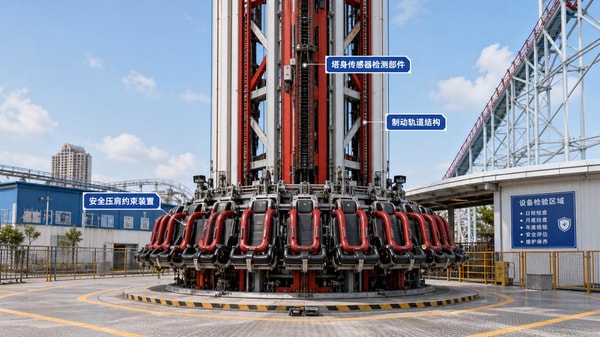
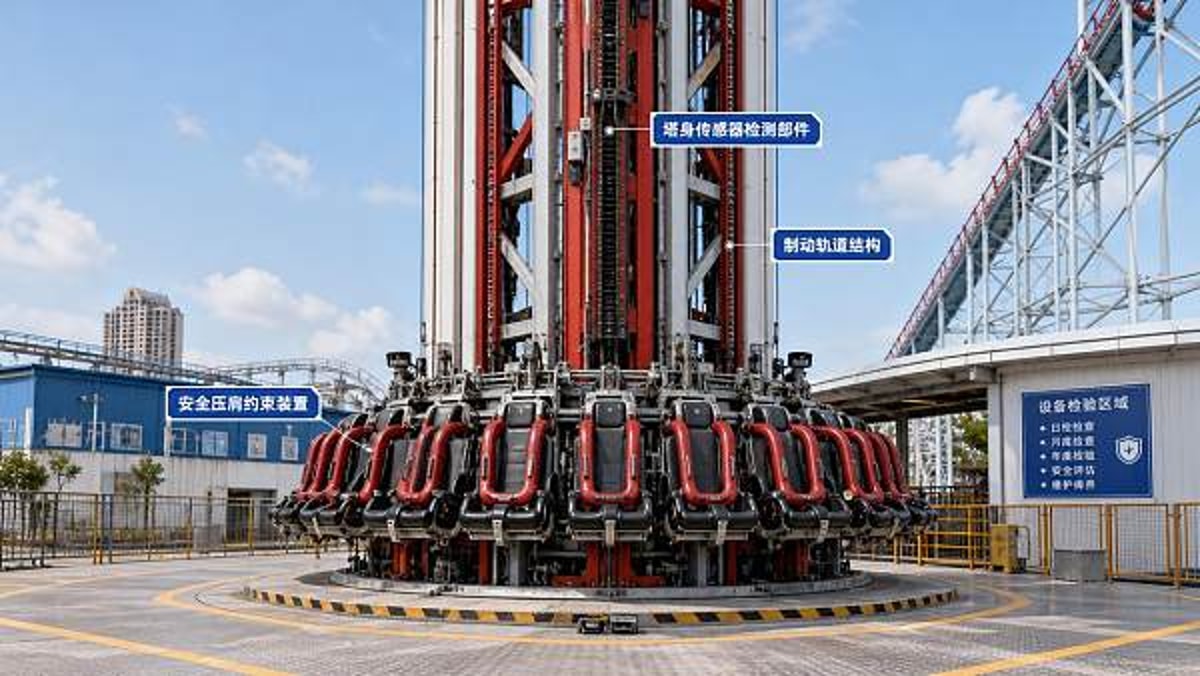
- Restraint systems must lock consistently, fit the intended rider range, and provide monitored status confirmation before dispatch.
- Braking systems must demonstrate controlled deceleration under normal cycles, emergency conditions, and power interruption scenarios.
- Control architecture must include validated interlocks, fault logic, sensor redundancy where required, and readable event logging.
- Structural components, foundations, and connection points must be inspected for fatigue risk, corrosion exposure, and installation accuracy.
- Service support must be reviewed as a safety issue, because missing parts, unclear manuals, or weak commissioning discipline often create operational hazards later.
Why the first review should focus on failure consequences
Not every inspection item carries the same weight. Cosmetic panel fit, lighting effects, or queue theming can wait. What cannot wait are components whose failure could cause uncontrolled motion, improper rider containment, or delayed emergency response. Technical evaluators should begin with systems that influence consequence severity: restraints, brakes, control logic, structural load paths, and evacuation provisions.
Which safety checks on drop tower rides matter most before approval?
The table below helps technical evaluators prioritize drop tower rides review points by linking each safety check to practical procurement and operational concerns. This is especially useful when comparing multiple suppliers, reviewing factory acceptance documentation, or preparing a commissioning checklist.
A useful pattern emerges from this comparison: the highest-priority checks are the ones that combine high consequence with limited recovery time. On drop tower rides, issues in restraint confirmation, stopping control, or fault logic can escalate quickly. Evaluators should therefore demand not only design descriptions, but also inspection records, test procedures, and clear acceptance criteria.
Restraints: the first non-negotiable review point
Restraint evaluation should go beyond asking whether the harness closes. The real questions are whether it locks at the intended positions, whether sensor feedback matches physical latch status, and whether the design accommodates expected rider size variance without unsafe gaps or excessive compression. Technical evaluators should also review wear points, hinge play, latch contamination risk, and access for inspection.
Where possible, ask suppliers to show the restraint inspection routine by interval: daily, weekly, monthly, and annual. A ride that is safe in principle but difficult to inspect in practice can create avoidable operating risk.
Brakes: normal performance is not enough
Many buyers focus on whether the braking system delivers a thrilling experience. Technical evaluators should focus on whether it performs consistently as components age, temperatures change, and cycle counts rise. Review how the drop tower ride behaves during emergency stop commands, power loss, and sensor disagreement. Ask whether the braking profile is monitored and whether trend data can reveal drift before a fault becomes critical.
How to assess controls, sensors, and interlocks on drop tower rides
On modern drop tower rides, the control system is the safety coordinator. Even when mechanical systems are strong, weak interlock logic or poor sensor management can produce unsafe states. Technical evaluators should request documentation that explains signal flow, permissive conditions, fault reactions, and reset rules in plain engineering language.
- Confirm that dispatch cannot occur unless all restraint channels show valid locked status and all ride position conditions are satisfied.
- Check how the system detects overspeed, position loss, or implausible sensor readings, and what safe-state response is triggered.
- Review calibration methods for height, position, and timing-related devices. If calibration is difficult, long-term reliability often suffers.
- Verify whether fault history is stored in a usable way. Event logs should support root cause analysis rather than only display generic alarms.
- Inspect the human-machine interface for clarity. Operators should be able to distinguish warning, lockout, maintenance override, and emergency states without ambiguity.
For procurement teams working across borders, this is where sourcing intelligence becomes valuable. GCT helps technical stakeholders compare how different manufacturers document controls, support remote diagnostics, and maintain spare parts continuity. A lower purchase price can become expensive if the control platform is proprietary, poorly documented, or difficult to service in the target region.
Do not ignore maintenance overrides
Maintenance mode is necessary, but it can also be a hidden exposure. Evaluators should ask how override functions are secured, logged, and limited. Any bypass of a normal interlock should have a clear purpose, authorization method, and restoration check. If override controls are vague, the ride may become vulnerable during troubleshooting or rushed pre-opening work.
What structural and mechanical inspections reduce long-term risk?
A drop tower ride operates under repeated dynamic loading, and the tower structure must maintain alignment, strength, and predictable response over time. Technical evaluators should not limit their review to visible steel dimensions. The real inspection value comes from understanding connections, fatigue-sensitive details, environmental exposure, and installation quality.
The following table is useful during pre-purchase review, installation acceptance, and annual audit planning for drop tower rides.
This table shows why structural acceptance should be evidence-based. A technically strong supplier can explain not only how the tower is built, but how it is inspected, how wear is trended, and what thresholds trigger intervention. That level of clarity is essential for evaluators responsible for lifecycle risk rather than one-time installation sign-off.
Foundation and site conditions are often underestimated
Drop tower rides are sensitive to installation quality. Soil conditions, drainage, local wind profile, corrosion environment, and access for cranes or rescue equipment can all affect safe operation. Evaluators should confirm that supplier assumptions match the actual site. A robust tower design can still underperform if the civil interface is poorly managed.
How to compare suppliers beyond the ride specification sheet
In commercial sourcing, technical evaluators often receive specification sheets that look similar across vendors. The real differences appear in documentation depth, inspection discipline, service responsiveness, and parts strategy. For drop tower rides, those differences strongly influence safe uptime.
- Ask for preventive maintenance schedules with labor estimates, not just broad recommendations.
- Review the spare parts list by criticality: commissioning spares, wear parts, emergency parts, and long-lead components.
- Check whether manuals include troubleshooting flowcharts, torque values, adjustment limits, and inspection photos.
- Clarify who performs installation supervision, commissioning tests, operator training, and acceptance sign-off.
- Evaluate support continuity in your region, especially if the control system or brake assemblies require specialized service.
This is where GCT’s role is practical rather than theoretical. For buyers in amusement and leisure parks, mixed-use commercial destinations, or hospitality-linked attractions, sourcing success depends on connecting technical review with supply chain realism. A ride should not be selected solely because it meets a headline capacity or height target. It should be selected because it can be inspected, maintained, and supported over time.
Questions that improve supplier comparison
Ask suppliers to explain what happens after a fault, not just before one. How quickly can they identify the issue? Which parts are likely to stop the ride? What is the expected lead time for critical replacements? How are software updates controlled? These answers often reveal more about safety performance than brochure-level technical claims.
Standards, compliance, and documentation: what should be on the checklist?
Technical evaluators should align drop tower rides review with applicable local regulations and widely recognized amusement ride practices. Exact requirements vary by country and authority, but the core expectation is consistent: the supplier must provide a traceable package covering design basis, testing, installation, operation, maintenance, and emergency procedures.
- Design and engineering documentation, including loads, safety functions, and component descriptions.
- Inspection and test records for fabrication, assembly, commissioning, and functional verification.
- Operation and maintenance manuals with intervals, acceptance limits, and emergency instructions.
- Training records or training scope for operators, maintenance staff, and rescue personnel.
- Parts traceability and revision control for critical safety components and software changes.
When international sourcing is involved, documentation quality becomes a safety factor by itself. Translation clarity, units consistency, revision tracking, and local regulator compatibility all affect whether a ride can be approved and operated without delay. GCT helps procurement and technical teams screen suppliers with these cross-border execution details in mind.
Common mistakes when evaluating drop tower rides
Is a high-capacity model always the better commercial choice?
Not necessarily. Higher capacity may increase throughput, but it can also raise maintenance complexity, spare parts cost, loading-time variability, and structural demands. Technical evaluators should match ride format to actual attendance patterns, staffing capability, and maintenance resources.
Can visual condition replace documented inspection history?
No. Clean paint and polished surfaces do not confirm restraint reliability, brake wear condition, or calibration integrity. Documented history is essential, especially for used equipment, demonstration units, or relocated drop tower rides.
Should buyers accept generic maintenance guidance?
That is risky. Generic guidance leaves too much room for interpretation. Evaluators should request component-specific intervals, inspection methods, rejection criteria, and service tooling requirements. Precision in maintenance planning supports both safety and budgeting.
Does a compliant design guarantee easy local approval?
Not always. Local authorities may require additional calculations, language-specific manuals, witness testing, or site-specific civil confirmation. That is why early coordination between supplier, evaluator, and project owner is important.
Why choose us for drop tower rides sourcing and technical evaluation support
Global Commercial Trade helps technical evaluators move from broad supplier searching to evidence-based sourcing decisions. In the amusement and leisure parks segment, that means focusing on what matters during approval, procurement, and operation: safety documentation, control logic transparency, maintainability, parts continuity, and realistic delivery coordination.
If you are reviewing drop tower rides for a new park, an attraction upgrade, or an international procurement program, you can consult GCT on specific decision points instead of sorting through fragmented market information alone.
- Parameter confirmation for ride height, passenger configuration, braking concept, and site conditions.
- Product selection support based on safety priorities, operational goals, and maintenance capability.
- Delivery and commissioning review, including documentation expectations and project coordination risks.
- Custom solution discussion for climate exposure, layout constraints, visitor profile, and commercial positioning.
- Certification and compliance preparation, especially where local approval requires structured technical files.
- Sample document review, supplier comparison, and quotation communication for cross-border sourcing projects.
The right drop tower rides decision is rarely about a single specification. It is about selecting a solution that can be validated, installed, maintained, and defended under technical scrutiny. That is the level of sourcing support GCT is built to facilitate.
Search News
Hot Articles
Popular Tags
Need ExpertConsultation?
Connect with our specialized leisureengineering team for procurementstrategies.
Recommended News
 May 07, 2026Shen Jing on Trade Rumors: Implications for Basketball Equipment ManufacturingBasketball equipment manufacturing gains strategic clarity as Shen Jing’s trade rumor response boosts OEM confidence—Dongguan & Suzhou suppliers see strengthened NBA facility credibility and smart gear demand.● Theme Park Strategist
 May 07, 2026Ferris Wheel Manufacturer Shortlists Often Miss This RiskFerris wheel manufacturer shortlists often miss lifecycle compliance risk. Learn how to avoid costly delays, safety gaps, and weak after-sales support before you buy.● Theme Park Strategist
 May 07, 2026Lazy River Equipment: Where Energy Use Adds Up FastLazy river equipment can drive energy costs higher than expected. Learn what technical evaluators should check before sourcing or upgrading for better efficiency and lifecycle value.● Theme Park Strategist
 May 07, 2026Water Playground Structures: Design Choices That Reduce Queue TimeWater playground structures that cut queue time: discover layout, capacity, and feature strategies that improve guest flow, safety, and ROI for commercial aquatic projects.● Theme Park Strategist
 May 07, 2026Bumper Cars Wholesale: Battery Options That Change Operating CostsBumper cars wholesale decisions depend heavily on battery choice. Compare lead-acid vs. lithium to cut downtime, lower operating costs, and improve long-term ROI.● Theme Park Strategist
![]() May 07, 2026Pirate Ship Amusement Rides: What Impacts Ride Smoothness Most?Pirate ship amusement ride smoothness depends on structure, drive control, bearings, balancing, and installation. Discover the key checks buyers need for safer, smoother, long-lasting performance.● Theme Park Strategist
May 07, 2026Pirate Ship Amusement Rides: What Impacts Ride Smoothness Most?Pirate ship amusement ride smoothness depends on structure, drive control, bearings, balancing, and installation. Discover the key checks buyers need for safer, smoother, long-lasting performance.● Theme Park Strategist![]() May 07, 2026How to Vet a Water Park Equipment Manufacturer for Large ProjectsWater park equipment manufacturer vetting guide for large projects: compare safety, compliance, capacity, customization, and delivery support to reduce risk and choose with confidence.● Theme Park Strategist
May 07, 2026How to Vet a Water Park Equipment Manufacturer for Large ProjectsWater park equipment manufacturer vetting guide for large projects: compare safety, compliance, capacity, customization, and delivery support to reduce risk and choose with confidence.● Theme Park Strategist May 07, 2026Drop Tower Rides: The Safety Checks That Matter MostDrop tower rides safety starts with the checks that matter most. Learn how restraints, brakes, sensors, and structural reviews support safer approval and smarter sourcing.● Theme Park Strategist
![]() May 07, 2026Flying Chair Ride Capacity Limits That Affect Daily ThroughputFlying chair ride capacity limits shape daily throughput, queue performance, and revenue. Learn the key factors buyers should assess before sourcing or planning layout.● Theme Park Strategist
May 07, 2026Flying Chair Ride Capacity Limits That Affect Daily ThroughputFlying chair ride capacity limits shape daily throughput, queue performance, and revenue. Learn the key factors buyers should assess before sourcing or planning layout.● Theme Park Strategist![]() May 07, 2026Fiberglass Water Slides: Common Surface Issues After InstallationFiberglass water slides can develop blisters, fading, rough spots, and hairline cracks after installation. Learn key causes, early warning signs, and what to inspect in the first 90 days.● Theme Park Strategist
May 07, 2026Fiberglass Water Slides: Common Surface Issues After InstallationFiberglass water slides can develop blisters, fading, rough spots, and hairline cracks after installation. Learn key causes, early warning signs, and what to inspect in the first 90 days.● Theme Park Strategist May 07, 2026How to Compare a Carousel Rides Manufacturer Beyond PriceCarousel rides manufacturer selection should go beyond price. Learn how to compare safety, compliance, customization, and after-sales support to choose a reliable supplier.● Theme Park Strategist
 May 07, 2026Roller Coaster Parts With the Highest Replacement FrequencyRoller coaster parts buyers: discover which components need the most frequent replacement, from wheels and bearings to sensors and restraints, to cut downtime and source smarter.● Theme Park Strategist
 May 07, 2026Electric Trackless Trains or Road Trains for Large Venues?Electric trackless trains for large venues: compare them with road trains to improve guest experience, reduce noise and emissions, and choose a smarter, future-ready mobility solution.● Theme Park Strategist
 May 07, 2026Wave Pool Equipment Failures That Disrupt Peak SeasonWave pool equipment failures can shut down peak-season operations fast. Learn the top breakdown risks, business impacts, and practical ways to reduce downtime and protect revenue.● Theme Park Strategist
 May 07, 2026Ferris Wheel Manufacturer Shortlists Often Miss This RiskFerris wheel manufacturer shortlists often miss lifecycle compliance risk. Learn how to avoid costly delays, safety gaps, and weak after-sales support before you buy.● Theme Park Strategist
 May 07, 2026Lazy River Equipment: Where Energy Use Adds Up FastLazy river equipment can drive energy costs higher than expected. Learn what technical evaluators should check before sourcing or upgrading for better efficiency and lifecycle value.● Theme Park Strategist
 May 07, 2026Water Playground Structures: Design Choices That Reduce Queue TimeWater playground structures that cut queue time: discover layout, capacity, and feature strategies that improve guest flow, safety, and ROI for commercial aquatic projects.● Theme Park Strategist
 May 07, 2026Bumper Cars Wholesale: Battery Options That Change Operating CostsBumper cars wholesale decisions depend heavily on battery choice. Compare lead-acid vs. lithium to cut downtime, lower operating costs, and improve long-term ROI.● Theme Park Strategist
![]() May 07, 2026Pirate Ship Amusement Rides: What Impacts Ride Smoothness Most?Pirate ship amusement ride smoothness depends on structure, drive control, bearings, balancing, and installation. Discover the key checks buyers need for safer, smoother, long-lasting performance.● Theme Park Strategist
May 07, 2026Pirate Ship Amusement Rides: What Impacts Ride Smoothness Most?Pirate ship amusement ride smoothness depends on structure, drive control, bearings, balancing, and installation. Discover the key checks buyers need for safer, smoother, long-lasting performance.● Theme Park Strategist![]() May 07, 2026How to Vet a Water Park Equipment Manufacturer for Large ProjectsWater park equipment manufacturer vetting guide for large projects: compare safety, compliance, capacity, customization, and delivery support to reduce risk and choose with confidence.● Theme Park Strategist
May 07, 2026How to Vet a Water Park Equipment Manufacturer for Large ProjectsWater park equipment manufacturer vetting guide for large projects: compare safety, compliance, capacity, customization, and delivery support to reduce risk and choose with confidence.● Theme Park Strategist May 07, 2026Drop Tower Rides: The Safety Checks That Matter MostDrop tower rides safety starts with the checks that matter most. Learn how restraints, brakes, sensors, and structural reviews support safer approval and smarter sourcing.● Theme Park Strategist
![]() May 07, 2026Flying Chair Ride Capacity Limits That Affect Daily ThroughputFlying chair ride capacity limits shape daily throughput, queue performance, and revenue. Learn the key factors buyers should assess before sourcing or planning layout.● Theme Park Strategist
May 07, 2026Flying Chair Ride Capacity Limits That Affect Daily ThroughputFlying chair ride capacity limits shape daily throughput, queue performance, and revenue. Learn the key factors buyers should assess before sourcing or planning layout.● Theme Park Strategist![]() May 07, 2026Fiberglass Water Slides: Common Surface Issues After InstallationFiberglass water slides can develop blisters, fading, rough spots, and hairline cracks after installation. Learn key causes, early warning signs, and what to inspect in the first 90 days.● Theme Park Strategist
May 07, 2026Fiberglass Water Slides: Common Surface Issues After InstallationFiberglass water slides can develop blisters, fading, rough spots, and hairline cracks after installation. Learn key causes, early warning signs, and what to inspect in the first 90 days.● Theme Park Strategist May 07, 2026How to Compare a Carousel Rides Manufacturer Beyond PriceCarousel rides manufacturer selection should go beyond price. Learn how to compare safety, compliance, customization, and after-sales support to choose a reliable supplier.● Theme Park Strategist