How to choose simultaneous interpretation equipment?
Choosing the right simultaneous interpretation equipment is a technical decision that directly affects speech clarity, latency, channel stability, and audience experience in multilingual conferences, training sessions, and global business events.
For technical evaluation, the challenge is not only comparing transmitters, receivers, microphones, and interpreter consoles.
It also requires checking compatibility, scalability, compliance, deployment efficiency, and long-term reliability under real venue conditions.
This guide explains how to choose simultaneous interpretation equipment with practical criteria for professional multilingual communication.
How to choose simultaneous interpretation equipment for real conference needs?
The first step is defining the event environment before comparing any simultaneous interpretation equipment specification.
A small training room has different signal, channel, and mobility needs than a summit hall or hybrid broadcast venue.
Start with audience size, language count, room layout, floor distance, ceiling height, and possible signal obstacles.
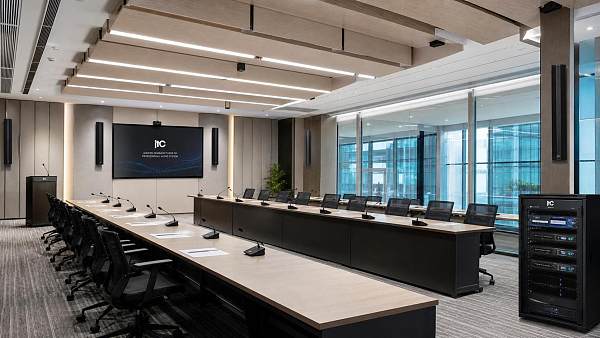
For fixed conference rooms, integrated wired systems often provide stable control and predictable audio performance.
For temporary events, wireless simultaneous interpretation equipment may offer faster setup and flexible receiver distribution.
Large venues may require infrared, digital RF, or networked audio systems with carefully planned coverage zones.
The correct choice depends on the full operating scenario, not only the listed transmission distance.
- Number of languages and available interpretation channels.
- Audience capacity and receiver quantity.
- Indoor, outdoor, temporary, or permanent installation.
- Required integration with microphones, mixers, cameras, or streaming platforms.
- Expected setup time and technical support availability.
Reliable simultaneous interpretation equipment should match both present requirements and future expansion plans.
What components are included in simultaneous interpretation equipment?
A professional system is not a single device. It is a complete signal chain.
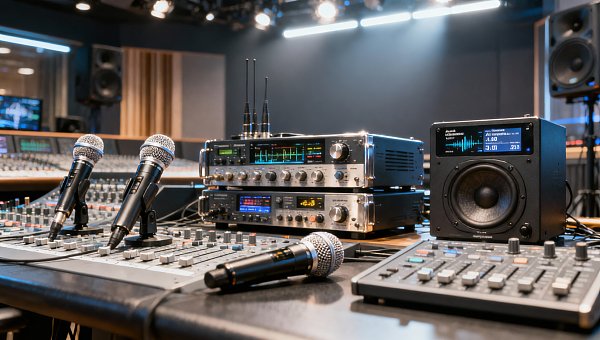
Typical simultaneous interpretation equipment includes interpreter consoles, microphones, headsets, transmitters, receivers, charging units, and distribution accessories.
Interpreter consoles allow language selection, relay listening, microphone control, and handover between interpreters.
The console should be intuitive, quiet, durable, and compliant with professional booth operation habits.
Microphones and headsets strongly influence intelligibility. Poor acoustic pickup can reduce performance even with advanced transmission hardware.
Transmitters send the interpreted audio to listeners through infrared, RF, digital, or network-based methods.
Receivers should provide clear channel selection, long battery life, stable reception, and comfortable use over long sessions.
Charging cases and storage systems matter because event readiness depends on battery management and equipment tracking.
When reviewing simultaneous interpretation equipment, verify whether all accessories are included or sold separately.
Which signal technology is better?
Infrared systems are common in confidential indoor meetings because signals normally remain within the room.
RF systems may be more flexible for larger or irregular spaces, but frequency planning becomes more important.
Digital networked systems support integration, monitoring, and modern AV workflows, especially in advanced commercial spaces.
The best simultaneous interpretation equipment is the system that delivers stable audio in the intended venue.
How should audio quality, latency, and channel stability be judged?
Audio clarity is the core performance indicator for simultaneous interpretation equipment.
Listeners must receive speech that is clean, natural, and easy to follow for extended periods.
Check frequency response, signal-to-noise ratio, distortion level, headset quality, and microphone rejection of background noise.
Latency is equally important. Excessive delay disrupts speaker timing, audience response, and hybrid meeting synchronization.
Professional simultaneous interpretation equipment should maintain low latency across the full signal path.
Channel stability depends on transmitter design, receiver sensitivity, antenna placement, environmental interference, and system configuration.
Do not judge coverage only by brochure figures. Test in the actual room whenever possible.
Walls, lighting systems, metal structures, LED screens, and wireless networks can affect performance.
- Test multiple channels at the same time.
- Walk through audience areas with receivers.
- Check audio during microphone switching.
- Verify performance near cameras, lighting rigs, and Wi-Fi access points.
- Confirm battery performance during a full session.
A short demonstration is useful, but a full operational test gives stronger evidence.
How do compatibility and scalability affect the selection?
Compatibility determines whether simultaneous interpretation equipment can work smoothly with existing AV infrastructure.
Review input and output formats, connector types, audio levels, Dante or AES67 support, and integration with conference microphones.
In hybrid events, the system may also need connection to streaming encoders, recording platforms, and video conferencing software.
Scalability is another important decision factor. Language needs can change quickly in international business environments.
A system with limited channel capacity may become expensive to replace after only a few projects.
Choose simultaneous interpretation equipment that supports reasonable expansion in receivers, channels, consoles, and coverage accessories.
Also check whether firmware upgrades, spare parts, and technical documentation are available.
What about different venue types?
Hotels, campuses, corporate halls, exhibition centers, and government facilities all create different installation challenges.
Portable simultaneous interpretation equipment is useful where rooms change frequently or events move between locations.
Permanent systems work better where appearance, cable routing, control integration, and fixed coverage are priorities.
For premium commercial spaces, visual design and discreet installation may be as important as technical performance.
Which compliance, security, and durability factors should be checked?
Professional simultaneous interpretation equipment should meet applicable safety, electromagnetic, and radio regulations in the target market.
Relevant marks may include CE, FCC, RoHS, or local wireless approvals, depending on region and technology.
For RF systems, frequency legality is critical. A permitted band in one country may be restricted elsewhere.
Security matters when confidential content is discussed. Infrared and encrypted digital options may reduce unintended signal exposure.
Durability should be assessed through materials, buttons, connectors, battery cycles, cable strain relief, and transport protection.
Receivers are handled repeatedly, so drop resistance and easy cleaning are practical considerations.
Interpreter consoles should withstand daily operation without noisy controls or unreliable switches.
Good simultaneous interpretation equipment should also include clear manuals, labeling, and maintenance procedures.
How should cost, service, and lifecycle value be compared?
Initial price is only one part of the total cost of simultaneous interpretation equipment.
A low-cost system may require more labor, more troubleshooting, or earlier replacement.
Compare warranty length, spare receiver availability, battery replacement cost, charger capacity, and support response time.
Training requirements also affect lifecycle value. Systems with clear operation reduce errors during fast event changes.
Rental, purchase, or hybrid ownership should be selected according to event frequency and required control.
Occasional events may justify rental, especially when local technical support is included.
Frequent multilingual programs may benefit from owned simultaneous interpretation equipment with standardized configuration.
Lifecycle value improves when equipment can be reused across meetings, training, tours, and commercial events.
What mistakes should be avoided when buying simultaneous interpretation equipment?
One common mistake is choosing equipment only by maximum range claims.
Real coverage depends on venue geometry, interference, receiver position, and installation quality.
Another mistake is underestimating the number of receivers needed.
Extra receivers provide flexibility for late attendance changes, device failure, and protocol requirements.
Ignoring interpreter comfort is also risky. Poor headsets or confusing consoles can increase fatigue and mistakes.
Some systems appear affordable but lack spare parts, local support, or future compatibility.
The safest approach is to evaluate simultaneous interpretation equipment as an operational system, not a product list.
- Avoid unsupported wireless frequencies.
- Avoid systems without enough channels.
- Avoid unclear battery specifications.
- Avoid poor documentation and limited training.
- Avoid decisions without venue testing.
Final checklist for selecting simultaneous interpretation equipment
A strong selection process begins with language requirements, venue conditions, and audience scale.
Then compare audio quality, latency, stability, compatibility, compliance, and service support.
Request technical documents, test results, warranty terms, and complete accessory lists before confirming a solution.
If possible, test simultaneous interpretation equipment in the actual venue under realistic operating conditions.
For global commercial environments, the best system balances performance, deployment efficiency, design fit, and lifecycle value.
The next step is to create a requirement sheet covering channels, receivers, venue type, integrations, compliance, and support expectations.
With clear criteria, selecting simultaneous interpretation equipment becomes a controlled technical decision rather than a price comparison.
Search News
Hot Articles
- Office Furniture & EquipChoosing Commercial Air Conditioners for Offices: Capacity, Zoning, and NoiseOct 13, 2026
- Fashion & Gem JewelryHow to Choose Designer Eyewear That Fits Your Store’s Customer ProfileOct 12, 2026
- Musical InstrumentsA Practical Guide to Identifying Wooden Orchestral Instruments by Family and ToneOct 10, 2026
Popular Tags
Need ExpertConsultation?
Connect with our specialized leisureengineering team for procurementstrategies.
Recommended News
 Sep 30, 2026How to Choose an Aluminum Projector Ceiling Mount for Load, Drop, and Ceiling TypeChoose an aluminum projector ceiling mount with confidence. Learn how load capacity, drop length, ceiling structure, safety retention, and service access shape a reliable commercial AV installation.● Pro Audio Engineer
 Sep 26, 2026How to Choose Dynamic Microphones for Vocals in Live Stage SettingsDynamic microphones for vocals: learn how to match polar patterns, feedback control, durability, and clarity to live stage needs for reliable, professional sound.● Pro Audio Engineer
 Sep 07, 2026How to Choose Wall Mount Speakers for Clear Audio in Commercial SpacesWall mount speakers for commercial spaces: learn how to optimize coverage, SPL, directivity, installation, and system design for clear, reliable audio.● Pro Audio Engineer
 Sep 03, 2026How to Choose Locking Speakon Speaker Cables for Reliable Live Sound ConnectionsLocking Speakon speaker cables: learn how to select the right gauge, connector pinout, strain relief, and durable construction for reliable live sound connections.● Pro Audio Engineer
 Sep 08, 2026Is It Worth Upgrading a Stage Sound System Mid-Project?Is it worth upgrading stage sound systems mid-project? Discover how to assess performance gaps, costs, compatibility, and long-term venue value.● Pro Audio Engineer
 Sep 04, 2026Can AV Systems Be Retrofitted Into Older Commercial Buildings?Can AV integration be retrofitted into older commercial buildings? Discover practical strategies for reliable, code-aware AV upgrades with minimal disruption.● Pro Audio Engineer
 Jul 17, 2026How to Choose a Crossover Networks Supplier: Key Specs, Quality Checks, and OEM FactorsFind the right crossover networks supplier with this practical guide to key specs, quality checks, OEM factors, and supply chain risks for better audio performance and sourcing confidence.● Pro Audio Engineer
 Jul 16, 2026How to Evaluate ODM Services for Pro Audio: Design, Certification, and Production CapabilitiesODM services for pro audio: learn how to assess design depth, certification readiness, and production strength to choose a reliable partner and launch better audio products with less risk.● Pro Audio Engineer
 Jul 15, 2026JETRO Flags Modular, Low-Power Shift in Pro Stage AudioPro Stage Audio buyers in Japan are shifting fast: JETRO flags modular amplifiers, IP65 line arrays, low standby power, and JIS compliance as key to channel entry.● Pro Audio Engineer
 Jul 15, 2026Paper Speaker Cones Explained: How Cone Weight and Stiffness Affect SoundPaper speaker cones explained: discover how cone weight and stiffness shape sensitivity, clarity, breakup control, and real-world speaker performance for smarter audio sourcing.● Pro Audio Engineer
 Jul 15, 2026Performance Venues Compliance Checklist: Fire Safety, Accessibility, and Crowd RulesPerformance venues compliance checklist covering fire safety, accessibility, and crowd rules. Learn how to reduce delays, improve approvals, and open safer, more resilient venues.● Pro Audio Engineer
 Jul 14, 2026Japan Adds EMC Immunity Test for Stage AmplifiersJapan Adds EMC Immunity Test for Stage Amplifiers: learn how Japan’s 2026 JIS update affects EMC testing, JIS marking, certification timing, and market access for exporters.● Pro Audio Engineer
 Jul 13, 2026CISCE 2026 Adds Pro Stage Audio ZoneCISCE 2026 Adds Pro Stage Audio Zone as free overseas pre-registration opens. Explore key updates for pro audio suppliers, distributors, and system integrators before the Shanghai expo.● Pro Audio Engineer
 Jul 12, 2026Japan Tightens Pro Stage Audio Efficiency Limits Under JIS C 8105-2026Japan Tightens Pro Stage Audio Efficiency Limits Under JIS C 8105-2026: learn how new PSE compliance rules reshape market access, product eligibility, and shipment planning in Japan.● Pro Audio Engineer
 Jul 12, 2026How to Choose Low Profile Ceiling Speakers for Hotels, Offices, and Retrofit ProjectsLow profile ceiling speakers for hotels, offices, and retrofit projects: learn how to compare depth, coverage, compliance, and installation factors to choose the right fit.● Pro Audio Engineer
 Jul 11, 2026Japan Tightens JIS C 8105-2026 for Pro AudioJapan Tightens JIS C 8105-2026 for Pro Audio: learn how stricter standby power, PSE diamond mark rules, and the 2026 deadline impact exports, compliance, and market access.● Pro Audio Engineer
 Jul 10, 2026JETRO Q2 Outlook Signals Higher Stage Audio DemandJETRO Q2 Outlook signals higher stage audio demand in Japan, with 37% procurement growth and stricter PSE Annex D compliance. See what importers, manufacturers, and rental channels must act on now.● Pro Audio Engineer
 Jul 10, 2026How to Choose Wall Mount Speakers for Restaurants by Layout, Coverage, and SPLWall mount speakers for restaurants should match layout, coverage, and SPL. Learn how to choose the right setup for even sound, guest comfort, and reliable performance.● Pro Audio Engineer
 Jul 09, 2026JIS T 9001:2026 Adds Mandatory AI Noise LabelsJIS T 9001:2026 adds mandatory AI noise labels for pro audio gear from October 2026. Learn how it impacts compliance, testing, exports, and product launches.● Pro Audio Engineer
 Jul 06, 2026Improving Sound Reinforcement Speech Clarity: Key Causes of Muddiness and How to Fix ThemSound reinforcement speech clarity starts with identifying reverberation, coverage, noise, and timing issues. Discover practical fixes that make announcements clearer and commercial spaces perform better.● Pro Audio Engineer
 Jul 05, 2026Saudi Rule Adds Arabic UI Requirement for Pro Audio ImportsSaudi Rule Adds Arabic UI Requirement for Pro Audio Imports: learn how SASO’s new Arabic UI mandate affects digital amplifiers, DSP processors, and network audio interfaces before Sept. 1, 2026.● Pro Audio Engineer
 Jul 02, 2026How to Choose Audio Mixing Consoles for Live Venues: Channels, Buses, and I/O ExplainedAudio mixing consoles explained for live venues: learn how to choose the right channels, buses, and I/O to improve workflow, support growth, and avoid costly mistakes.● Pro Audio Engineer
 Jul 01, 2026UL 62368-3:2026 Adds EMC Rules for Pro Stage AudioUL 62368-3:2026 adds EMC rules for Pro Stage Audio, requiring Level 4 immunity and manual labeling by Oct 1, 2026. See what exporters, makers, and buyers must do now.● Pro Audio Engineer
 Jun 30, 2026Sound Reinforcement Design Basics: How to Plan Coverage, SPL, and Speaker PlacementSound reinforcement design starts with smarter coverage, target SPL, and speaker placement. Learn how to plan clearer, more reliable audio performance for commercial spaces.● Pro Audio Engineer