Middle East Conflict Drives 37% Surge in Container Freight to Jeddah
On May 29, 2026, escalating shipping uncertainty in the Strait of Hormuz prompted major Persian Gulf carriers to increase surcharges on the Red Sea–Jeddah route, triggering a sharp rise in ocean freight costs for shipments from South China ports to Jeddah Port, Saudi Arabia — with particular impact on high-value, bulky, time-sensitive outdoor ride products.
Confirmed Freight Rate Adjustment Effective May 29, 2026
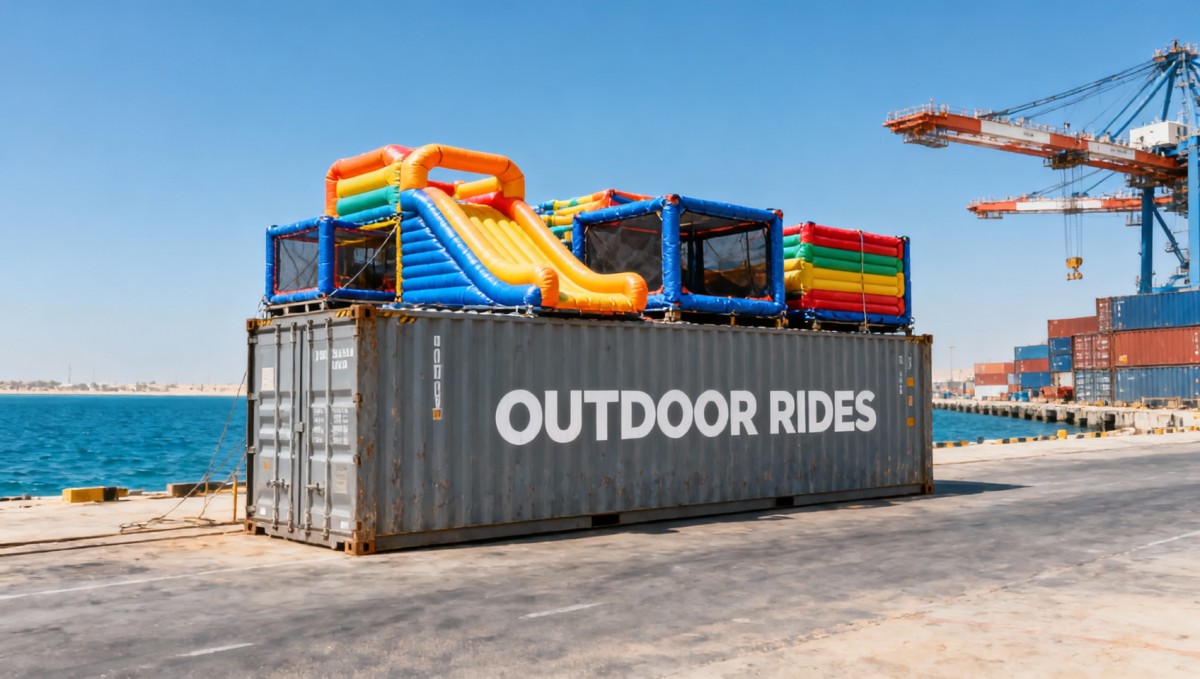
On May 29, 2026, leading carriers operating in the Persian Gulf announced revised surcharges for the Red Sea–Jeddah corridor. As a direct result, the all-in freight rate for a 40HQ container shipped from ports in South China to Jeddah Port surged by 37% week-on-week, reaching USD 5,820. Outdoor Rides — characterized by high per-container value, large physical footprint, and strict delivery timelines — emerged as the most significantly affected product category. Multiple distributors in Saudi Arabia have since activated emergency reordering and local warehouse stocking protocols.
Supply Chain Impact Across Key Business Roles
Export-oriented trading enterprises
These firms face immediate margin pressure due to the abrupt 37% freight cost increase. Since Outdoor Rides shipments often operate on narrow landed-cost margins, the surge directly erodes profitability unless pricing or contractual terms are renegotiated. Delivery schedule adherence — already critical for seasonal outdoor product launches — is now further jeopardized by port congestion and routing delays.
Raw material and component procurement teams
Although not directly exposed to ocean freight, procurement units must reassess landed cost models for imported inputs destined for final assembly in China. Any upstream logistics disruption affecting component suppliers in the Middle East or Europe may compound lead-time variability, requiring earlier safety-stock planning and dual-sourcing evaluation.
Manufacturing and assembly facilities
Production planners must now account for extended and less predictable inbound/outbound transit times. For Outdoor Rides — where finished goods occupy significant container volume — even minor delays in factory dispatch can cascade into missed vessel cutoffs and costly demurrage or detention charges at origin or destination ports.
Logistics and freight forwarding service providers
Forwarders are experiencing heightened demand for real-time route monitoring, alternative routing options (e.g., via Suez or Cape of Good Hope), and documentation support for new surcharge justifications. Clients increasingly request granular breakdowns of BAF, ECA, and war-risk surcharges — raising operational complexity and compliance verification requirements.
Strategic Priorities and Tactical Responses for Affected Companies
Review and stress-test delivery commitments
Given the sensitivity of Outdoor Rides to delivery timing, companies should immediately audit open orders against updated transit windows. Contracts referencing fixed Incoterms® (e.g., FOB or CIF) may require renegotiation to allocate new surcharge liabilities transparently.
Accelerate local inventory deployment in Saudi Arabia
With distributors initiating emergency stockpiling, manufacturers and exporters should prioritize air-freight partial shipments or expedited LCL consolidation for critical SKUs — balancing cost against risk of lost sales during peak season.
Validate carrier surcharge applicability and documentation
Not all vessels or services are subject to identical surcharge structures. Companies must verify whether their specific service contracts, vessel types, and transshipment points trigger the full $5,820 rate — and retain auditable records of carrier communications and tariff updates.
Assess inland transportation and customs clearance readiness
Higher freight costs coincide with increased scrutiny at Jeddah Port. Ensuring up-to-date Saudi Standards, Metrology and Quality Organization (SASO) certifications, GCC Conformity Marking, and Arabic-language technical documentation is now essential to avoid clearance delays that would negate any time saved in ocean transit.
Industry Observation: Volatility Is Becoming Structural, Not Temporary
Analysis shows that geopolitical risk premiums are no longer episodic cost add-ons but increasingly embedded in base freight tariffs — especially for routes traversing chokepoints like the Strait of Hormuz. From an industry perspective, this shift implies that supply chain resilience planning must now incorporate permanent buffer allocations for war-risk surcharges, dynamic fuel adjustment clauses, and multi-modal contingency routing. What deserves closer attention is how rapidly these adjustments are being codified into carrier tariff bulletins — with minimal consultation or phased implementation — suggesting growing standardization of conflict-related cost pass-through mechanisms.
Key Takeaway for Market Participants
This event underscores that freight cost volatility is now a core input — not an external variable — in product pricing, inventory strategy, and contract design for exporters serving the Gulf region. A reactive approach focused solely on short-term freight negotiations is insufficient; forward-looking firms are integrating maritime risk mapping, regional stockholding, and regulatory pre-clearance into their baseline operational frameworks.
Source Attribution and Verification Guidance
This article was generated exclusively from the user-provided title, event date (May 29, 2026), and summary. Specific official source links were not provided in the input and should be verified continuously. Stakeholders are advised to monitor updates from the Saudi Ports Authority (MAWANI), the International Chamber of Shipping (ICS), and carrier tariff notices (e.g., Maersk, Hapag-Lloyd, COSCO) for evolving surcharge structures, exemption criteria, and documentation requirements. Ongoing observation is recommended for policy clarifications on war-risk insurance mandates, SASO enforcement timelines, and distributor-level inventory reporting obligations.
Search News
Hot Articles
- Fashion & Gem JewelryHow to Choose Designer Eyewear That Fits Your Store’s Customer ProfileOct 12, 2026
- Musical InstrumentsA Practical Guide to Identifying Wooden Orchestral Instruments by Family and ToneOct 10, 2026
- Indoor PlaygroundHow to Choose Animatronic Haunted House Props for High-Throughput AttractionsOct 08, 2026
Popular Tags
Need ExpertConsultation?
Connect with our specialized leisureengineering team for procurementstrategies.
Recommended News
 Oct 12, 2026How to Choose Designer Eyewear That Fits Your Store’s Customer ProfileDesigner eyewear buying guide for retailers: match frames, price points, brand appeal, fit, and supplier support to your store’s customer profile for stronger sales.● Luxury Retail Analyst
 Oct 10, 2026A Practical Guide to Identifying Wooden Orchestral Instruments by Family and ToneWooden orchestral instruments made simple: identify strings, flutes, clarinets, oboes, and bassoons by sound source, design, and tone.● Pro Audio Engineer
 Oct 08, 2026How to Choose Animatronic Haunted House Props for High-Throughput AttractionsAnimatronic haunted house props for high-throughput attractions: compare motion, triggers, safety, and maintenance to create reliable scares that keep guests moving.● Theme Park Strategist
 Oct 07, 2026Thermal Diamond Testers: How They Work and When They Can Misidentify StonesThermal diamond tester guide: learn how it works, spot false positives from moissanite, and choose reliable verification methods for jewelry trade and retail.● Luxury Retail Analyst
 Oct 06, 2026What Is Driving Demand for Commercial Hospitality Projects Across the GCC?Commercial hospitality GCC demand is rising through destination-led tourism, mixed-use development, and premium operational standards. Explore the procurement strategies shaping resilient projects.● Hospitality Sourcing Dir
 Oct 05, 2026How to Select Hotel Hair Dryers That Balance Guest Safety, Durability, and CostHair dryer for hotels: learn how to select safe, durable, cost-efficient models with the right certifications, performance, maintenance, and supplier support.● Hospitality Sourcing Dir
 Oct 04, 2026Fast-Casual Restaurant Interiors: Design Choices That Improve Speed and Guest FlowRestaurant interiors for fast casual brands: discover design choices that improve guest flow, speed service, streamline pickup, and elevate every visit.● Hospitality Sourcing Dir
 Oct 03, 2026How to Select Leisure Park Equipment for Safe, High-Throughput Visitor AreasLeisure park equipment selection guide for safe, high-throughput venues—explore capacity, supervision, durability, accessibility, and supplier criteria.● Theme Park Strategist
 Oct 02, 2026Diamond Tester Wholesale: How to Vet Accuracy, Calibration, and MOQ Before OrderingDiamond tester wholesale guide: verify accuracy, calibration records, supplier quality controls, and MOQ terms before ordering. Source reliable testers with confidence.● Luxury Retail Analyst
 Oct 01, 2026How Hotels Can Choose Amenity Bottles That Balance Brand Image and Refill CostsHotel amenity bottles: learn how to balance premium brand presentation, refill costs, hygiene, durability, and efficient housekeeping workflows.● Hospitality Sourcing Dir
 Sep 30, 2026How to Choose an Aluminum Projector Ceiling Mount for Load, Drop, and Ceiling TypeChoose an aluminum projector ceiling mount with confidence. Learn how load capacity, drop length, ceiling structure, safety retention, and service access shape a reliable commercial AV installation.● Pro Audio Engineer
 Sep 29, 2026Poured Playground Safety Surfacing: How to Specify Thickness for Fall HeightsPoured playground safety surfacing: learn how to specify tested thickness by fall height, ASTM standards, substrate conditions, accessibility, and field verification.● Theme Park Strategist
 Sep 28, 2026How U.S. Schools Can Choose Laboratory Equipment for Safe, Compliant Science LabsSchool laboratory equipment USA: learn how to select safe, compliant lab furniture, ventilation, emergency systems, and durable tools for K–12 science labs.● Institutional Buyer
 Sep 27, 2026Custom Trampoline Park Equipment: Planning Capacity, Safety, and LayoutCustom trampoline park equipment for safer capacity, smooth guest flow, and efficient layouts. Explore practical planning insights for a high-performing park.● Theme Park Strategist
 Sep 26, 2026How to Choose Dynamic Microphones for Vocals in Live Stage SettingsDynamic microphones for vocals: learn how to match polar patterns, feedback control, durability, and clarity to live stage needs for reliable, professional sound.● Pro Audio Engineer
 Sep 25, 2026How to Evaluate a Wall-Mounted Hotel Hair Dryer Manufacturer for Bulk ProjectsHotel hair dryers wall mounted manufacturer evaluation guide: compare safety, durability, installation fit, OEM options, total cost, and reliable bulk-project support.● Hospitality Sourcing Dir
 Sep 24, 2026Conveyor Pizza Oven Price: What Buyers Should Budget for Capacity and FeaturesConveyor pizza oven price guide: compare capacity, features, installation costs, and quote factors to choose the right commercial oven for your operation.● Hospitality Sourcing Dir
 Sep 23, 2026How Restaurant Buyers Can Source Hospitality Supplies Without OverorderingHospitality supplies for restaurants: learn practical sourcing strategies to cut excess inventory, protect cash flow, improve supplier reliability, and keep every service running smoothly.● Hospitality Sourcing Dir
 Sep 22, 2026Commercial Kitchen Design Price: Budgeting by Layout, Equipment, and MEP ScopeCommercial kitchen design price explained: budget smarter for layout, equipment, MEP scope, compliance, installation, and long-term operational performance.● Hospitality Sourcing Dir
 Sep 21, 2026How Schools Can Cut Printing Costs When Buying Ink Cartridges in BulkSchool ink cartridges wholesale made smarter: cut printing costs with fleet planning, cost-per-page comparisons, reliable suppliers, and inventory controls.● Institutional Buyer
 Sep 20, 2026How to Evaluate a Luxury Retail Packaging Supplier for Premium Brand ConsistencyLuxury retail packaging supplier evaluation guide: protect premium brand consistency with proven quality control, material expertise, scalable production, and supply reliability.● Luxury Retail Analyst
 Sep 19, 2026How to Select a Spiral Dough Mixer for Bakery Batch Size and Dough HydrationSpiral dough mixer bakery guide: match batch size, flour load, and hydration to select reliable torque, temperature control, and consistent dough results.● Hospitality Sourcing Dir
 Sep 18, 2026What Drives Animatronic Dinosaur Manufacturer Prices for Theme Park Projects?Animatronic dinosaurs manufacturer price guide: compare motion, materials, controls, installation, and lifecycle costs to plan a durable theme park attraction.● Theme Park Strategist
 Sep 17, 2026How to Source Wholesale Packing Tape Without Compromising Carton Seal StrengthWholesale packing tape sourcing guide: compare adhesive, backing, carton conditions, and real-world trials to reduce costs while maintaining reliable carton seal strength.● Institutional Buyer