France and Belgium Add Pro Audio to EPR Scope
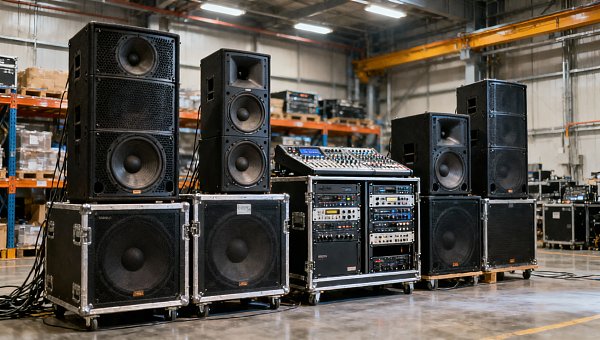
On June 1, 2026, a compliance change tied to the revised EU WEEE extended producer responsibility framework brought professional stage audio equipment into mandatory EPR registration scope in France and Belgium. For importers and brand owners handling products such as mixing consoles, amplifiers, and wireless microphone systems, this is not just a regulatory update but an operational issue that directly affects customs clearance and online or offline market access before the July 31, 2026 registration deadline.
What the new requirement confirms
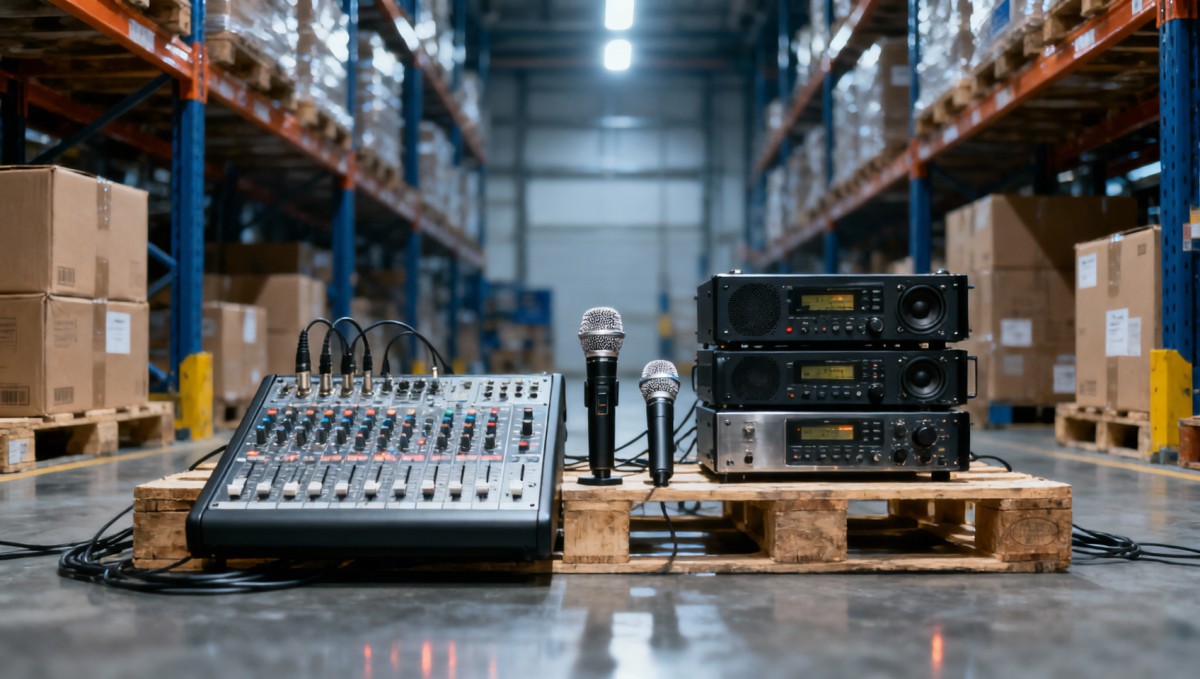
According to the information provided, from June 2026, professional audio equipment is formally included in the mandatory EPR registration categories in France and Belgium under the revised WEEE extended producer responsibility directive. The covered examples mentioned in the event summary include mixing consoles, amplifiers, and wireless microphone systems.
The same information also confirms that importers and brand owners must complete registration with local producer responsibility organizations and pay the annual recycling fee by July 31, 2026. If they do not, the products may not clear customs or be listed for sale.
Where the pressure is likely to appear first
Market-entry teams face an immediate compliance checkpoint
From an industry perspective, the first impact is likely to fall on companies that place professional stage audio equipment into the French or Belgian market. The reason is straightforward: the requirement is tied directly to whether goods can enter the market legally. What deserves closer attention is the timing relationship between registration, fee payment, and actual shipment or listing plans.
Brand owners and importers need tighter document control
Analysis shows that brand owners and importers may be the most directly affected business roles because the event summary explicitly places the registration obligation on them. The practical impact is likely to show up in compliance documentation, internal responsibility allocation, and coordination with local registration arrangements in France and Belgium.
Channels and sales operations may be affected by listing restrictions
Observably, channel operators and sales teams also need to watch this change because the consequence described in the event summary is not limited to customs clearance. The inability to list products for sale means the issue can move from regulatory compliance into day-to-day sales execution, especially where launch schedules or replenishment cycles depend on uninterrupted market access.
Supply-chain service providers may need earlier coordination
From an industry perspective, logistics, customs, and related supply-chain service providers may need earlier communication with clients handling covered equipment. The key reason is that compliance timing can affect shipment readiness, customs processing expectations, and delivery coordination, even though the registration duty itself is assigned to importers and brand owners in the provided information.
What companies should watch now
Check whether current product lines fall within the named scope
The immediate practical issue is product mapping. Companies dealing in professional stage audio equipment should first identify whether their items match the categories explicitly referenced in the event summary, including mixing consoles, amplifiers, and wireless microphone systems, and whether those products are destined for France or Belgium.
Separate policy wording from execution readiness
Analysis shows that one of the most important distinctions is between knowing the rule and being ready to act on it. The provided information confirms a deadline and a consequence, but companies still need to make sure their internal process, local registration work, and annual fee arrangements are aligned with real shipment and listing schedules.
Review timelines for customs, launch, and replenishment
What deserves closer attention is not only the July 31, 2026 deadline itself, but also how that deadline interacts with existing business calendars. For companies with ongoing imports or planned product releases in France and Belgium, even a short delay in registration or fee payment could become a commercial disruption if goods cannot clear customs or be put on sale.
Prepare counterpart communication across the chain
Observably, this is also a communication issue. Importers, brand owners, channel partners, and service providers may all need consistent status updates on registration progress, required paperwork, and go-live timing so that compliance issues do not surface only when goods are already moving or listings are already planned.
Why this matters beyond a single deadline
As an editorial observation, this update is more appropriate to understand as both a near-term compliance change and a longer-term policy signal. The near-term part is clear: the event summary sets a defined market obligation and a defined consequence for non-compliance in France and Belgium. The longer-term signal is that professional audio equipment is being treated more explicitly within the EPR compliance framework, which makes category-level regulatory tracking more important for companies selling into Europe.
At the same time, this should not be overstated. Based on the information provided, the confirmed facts relate specifically to France and Belgium, the named product examples, the July 31, 2026 registration deadline, and the stated customs or listing consequences. Any broader interpretation still requires continued verification through subsequent official wording and implementation practice.
How the industry may best read this update
Taking the current information on its own terms, this is not merely a routine policy headline. It points to a direct compliance requirement with immediate operational relevance for companies placing professional stage audio equipment into the French and Belgian markets. A neutral reading is that the development should be treated as an actionable market-access condition now, while also being monitored as part of a wider regulatory direction affecting product-category responsibility in Europe.
About the basis of this article
This article is generated from the user-provided news title, event date, and event summary. The factual basis used here is limited to the stated implementation timing of June 2026, the inclusion of professional audio equipment in mandatory EPR registration in France and Belgium, the examples of covered products, the July 31, 2026 deadline, and the stated consequence of failing to register and pay the annual recycling fee.
For developments of this type, the source categories usually worth checking include official announcements, company disclosures, industry association updates, authoritative media coverage, and standards or regulatory documents. No specific official source link was provided in the input, so the exact official documentation and any later clarification still need ongoing verification. The main follow-up points to watch are any further official wording on scope interpretation, registration implementation, and practical enforcement at customs clearance or sales listing stage.
Search News
Hot Articles
- Pro Stage AudioAudio Production for Streaming: How to Build a Dedicated Live Event MixOct 22, 2026
- Outdoor RidesIAAPA Launches Insurance Solution for North American Attractions IndustryOct 21, 2026
- Watch OEM & SmartwatchesWatch Movement Parts: How to Check Compatibility With a Specific CaliberOct 21, 2026
Popular Tags
Need ExpertConsultation?
Connect with our specialized leisureengineering team for procurementstrategies.
Recommended News
 Oct 22, 2026Audio Production for Streaming: How to Build a Dedicated Live Event MixMaster audio production for streaming with a dedicated live event mix. Learn routing, loudness control, and monitoring techniques to deliver clear, balanced sound your online audience will love.● Pro Audio Engineer
 Oct 15, 2026Designing Theater Sound Systems for Clear Dialogue and Even Audience CoverageOptimize stage sound for theaters with practical tips on acoustics, speaker placement, and tuning. Discover how to deliver clear dialogue and consistent coverage across audience seating.● Pro Audio Engineer
 Oct 22, 2026Which Professional Sound System Specs Matter Most for Live Venues?Discover what professional sound system specs matter most for live venues. Compare SPL, coverage, frequency response, and headroom to choose a PA that delivers clear, powerful sound.● Pro Audio Engineer
 Oct 20, 2026Should You Prioritize Stage Sound or Audience Coverage?Should I prioritize stage sound or audience coverage first? Discover how to balance clear audience audio, reliable monitoring, and smarter sound-system upgrades for your venue.● Pro Audio Engineer
 Oct 18, 2026How Much Does Studio Acoustic Treatment Cost per Square Meter?How much does studio acoustic treatment cost per square meter? Learn how to compare panel prices, installation fees, and complete budgets to choose the right treatment without overspending.● Pro Audio Engineer
 Oct 17, 2026How Do Line Array and Point Source Sound Systems Differ?What is the difference between line array and point source systems? Compare coverage, costs, and venue fit to find the right solution for clearer sound.● Pro Audio Engineer
 Oct 16, 2026Are Standard Acoustic Panels Enough for Performance Venues?Are standard acoustic panels enough for performance venues? Discover their limits, explore bass control and diffusion, and learn how to choose treatments that improve sound without wasting budget.● Pro Audio Engineer
 Sep 30, 2026How to Choose an Aluminum Projector Ceiling Mount for Load, Drop, and Ceiling TypeChoose an aluminum projector ceiling mount with confidence. Learn how load capacity, drop length, ceiling structure, safety retention, and service access shape a reliable commercial AV installation.● Pro Audio Engineer
 Sep 26, 2026How to Choose Dynamic Microphones for Vocals in Live Stage SettingsDynamic microphones for vocals: learn how to match polar patterns, feedback control, durability, and clarity to live stage needs for reliable, professional sound.● Pro Audio Engineer
 Sep 07, 2026How to Choose Wall Mount Speakers for Clear Audio in Commercial SpacesWall mount speakers for commercial spaces: learn how to optimize coverage, SPL, directivity, installation, and system design for clear, reliable audio.● Pro Audio Engineer
 Sep 03, 2026How to Choose Locking Speakon Speaker Cables for Reliable Live Sound ConnectionsLocking Speakon speaker cables: learn how to select the right gauge, connector pinout, strain relief, and durable construction for reliable live sound connections.● Pro Audio Engineer
 Sep 08, 2026Is It Worth Upgrading a Stage Sound System Mid-Project?Is it worth upgrading stage sound systems mid-project? Discover how to assess performance gaps, costs, compatibility, and long-term venue value.● Pro Audio Engineer
 Sep 04, 2026Can AV Systems Be Retrofitted Into Older Commercial Buildings?Can AV integration be retrofitted into older commercial buildings? Discover practical strategies for reliable, code-aware AV upgrades with minimal disruption.● Pro Audio Engineer
 Jul 17, 2026How to Choose a Crossover Networks Supplier: Key Specs, Quality Checks, and OEM FactorsFind the right crossover networks supplier with this practical guide to key specs, quality checks, OEM factors, and supply chain risks for better audio performance and sourcing confidence.● Pro Audio Engineer
 Jul 16, 2026How to Evaluate ODM Services for Pro Audio: Design, Certification, and Production CapabilitiesODM services for pro audio: learn how to assess design depth, certification readiness, and production strength to choose a reliable partner and launch better audio products with less risk.● Pro Audio Engineer
 Jul 15, 2026JETRO Flags Modular, Low-Power Shift in Pro Stage AudioPro Stage Audio buyers in Japan are shifting fast: JETRO flags modular amplifiers, IP65 line arrays, low standby power, and JIS compliance as key to channel entry.● Pro Audio Engineer
 Jul 15, 2026Paper Speaker Cones Explained: How Cone Weight and Stiffness Affect SoundPaper speaker cones explained: discover how cone weight and stiffness shape sensitivity, clarity, breakup control, and real-world speaker performance for smarter audio sourcing.● Pro Audio Engineer
 Jul 15, 2026Performance Venues Compliance Checklist: Fire Safety, Accessibility, and Crowd RulesPerformance venues compliance checklist covering fire safety, accessibility, and crowd rules. Learn how to reduce delays, improve approvals, and open safer, more resilient venues.● Pro Audio Engineer
 Jul 14, 2026Japan Adds EMC Immunity Test for Stage AmplifiersJapan Adds EMC Immunity Test for Stage Amplifiers: learn how Japan’s 2026 JIS update affects EMC testing, JIS marking, certification timing, and market access for exporters.● Pro Audio Engineer
 Jul 13, 2026CISCE 2026 Adds Pro Stage Audio ZoneCISCE 2026 Adds Pro Stage Audio Zone as free overseas pre-registration opens. Explore key updates for pro audio suppliers, distributors, and system integrators before the Shanghai expo.● Pro Audio Engineer
 Jul 12, 2026Japan Tightens Pro Stage Audio Efficiency Limits Under JIS C 8105-2026Japan Tightens Pro Stage Audio Efficiency Limits Under JIS C 8105-2026: learn how new PSE compliance rules reshape market access, product eligibility, and shipment planning in Japan.● Pro Audio Engineer
 Jul 12, 2026How to Choose Low Profile Ceiling Speakers for Hotels, Offices, and Retrofit ProjectsLow profile ceiling speakers for hotels, offices, and retrofit projects: learn how to compare depth, coverage, compliance, and installation factors to choose the right fit.● Pro Audio Engineer
 Jul 11, 2026Japan Tightens JIS C 8105-2026 for Pro AudioJapan Tightens JIS C 8105-2026 for Pro Audio: learn how stricter standby power, PSE diamond mark rules, and the 2026 deadline impact exports, compliance, and market access.● Pro Audio Engineer
 Jul 10, 2026JETRO Q2 Outlook Signals Higher Stage Audio DemandJETRO Q2 Outlook signals higher stage audio demand in Japan, with 37% procurement growth and stricter PSE Annex D compliance. See what importers, manufacturers, and rental channels must act on now.● Pro Audio Engineer