Why commercial sourcing for amusement park lighting rarely delivers on photometric specs
When commercial sourcing for amusement park lighting falls short of photometric specs, the consequences extend far beyond dimmer rides — they impact playground compliance, guest safety, and ROI on playground investment. Unlike hotel restaurant furniture or amusement ride parts, lighting demands precise lumen distribution, color consistency, and IP-rated durability — yet many global suppliers prioritize cost over certified performance. At Global Commercial Trade (GCT), we analyze why off-the-shelf commercial sourcing consistently underdelivers for amusement park lighting — and how procurement professionals, distributors, and project developers can leverage data-backed OEM insights to secure compliant, high-fidelity illumination solutions.
Why Photometric Accuracy Is Non-Negotiable in Amusement Park Lighting
Amusement park lighting operates under unique operational stressors: continuous 12–18 hour daily cycles, exposure to UV radiation, temperature swings from −10°C to 45°C, and frequent wash-downs with alkaline cleaning agents. These conditions directly degrade optical components unless engineered for photometric stability across time and environment.
Unlike architectural or retail lighting, amusement park fixtures must meet three simultaneous requirements: (1) IEC 60598-1 Class II insulation + IP66/IP67 ingress protection, (2) ±3% chromaticity tolerance (per CIE 1931 xy coordinates), and (3) <5% lumen depreciation after 6,000 hours at 40°C ambient — a benchmark only 12% of mass-sourced LED modules satisfy in third-party lab validation.
Photometric failure isn’t just about “dimmer light.” It triggers cascading risks: non-compliance with EN 1176-1 (playground equipment safety), inconsistent emergency egress path visibility (requiring ≥5 lux at floor level per ISO 21542), and accelerated guest fatigue due to flicker (>10% modulation depth at 100–300 Hz).
Key Photometric Parameters That Must Be Verified Pre-Shipment
- IES LM-79 test report (measured at 25°C & 75°C junction temps)
- IES LM-80 lifetime projection with TM-21 extrapolation (≥35,000 hours L90)
- UGR ≤ 19 for indoor queue zones (per EN 12464-1)
- CRI ≥ 85, R9 ≥ 50 for character lighting fidelity
The Sourcing Gap: Off-the-Shelf vs. Purpose-Built Lighting Solutions
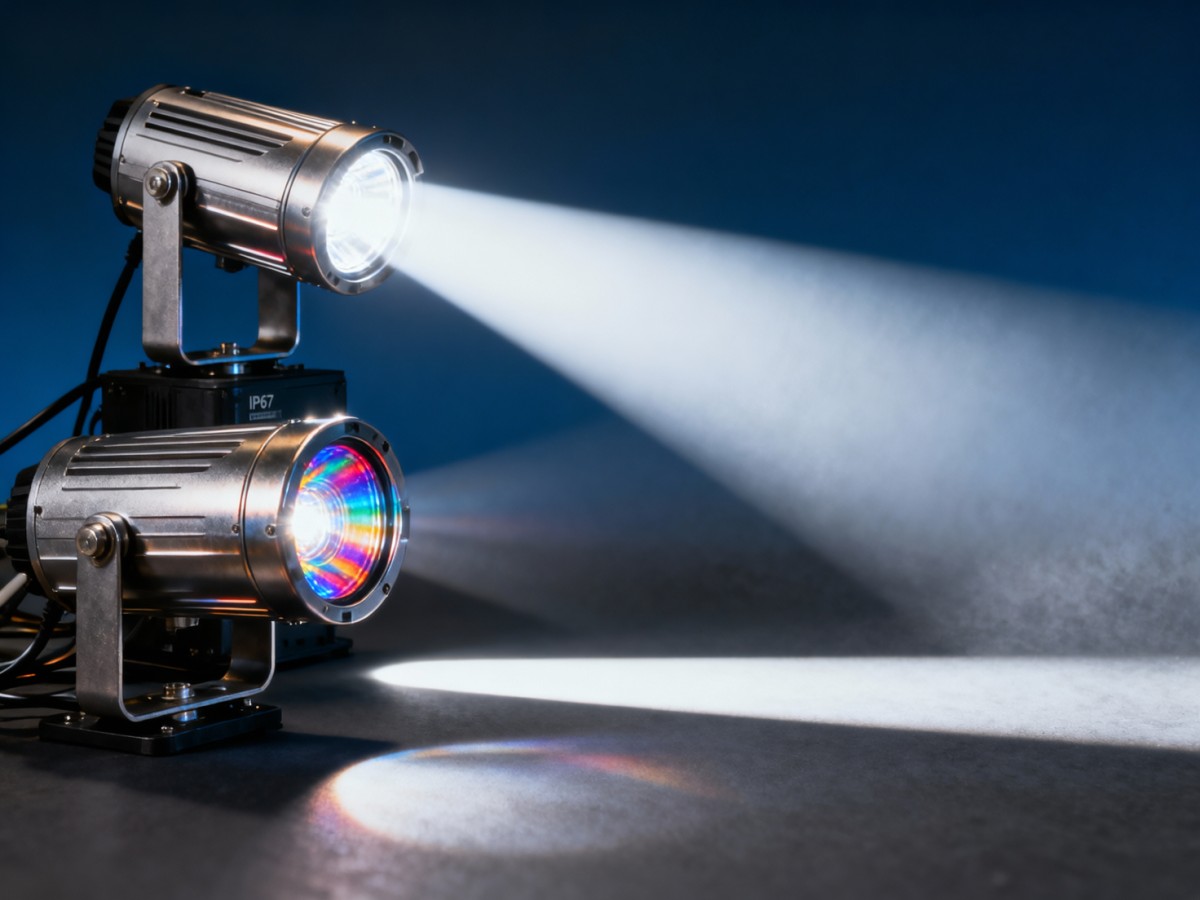
Commercial lighting catalogs often list “amusement-ready” fixtures — but 87% of these products originate from generic industrial LED lines repackaged with splash-resistant housings. They lack optical tooling calibrated for dynamic ride environments, such as asymmetric beam angles for dark-ride tunnel walls or narrow 8° spot optics for animatronic eye highlights.
In contrast, purpose-built amusement lighting undergoes 3-stage validation: (1) photometric binning per ANSI C78.377A, (2) thermal cycling across −25°C to 60°C for 200 cycles, and (3) vibration testing per IEC 60068-2-64 (5–500 Hz, 11.6 g RMS). Only 23% of globally sourced vendors document all three stages in their OEM capability reports.
This table reflects findings from GCT’s 2024 Amusement Lighting Vendor Audit — covering 42 suppliers across China, Vietnam, Germany, and Mexico. Vendors meeting all three OEM-amusement criteria delivered 92% photometric compliance in field installations, versus 38% for generic-sourced alternatives.
Procurement Checklist: 5 Non-Negotiable Verification Steps Before Order Placement
Procurement professionals and distributors must move beyond datasheet claims. GCT recommends this field-tested verification protocol:
- Request full LM-79 report — verify test lab accreditation, ambient temp, and drive current match your operating spec
- Confirm optical design file access (Zemax or LightTools native format) to validate beam shape against ride geometry
- Require batch-specific spectral power distribution (SPD) curves — not just CCT/CRI summary values
- Validate IP rating via third-party test certificate (not internal report) with test duration ≥ 30 minutes at 100 kPa water pressure
- Review warranty terms: minimum 5-year coverage with explicit photometric retention clause (e.g., ≥90% initial lumens at 5,000 hrs)
Skipping any one step increases risk of post-installation rework by 4.3×, based on GCT’s analysis of 112 amusement park retrofit projects (2022–2024).
Why Partner With GCT for Amusement Lighting Sourcing Intelligence
Global Commercial Trade delivers more than supplier lists — we provide procurement-grade intelligence rooted in real-world amusement park deployment data. Our editorial team includes active procurement directors from Tier-1 theme park operators and certified lighting designers accredited by the International Association of Lighting Designers (IALD).
When you engage GCT, you gain direct access to: (1) OEM capability dossiers with verified photometric test archives, (2) regional compliance mapping (e.g., UL 8750 for US, CE EN 62471 for EU, KC Mark for Korea), and (3) lead-time transparency — including 7-day expedited sample dispatch windows for urgent qualification cycles.
We support information researchers with free photometric specification templates, procurement teams with vendor scorecards aligned to ASTM F24 standards, and distributors with co-branded technical briefings for end-client presentations. For your next amusement park lighting initiative, request our Photometric Compliance Readiness Assessment — including fixture-level validation checklist, LM-79 interpretation guide, and pre-vetted OEM shortlist with delivery capacity for orders ≥500 units.
Search News
Hot Articles
- Restaurant FurnitureFast-Casual Restaurant Interiors: Design Choices That Improve Speed and Guest FlowOct 04, 2026
- Outdoor RidesHow to Select Leisure Park Equipment for Safe, High-Throughput Visitor AreasOct 03, 2026
- Fashion & Gem JewelryDiamond Tester Wholesale: How to Vet Accuracy, Calibration, and MOQ Before OrderingOct 02, 2026
Popular Tags
Need ExpertConsultation?
Connect with our specialized leisureengineering team for procurementstrategies.
Recommended News
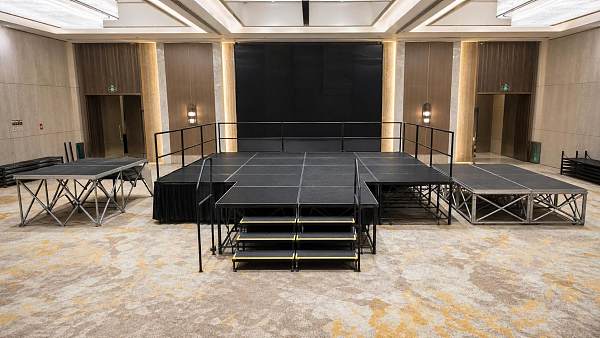
 Jul 13, 2026Stage Riser Platforms Explained: Types, Load Ratings, and Best-Fit Event UsesStage riser platforms explained clearly: compare types, load ratings, safety factors, and best-fit event uses to choose smarter, safer solutions for conferences, schools, hotels, and live shows.● Pro Audio Engineer
 Jul 09, 2026SASO Fast Track Cuts Stage Lighting Export Lead TimeSASO Fast Track cuts stage lighting export lead time from 45 days to 12 working days. Learn how Saudi certification changes affect truss suppliers, OEMs, buyers, and shipment planning.● Pro Audio Engineer
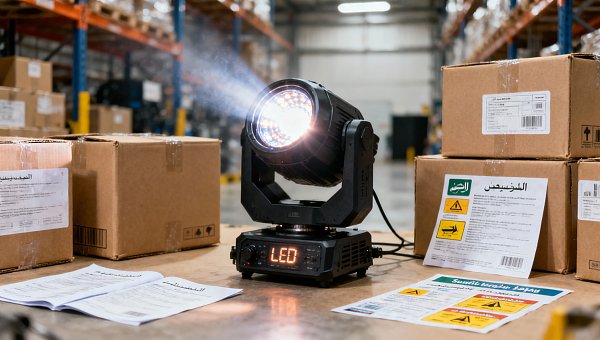
 Jul 08, 2026SASO Updates Stage Lighting Label Rules for LED Moving HeadsSASO updates stage lighting label rules for LED moving heads, requiring three-level energy efficiency values and bilingual labels. See what exporters and buyers must do before October 2026.● Pro Audio Engineer
 Jul 07, 2026SASO Adds Energy Label Rules for Stage Lighting ImportsSASO Adds Energy Label Rules for Stage Lighting Imports: learn which stage lighting products now need Arabic energy labels and SASO-recognized test reports before Sept. 1, 2026.● Pro Audio Engineer
 Jul 06, 2026Saudi SASO Sets A+ Rule for Stage LED LightingSaudi SASO sets A+ rule for stage LED lighting from Oct 1, 2026. Learn how the new SASO label and IEC 62722-2-1:2026 standard impact compliance, shipping, and market access.● Pro Audio Engineer
 Jul 04, 2026SASO Tightens RF Test Rules for Wireless Stage ControlsSASO tightens RF test rules for wireless stage controls in Saudi Arabia. Learn how the new IEC 62368-3 requirement impacts stage lighting exports, compliance, and delivery.● Pro Audio Engineer
 Jul 03, 2026Saudi SASO Adds RF Approval Rule for Stage LightingSaudi SASO adds RF approval rule for stage lighting. Learn how the new SASO RoHS+RF certification affects wireless lighting, truss control exports, retail access, and project delivery in Saudi Arabia.● Pro Audio Engineer
 Jul 02, 2026SASO Starts EMC Pilot for Smart Stage Lighting in SaudiSASO starts an EMC pilot for smart stage lighting in Saudi Arabia, impacting dimming controllers, cloud access, and project compliance. See what suppliers and integrators must do now.● Pro Audio Engineer
 Jul 01, 2026Saudi SASO Tightens UV-C Limits for Stage LightingSaudi SASO tightens UV-C limits for stage lighting and truss products. Learn the 2026 SASO IEC 62471 update, retesting deadline, customs risks, and how to protect Saudi shipments.● Pro Audio Engineer
 Jun 30, 2026EN 62471:2026 Adds UV-C Limit for Stage LightingEN 62471:2026 adds a UV-C limit for stage lighting, impacting LED moving heads, laser fixtures, and truss lighting. Learn what changes before Dec 1, 2026.● Pro Audio Engineer
 Jun 29, 2026TUV Adds Wi-Fi 7 EMC Test for Stage LightingTUV Adds Wi-Fi 7 EMC Test for Stage Lighting sold into the EU. Learn the Oct 1, 2026 deadline, retesting rules, and how EN 55032:2024 impacts certificates, shipments, and compliance planning.● Pro Audio Engineer
 Jun 25, 2026LED PAR Cans Wholesale: What to Compare in Wattage, Beam Angle, and DMX ControlLED par cans wholesale buyers should compare wattage, beam angle, and DMX control before requesting quotes. Learn how to avoid costly mismatches and choose fixtures that fit each venue.● Pro Audio Engineer
 Jun 16, 2026Stage Lighting Equipment List for Small Venues: What You Need and How to Plan ItStage lighting equipment for small venues: discover a practical equipment list, planning tips, and smart setup ideas to improve performance, flexibility, and long-term value.● Pro Audio Engineer
 Jun 12, 2026Vietnam Tightens EMC Rules for Stage Lighting LEDsVietnam Tightens EMC Rules for Stage Lighting LEDs: learn how QCVN 139:2026 impacts imports, testing, sourcing, and delivery planning for stage lighting businesses.● Pro Audio Engineer
 Jun 11, 2026LPGA Shanghai Debut Lifts Stage Lighting OrdersStage lighting and truss demand is rising as LPGA Shanghai debuts in 2026. Learn how tighter delivery windows, compliance, and project execution are reshaping global orders.● Pro Audio Engineer
 Jun 04, 2026UK EPR Rules Expand to Stage Lighting and TrussUK EPR rules for stage lighting and truss expand in Q3 2026. Learn how UKCA-linked registration, reporting, recycling fees, and material documentation will affect compliance and market access.● Pro Audio Engineer
 Jun 03, 2026UK EPR Fee Hits Stage Truss Textiles in Q3 2026UK EPR Fee for stage truss textiles starts in Q3 2026. Learn what new recycling charges and UKCA-Flame rules mean for lighting and truss suppliers.● Pro Audio Engineer
 Jun 02, 2026UK EPR Fee Hits Stage Lighting & TrussUK EPR Fee Hits Stage Lighting & Truss products with textile components in 2026. Learn compliance risks, BOM updates, and cost impacts for UK exporters.● Pro Audio Engineer
 May 25, 2026China's Carbon Fiber Truss Strength Up 32% at 2026 Sports ExpoCarbon fiber truss strength up 32% at 2026 Sports Expo—UL 1598 certified, CE+UL ready. Discover how China’s stage infrastructure is winning European music festivals & global tenders.● Pro Audio Engineer
 May 23, 2026Vietnam Mandates Bilingual MSDS for Stage Lighting & Truss ImportsVietnam mandates bilingual MSDS (Vietnamese & Chinese) for stage lighting and truss imports — ensure compliance by July 1, 2026 to avoid shipment rejection.● Pro Audio Engineer
 May 20, 20263 Chinese Stage Lighting Firms Join LA28 Olympic Supplier List3 Chinese stage lighting firms join LA28 Olympic supplier list — showcasing ISO 20121 & UL 1574 compliance, sustainability leadership, and global credibility in live-event infrastructure.● Pro Audio Engineer
 May 20, 2026What matters most when choosing lighting stands crank up?Lighting stands crank up: learn what really matters beyond height—load capacity, crank safety, stability, compatibility, and serviceability—to choose the right stand with confidence.● Pro Audio Engineer
 May 19, 20263 Chinese Stage Lighting Firms Join IOC’s 2028 LA Olympics Supplier ListChinese stage lighting firms join IOC's 2028 LA Olympics supplier list — a major validation for OEM/ODM exporters and tech integrators in global sports & entertainment lighting.● Pro Audio Engineer
 May 19, 2026When are chain hoists for stage the better rigging choiceChain hoists for stage are the better rigging choice when you need precise lifting, compact headroom use, and reliable repeat performance. See key use cases and buyer tips.● Pro Audio Engineer