What Makes an Adventure Playground Different from Standard Play Areas?
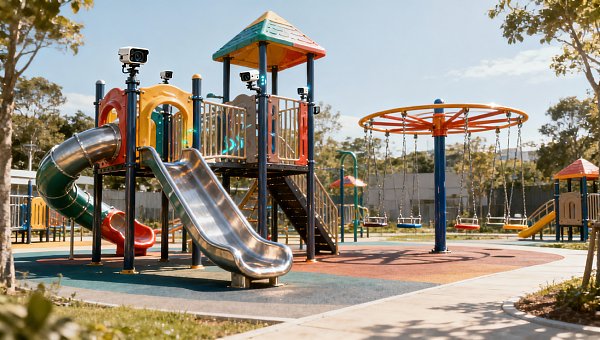
An adventure playground stands apart because it is designed for active discovery, not only passive entertainment. Children do more than move between fixed play pieces. They climb, balance, build, invent, negotiate, and test judgment in ways that feel open-ended yet still structured by safety planning.
That distinction matters when comparing play environments for schools, parks, hospitality spaces, mixed-use developments, or leisure destinations. In commercial planning, the real question is not whether one format looks more exciting. It is whether an adventure playground delivers stronger developmental value, better long-term engagement, and a suitable risk profile for the setting.
From a broader sourcing perspective, this is why the topic draws attention across the amusement and leisure parks segment tracked by Global Commercial Trade. Spaces that support memorable experiences now need to balance design appeal, compliance, durability, and repeat use without losing the spirit of play.
So what exactly makes an adventure playground different?
The simplest answer is that an adventure playground encourages challenge, imagination, and controlled uncertainty. A standard play area often focuses on familiar equipment such as swings, slides, spring riders, or a compact climbing frame. The experience is usually predictable.
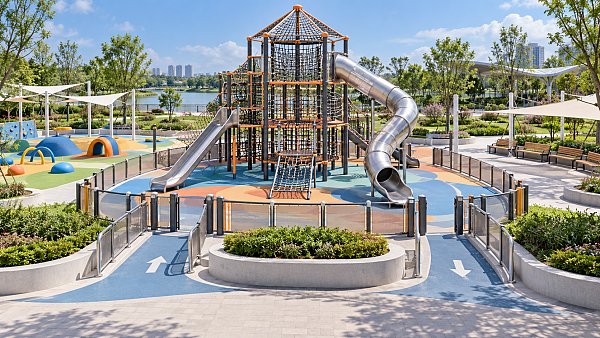
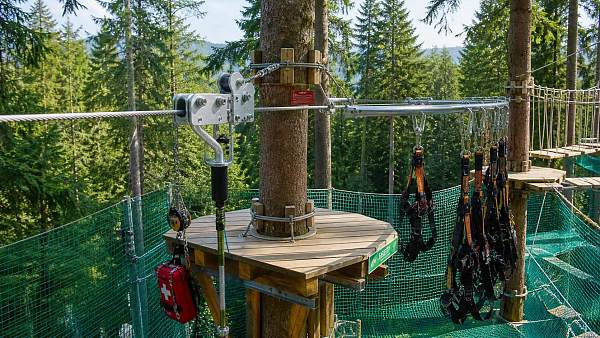
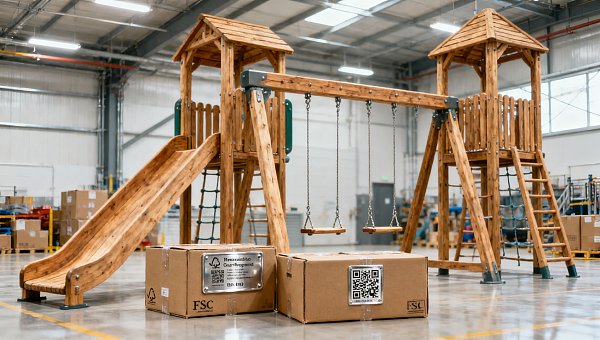
An adventure playground, by contrast, is built around exploration. It may include rope structures, multi-level towers, nets, scrambling zones, embankment slides, timber balance trails, bouldering elements, loose parts, or sensory pathways. The child is not just using equipment. The child is making choices.
This difference changes the whole design purpose. Standard play areas often prioritize easy supervision and broad accessibility in a compact footprint. An adventure playground still values those goals, but adds layered movement, graduated challenge, and more opportunities for self-directed play.
In practical terms, the adventure playground model treats play as a developmental process. It gives room for problem-solving, social cooperation, and physical confidence rather than repeating the same short play cycle every visit.
A quick comparison helps
This table does not mean one option is always better. It shows that the adventure playground serves a different purpose and should be judged by different performance criteria.
Is an adventure playground mainly about higher risk?
That is one of the most common misunderstandings. An adventure playground is not successful because it feels dangerous. It is successful because it allows children to encounter challenge in a managed, readable way.
There is an important difference between hazard and risk. A hazard is something hidden, poorly controlled, or likely to cause harm without warning. Risk, in a healthy play setting, is visible and understandable. A child can judge height, speed, grip, spacing, and movement.
This matters in design reviews. A well-planned adventure playground does not ignore safety standards. It usually depends on them even more heavily because the play experience includes height variation, dynamic routes, and complex circulation.
In actual projects, the better question is whether the environment supports risk awareness. Can children test ability in stages? Are fall zones clear? Is surfacing appropriate? Are sightlines strong enough for supervision? Does the layout avoid hidden conflict points?
- Good adventure playground design uses challenge gradients rather than one intimidating obstacle.
- It offers multiple entry points for different confidence levels.
- It aligns play intensity with recognized safety and material standards.
- It treats supervision, maintenance, and user behavior as part of safety.
So yes, adventure playground environments feel more challenging. No, they should not feel uncontrolled. The value lies in risk literacy, not recklessness.
Where does an adventure playground make the most sense?
Not every site needs one. The strongest fit appears where play is part of a wider experience strategy. Leisure parks, destination retail zones, family resorts, public open spaces, education campuses, and premium residential developments often benefit most.
Why? Because these places want people to stay longer, return more often, and remember the environment. A standard play area may satisfy a baseline amenity need. An adventure playground is more likely to become a feature that shapes destination identity.
In hospitality-linked settings, for example, family dwell time and place attachment matter. In school environments, the focus may shift toward physical literacy and social development. In civic parks, the goal may be age range diversity and stronger community use across the day.
This is where sourcing judgment becomes more nuanced. Platforms such as Global Commercial Trade typically examine not just equipment categories, but also how design language, compliance records, installation capability, and durability align with the intended user journey.
A practical way to decide is to match the play model to the site ambition:
How should you judge the quality of an adventure playground design?
Visual appeal is only the starting point. Many designs look adventurous in concept drawings, yet underperform once installed. The stronger evaluation method is to examine how the play environment behaves over time.
One useful test is flow. Does the adventure playground invite continuous movement, or does it create bottlenecks? Children usually prefer routes, loops, and options over single-file experiences with one obvious entry and exit.
Another test is developmental range. The best layouts do not serve only the boldest users. They include stepping-stone progression, social corners, sensory elements, and varied climbing intensity so more children can participate without frustration.
Materials also tell a story. Timber, steel, rope, HDPE panels, molded components, and impact surfacing each affect maintenance cycles, climate suitability, and design character. A visually natural adventure playground may fit a resort or park setting, while a more urban structure may suit a mixed-use plaza.
It also helps to ask about the less visible details:
- How frequently do high-wear components require inspection or replacement?
- Are replacement parts standardized across the system?
- Can the design support local safety codes and international benchmarks?
- Will the layout still feel engaging after the novelty period ends?
In commercial environments, long-term value often comes from this combination: emotional appeal on day one, stable performance in year three, and reliable maintenance through the full lifecycle.
What mistakes do people make when comparing an adventure playground with standard play areas?
The first mistake is comparing them only by equipment count. A larger number of components does not automatically create a better adventure playground. What matters more is how the elements connect into a meaningful play journey.
The second mistake is over-focusing on upfront cost. Adventure playground projects often involve higher design complexity, deeper site integration, and more tailored fabrication. Yet they may also generate stronger usage, destination value, and lifespan returns when matched to the right context.
Another common issue is treating compliance as a final checkpoint instead of an early design driver. In reality, safety surfacing, circulation width, edge protection, structural integrity, and maintenance access influence the concept from the beginning.
There is also a softer mistake: assuming challenge excludes inclusion. A thoughtful adventure playground can include graduated routes, sensory features, resting points, and cooperative play areas. Inclusion is not the absence of difficulty. It is the presence of meaningful options.
When a comparison feels unclear, it usually helps to reset the evaluation around five questions:
- What user behavior should the space encourage?
- How long should visitors stay engaged?
- What level of challenge suits the site?
- What maintenance model is realistic?
- How important is destination identity?
Before choosing an adventure playground, what should be confirmed?
A sound decision usually starts with use case clarity. If the site simply needs a safe, compact, familiar amenity, a standard play area may be the better answer. If the site needs stronger differentiation, broader age engagement, and more immersive play, the adventure playground becomes a serious option.
Beyond concept, several checks are worth making early:
- Confirm site dimensions, topography, drainage, shade, and circulation patterns.
- Review applicable standards, inspection routines, and surfacing requirements.
- Compare material resilience against climate and expected footfall.
- Check lead times for fabrication, shipping, and installation sequencing.
- Understand spare parts access and post-installation service structure.
This is often where reliable industry intelligence becomes useful. In sectors tied to experiential environments, the most successful sourcing decisions rarely depend on appearance alone. They come from matching design ambition with safety evidence, operational realism, and supplier consistency.
In the end, an adventure playground is different because it asks more from the design and gives more back when done well. It creates challenge without chaos, freedom without guesswork, and play value that lasts longer than the first impression.
If the next step is evaluation, compare play goals before comparing equipment lists. Map the site conditions, define the desired user experience, and test each adventure playground option against safety, upkeep, and long-term engagement. That approach usually leads to a more confident decision than choosing by appearance alone.
Search News
Hot Articles
- Musical InstrumentsChoosing a Classical Guitar Manufacturer in China: Quality Checks Before OrderingOct 20, 2026
- Stationery & UniformsChoosing a Wholesale Chef Coat Supplier: MOQs, Samples, and Lead TimesOct 19, 2026
- Indoor PlaygroundTurnkey Playground Installation: What's Included and What Costs Extra?Oct 18, 2026
Popular Tags
Need ExpertConsultation?
Connect with our specialized leisureengineering team for procurementstrategies.
Recommended News
 Oct 03, 2026How to Select Leisure Park Equipment for Safe, High-Throughput Visitor AreasLeisure park equipment selection guide for safe, high-throughput venues—explore capacity, supervision, durability, accessibility, and supplier criteria.● Theme Park Strategist
 Sep 18, 2026What Drives Animatronic Dinosaur Manufacturer Prices for Theme Park Projects?Animatronic dinosaurs manufacturer price guide: compare motion, materials, controls, installation, and lifecycle costs to plan a durable theme park attraction.● Theme Park Strategist
 Sep 06, 2026Do Amusement Ride Safety Compliance Requirements Change Every Year?Do amusement safety compliance requirements change annually? Learn what really changes, from standards and inspections to permits, upgrades, and local approvals.● Theme Park Strategist
 Sep 02, 2026How Long Does It Take to Receive Full Safety Documents From an OEM?How long does it take to get full safety documentation from OEM partners? Discover realistic timelines, common delays, and practical steps to secure compliant files faster.● Theme Park Strategist
 Sep 03, 2026Designing Adventure Park Safety Systems for Zip Lines, Ropes Courses, and Daily InspectionsAdventure park safety systems: learn how to design safer zip lines and ropes courses with daily inspections, defect controls, rescue readiness, and staff training.● Theme Park Strategist
 Aug 22, 2026What to Look for When Choosing Three Seat Jet Skis for Rental or Resort UseThree seat jet skis for rental or resort use should balance stability, safety, maintenance, and guest comfort. Learn how to choose models that boost uptime and guest satisfaction.● Theme Park Strategist
 Aug 17, 2026What Parts Matter Most in a Roller Coaster and How Do They Affect Ride Safety?Roller coaster parts determine ride safety more than most riders realize. Explore how tracks, restraints, brakes, wheels, and control systems work together to protect every ride.● Theme Park Strategist
 Aug 15, 20262026 China Sports Expo Sees 45.74% More Overseas Pre-registered Buyers as POB Expands Procurement Matching2026 China Sports Expo boosts overseas pre-registered buyers by 45.74% as POB expands procurement matching for fitness, outdoor, and venue suppliers.● Theme Park Strategist
 Aug 14, 2026What Should Buyers Check Before Choosing a Flying Chair Ride Exporter?Flying chair ride exporter buyers should check safety, structure, export support, and spare parts before purchase to reduce risk and choose a reliable supplier.● Theme Park Strategist
 Aug 04, 2026EU Issues EN 1176-1:2026 for Playground SafetyEU Issues EN 1176-1:2026 for Playground Safety: learn how the new standard impacts Outdoor Rides, CE certification, inventory checks, and EU compliance before March 2027.● Theme Park Strategist
 Aug 03, 2026CPSC Adopts ASTM F1487-26 for Imported Outdoor RidesOutdoor Rides face a major U.S. compliance shift as CPSC adopts ASTM F1487-26. Learn the new certification, testing, and customs risks before November 1, 2026.● Theme Park Strategist
 Jul 26, 2026Revised EN 1176:2026 Triggers Re-Certification for Outdoor RidesOutdoor Rides face immediate EN 1176:2026 re-certification for new CE applications. Learn how testing, documentation, and EU market access rules now affect exports and delivery plans.● Theme Park Strategist
 Jul 21, 2026CPSC Recall Flags Structural Risk in Outdoor RidesCPSC recall flags structural risk in outdoor rides: learn how ASTM F1487-23 failures affect importers, distributors, and compliance teams across the U.S., Canada, and Australia.● Theme Park Strategist
 Jul 19, 2026How to Choose Outdoor Fitness Equipment for Parks Based on Users, Space, and BudgetOutdoor fitness equipment for parks: learn how to choose the right mix based on users, space, and budget to improve safety, usage, and long-term value.● Theme Park Strategist
 Jul 15, 2026Ocean Freight Spike Pressures Outdoor Rides ExportsOcean Freight Spike Pressures Outdoor Rides Exports as Shanghai-Rotterdam rates surge 42%. See how rising freight costs, delays, and rerouting risks could reshape Europe-bound delivery plans.● Theme Park Strategist
 Jul 14, 2026EN 1176 Revision Takes Effect for Outdoor Ride Weld TestingEN 1176 revision takes effect for outdoor ride weld testing from Sept 1, 2026. Learn ISO 5817 level B, third-party NDT report rules, and key EU compliance steps.● Theme Park Strategist
 Jul 12, 2026Vietnam Requires AI Anti-Collision Systems for Imported Outdoor RidesVietnam Requires AI Anti-Collision Systems for Imported Outdoor Rides from Sept. 15, 2026. Learn compliance rules, VAST certification needs, and how importers can avoid delays.● Theme Park Strategist
 Jul 11, 2026Vietnam Tightens Rules for Imported Outdoor RidesVietnam Tightens Rules for Imported Outdoor Rides: learn how Vietnam’s 2026 compliance update adds AI anti-collision, Vietnamese logs, and local maintenance duties for importers and manufacturers.● Theme Park Strategist
 Jul 09, 2026How to Evaluate a Lazy River Equipment Supplier for Safety, Flow Design, and MaintenanceLazy river equipment supplier selection affects safety, flow design, and maintenance costs. Learn what to compare, what to ask, and how to choose a reliable partner.● Theme Park Strategist
 Jul 08, 2026RCEP Update Cuts ASEAN Tariffs to Zero for Outdoor RidesRCEP update cuts ASEAN tariffs to zero for outdoor rides from China. Learn how FSC-CoC, PEFC traceability, and e-CO compliance affect exports, sourcing, and buyer decisions.● Theme Park Strategist
 Jul 07, 2026RCEP Guide Adds Dual Wood Traceability for Outdoor RidesOutdoor Rides exporters face a new RCEP traceability rule: dual FSC-CoC and PEFC-STS 2023 codes for wood components. See what changes before Oct. 1, 2026.● Theme Park Strategist
 Jul 06, 2026Vietnam Tightens RCEP Rules for Wooden Ride PartsVietnam Tightens RCEP Rules for Wooden Ride Parts: learn how FSC Chain-of-Custody and QR code requirements now affect outdoor rides, RCEP imports, and shipment compliance.● Theme Park Strategist
 Jul 06, 2026How to Evaluate a Bumper Cars on Ice Manufacturer for Safety, Capacity, and ROIBumper cars on ice manufacturer selection starts with safety, capacity, and ROI. Learn how to compare suppliers, reduce risk, and choose a partner built for long-term commercial success.● Theme Park Strategist
 Jul 04, 2026Electric Drift Bumper Cars vs Traditional Bumper Cars: Which Fits Your Venue Better?Electric drift bumper cars or traditional bumper cars? Compare installation, safety, maintenance, guest appeal, and ROI to choose the best fit for your venue.● Theme Park Strategist