VR Simulator Rides for Family Entertainment Centers: How to Compare ROI and Throughput
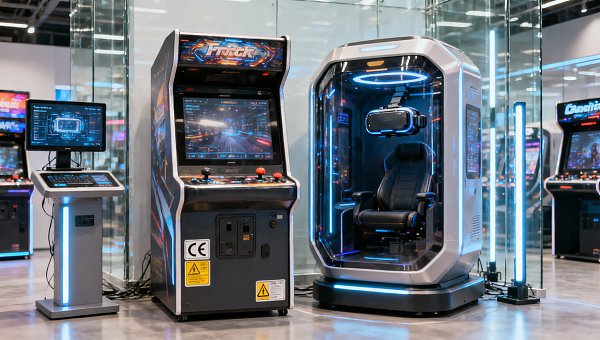
For family entertainment centers, vr simulator rides look exciting on a showroom floor. The harder part is proving they can deliver stable cash flow after installation, training, and daily operations begin.
That is why ROI should never be reduced to ticket price alone. A stronger comparison model looks at throughput, uptime, labor, replay value, maintenance demand, and how well each unit fits the wider guest journey.
Across amusement and leisure projects covered by Global Commercial Trade, the best-performing investments usually share one trait: they are selected as operating systems, not just attractions. In other words, the unit works commercially before it works visually.
If the goal is a scalable entertainment model, the useful question is simple. Which vr simulator rides can move guests fast, stay reliable under peak pressure, and still create enough excitement to support repeat visits?
Start with the ROI formula that actually matches daily operations
A lot of projects compare capital cost first. That is understandable, but it often leads to weak decisions. A lower-priced unit can still produce worse returns if dispatch times are slow or downtime is frequent.
For most vr simulator rides, practical ROI starts with five numbers: purchase and installation cost, hourly throughput, average paid sessions per day, labor cost per shift, and expected service interruptions per month.
The next step is to compare revenue under real operating conditions, not ideal brochures. Weekends, school holidays, queue abandonment, cleaning time, and content resets all affect actual earning speed.
Key points to compare before asking for a final quotation
- Use live throughput, not theoretical capacity. Measure boarding, safety checks, ride cycle, unloading, and reset time to see how many paid sessions one unit can truly complete each hour.
- Check operator dependence early. Some vr simulator rides need constant manual supervision, while others automate dispatch, calibration, and content selection, reducing labor pressure during peak attendance windows.
- Review maintenance by month, not by warranty headline. A long warranty sounds strong, but frequent part replacement, headset cleaning, and motion platform tuning can still dilute returns.
- Compare revenue per square meter. Compact systems with steady throughput sometimes beat larger signature rides because they fit tighter layouts and leave room for retail, redemption, or food zones.
- Test content refresh economics. If new ride films, software licenses, or branded experiences cost too much, replay value drops and vr simulator rides lose momentum after the launch phase.
- Ask for real uptime records from operating sites. Factory demos rarely reflect heavy weekend use, so field performance is a better indicator of long-term commercial reliability.
Throughput usually decides whether a good attraction becomes a good business
Many teams fall in love with immersive visuals and motion effects. Guests do notice those features. Still, throughput is often the metric that separates a crowd magnet from a profit center.
A four-seat system with slow loading may underperform a two-seat system with rapid dispatch. The math becomes obvious when queues build, parents hesitate, and staff spend too much time explaining controls.
In GCT sourcing reviews, this is a recurring pattern across commercial experience sectors: fast operational rhythm supports both revenue and guest satisfaction. People accept short rides more easily than slow lines.
What to measure on site or during a vendor demo
- Time the full guest cycle with a stopwatch. Include briefing, seat entry, restraint checks, headset fit, ride duration, exit, sanitation, and the next group handoff.
- Watch first-time riders, not trained staff. Real guests reveal friction points faster, especially when boarding positions, headset comfort, or menu navigation are less intuitive than expected.
- Measure queue drop-off during waits above ten minutes. Even attractive vr simulator rides can lose conversion if families see slow turnover and shift toward arcades or food counters.
- Check whether attendants can support more than one attraction nearby. When one operator can manage two adjacent experiences, labor efficiency improves without hurting safety or service quality.
- Review emergency reset speed. A unit that recovers quickly after tracking loss or guest interruption protects hourly revenue far better than one needing technical intervention.
Compare different operating scenarios before locking the specification
A neighborhood family entertainment center and a destination leisure complex rarely need the same solution. The right specification depends on visit length, average spend, staffing depth, and floor plan constraints.
Small-footprint urban venue
In compact sites, every square meter must earn. Here, vr simulator rides should be evaluated against footprint efficiency, queue containment, ventilation, and noise control as much as visual appeal.
Shorter cycles, simple entry, and low staffing demand usually outperform highly theatrical systems. A smaller ride that turns quickly often supports better daily revenue than a premium platform that blocks circulation.
Large mixed-attraction destination
In bigger sites, vr simulator rides can serve as anchor experiences. The priority shifts toward visual draw, social media appeal, and how well the ride feeds nearby zones like redemption, merchandise, or themed dining.
Even then, operating discipline still matters. Signature attractions need high uptime and a clear queue strategy, or they end up absorbing staff and frustrating guests during the busiest trading periods.
Seasonal or tourism-led traffic
Sites with sharp seasonal peaks should favor systems that are easy to train, quick to clean, and simple to restart. Temporary labor structures expose weak interfaces and complicated maintenance routines very fast.
In this setting, content accessibility matters too. Clear themes, family-friendly ride narratives, and low learning friction help vr simulator rides convert one-time visitors without long explanations.
A practical comparison table helps remove sales noise
When several suppliers look similar, a simple weighted matrix is often enough to expose the real difference. It also makes internal approval easier because the decision path becomes more transparent.
The hidden costs behind vr simulator rides often appear after launch
This is where many business cases weaken. The attraction opens well, guest interest is strong, then margins tighten because service routines were underestimated during procurement.
Common pressure points include headset hygiene, replacement parts lead time, motion base recalibration, software compatibility, and power or HVAC demands. None of these are dramatic alone, but together they change ROI.
Items that deserve a second look before sign-off
- Confirm spare parts location and response time. Imported vr simulator rides can face long delays if key components are stocked only in one overseas service center.
- Review sanitation workflow in detail. Fast turnover means little if headset cleaning creates bottlenecks or if consumable costs grow faster than expected.
- Check software ownership and upgrade rules. Some systems appear affordable upfront but become restrictive when adding content, language packs, or integration features later.
- Verify structural, electrical, and HVAC needs before site approval. Installation surprises can significantly raise the true landed cost of vr simulator rides.
- Request operator training documentation early. Clear manuals, remote support, and troubleshooting logic reduce commissioning risk and shorten the path to stable daily performance.
Why sourcing discipline matters as much as attraction design
In commercial leisure procurement, product choice and supplier quality are tightly linked. A technically impressive ride can still become a weak asset if documentation, after-sales support, or compliance readiness is inconsistent.
That is where a data-backed sourcing approach adds value. Global Commercial Trade focuses on the commercial experience economy, so the comparison lens goes beyond visuals and into operational proof, support depth, and execution fit.
For vr simulator rides, that broader lens is especially useful because these systems sit at the intersection of hardware, content, service, and guest psychology. Missing one layer usually means paying for it later.
A smarter next step is to model returns with real traffic assumptions
Before making a final selection, build a simple operating model for two traffic conditions: normal weekdays and peak weekends. Then pressure-test each supplier using the same assumptions.
The best vr simulator rides are not always the most dramatic. They are the units that fit the venue, maintain rhythm under pressure, and keep earning without demanding constant rescue from staff or technicians.
When the numbers are grounded in throughput, uptime, and lifecycle support, decisions become clearer. That makes it much easier to choose a ride that works not only for opening day, but for the operating year ahead.
Search News
Hot Articles
- Watch OEM & SmartwatchesWatch Movement Parts: How to Check Compatibility With a Specific CaliberOct 21, 2026
- Outdoor RidesEnergylandia Announces Rokan, Set to Be Europe’s Tallest and Longest B&M Wing CoasterOct 20, 2026
- Musical InstrumentsChoosing a Classical Guitar Manufacturer in China: Quality Checks Before OrderingOct 20, 2026
Popular Tags
Need ExpertConsultation?
Connect with our specialized leisureengineering team for procurementstrategies.
Recommended News
 Oct 14, 2026Choosing a Racing Simulator Cockpit for an FEC: Durability and Guest FitChoosing a racing simulator cockpit for FEC? Discover how to assess durability, guest fit, and maintenance to reduce downtime and select a cockpit built for busy venues.● Theme Park Strategist
 Sep 15, 2026How to Choose Coin-Operated Pool Tables for Bars, Hotels, and Arcade VenuesCoin operated pool tables for bars, hotels, and arcades: compare sizes, payment systems, durability, service access, and revenue potential.● Theme Park Strategist
 Sep 08, 2026What to Look for in a Flight Simulator Chair Manufacturer for Commercial VR CentersChoose a flight simulator chair manufacturer that delivers durable, safe, customizable seating for commercial VR centers. Explore key sourcing criteria now.● Theme Park Strategist
 Aug 25, 2026What to Evaluate Before Buying Commercial Self Service Photo Booths for VenuesCommercial self service photo booths for venues: learn how to evaluate durability, software stability, branding flexibility, support, and total ROI before you buy.● Theme Park Strategist
 Aug 23, 2026How to Evaluate Wholesale Vending Machines for Multi-Location Business DeploymentWholesale vending machines for multi-location deployment require more than low unit cost. Learn how to compare reliability, payments, telemetry, and supplier support to scale smarter.● Theme Park Strategist
 Aug 17, 2026U.S. CPSC Urges Bilingual Warnings for Arcade and VR MachinesU.S. CPSC urges bilingual safety warnings for Arcade & VR Machines—learn what exporters, importers, and distributors must do now to avoid delays and returns.● Theme Park Strategist
 Aug 16, 2026EU Enforces EN IEC 62368-1:2026 Certification for Arcade and VR MachinesEU Enforces EN IEC 62368-1:2026 certification for arcade and VR machines, reshaping EU market access, customs clearance, and compliance planning for exporters and distributors.● Theme Park Strategist
 Aug 13, 2026UFLPA’s new guidelines take effect: Exports of Arcade and VR equipment face full-link labor compliance requirementsUFLPA’s new guide takes effect: Arcade and VR machine exports to the U.S. now face full-chain labor compliance checks. Discover key risks and action steps.● Theme Park Strategist
 Aug 12, 2026EU PPWR takes effect, Arcade and VR packaging incorporate heavy metal and PFAS restrictionsEU PPWR now applies to Arcade and VR packaging, tightening heavy metal and PFAS compliance. Learn how exporters can avoid delays, fines, and customs risks.● Theme Park Strategist
 Aug 11, 2026CPSC Sets Bilingual Labels for Arcade and VR ImportsCPSC bilingual labels for arcade and VR imports become mandatory on October 1, 2026. Learn the new English-Spanish warning rules, customs risks, and key compliance steps now.● Theme Park Strategist
 Aug 10, 2026EU Rule Takes Effect for Arcade & VR Machine ClearanceArcade & VR Machine clearance in the EU now depends on EN IEC 62368-1:2026+A11:2026 compliance. Learn what changed, who is affected, and how to avoid customs delays.● Theme Park Strategist
 Aug 09, 2026CPSC Requires New Labels for Arcade and VR ImportsCPSC requires new labels for Arcade and VR imports starting Oct 1, 2026. Learn the multilingual warning rules, compliance risks, and key steps exporters and buyers must take now.● Theme Park Strategist
 Aug 08, 2026EU Entry Rule Tightens for Arcade & VR MachinesArcade & VR Machines entering the EU now face stricter CE compliance under EN IEC 62368-1:2026+A11:2026. Learn the new rule, risks, and what exporters must do now.● Theme Park Strategist
 Aug 07, 2026CPSC Notice Tightens U.S. Entry Rules for Arcade and VR MachinesCPSC Notice Tightens U.S. Entry Rules for Arcade and VR Machines: learn the new labeling, FCC, UN38.3, and compliance document requirements before October 1, 2026.● Theme Park Strategist
 Aug 06, 2026EU Rule Takes Effect for CE-UKCA Labels on Arcade & VR MachinesArcade & VR Machines face new CE-UKCA label and ECPD filing rules in the EU and UK. Learn what manufacturers, importers, and distributors must do now to avoid delays.● Theme Park Strategist
 Aug 05, 2026CPSC Recalls Arcade and VR Machines Over UL 62368-1CPSC recalls arcade and VR machines over UL 62368-1 non-compliance. Learn how this 2026 safety action may affect imports, distribution, customs clearance, and market access.● Theme Park Strategist
 Aug 02, 2026EU Sets New Certification Rule for Arcade and VR MachinesArcade and VR Machines face a new EU certification rule from Oct 1, 2026. Learn how EN IEC 62368-1:2026+A11:2026 affects CE marking, customs clearance, and market access.● Theme Park Strategist
 Aug 01, 2026CPSC Moves to Require Bilingual Warnings on Arcade and VR MachinesCPSC bilingual warnings for Arcade and VR Machines may reshape U.S. import compliance. Learn how English-Spanish labels affect packaging, customs risk, and shipment readiness.● Theme Park Strategist
 Jul 31, 2026EU Sets EN IEC 62368-1:2025 Rule for Arcade and VR MachinesEU Sets EN IEC 62368-1:2025 Rule for Arcade and VR Machines. Learn the new EU compliance deadlines, safety updates, and key actions for manufacturers, OEMs, and distributors.● Theme Park Strategist
 Jul 30, 2026CPSC Sets New Warning Label Rule for Arcade & VR MachinesCPSC sets a new warning label rule for Arcade & VR Machines effective August 15, 2026. Learn key compliance risks, multilingual label requirements, and shipment actions now.● Theme Park Strategist
 Jul 29, 2026EU Enforces New Safety Standard for Arcade and VR MachinesEU Enforces New Safety Standard for Arcade and VR Machines: learn how EN IEC 62368-1 affects CE compliance, customs clearance, and EU market access for exporters and buyers.● Theme Park Strategist
 Jul 28, 2026CPSC Sets ASTM F3472-26 Rule for Arcade & VR ImportsCPSC ASTM F3472-26 rule reshapes Arcade & VR imports to the U.S. Learn key compliance deadlines, certification risks, and what exporters, OEM/ODM suppliers, and buyers should do now.● Theme Park Strategist
 Jul 27, 2026EU Rule Takes Effect for Arcade & VR Machine CybersecurityEU Rule Takes Effect for Arcade & VR Machine Cybersecurity: learn how EN IEC 62443-3-3:2025 affects compliance, customs clearance, sales continuity, and supplier planning in the EU market.● Theme Park Strategist
 Jul 25, 2026CPSC Sets Bilingual Warning Rule for Arcade and VR ImportsCPSC bilingual warning rule for arcade and VR imports takes effect August 1, 2026. Learn how OEM/ODM exporters can avoid CBP delays, relabel shipments, and protect U.S. delivery timelines.● Theme Park Strategist