Water Park Systems Explained: Key Components, Capacity Planning, and Operating Needs
Water park systems sit at the intersection of entertainment design, public safety, utilities engineering, and long-term asset management. For commercial projects, they are not simply collections of slides and pools. They are integrated operating environments where ride performance, water quality, guest circulation, energy demand, and maintenance strategy must work together from the first design brief onward.
That is why the subject matters beyond the amusement sector alone. Resorts, mixed-use destinations, hospitality groups, and leisure developers increasingly treat water-based attractions as experience drivers. In that context, water park systems influence not only opening-day appeal, but also lifecycle cost, staffing models, compliance exposure, and the reliability of the wider commercial offering.
What water park systems really include
A complete system combines mechanical, civil, structural, electrical, and operational elements. Guests may only notice the attraction surface, yet the hidden infrastructure determines whether the venue runs efficiently or becomes difficult to manage.
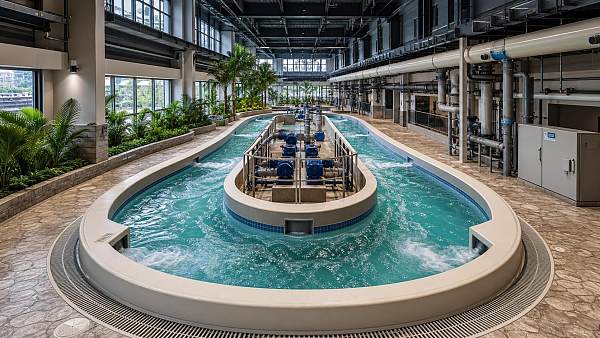
In practical terms, water park systems usually include ride structures, splash features, circulation pumps, filtration trains, chemical dosing equipment, balance tanks, control panels, drainage networks, and safety barriers. They also include plant rooms, backwash handling, lighting, signage, and access routes for inspection and repair.
This broader view is important because many project risks appear at the interfaces. A slide tower may be well designed, yet still create problems if stair capacity, queue management, pump sizing, or deck drainage were treated as secondary items.
Core component groups
Why capacity planning deserves early attention
Capacity planning is one of the most underestimated parts of water park systems. It is not only about peak attendance. It is about how many people each zone can handle safely, comfortably, and profitably at different times of day.
A park can have enough total area and still underperform if one anchor ride creates excessive waiting, or if family zones are too small for the intended mix of guests. Throughput modeling should therefore connect guest profiles, attraction sequencing, dwell time, and staffing assumptions.
The strongest projects usually test several scenarios before equipment is finalized. A resort-focused park, for example, may prioritize balanced circulation and multi-age engagement. A regional ticketed venue may place more emphasis on high-volume headline attractions and queue turnover.
Capacity questions that change design decisions
- What is the realistic peak load, not only the promotional target?
- How many guests can each attraction process per hour?
- Where do queues spill over into circulation or emergency routes?
- How much deck space is needed for family groups and spectators?
- Does the plant room support future expansion or seasonal surges?
When these questions are asked late, teams often compensate with expensive redesigns. When they are asked early, water park systems become easier to phase, budget, and operate.
Operating needs go far beyond water supply
Many feasibility discussions focus on ride mix and visible construction cost. Operating needs tend to receive less attention until procurement or commissioning begins. By then, hidden demands can affect both schedule and budget.
Water park systems require stable utilities, disciplined maintenance access, trained operators, and a realistic spare parts plan. They also depend on chemical storage protocols, drainage capacity, air handling for indoor sites, and resilient power distribution.
Energy is a major issue. Pumps, heating, ventilation, and water treatment equipment can create large ongoing loads. If sustainability goals are part of the business case, the design stage should evaluate variable-speed drives, heat recovery, efficient filtration strategies, and water recirculation logic.
Typical utility and operational pressure points
Indoor facilities often face the toughest environmental controls. Humidity, corrosion risk, and temperature stability can quickly affect finishes, guest comfort, and plant life. Outdoor venues, on the other hand, may face seasonal startup demands, evaporation losses, and wider fluctuations in source water conditions.
This is where a sourcing-led perspective becomes useful. Platforms such as Global Commercial Trade, with a focus on commercial experience sectors, reflect how procurement quality, compliance alignment, and supplier reliability shape project outcomes long after installation.
Safety, compliance, and reliability are inseparable
Safety in water park systems is not a single checklist item. It is built into hydraulic design, anti-entrapment measures, structural engineering, slip resistance, rider dispatch procedures, and water chemistry control. A weakness in one area usually creates pressure elsewhere.
Compliance also varies by market. International projects may need to reconcile local building codes, public health rules, electrical standards, accessibility requirements, and attraction-specific testing protocols. That makes early coordination between consultants, fabricators, and operators especially valuable.
Reliability matters just as much as compliance. Downtime on a flagship attraction changes guest flow across the entire site. It can increase crowding in secondary zones, reduce spend per visit, and raise staffing inefficiency. In commercial terms, reliability is part of the guest experience.
Useful indicators during specification review
- Documented testing standards for ride structures and components
- Clear water treatment performance parameters and monitoring logic
- Defined inspection access for pumps, valves, sensors, and anchors
- Emergency stop procedures integrated with control architecture
- Supplier support for commissioning, training, and replacement parts
Different project models call for different system priorities
Not all water park systems are designed for the same business model. A destination resort, an urban indoor park, and a municipal family center may each use similar technologies, yet the priorities behind specification can differ sharply.
Resort projects often value aesthetics, thematic integration, and a broad age mix. Regional leisure parks may emphasize throughput, repeatable operations, and quick ride turnaround. Mixed-use developments frequently need systems that fit within tighter footprints while still delivering a premium guest impression.
This is why copying another project rarely works well. The better route is to start with business objectives, attendance assumptions, utility constraints, and service expectations, then match the system architecture to that framework.
How to evaluate options without losing the big picture
During concept and procurement stages, water park systems should be compared on more than capital cost. A lower-priced package can become more expensive if it increases energy use, narrows maintenance access, or relies on hard-to-source components.
A useful review framework combines technical fit, lifecycle efficiency, supplier credibility, and operational resilience. This is especially relevant for internationally sourced projects, where shipping lead times, certification evidence, and after-sales support can materially affect the risk profile.
A practical next step for project planning
The most effective way to approach water park systems is to treat them as operational ecosystems, not isolated attractions. That means aligning concept design, capacity assumptions, utility planning, compliance strategy, and sourcing decisions before equipment selections become fixed.
A structured comparison matrix can help. Start with guest mix, attendance range, and site conditions. Then map required attractions, hydraulic loads, treatment needs, energy expectations, and service access. From there, supplier discussions become more precise and easier to verify.
For organizations tracking broader commercial experience trends, that disciplined approach also supports stronger investment decisions. It becomes easier to judge whether a proposal will deliver durable performance, manageable operating costs, and the level of quality expected in today’s leisure and hospitality environments.
Before moving into final specification, it is worth reviewing water park systems through three lenses at once: guest experience, engineering resilience, and sourcing reliability. When those three remain connected, the project is far more likely to open well, run predictably, and hold value over time.
Search News
Hot Articles
- Commercial KitchenHow to Select a Spiral Dough Mixer for Bakery Batch Size and Dough HydrationSep 19, 2026
- Outdoor RidesWhat Drives Animatronic Dinosaur Manufacturer Prices for Theme Park Projects?Sep 18, 2026
- Stationery & UniformsHow to Source Wholesale Packing Tape Without Compromising Carton Seal StrengthSep 17, 2026
Popular Tags
Need ExpertConsultation?
Connect with our specialized leisureengineering team for procurementstrategies.
Recommended News
 Sep 18, 2026What Drives Animatronic Dinosaur Manufacturer Prices for Theme Park Projects?Animatronic dinosaurs manufacturer price guide: compare motion, materials, controls, installation, and lifecycle costs to plan a durable theme park attraction.● Theme Park Strategist
 Sep 06, 2026Do Amusement Ride Safety Compliance Requirements Change Every Year?Do amusement safety compliance requirements change annually? Learn what really changes, from standards and inspections to permits, upgrades, and local approvals.● Theme Park Strategist
 Sep 02, 2026How Long Does It Take to Receive Full Safety Documents From an OEM?How long does it take to get full safety documentation from OEM partners? Discover realistic timelines, common delays, and practical steps to secure compliant files faster.● Theme Park Strategist
 Sep 03, 2026Designing Adventure Park Safety Systems for Zip Lines, Ropes Courses, and Daily InspectionsAdventure park safety systems: learn how to design safer zip lines and ropes courses with daily inspections, defect controls, rescue readiness, and staff training.● Theme Park Strategist
 Aug 22, 2026What to Look for When Choosing Three Seat Jet Skis for Rental or Resort UseThree seat jet skis for rental or resort use should balance stability, safety, maintenance, and guest comfort. Learn how to choose models that boost uptime and guest satisfaction.● Theme Park Strategist
 Aug 17, 2026What Parts Matter Most in a Roller Coaster and How Do They Affect Ride Safety?Roller coaster parts determine ride safety more than most riders realize. Explore how tracks, restraints, brakes, wheels, and control systems work together to protect every ride.● Theme Park Strategist
 Aug 15, 20262026 China Sports Expo Sees 45.74% More Overseas Pre-registered Buyers as POB Expands Procurement Matching2026 China Sports Expo boosts overseas pre-registered buyers by 45.74% as POB expands procurement matching for fitness, outdoor, and venue suppliers.● Theme Park Strategist
 Aug 14, 2026What Should Buyers Check Before Choosing a Flying Chair Ride Exporter?Flying chair ride exporter buyers should check safety, structure, export support, and spare parts before purchase to reduce risk and choose a reliable supplier.● Theme Park Strategist
 Aug 04, 2026EU Issues EN 1176-1:2026 for Playground SafetyEU Issues EN 1176-1:2026 for Playground Safety: learn how the new standard impacts Outdoor Rides, CE certification, inventory checks, and EU compliance before March 2027.● Theme Park Strategist
 Aug 03, 2026CPSC Adopts ASTM F1487-26 for Imported Outdoor RidesOutdoor Rides face a major U.S. compliance shift as CPSC adopts ASTM F1487-26. Learn the new certification, testing, and customs risks before November 1, 2026.● Theme Park Strategist
 Jul 26, 2026Revised EN 1176:2026 Triggers Re-Certification for Outdoor RidesOutdoor Rides face immediate EN 1176:2026 re-certification for new CE applications. Learn how testing, documentation, and EU market access rules now affect exports and delivery plans.● Theme Park Strategist
 Jul 21, 2026CPSC Recall Flags Structural Risk in Outdoor RidesCPSC recall flags structural risk in outdoor rides: learn how ASTM F1487-23 failures affect importers, distributors, and compliance teams across the U.S., Canada, and Australia.● Theme Park Strategist
 Jul 19, 2026How to Choose Outdoor Fitness Equipment for Parks Based on Users, Space, and BudgetOutdoor fitness equipment for parks: learn how to choose the right mix based on users, space, and budget to improve safety, usage, and long-term value.● Theme Park Strategist
 Jul 15, 2026Ocean Freight Spike Pressures Outdoor Rides ExportsOcean Freight Spike Pressures Outdoor Rides Exports as Shanghai-Rotterdam rates surge 42%. See how rising freight costs, delays, and rerouting risks could reshape Europe-bound delivery plans.● Theme Park Strategist
 Jul 14, 2026EN 1176 Revision Takes Effect for Outdoor Ride Weld TestingEN 1176 revision takes effect for outdoor ride weld testing from Sept 1, 2026. Learn ISO 5817 level B, third-party NDT report rules, and key EU compliance steps.● Theme Park Strategist
 Jul 12, 2026Vietnam Requires AI Anti-Collision Systems for Imported Outdoor RidesVietnam Requires AI Anti-Collision Systems for Imported Outdoor Rides from Sept. 15, 2026. Learn compliance rules, VAST certification needs, and how importers can avoid delays.● Theme Park Strategist
 Jul 11, 2026Vietnam Tightens Rules for Imported Outdoor RidesVietnam Tightens Rules for Imported Outdoor Rides: learn how Vietnam’s 2026 compliance update adds AI anti-collision, Vietnamese logs, and local maintenance duties for importers and manufacturers.● Theme Park Strategist
 Jul 09, 2026How to Evaluate a Lazy River Equipment Supplier for Safety, Flow Design, and MaintenanceLazy river equipment supplier selection affects safety, flow design, and maintenance costs. Learn what to compare, what to ask, and how to choose a reliable partner.● Theme Park Strategist
 Jul 08, 2026RCEP Update Cuts ASEAN Tariffs to Zero for Outdoor RidesRCEP update cuts ASEAN tariffs to zero for outdoor rides from China. Learn how FSC-CoC, PEFC traceability, and e-CO compliance affect exports, sourcing, and buyer decisions.● Theme Park Strategist
 Jul 07, 2026RCEP Guide Adds Dual Wood Traceability for Outdoor RidesOutdoor Rides exporters face a new RCEP traceability rule: dual FSC-CoC and PEFC-STS 2023 codes for wood components. See what changes before Oct. 1, 2026.● Theme Park Strategist
 Jul 06, 2026Vietnam Tightens RCEP Rules for Wooden Ride PartsVietnam Tightens RCEP Rules for Wooden Ride Parts: learn how FSC Chain-of-Custody and QR code requirements now affect outdoor rides, RCEP imports, and shipment compliance.● Theme Park Strategist
 Jul 06, 2026How to Evaluate a Bumper Cars on Ice Manufacturer for Safety, Capacity, and ROIBumper cars on ice manufacturer selection starts with safety, capacity, and ROI. Learn how to compare suppliers, reduce risk, and choose a partner built for long-term commercial success.● Theme Park Strategist
 Jul 04, 2026Electric Drift Bumper Cars vs Traditional Bumper Cars: Which Fits Your Venue Better?Electric drift bumper cars or traditional bumper cars? Compare installation, safety, maintenance, guest appeal, and ROI to choose the best fit for your venue.● Theme Park Strategist
 Jul 03, 2026EN 15330-2:2026 Takes Effect for Outdoor RidesEN 15330-2:2026 takes effect for Outdoor Rides in the EU on July 1, 2026. Learn how CE certification and ISO 13849-1 PLd impact market access, customs clearance, and export compliance.● Theme Park Strategist