Roller Coaster Parts Explained: Key Components, Materials, and Wear Points
Roller Coaster Parts Explained for Technical Evaluation
Understanding roller coaster parts is essential for safety review, lifecycle planning, and supplier screening.
Every assembly affects ride dynamics, inspection intervals, downtime risk, and total operating cost.
In practice, technical decisions rarely depend on one part alone.
Track geometry, wheel compounds, fastening methods, and control logic must work as one system.
This makes a structured review of roller coaster parts far more useful than a simple component list.
The most reliable evaluations focus on materials, load paths, wear points, and maintenance access.
That approach also supports supplier qualification, spare parts strategy, and compliance verification.
Core Roller Coaster Parts and Their Functions
Most roller coaster parts fall into five groups: track, trains, propulsion, safety systems, and controls.
Looking at them by function helps identify where failure risk concentrates.
Track and support structure
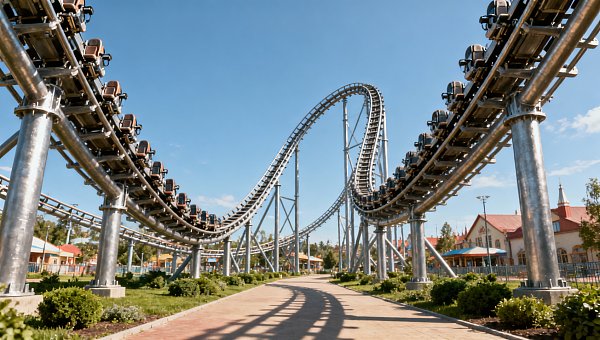
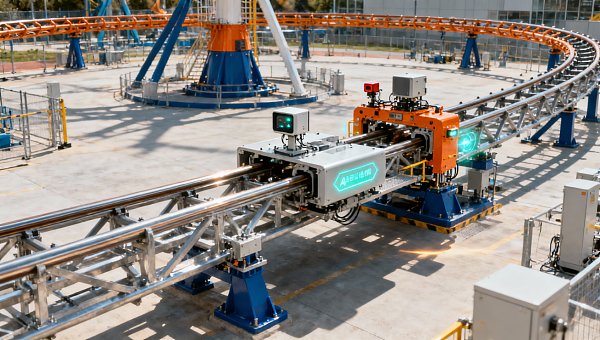
The track is one of the most critical roller coaster parts because it defines the load envelope.
It includes rails, cross ties, spine members, connection plates, and welded or bolted joints.
Support columns, base plates, anchors, and bracing transfer dynamic loads into the foundation.
Small alignment errors here often create larger downstream issues in wheel wear and rider comfort.
Train bodies and chassis
The train assembly contains the chassis, car body, bogies, axle hardware, seats, and restraint mounting points.
Among all roller coaster parts, the chassis usually carries the highest fatigue concern.
Stress accumulates around welded corners, axle brackets, and restraint attachment interfaces.
Wheel systems
Wheel assemblies typically include road wheels, side friction wheels, and up-stop wheels.
These roller coaster parts control guidance, vertical retention, and lateral stability.
Bearing quality, tread material, and thermal behavior matter as much as nominal wheel diameter.
Restraints and rider containment
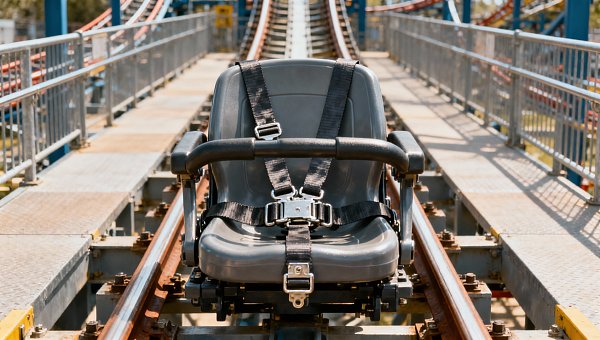
Lap bars, over-the-shoulder restraints, seat belts, locking cylinders, and sensors form this safety group.
These roller coaster parts must resist repeated cycles without excessive play or sensor drift.
A comfortable restraint is valuable, but secure lock confirmation is the first technical priority.
Drive, brake, and control systems
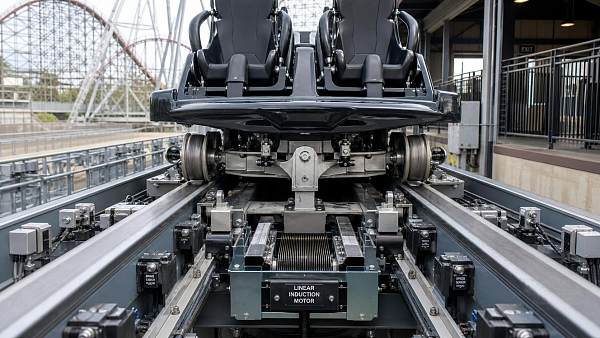
Lift chains, tire drives, LSM or LIM launch modules, anti-rollback devices, brakes, PLCs, and sensors belong here.
These roller coaster parts decide how predictably the ride moves through each block zone.
For evaluators, redundancy, fail-safe behavior, and diagnostic transparency deserve close attention.
Common Materials Used in Roller Coaster Parts
Material selection shapes durability, corrosion resistance, manufacturability, and replacement cost.
This is where many sourcing decisions become either resilient or expensive.
Structural steel
Structural steel dominates major roller coaster parts such as track spines, columns, and chassis elements.
Its advantages include strength, weldability, and familiarity across inspection programs.
However, coating quality and weld procedure control strongly influence long-term performance.
Stainless steel and corrosion-resistant alloys
Stainless steel appears in fasteners, shafts, enclosures, and selected restraint hardware.
For roller coaster parts in humid or coastal sites, corrosion resistance can justify the higher initial cost.
Still, mixed-metal contact should be reviewed to avoid galvanic issues.
Aluminum alloys and composites
Body panels, trim, and non-primary covers often use aluminum or composite materials.
These roller coaster parts reduce weight and improve styling flexibility.
The trade-off is impact sensitivity, thermal expansion differences, and more complex repair methods.
Polyurethane, rubber, and engineered polymers
Wheel treads, dampers, bushings, cable covers, and interior touchpoints often use polymer materials.
These roller coaster parts can improve ride smoothness and lower noise.
But heat buildup, UV exposure, and chemical compatibility must be verified carefully.
Key Wear Points That Deserve Closer Inspection
Not all roller coaster parts age at the same rate.
A reliable evaluation identifies where high cycles, vibration, friction, and weather combine.
- Wheel treads and bearings wear from heat, side loads, contamination, and alignment drift.
- Track welds and bolted joints fatigue under repeated dynamic loading and seasonal movement.
- Brake fins and brake pads degrade through friction, debris, and thermal cycling.
- Lift chain links, sprockets, and anti-rollback mechanisms accumulate shock and lubrication-related wear.
- Restraint pivots, lock teeth, and sensor brackets loosen gradually if tolerances are not controlled.
- Electrical connectors and control cabinets suffer from moisture ingress, vibration, and corrosion.
These wear patterns are rarely random.
They usually reflect a mismatch between duty cycle, environment, design tolerance, or maintenance access.
How to Evaluate Roller Coaster Parts During Sourcing
When sourcing roller coaster parts, technical review should go beyond brochures and nominal specifications.
The better approach is to compare documents, process control, and field maintainability.
- Verify applicable standards, testing records, and traceability for safety-critical roller coaster parts.
- Review material certificates, weld procedures, heat treatment records, and coating specifications.
- Check tolerance control for wheel, axle, bearing, and restraint interfaces.
- Assess spare parts lead time, interchangeability, and obsolescence planning.
- Ask for maintenance manuals that show inspection frequency and actual replacement criteria.
- Confirm how the supplier handles nonconformance, redesign feedback, and field failure analysis.
From a lifecycle cost perspective, access matters almost as much as durability.
If roller coaster parts are difficult to inspect or replace, maintenance cost rises quickly.
Standards, Compliance, and Documentation Signals
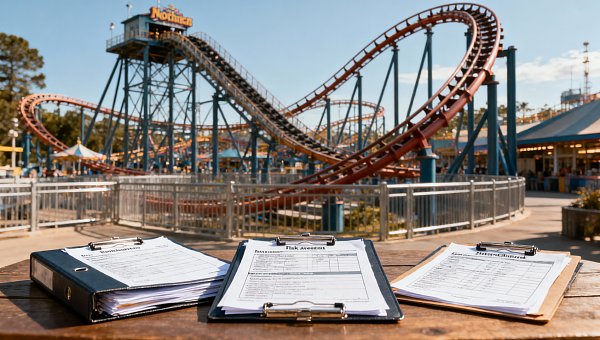
Technical evaluation also depends on the quality of supporting records.
For roller coaster parts, documentation often reveals risk earlier than physical inspection.
ASTM and local ride safety frameworks should guide the review scope where applicable.
What matters most is whether the supplier can prove consistent conformity, not just claim it.
Practical Decision Points Before Approval
A practical review of roller coaster parts should end with clear approval criteria.
That keeps sourcing decisions consistent across projects and suppliers.
- Prioritize safety-critical roller coaster parts with proven field history and documented failure analysis.
- Choose materials based on climate, corrosion exposure, and actual ride cycle intensity.
- Map wear points to inspection labor, shutdown impact, and spare inventory needs.
- Reject incomplete traceability on restraint, wheel, braking, or control-related components.
- Favor suppliers that provide technical support after installation, not only shipment readiness.
In the end, roller coaster parts should be judged as a serviceable system, not isolated hardware.
The strongest sourcing decisions balance compliance, durability, maintainability, and documentation discipline.
If that balance is clear, long-term ride reliability becomes far easier to defend and manage.
Search News
Hot Articles
Popular Tags
Need ExpertConsultation?
Connect with our specialized leisureengineering team for procurementstrategies.
Recommended News
 Oct 26, 2026Aurora Park Phase One Opens at Former SeaWorld Site in OhioAurora Park at Ohio’s former SeaWorld site is scheduled to open phase one on October 25, 2026. Discover its restored dock, pavilion and new public recreation spaces.● Theme Park Strategist
 Oct 25, 2026Six Flags to Add Seat Belts to Goliath and Eight Other Coasters to Improve SafetySix Flags reportedly plans to add seat belts to Goliath and eight other coasters. Explore the planned safety upgrades, ride closures and potential retrofit implications.● Theme Park Strategist
 Oct 23, 2026Comcast Q3 Earnings: Universal Theme Park Revenue Falls 4.4% to $2.6 BillionComcast Q3 earnings: Universal theme park revenue reportedly fell 4.4% to $2.6 billion. Explore what ticket discounts and pricing pressure could mean for operators, ticket sellers and suppliers.● Theme Park Strategist
 Oct 21, 2026IAAPA Launches Insurance Solution for North American Attractions IndustryExplore IAAPA Insurance Solution, a dedicated insurance and risk management offering for North American attractions operators, and discover what it could mean for your business.● Theme Park Strategist
 Oct 20, 2026Energylandia Announces Rokan, Set to Be Europe’s Tallest and Longest B&M Wing CoasterDiscover Energylandia’s Rokan, set to become Europe’s tallest and longest B&M wing coaster. Explore the 62-metre thrill ride planned for spring 2027 in the new Volana themed area.● Theme Park Strategist
 Oct 23, 2026Can Amusement Ride Suppliers Meet Safety Rules Without On-Site Audits?Can a supplier pass amusement safety compliance without on-site audit? Explore accepted evidence, remote checks, and required inspections to make safer sourcing decisions.● Theme Park Strategist
 Oct 03, 2026How to Select Leisure Park Equipment for Safe, High-Throughput Visitor AreasLeisure park equipment selection guide for safe, high-throughput venues—explore capacity, supervision, durability, accessibility, and supplier criteria.● Theme Park Strategist
 Sep 18, 2026What Drives Animatronic Dinosaur Manufacturer Prices for Theme Park Projects?Animatronic dinosaurs manufacturer price guide: compare motion, materials, controls, installation, and lifecycle costs to plan a durable theme park attraction.● Theme Park Strategist
 Sep 06, 2026Do Amusement Ride Safety Compliance Requirements Change Every Year?Do amusement safety compliance requirements change annually? Learn what really changes, from standards and inspections to permits, upgrades, and local approvals.● Theme Park Strategist
 Sep 02, 2026How Long Does It Take to Receive Full Safety Documents From an OEM?How long does it take to get full safety documentation from OEM partners? Discover realistic timelines, common delays, and practical steps to secure compliant files faster.● Theme Park Strategist
 Sep 03, 2026Designing Adventure Park Safety Systems for Zip Lines, Ropes Courses, and Daily InspectionsAdventure park safety systems: learn how to design safer zip lines and ropes courses with daily inspections, defect controls, rescue readiness, and staff training.● Theme Park Strategist
 Aug 22, 2026What to Look for When Choosing Three Seat Jet Skis for Rental or Resort UseThree seat jet skis for rental or resort use should balance stability, safety, maintenance, and guest comfort. Learn how to choose models that boost uptime and guest satisfaction.● Theme Park Strategist
 Aug 17, 2026What Parts Matter Most in a Roller Coaster and How Do They Affect Ride Safety?Roller coaster parts determine ride safety more than most riders realize. Explore how tracks, restraints, brakes, wheels, and control systems work together to protect every ride.● Theme Park Strategist
 Aug 15, 20262026 China Sports Expo Sees 45.74% More Overseas Pre-registered Buyers as POB Expands Procurement Matching2026 China Sports Expo boosts overseas pre-registered buyers by 45.74% as POB expands procurement matching for fitness, outdoor, and venue suppliers.● Theme Park Strategist
 Aug 14, 2026What Should Buyers Check Before Choosing a Flying Chair Ride Exporter?Flying chair ride exporter buyers should check safety, structure, export support, and spare parts before purchase to reduce risk and choose a reliable supplier.● Theme Park Strategist
 Aug 04, 2026EU Issues EN 1176-1:2026 for Playground SafetyEU Issues EN 1176-1:2026 for Playground Safety: learn how the new standard impacts Outdoor Rides, CE certification, inventory checks, and EU compliance before March 2027.● Theme Park Strategist
 Aug 03, 2026CPSC Adopts ASTM F1487-26 for Imported Outdoor RidesOutdoor Rides face a major U.S. compliance shift as CPSC adopts ASTM F1487-26. Learn the new certification, testing, and customs risks before November 1, 2026.● Theme Park Strategist
 Jul 26, 2026Revised EN 1176:2026 Triggers Re-Certification for Outdoor RidesOutdoor Rides face immediate EN 1176:2026 re-certification for new CE applications. Learn how testing, documentation, and EU market access rules now affect exports and delivery plans.● Theme Park Strategist
 Jul 21, 2026CPSC Recall Flags Structural Risk in Outdoor RidesCPSC recall flags structural risk in outdoor rides: learn how ASTM F1487-23 failures affect importers, distributors, and compliance teams across the U.S., Canada, and Australia.● Theme Park Strategist
 Jul 19, 2026How to Choose Outdoor Fitness Equipment for Parks Based on Users, Space, and BudgetOutdoor fitness equipment for parks: learn how to choose the right mix based on users, space, and budget to improve safety, usage, and long-term value.● Theme Park Strategist
 Jul 15, 2026Ocean Freight Spike Pressures Outdoor Rides ExportsOcean Freight Spike Pressures Outdoor Rides Exports as Shanghai-Rotterdam rates surge 42%. See how rising freight costs, delays, and rerouting risks could reshape Europe-bound delivery plans.● Theme Park Strategist
 Jul 14, 2026EN 1176 Revision Takes Effect for Outdoor Ride Weld TestingEN 1176 revision takes effect for outdoor ride weld testing from Sept 1, 2026. Learn ISO 5817 level B, third-party NDT report rules, and key EU compliance steps.● Theme Park Strategist
 Jul 12, 2026Vietnam Requires AI Anti-Collision Systems for Imported Outdoor RidesVietnam Requires AI Anti-Collision Systems for Imported Outdoor Rides from Sept. 15, 2026. Learn compliance rules, VAST certification needs, and how importers can avoid delays.● Theme Park Strategist
 Jul 11, 2026Vietnam Tightens Rules for Imported Outdoor RidesVietnam Tightens Rules for Imported Outdoor Rides: learn how Vietnam’s 2026 compliance update adds AI anti-collision, Vietnamese logs, and local maintenance duties for importers and manufacturers.● Theme Park Strategist