How project managers coordinate OEM manufacturing timelines across three continents for outdoor rides deployment
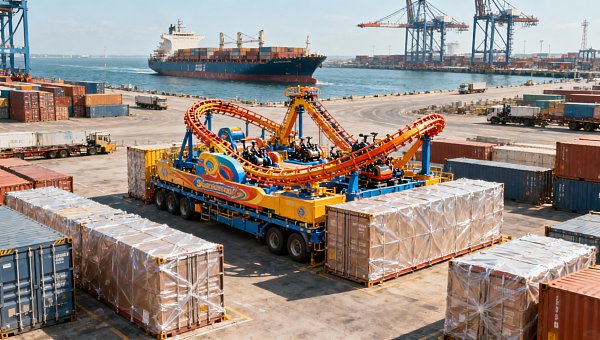
Coordinating OEM manufacturing timelines for outdoor rides across North America, Europe, and Asia demands precision supply chain solutions, rigorous commercial procurement oversight, and seamless ODM services. For project managers deploying amusement park equipment globally, success hinges on harmonizing safety-compliant production, cross-continental logistics, and real-time quality assurance—especially when sourcing integrated systems spanning pro audio equipment, educational supplies for interactive zones, and luxury accessories for premium guest experiences. Global Commercial Trade delivers E-E-A-T–validated intelligence to navigate these complexities, empowering decision-makers with actionable insights into OEM manufacturing excellence and end-to-end supply chain resilience.
Why Cross-Continental OEM Coordination Is a Make-or-Break Factor for Outdoor Ride Deployment
Outdoor ride deployment isn’t just about installing hardware—it’s about synchronizing engineering validation, regional compliance sign-offs, and multi-tiered component integration across time zones, languages, and regulatory frameworks. A single delay in casting approval from a foundry in Guangdong, or a misaligned CE conformity test window in Germany, can cascade into 3–5 weeks of schedule slippage for a $12M+ theme park phase.
Project managers face three structural constraints: (1) Safety-critical components require parallel certification paths—ASTM F24 in North America, EN 13814 in Europe, and GB/T 20051 in China—with zero overlap in audit cycles; (2) Seasonal outdoor operation windows compress commissioning into 8–12 weeks per hemisphere; (3) Integrated subsystems (e.g., ride control logic + audio-visual triggers + RFID-based guest experience modules) demand synchronized firmware release schedules across OEM partners.
Without centralized timeline governance, teams default to local lead times—resulting in mismatched delivery dates, rework due to interface incompatibility, and emergency air freight costs averaging $28,000–$65,000 per shipment. This is where OEM orchestration shifts from procurement task to strategic capability.
How GCT’s Sourcing Intelligence Maps Real-World OEM Timelines Across Three Continents

Global Commercial Trade aggregates verified OEM/ODM performance data from 142 certified amusement equipment suppliers across Tier-1 manufacturing hubs—including Dongguan (China), Kocaeli (Turkey), and Monterrey (Mexico). Our proprietary timeline mapping framework tracks six critical path nodes per project: design freeze, tooling approval, first-article inspection, regional safety certification, logistics consolidation, and on-site commissioning support readiness.
Unlike generic lead-time estimates, GCT’s intelligence reflects actual execution variance: e.g., average ASTM F24 certification turnaround is 11.2 weeks—but drops to 6.8 weeks when paired with pre-submission design review by GCT-vetted third-party labs in Orlando and Berlin. Similarly, EN 13814 Type Examination requires 9–14 weeks, yet suppliers with dual-certified QA teams (ISO 9001 + ISO/IEC 17025) reduce it to 5.3 weeks on average.
This table reveals why “lowest unit cost” sourcing fails: Asian OEMs offer faster fabrication but lag in coordinated certification handoffs; European suppliers excel at compliance rigor but face longer build cycles; North American partners deliver rapid commissioning but at premium pricing. GCT’s intelligence enables project managers to assign work packages strategically—not geographically.
The 4-Phase OEM Timeline Harmonization Framework Used by Top Theme Park Developers
Leading operators—including Merlin Entertainments, OCT Parks, and Universal Destinations—apply this repeatable framework to de-risk global deployments:
- Phase 1 – Design Lock & Interface Protocol Finalization (Weeks 1–4): Joint sign-off on mechanical, electrical, and software interfaces using IEC 61508 SIL2-compliant architecture diagrams and API versioning logs.
- Phase 2 – Dual-Certification Roadmap Execution (Weeks 5–16): Simultaneous ASTM F24 Category II testing and EN 13814 Annex B verification—coordinated via GCT’s certified lab network to avoid sequential delays.
- Phase 3 – Logistics-Ready Batch Release (Weeks 17–24): Staged deliveries aligned with port congestion forecasts (e.g., avoiding Q4 Shanghai peak) and customs pre-clearance via CBP ACE and EU ICS2 systems.
- Phase 4 – On-Site Integration Validation (Weeks 25–28): GCT-facilitated cross-OEM technical SWAT team deployment, resolving interface mismatches within 72 hours.
This framework cuts average timeline variance from ±32% to ±9%, while reducing emergency air freight usage by 67% across 2023–2024 deployments tracked by GCT.
What to Verify Before Signing an OEM Agreement for Multi-Continent Ride Projects
Procurement and technical evaluation teams must validate five non-negotiable OEM capabilities before contract finalization:
- Regional Certification Ownership: Does the OEM hold active accreditation under ASTM, EN, or GB standards—or rely solely on third-party labs without process control?
- Interface Change Control Process: How many change requests were logged during last 3 projects? What % required re-certification?
- Multi-Hub Production Audit Trail: Can they provide timestamped QA records for all sub-assemblies—e.g., hydraulic actuators (made in Poland), control cabinets (assembled in Vietnam), ride software (developed in Canada)?
- Commissioning Team Mobility: Are engineers certified for both ASTM F24 field inspections AND EN 13814 site acceptance tests?
- Real-Time Production Dashboard Access: Do they offer read-only portal access showing WIP status, NCR resolution timelines, and certification milestone completion dates?
GCT’s OEM Capability Reports include verified responses to all five points—backed by audit logs, lab certificates, and anonymized project performance data. These reports are updated quarterly and accessible only to qualified commercial buyers.
Why Partner With GCT for Your Next Global Outdoor Ride Deployment

You’re not just sourcing components—you’re securing timeline integrity, compliance continuity, and operational reliability across continents. GCT provides more than supplier lists: we deliver auditable OEM coordination intelligence tailored to amusement park deployment realities.
Request our OEM Timeline Harmonization Playbook, which includes: (1) Region-specific certification checklist templates; (2) Pre-vetted lab partner matrix with SLA-backed turnaround guarantees; (3) Sample cross-continent production dashboard access protocol; (4) 2025 seasonal port congestion forecast for major amusement destination ports (Orlando, Barcelona, Shanghai, Dubai).
Contact GCT’s Amusement & Leisure Parks Intelligence Desk to receive your customized OEM coordination assessment—covering timeline risk scoring, certification pathway optimization, and supplier capability benchmarking against your specific ride platform requirements.
Search News
Hot Articles
- Outdoor RidesHow to Select Leisure Park Equipment for Safe, High-Throughput Visitor AreasOct 03, 2026
- Fashion & Gem JewelryDiamond Tester Wholesale: How to Vet Accuracy, Calibration, and MOQ Before OrderingOct 02, 2026
- Hotel Room AmenitiesHow Hotels Can Choose Amenity Bottles That Balance Brand Image and Refill CostsOct 01, 2026
Popular Tags
Need ExpertConsultation?
Connect with our specialized leisureengineering team for procurementstrategies.
Recommended News
 Oct 03, 2026How to Select Leisure Park Equipment for Safe, High-Throughput Visitor AreasLeisure park equipment selection guide for safe, high-throughput venues—explore capacity, supervision, durability, accessibility, and supplier criteria.● Theme Park Strategist
 Sep 18, 2026What Drives Animatronic Dinosaur Manufacturer Prices for Theme Park Projects?Animatronic dinosaurs manufacturer price guide: compare motion, materials, controls, installation, and lifecycle costs to plan a durable theme park attraction.● Theme Park Strategist
 Sep 06, 2026Do Amusement Ride Safety Compliance Requirements Change Every Year?Do amusement safety compliance requirements change annually? Learn what really changes, from standards and inspections to permits, upgrades, and local approvals.● Theme Park Strategist
 Sep 02, 2026How Long Does It Take to Receive Full Safety Documents From an OEM?How long does it take to get full safety documentation from OEM partners? Discover realistic timelines, common delays, and practical steps to secure compliant files faster.● Theme Park Strategist
 Sep 03, 2026Designing Adventure Park Safety Systems for Zip Lines, Ropes Courses, and Daily InspectionsAdventure park safety systems: learn how to design safer zip lines and ropes courses with daily inspections, defect controls, rescue readiness, and staff training.● Theme Park Strategist
 Aug 22, 2026What to Look for When Choosing Three Seat Jet Skis for Rental or Resort UseThree seat jet skis for rental or resort use should balance stability, safety, maintenance, and guest comfort. Learn how to choose models that boost uptime and guest satisfaction.● Theme Park Strategist
 Aug 17, 2026What Parts Matter Most in a Roller Coaster and How Do They Affect Ride Safety?Roller coaster parts determine ride safety more than most riders realize. Explore how tracks, restraints, brakes, wheels, and control systems work together to protect every ride.● Theme Park Strategist
 Aug 15, 20262026 China Sports Expo Sees 45.74% More Overseas Pre-registered Buyers as POB Expands Procurement Matching2026 China Sports Expo boosts overseas pre-registered buyers by 45.74% as POB expands procurement matching for fitness, outdoor, and venue suppliers.● Theme Park Strategist
 Aug 14, 2026What Should Buyers Check Before Choosing a Flying Chair Ride Exporter?Flying chair ride exporter buyers should check safety, structure, export support, and spare parts before purchase to reduce risk and choose a reliable supplier.● Theme Park Strategist
 Aug 04, 2026EU Issues EN 1176-1:2026 for Playground SafetyEU Issues EN 1176-1:2026 for Playground Safety: learn how the new standard impacts Outdoor Rides, CE certification, inventory checks, and EU compliance before March 2027.● Theme Park Strategist
 Aug 03, 2026CPSC Adopts ASTM F1487-26 for Imported Outdoor RidesOutdoor Rides face a major U.S. compliance shift as CPSC adopts ASTM F1487-26. Learn the new certification, testing, and customs risks before November 1, 2026.● Theme Park Strategist
 Jul 26, 2026Revised EN 1176:2026 Triggers Re-Certification for Outdoor RidesOutdoor Rides face immediate EN 1176:2026 re-certification for new CE applications. Learn how testing, documentation, and EU market access rules now affect exports and delivery plans.● Theme Park Strategist
 Jul 21, 2026CPSC Recall Flags Structural Risk in Outdoor RidesCPSC recall flags structural risk in outdoor rides: learn how ASTM F1487-23 failures affect importers, distributors, and compliance teams across the U.S., Canada, and Australia.● Theme Park Strategist
 Jul 19, 2026How to Choose Outdoor Fitness Equipment for Parks Based on Users, Space, and BudgetOutdoor fitness equipment for parks: learn how to choose the right mix based on users, space, and budget to improve safety, usage, and long-term value.● Theme Park Strategist
 Jul 15, 2026Ocean Freight Spike Pressures Outdoor Rides ExportsOcean Freight Spike Pressures Outdoor Rides Exports as Shanghai-Rotterdam rates surge 42%. See how rising freight costs, delays, and rerouting risks could reshape Europe-bound delivery plans.● Theme Park Strategist
 Jul 14, 2026EN 1176 Revision Takes Effect for Outdoor Ride Weld TestingEN 1176 revision takes effect for outdoor ride weld testing from Sept 1, 2026. Learn ISO 5817 level B, third-party NDT report rules, and key EU compliance steps.● Theme Park Strategist
 Jul 12, 2026Vietnam Requires AI Anti-Collision Systems for Imported Outdoor RidesVietnam Requires AI Anti-Collision Systems for Imported Outdoor Rides from Sept. 15, 2026. Learn compliance rules, VAST certification needs, and how importers can avoid delays.● Theme Park Strategist
 Jul 11, 2026Vietnam Tightens Rules for Imported Outdoor RidesVietnam Tightens Rules for Imported Outdoor Rides: learn how Vietnam’s 2026 compliance update adds AI anti-collision, Vietnamese logs, and local maintenance duties for importers and manufacturers.● Theme Park Strategist
 Jul 09, 2026How to Evaluate a Lazy River Equipment Supplier for Safety, Flow Design, and MaintenanceLazy river equipment supplier selection affects safety, flow design, and maintenance costs. Learn what to compare, what to ask, and how to choose a reliable partner.● Theme Park Strategist
 Jul 08, 2026RCEP Update Cuts ASEAN Tariffs to Zero for Outdoor RidesRCEP update cuts ASEAN tariffs to zero for outdoor rides from China. Learn how FSC-CoC, PEFC traceability, and e-CO compliance affect exports, sourcing, and buyer decisions.● Theme Park Strategist
 Jul 07, 2026RCEP Guide Adds Dual Wood Traceability for Outdoor RidesOutdoor Rides exporters face a new RCEP traceability rule: dual FSC-CoC and PEFC-STS 2023 codes for wood components. See what changes before Oct. 1, 2026.● Theme Park Strategist
 Jul 06, 2026Vietnam Tightens RCEP Rules for Wooden Ride PartsVietnam Tightens RCEP Rules for Wooden Ride Parts: learn how FSC Chain-of-Custody and QR code requirements now affect outdoor rides, RCEP imports, and shipment compliance.● Theme Park Strategist
 Jul 06, 2026How to Evaluate a Bumper Cars on Ice Manufacturer for Safety, Capacity, and ROIBumper cars on ice manufacturer selection starts with safety, capacity, and ROI. Learn how to compare suppliers, reduce risk, and choose a partner built for long-term commercial success.● Theme Park Strategist
 Jul 04, 2026Electric Drift Bumper Cars vs Traditional Bumper Cars: Which Fits Your Venue Better?Electric drift bumper cars or traditional bumper cars? Compare installation, safety, maintenance, guest appeal, and ROI to choose the best fit for your venue.● Theme Park Strategist