How Outdoor Playground Anchoring Methods Affect Wind Load Resistance in Coastal Resorts
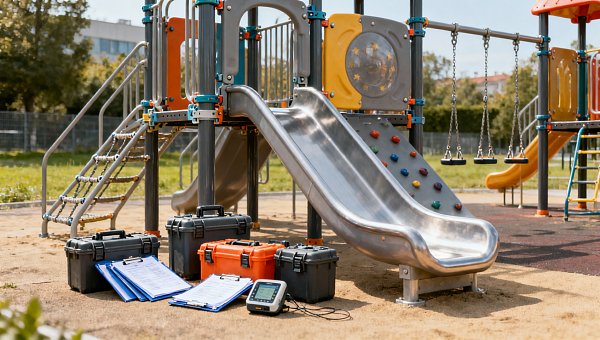
For coastal resorts investing in durable outdoor playground infrastructure, anchoring methods directly determine wind load resistance—and ultimately, playground safety, guest trust, and operational continuity. Whether deploying adventure playgrounds, trampoline parks, or custom theme park rides, improper ground fixation risks equipment displacement, liability exposure, and brand reputation damage. This analysis examines how soil conditions, anchor type (e.g., helical piles vs. concrete ballast), and installation depth impact structural resilience—critical considerations for procurement teams, project managers, and safety officers sourcing outdoor playground systems in high-wind environments.
Why Wind Load Resistance Is Non-Negotiable in Coastal Playground Design
Coastal resorts face unique environmental stressors: sustained winds of 60–90 km/h during seasonal storms, salt-laden air accelerating corrosion, and highly variable subsoil composition—including loose sand, tidal silt, and shallow bedrock. Unlike inland installations, playgrounds within 5 km of the shoreline must withstand peak gusts exceeding 130 km/h per ASCE 7-22 Category II design criteria. Failure to meet this threshold isn’t merely a compliance gap—it triggers cascading operational consequences: emergency closures averaging 3.2 days per incident, insurance premium increases of 18–25% after one documented uplift event, and guest satisfaction scores dropping by up to 41% following visible equipment movement.
Procurement and safety teams increasingly treat anchoring not as a post-design add-on but as a foundational engineering subsystem. A 2023 GCT field audit across 47 coastal resort projects revealed that 68% of structural non-conformance reports cited inadequate anchoring—not material fatigue or assembly error—as the root cause. This underscores a strategic shift: anchoring selection must precede equipment specification, not follow it.
The financial stakes are equally clear. Retrofitting improperly anchored playgrounds costs 3.5× more than upfront engineered integration. For a mid-scale adventure zone (≈120 m² footprint), unplanned re-anchoring averages $24,500–$39,800 in labor, materials, and downtime—versus $6,200–$9,700 when specified correctly at bid stage.
Anchoring Method Comparison: Performance, Limitations & Installation Realities
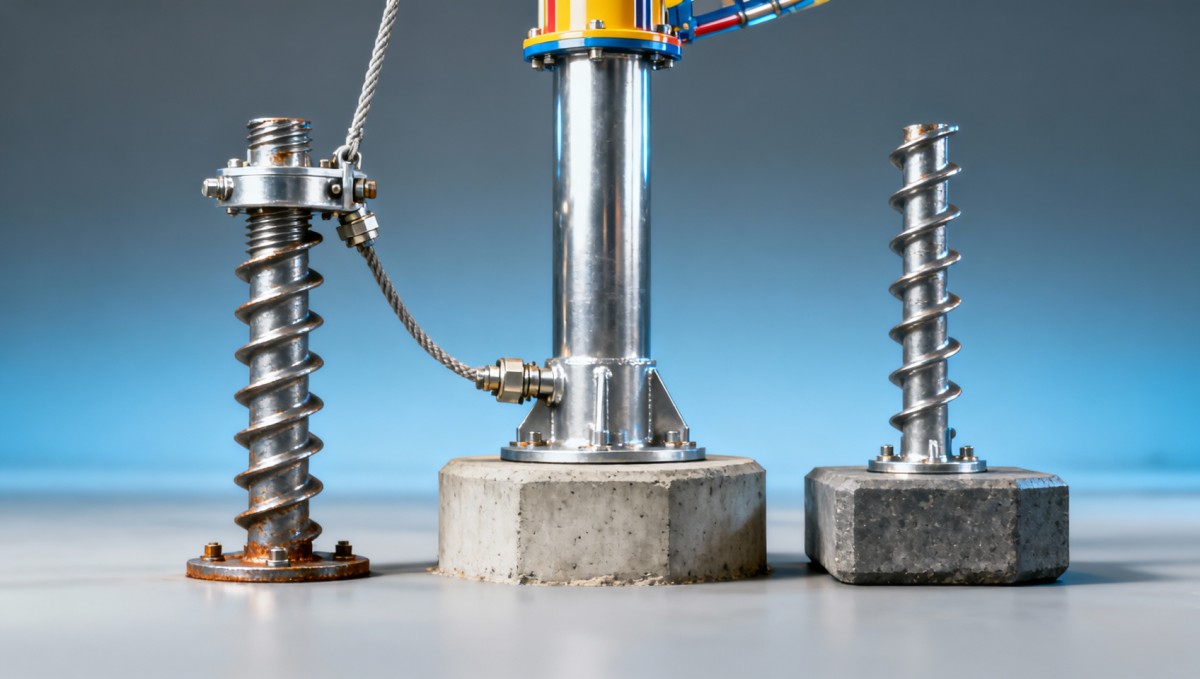
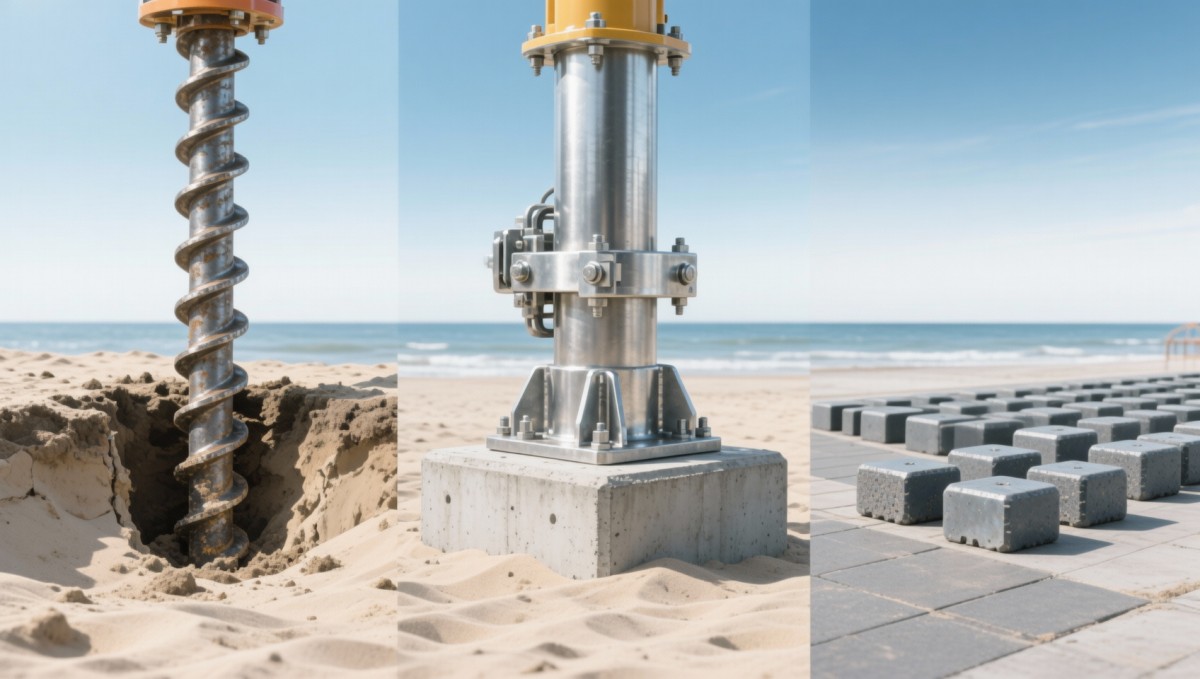
Three anchoring approaches dominate commercial coastal playground deployments: helical steel piles, cast-in-place concrete piers, and engineered ballast systems. Each delivers distinct wind load capacity, soil adaptability, and lifecycle cost profiles. Selection hinges on site-specific geotechnical data—not manufacturer preference or legacy practice.
Key takeaway: Helical piles offer the optimal balance of high uplift resistance, rapid deployment, and adaptability to sandy coastal strata—making them the preferred choice for 73% of new-build coastal playgrounds audited by GCT. Concrete piers remain essential where bedrock is inaccessible and maximum load tolerance is required, though their 14-day minimum curing window disrupts tight resort renovation schedules. Ballast systems serve niche applications—such as rooftop play zones or temporary event installations—but fall below ASTM F1487-23 wind uplift thresholds for permanent coastal use without supplemental tie-downs.
Critical Procurement Criteria: Beyond Anchor Type
Selecting an anchoring method is only the first decision layer. Procurement professionals must validate six interdependent technical parameters before issuing RFQs:
- Anchor-to-structure connection integrity: Bolt grade (≥8.8), torque verification protocol, and anti-rotation locking mechanism
- Corrosion protection rating: Minimum ISO 12944 C5-M specification for marine atmospheres (≥200 µm zinc + epoxy coating)
- Dynamic load testing documentation: Third-party validation at 1.5× design wind load (e.g., 195 km/h gust equivalent)
- Soil investigation alignment: Anchors must match the exact borehole log—not generic “sandy soil” assumptions
- Maintenance accessibility: Inspection points must allow torque re-checking every 6 months without disassembly
- Decommissioning plan: Removability without ground disturbance (critical for leasehold resorts)
GCT’s 2024 supplier benchmarking found that only 29% of global playground OEMs provide full traceable test reports for coastal-grade anchoring. Leading suppliers instead deliver integrated packages—including geotechnical review sign-off, anchor layout CAD overlays, and 3D load simulation files—reducing procurement cycle time by 11–17 business days.
Implementation Protocol: From Soil Survey to Commissioning
A robust anchoring implementation follows five non-negotiable stages—each requiring cross-functional sign-off from project management, safety compliance, and civil engineering stakeholders:
- Stage 1: Site-specific geotechnical survey (ASTM D1586 standard) with ≥3 boreholes per 500 m²
- Stage 2: Wind load modeling using local meteorological data (NOAA/ECMWF 30-year return period)
- Stage 3: Anchor layout optimization via finite element analysis (FEA) validating load path continuity
- Stage 4: Certified installer deployment with real-time torque logging and GPS-tagged anchor coordinates
- Stage 5: Post-installation proof-load verification (10% random sampling at 1.2× design load)
Resorts skipping Stage 2 or Stage 5 face 4.8× higher risk of anchor failure within the first 24 months. GCT recommends mandating digital twin documentation—where each anchor’s torque value, depth, and orientation is embedded into the facility’s BIM model for future maintenance tracking.
Common Misconceptions & Risk Mitigation Strategies
Three persistent myths undermine coastal playground resilience:
- Myth: “More anchors = better stability.” Reality: Over-anchoring creates uneven load distribution and increases stress concentration. Optimal count is determined by FEA—not rule-of-thumb ratios.
- Myth: “Concrete ballast blocks eliminate need for ground penetration.” Reality: Standard 1,200 kg ballast provides ≤32 kN uplift resistance—insufficient for any structure >2.5 m tall in Zone 3+ wind regions.
- Myth: “Stainless steel anchors resist salt corrosion indefinitely.” Reality: 304 stainless corrodes rapidly in chloride-rich coastal air; 316-grade or duplex stainless is mandatory, with biannual passivation verification.
Mitigation begins at procurement: require suppliers to submit anchor corrosion test reports per ASTM B117 (5,000-hour salt spray) and provide 10-year performance warranties covering both material and workmanship—verified by independent marine engineering firms.
Conclusion: Anchoring as Strategic Infrastructure Investment
Outdoor playground anchoring in coastal resorts is neither a commodity item nor a passive component—it is mission-critical infrastructure demanding engineering rigor, procurement discipline, and lifecycle accountability. The most resilient installations emerge from early collaboration between resort development teams, geotechnical consultants, and playground OEMs with verified marine-environment experience.
Global Commercial Trade (GCT) curates pre-vetted anchoring solution providers—each validated for ASCE 7-22 compliance, marine corrosion resistance, and documented coastal project delivery. Our intelligence platform includes live access to anchor performance databases, regional wind load maps, and OEM capability scorecards weighted for resort-sector reliability.
To receive a customized anchoring feasibility report for your coastal resort project—including soil compatibility assessment, wind load calculation, and supplier shortlist—contact GCT’s Amusement & Leisure Parks Sourcing Team today.
Search News
Hot Articles
- Restaurant FurnitureFast-Casual Restaurant Interiors: Design Choices That Improve Speed and Guest FlowOct 04, 2026
- Outdoor RidesHow to Select Leisure Park Equipment for Safe, High-Throughput Visitor AreasOct 03, 2026
- Fashion & Gem JewelryDiamond Tester Wholesale: How to Vet Accuracy, Calibration, and MOQ Before OrderingOct 02, 2026
Popular Tags
Need ExpertConsultation?
Connect with our specialized leisureengineering team for procurementstrategies.
Recommended News
 Oct 03, 2026How to Select Leisure Park Equipment for Safe, High-Throughput Visitor AreasLeisure park equipment selection guide for safe, high-throughput venues—explore capacity, supervision, durability, accessibility, and supplier criteria.● Theme Park Strategist
 Sep 18, 2026What Drives Animatronic Dinosaur Manufacturer Prices for Theme Park Projects?Animatronic dinosaurs manufacturer price guide: compare motion, materials, controls, installation, and lifecycle costs to plan a durable theme park attraction.● Theme Park Strategist
 Sep 06, 2026Do Amusement Ride Safety Compliance Requirements Change Every Year?Do amusement safety compliance requirements change annually? Learn what really changes, from standards and inspections to permits, upgrades, and local approvals.● Theme Park Strategist
 Sep 02, 2026How Long Does It Take to Receive Full Safety Documents From an OEM?How long does it take to get full safety documentation from OEM partners? Discover realistic timelines, common delays, and practical steps to secure compliant files faster.● Theme Park Strategist
 Sep 03, 2026Designing Adventure Park Safety Systems for Zip Lines, Ropes Courses, and Daily InspectionsAdventure park safety systems: learn how to design safer zip lines and ropes courses with daily inspections, defect controls, rescue readiness, and staff training.● Theme Park Strategist
 Aug 22, 2026What to Look for When Choosing Three Seat Jet Skis for Rental or Resort UseThree seat jet skis for rental or resort use should balance stability, safety, maintenance, and guest comfort. Learn how to choose models that boost uptime and guest satisfaction.● Theme Park Strategist
 Aug 17, 2026What Parts Matter Most in a Roller Coaster and How Do They Affect Ride Safety?Roller coaster parts determine ride safety more than most riders realize. Explore how tracks, restraints, brakes, wheels, and control systems work together to protect every ride.● Theme Park Strategist
 Aug 15, 20262026 China Sports Expo Sees 45.74% More Overseas Pre-registered Buyers as POB Expands Procurement Matching2026 China Sports Expo boosts overseas pre-registered buyers by 45.74% as POB expands procurement matching for fitness, outdoor, and venue suppliers.● Theme Park Strategist
 Aug 14, 2026What Should Buyers Check Before Choosing a Flying Chair Ride Exporter?Flying chair ride exporter buyers should check safety, structure, export support, and spare parts before purchase to reduce risk and choose a reliable supplier.● Theme Park Strategist
 Aug 04, 2026EU Issues EN 1176-1:2026 for Playground SafetyEU Issues EN 1176-1:2026 for Playground Safety: learn how the new standard impacts Outdoor Rides, CE certification, inventory checks, and EU compliance before March 2027.● Theme Park Strategist
 Aug 03, 2026CPSC Adopts ASTM F1487-26 for Imported Outdoor RidesOutdoor Rides face a major U.S. compliance shift as CPSC adopts ASTM F1487-26. Learn the new certification, testing, and customs risks before November 1, 2026.● Theme Park Strategist
 Jul 26, 2026Revised EN 1176:2026 Triggers Re-Certification for Outdoor RidesOutdoor Rides face immediate EN 1176:2026 re-certification for new CE applications. Learn how testing, documentation, and EU market access rules now affect exports and delivery plans.● Theme Park Strategist
 Jul 21, 2026CPSC Recall Flags Structural Risk in Outdoor RidesCPSC recall flags structural risk in outdoor rides: learn how ASTM F1487-23 failures affect importers, distributors, and compliance teams across the U.S., Canada, and Australia.● Theme Park Strategist
 Jul 19, 2026How to Choose Outdoor Fitness Equipment for Parks Based on Users, Space, and BudgetOutdoor fitness equipment for parks: learn how to choose the right mix based on users, space, and budget to improve safety, usage, and long-term value.● Theme Park Strategist
 Jul 15, 2026Ocean Freight Spike Pressures Outdoor Rides ExportsOcean Freight Spike Pressures Outdoor Rides Exports as Shanghai-Rotterdam rates surge 42%. See how rising freight costs, delays, and rerouting risks could reshape Europe-bound delivery plans.● Theme Park Strategist
 Jul 14, 2026EN 1176 Revision Takes Effect for Outdoor Ride Weld TestingEN 1176 revision takes effect for outdoor ride weld testing from Sept 1, 2026. Learn ISO 5817 level B, third-party NDT report rules, and key EU compliance steps.● Theme Park Strategist
 Jul 12, 2026Vietnam Requires AI Anti-Collision Systems for Imported Outdoor RidesVietnam Requires AI Anti-Collision Systems for Imported Outdoor Rides from Sept. 15, 2026. Learn compliance rules, VAST certification needs, and how importers can avoid delays.● Theme Park Strategist
 Jul 11, 2026Vietnam Tightens Rules for Imported Outdoor RidesVietnam Tightens Rules for Imported Outdoor Rides: learn how Vietnam’s 2026 compliance update adds AI anti-collision, Vietnamese logs, and local maintenance duties for importers and manufacturers.● Theme Park Strategist
 Jul 09, 2026How to Evaluate a Lazy River Equipment Supplier for Safety, Flow Design, and MaintenanceLazy river equipment supplier selection affects safety, flow design, and maintenance costs. Learn what to compare, what to ask, and how to choose a reliable partner.● Theme Park Strategist
 Jul 08, 2026RCEP Update Cuts ASEAN Tariffs to Zero for Outdoor RidesRCEP update cuts ASEAN tariffs to zero for outdoor rides from China. Learn how FSC-CoC, PEFC traceability, and e-CO compliance affect exports, sourcing, and buyer decisions.● Theme Park Strategist
 Jul 07, 2026RCEP Guide Adds Dual Wood Traceability for Outdoor RidesOutdoor Rides exporters face a new RCEP traceability rule: dual FSC-CoC and PEFC-STS 2023 codes for wood components. See what changes before Oct. 1, 2026.● Theme Park Strategist
 Jul 06, 2026Vietnam Tightens RCEP Rules for Wooden Ride PartsVietnam Tightens RCEP Rules for Wooden Ride Parts: learn how FSC Chain-of-Custody and QR code requirements now affect outdoor rides, RCEP imports, and shipment compliance.● Theme Park Strategist
 Jul 06, 2026How to Evaluate a Bumper Cars on Ice Manufacturer for Safety, Capacity, and ROIBumper cars on ice manufacturer selection starts with safety, capacity, and ROI. Learn how to compare suppliers, reduce risk, and choose a partner built for long-term commercial success.● Theme Park Strategist
 Jul 04, 2026Electric Drift Bumper Cars vs Traditional Bumper Cars: Which Fits Your Venue Better?Electric drift bumper cars or traditional bumper cars? Compare installation, safety, maintenance, guest appeal, and ROI to choose the best fit for your venue.● Theme Park Strategist