Playground Safety Checklist: Surfacing, Fall Zones, and Inspection Priorities
A reliable playground safety plan starts with the right checklist. From impact-absorbing surfacing and properly sized fall zones to daily inspection priorities, every detail affects injury prevention and compliance. This guide explains the essential elements of playground safety so facility managers, schools, and park operators can assess risks, improve maintenance routines, and create safer play environments with greater confidence.
Why playground safety requires a system, not a quick visual check
For information researchers comparing suppliers, standards, and maintenance practices, playground safety often looks simple at first glance. In reality, it is a layered risk-management task involving surface performance, equipment layout, user age range, inspection frequency, drainage, wear patterns, and documentation discipline.
This matters across commercial and institutional settings. A school campus, hospitality resort, mixed-use community, indoor family center, or municipal park may all operate play areas, but each environment faces different traffic loads, weather exposure, staffing limitations, and compliance expectations.
Global Commercial Trade (GCT) supports these decisions by connecting buyers with sourcing intelligence across amusement and leisure environments, educational spaces, and broader commercial projects. That cross-sector perspective is useful because playground safety decisions rarely stand alone; they influence procurement timing, installation planning, replacement budgets, and long-term operating risk.
- A compliant-looking play area can still present impact risks if surfacing depth has compacted below recommended levels.
- Well-built equipment can still become unsafe when fall zones overlap circulation paths or hard borders.
- Routine maintenance can still fail if inspections are undocumented or assigned without clear responsibility.
What should a playground safety checklist include first?
A practical checklist should begin with the three priorities named most often in incident prevention reviews: surfacing, fall zones, and inspection points. These categories shape the highest-risk conditions and also influence purchasing choices when upgrading an existing site or planning a new installation.
1. Surfacing performance
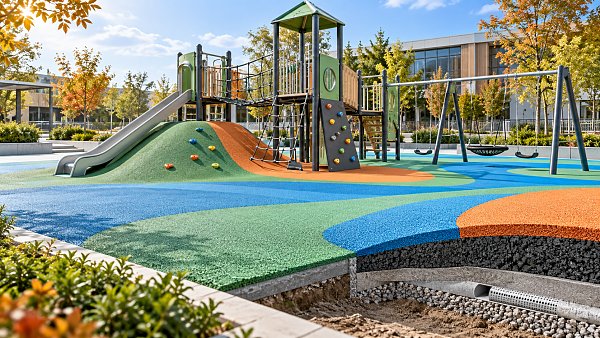
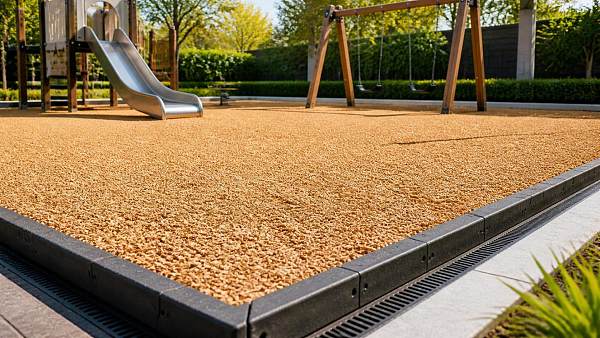
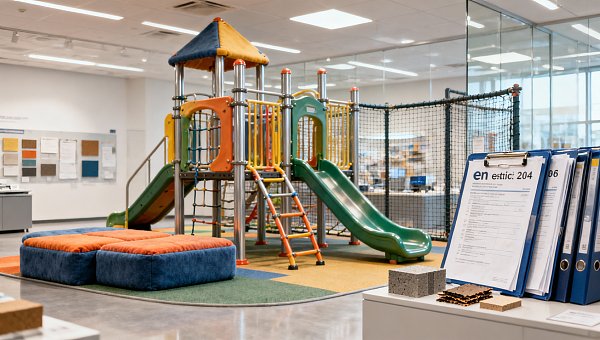
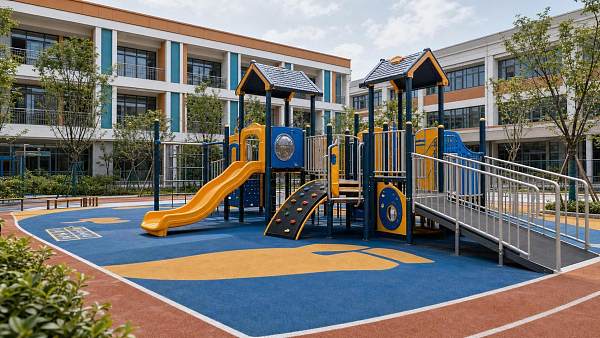
The primary function of safety surfacing is impact attenuation. Whether the project uses engineered wood fiber, rubber mulch, poured-in-place rubber, bonded systems, or synthetic turf with pad layers, the key question is not appearance alone. The real question is whether the surface still performs at the equipment’s critical fall height after use, weather, drainage shifts, and compaction.
2. Adequate fall zones
Fall zones are the clear use areas around playground equipment where protective surfacing must extend. Buyers and operators should confirm that these zones are not reduced by edging, benches, planters, fencing posts, exposed roots, or decorative paving. A generous-looking site can still fail functionally if active movement patterns bring children into contact with hard objects.
3. Inspection priorities
Inspection should cover both obvious defects and gradual deterioration. Loose fasteners, cracked components, surfacing displacement, corrosion, entrapment hazards, trip points, and broken drainage areas all belong on the checklist. Equally important is defining who checks what, how often, and how corrective actions are recorded.
How to compare surfacing options for better playground safety
When organizations research playground safety upgrades, surfacing is often the largest line item after equipment itself. The right choice depends on traffic intensity, maintenance capacity, climate, accessibility needs, and total lifecycle cost rather than purchase price alone.
For playground safety, the best surfacing choice is usually the one that matches maintenance reality. A lower-cost option becomes expensive if replenishment is delayed, while a premium option underperforms if installation quality, sub-base preparation, or drainage planning are weak.
Why fall zones are often misjudged during planning and renovation
Fall zones are frequently reduced by design compromises. Operators try to fit more activity into a limited footprint, add seating too close to equipment, or retrofit new features into old layouts. The result is a site that looks efficient on plan but creates hidden collision and impact risks in use.
For commercial buyers, this is where layout review becomes a procurement issue, not just a maintenance issue. If the equipment footprint is incompatible with the available safety use area, the wrong purchase can trigger costly redesign, relocation, or phased replacement.
- Check equipment height and motion type before confirming surfacing extents.
- Verify that adjacent structures, shade posts, retaining edges, and site furniture remain outside active fall areas.
- Review age-group separation so toddler users are not drawn into higher-risk circulation zones.
- Confirm that access routes, drains, and utility covers do not interrupt protective zones.
Which inspection priorities matter most in daily, monthly, and seasonal reviews?
A strong playground safety routine works in layers. Daily checks catch obvious hazards before opening. Monthly inspections identify wear trends. Seasonal or scheduled technical reviews support deeper repair planning, budget forecasting, and supplier coordination.
The following table helps operators build a more usable inspection framework instead of relying on vague reminders to “check the playground regularly.”
For larger portfolios such as school groups, hospitality properties, or multi-site recreation operators, documented inspection cycles also improve purchasing discipline. Teams can replace components based on evidence rather than guesswork and can compare supplier response times more fairly.
What standards and compliance points should buyers review?
Playground safety requirements vary by jurisdiction, but buyers should still review several widely referenced areas: impact attenuation, equipment design safety, installation quality, maintenance records, accessibility considerations, and age-appropriate use separation. In many markets, ASTM or EN references may appear in technical discussions, while local codes or public procurement guidelines may add additional obligations.
Questions worth asking suppliers and project teams
- What critical fall height is the surfacing system designed to support, and under what installation conditions?
- How will drainage, edging, and sub-base preparation affect long-term surface performance?
- Which inspection and maintenance tasks remain the operator’s responsibility after handover?
- Are spare parts, repair materials, and technical guidance available within realistic lead times?
- How is age-group suitability documented in the layout and user guidance?
These questions help information researchers move beyond brochure claims. They also fit GCT’s sourcing model, which emphasizes practical decision support for buyers balancing design intent, compliance expectations, and supply chain reliability.
How should schools, parks, and commercial operators choose the right solution?
The best playground safety plan depends on use intensity and operating context. A low-traffic private campus may tolerate more manual maintenance than a public park. A hotel or mixed-use residential development may prioritize aesthetics and accessibility. A school may focus on supervision lines, age separation, and reliable replenishment schedules.
Before purchasing, compare needs across five decision filters.
This comparison is especially useful for procurement teams that must justify specifications internally. It turns playground safety from a vague concern into a measurable buying framework.
Common mistakes that weaken playground safety even after installation
Many sites become riskier not because the original concept was poor, but because operational shortcuts slowly undermine it. Recognizing these patterns early can save money and reduce injuries.
- Treating surfacing as permanent even when loose-fill systems need routine depth restoration.
- Adding landscape elements, signage, or loose furniture inside fall zones after opening.
- Assuming visual cleanliness means structural safety.
- Ignoring drainage because water disappears later, even though repeated saturation can degrade base stability.
- Purchasing replacement parts without checking compatibility with the original system.
For multi-stakeholder projects, these mistakes often happen when design, installation, and operations are handled by separate parties with weak documentation transfer. That is why sourcing intelligence and technical clarity matter from the beginning.
FAQ: practical questions buyers ask about playground safety
How often should playground safety inspections be performed?
High-use sites should perform a quick visual check daily or before opening. More detailed operational inspections are often scheduled monthly, while broader technical reviews may be seasonal or annual. The right frequency depends on traffic, climate, vandalism risk, and surface type.
Which surfacing option is usually best for low-maintenance operation?
In many projects, unitary systems such as poured-in-place rubber are selected when consistent accessibility and reduced daily maintenance are priorities. However, the best answer still depends on climate, sub-base quality, heat exposure, and available installation expertise.
What is the most overlooked part of a playground safety checklist?
Fall zone obstruction is often overlooked. Teams may focus on the equipment itself but miss nearby edging, seating, decorative rocks, or drainage structures that create secondary impact hazards inside the use area.
Can older playgrounds be upgraded without full replacement?
Often yes, but only after reviewing structural condition, layout compatibility, surfacing performance, and current operational needs. In some cases, selective resurfacing, spacing correction, component replacement, and inspection process upgrades provide a better return than a full rebuild.
Why choose us for sourcing guidance and project support
When researching playground safety, buyers rarely need generic advice. They need help comparing surface systems, checking fall zone implications, understanding maintenance burdens, and aligning supplier offers with real project constraints. That is where GCT adds value.
Our cross-industry sourcing perspective is particularly useful for schools, amusement and leisure operators, hospitality groups, campus planners, and commercial developers working across multiple facility types. We help decision-makers evaluate practical factors that affect both safety and procurement outcomes.
- Confirm technical parameters for surfacing systems and equipment compatibility.
- Compare product options based on maintenance load, application scenario, and budget horizon.
- Review likely lead times, replacement support, and project delivery considerations.
- Discuss custom solutions for education, recreation, hospitality, and mixed-use developments.
- Clarify documentation, certification expectations, sample support, and quotation scope before purchase.
If you are evaluating a new play area or upgrading an existing site, contact GCT to discuss playground safety priorities, surface selection, inspection planning, certification questions, delivery timing, and supplier comparison. A well-structured checklist is the starting point, but informed sourcing turns that checklist into a safer and more durable result.
Search News
Hot Articles
- Indoor PlaygroundTurnkey Playground Installation: What's Included and What Costs Extra?Oct 18, 2026
- Musical InstrumentsProfessional String Instruments: How to Evaluate Tone, Response, and ProjectionOct 17, 2026
- Restaurant FurnitureBuying Hotel Lobby Furniture Wholesale: MOQs, Freight Costs, and Lead TimesOct 16, 2026
Popular Tags
Need ExpertConsultation?
Connect with our specialized leisureengineering team for procurementstrategies.
Recommended News
 Oct 18, 2026Turnkey Playground Installation: What's Included and What Costs Extra?Turnkey playground installation: discover what's included, uncover extra costs, and compare quotes confidently. Learn how to avoid budget surprises before you sign.● Theme Park Strategist
 Oct 08, 2026How to Choose Animatronic Haunted House Props for High-Throughput AttractionsAnimatronic haunted house props for high-throughput attractions: compare motion, triggers, safety, and maintenance to create reliable scares that keep guests moving.● Theme Park Strategist
 Sep 29, 2026Poured Playground Safety Surfacing: How to Specify Thickness for Fall HeightsPoured playground safety surfacing: learn how to specify tested thickness by fall height, ASTM standards, substrate conditions, accessibility, and field verification.● Theme Park Strategist
 Sep 27, 2026Custom Trampoline Park Equipment: Planning Capacity, Safety, and LayoutCustom trampoline park equipment for safer capacity, smooth guest flow, and efficient layouts. Explore practical planning insights for a high-performing park.● Theme Park Strategist
 Aug 30, 2026Entertainment Venue Master Planning: How to Balance Capacity, Flow, and RevenueEntertainment venue development master planning: balance capacity, guest flow, and revenue with practical strategies for resilient, high-performing venues.● Theme Park Strategist
 Sep 07, 2026What Should Buyers Do When a Supplier Delivers Non-Compliant Products?What to do if a supplier delivers non-compliant commercial products: contain risks, document evidence, protect your project, and secure the right remedy.● Theme Park Strategist
 Sep 02, 2026Waterpark Capacity Management: Balancing Queue Times, Safety, and Guest ThroughputWaterpark capacity management strategies to reduce queue times, protect safety, optimize guest throughput, and build a smoother, more profitable park operation.● Theme Park Strategist
 Sep 01, 2026ASTM F2075 Explained: Testing Engineered Wood Fiber for Playground Impact SafetyASTM F2075 explained: learn how engineered wood fiber supports playground impact safety, smarter sourcing, compliance documentation, and reliable maintenance planning.● Theme Park Strategist
 Aug 24, 2026How to Evaluate an Indoor Ninja Warrior Course Supplier in Europe?indoor ninja warrior course Europe supplier guide: learn how to assess safety, EN compliance, engineering, installation, and maintenance support before you choose.● Theme Park Strategist
 Aug 20, 2026How to Choose Modular Indoor Play Equipment for Different Venue Sizes and Age GroupsModular indoor play equipment buying guide: learn how to match venue size, ceiling height, traffic flow, and age groups to create safer, smarter, and more profitable play spaces.● Theme Park Strategist
 Aug 14, 2026POB Push Lifts Overseas Pre-Registrations 45.74%POB boosts overseas pre-registrations for the 2026 China Sport Show by 45.74%, signaling stronger global buyer interest and smarter sourcing opportunities in sports manufacturing.● Theme Park Strategist
 Aug 02, 2026What to Check Before Buying Thick Gymnastic Mats Wholesale for Schools and GymsThick gymnastic mats wholesale buying guide for schools and gyms: learn how to check foam, cover durability, safety documents, samples, and true long-term value before placing a bulk order.● Theme Park Strategist
 Jul 28, 2026How to Design Inclusive Sensory Play Areas for Different Age Groups and NeedsInclusive sensory play starts with smart zoning, age planning, accessibility, and acoustics. Discover practical design tips to create safer, engaging spaces that truly work.● Theme Park Strategist
 Jul 26, 2026How to Evaluate a Bowling Alley Equipment Factory Before Requesting a QuoteBowling alley equipment factory evaluation starts before price. Learn how to check manufacturing scope, engineering, compliance, spare parts, and installation support to avoid costly sourcing mistakes.● Theme Park Strategist
 Jul 16, 2026EN 1176:2026 Takes Effect for Indoor PlaygroundsEN 1176:2026 takes effect for indoor playgrounds in the EU, making conformity assessment mandatory. Learn how this impacts certification, customs clearance, suppliers, and market access.● Theme Park Strategist
 Jul 15, 2026CPSC Sets New ASTM Impact Test for Indoor Playground Metal PartsCPSC sets new ASTM impact test rules for indoor playground metal parts effective Oct. 1, 2026. Learn how the 15kN requirement may affect compliance, testing timelines, and U.S. export delivery.● Theme Park Strategist
 Jul 14, 2026CPSC Tightens Phthalate Limit for Indoor Playground Soft MaterialsCPSC tightens phthalate limits for indoor playground soft materials from Aug 15, 2026. Learn how DIBP control, CBP detention risk, and testing changes impact sourcing, exports, and compliance.● Theme Park Strategist
 Jul 13, 2026Vietnam Tightens IoT Rule for Indoor Playground ImportsVietnam Tightens IoT Rule for Indoor Playground Imports: learn how VNSS-2025 gateway requirements affect exporters, buyers, installers, and delivery timelines before the 2026 deadline.● Theme Park Strategist
 Jul 13, 2026How a Recreational Facility Planning Company Helps Reduce Layout MistakesRecreational facility planning company insights: learn how early layout strategy reduces costly mistakes, improves flow, compliance, and buildability for smoother project delivery.● Theme Park Strategist
 Jul 12, 2026CPSC Halts Imports of Indoor Playground Soft PartsCPSC halts imports of indoor playground soft parts from China under ASTM F3432-26. Learn the compliance risks, testing requirements, and urgent steps importers must take now.● Theme Park Strategist
 Jul 11, 2026CPSC Import Alert Tightens Fire Test Rule for Indoor Playground PaddingCPSC import alert updates indoor playground padding rules to ASTM F3432-26. See how the new fire test affects foam mats, shipments, and U.S. market access.● Theme Park Strategist
 Jul 11, 2026Ice Bumper Cars Bulk Order Checklist for Indoor Parks: Space, Power, and Safety PointsIce bumper cars bulk order guide for indoor parks: learn how to assess space, power, safety, and throughput before buying, so you can avoid costly mistakes and choose the right fleet with confidence.● Theme Park Strategist
 Jul 10, 2026Commercial Playground Equipment for Campuses: Key Safety Standards and Planning TipsCommercial playground equipment for campuses: explore key safety standards, inclusive layout planning, durable materials, and smart procurement tips to avoid costly mistakes.● Theme Park Strategist
 Jul 09, 2026CPSC Recall Escalates Over Phthalates in Indoor Playground PadsCPSC recall escalates over phthalates in indoor playground pads as affected batches exceed CPSIA limits. Learn the risks, supply chain impact, and what buyers should monitor now.● Theme Park Strategist