Playground Safety Checklist: Critical Surfacing, Fall Height, and Inspection Points
Why does playground safety planning begin before installation?
Playground safety is rarely solved by a final inspection alone.
Most failures begin earlier, during layout decisions, equipment selection, drainage planning, and surfacing specification.
In commercial environments, that timing matters even more.
A school courtyard, resort kids’ area, mixed-use park, or family leisure venue faces different traffic patterns and supervision levels.
That is why playground safety should be reviewed as a project control issue, not only a maintenance topic.
The practical goal is simple.
Reduce injury risk, document compliance, protect long-term usability, and avoid costly rework after opening.
Across commercial sourcing and public-space planning, GCT often highlights the same pattern.
Strong outcomes come from connecting design intent, safety standards, supplier capability, and inspection discipline from day one.
What should be checked first when reviewing playground safety?
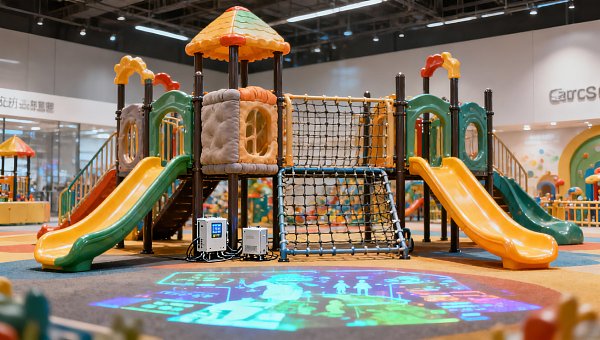
Start with the relationship between user age, equipment type, and fall exposure.
Many playground safety problems happen because components are compliant on paper, but misaligned in the field.
A quick first review usually includes these points:
- Intended age group and expected behavior pattern
- Maximum fall height for each play element
- Required use zone around moving or elevated equipment
- Surfacing type, thickness, drainage, and maintenance needs
- Site hazards such as slopes, edges, fencing gaps, or nearby traffic
- Inspection access after handover
This first pass helps separate visual design preference from actual risk control.
In practice, the most common issue is not dramatic equipment failure.
It is the quiet mismatch between fall height and surfacing performance.
How do surfacing and fall height work together in real projects?
This is the core of playground safety.
Fall height defines the highest designated play surface from which a user may fall.
Surfacing must be tested and installed to protect against impact at that height.
A surface can look soft and still fail performance requirements.
That is why certificates, test data, and installed depth all matter.
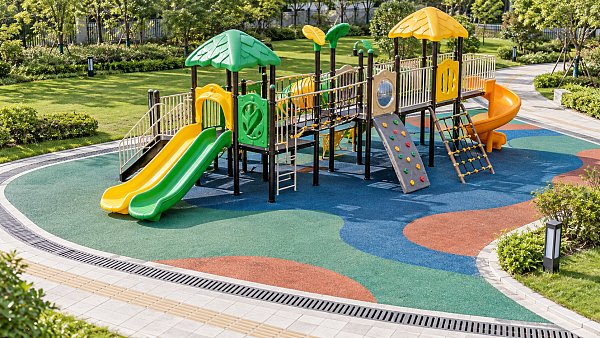
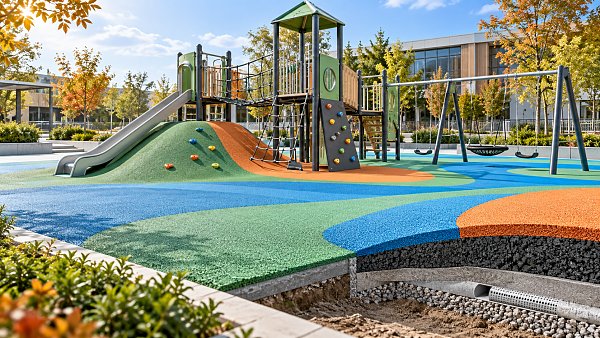
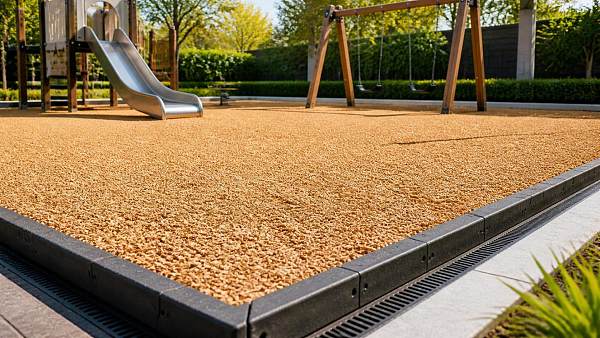
Common options include poured-in-place rubber, rubber tiles, engineered wood fiber, and synthetic turf systems with pads.
Each has different trade-offs in drainage, wear, appearance, maintenance, and lifecycle cost.
A useful rule is to review surfacing as a system.
That means sub-base, drainage, material thickness, joints, perimeter restraint, and maintenance access.
If one layer fails, playground safety performance can drop quickly.
Which inspection points are most often missed after opening?
Once the site opens, attention often shifts to operations.
That is when routine playground safety issues begin to accumulate.
The missed items are usually small, but they change risk exposure over time.
- Loose fasteners, exposed hardware, or worn protective caps
- Surfacing settlement near slide exits and swing bays
- Standing water that weakens base layers or creates slip risk
- Openings that may create head, neck, or limb entrapment hazards
- Damaged edges where accessible routes meet play surfacing
- Corrosion, cracking, splintering, or UV-related material degradation
More important than the checklist itself is inspection rhythm.
Visual daily checks, documented periodic reviews, and annual technical inspections serve different purposes.
When records are missing, even minor incidents become harder to assess and defend.
For commercial sites, consistent documentation is part of playground safety management, not paperwork for its own sake.
How can you tell whether a playground safety specification is actually reliable?
A reliable specification does more than list materials.
It links equipment geometry, use zones, tested surfacing, installation details, and inspection obligations.
If those pieces are separated across vendors, coordination risk increases.
In actual sourcing work, a safer review process asks a few direct questions:
- Which standard applies in the target market, and is evidence current?
- Does the declared critical fall height match the installed play equipment?
- Are drainage, slope, and substrate conditions included in the design package?
- Can the supplier show reference projects with similar traffic and climate?
- Who is responsible for post-install inspection and maintenance guidance?
This is where sector knowledge becomes useful.
GCT’s sourcing perspective across leisure, hospitality, and educational environments shows that compliance alone is not enough.
Durability, replacement planning, and supplier traceability also shape real playground safety performance.
What are the most common mistakes that raise cost and liability later?
The expensive mistakes are usually the ones that seem efficient at the start.
One example is value engineering surfacing without rechecking fall height requirements.
Another is choosing an attractive finish that performs poorly in local weather or maintenance conditions.
A few patterns appear again and again:
- Treating test certificates as universal, without checking installation variables
- Ignoring wear concentration at entries, exits, climbers, and swings
- Underestimating maintenance labor for loose-fill systems
- Skipping clear handover documents and inspection schedules
- Separating procurement, installation, and compliance review too aggressively
In other words, playground safety is not just about passing an opening test.
It is about preserving intended performance over years of use.
That broader view usually leads to better lifecycle cost decisions.
So what does a practical playground safety checklist look like before sign-off?
Before final acceptance, it helps to run one compact review that brings all key issues together.
The checklist below works well as a final coordination tool.
If any one of these items is unclear, sign-off is not really complete.
A short delay before opening is usually less costly than correcting preventable defects later.
The strongest playground safety outcomes come from disciplined review, verified data, and realistic maintenance planning.
The next sensible step is to map each play zone against surfacing, fall height, drainage, and inspection ownership.
That turns a general checklist into a workable site standard.
Search News
Hot Articles
Popular Tags
Need ExpertConsultation?
Connect with our specialized leisureengineering team for procurementstrategies.
Recommended News
 Oct 26, 2026Indoor Playground Maintenance Checklist: Daily, Weekly, and Monthly TasksStreamline playground maintenance with daily, weekly, and monthly checklists. Learn how to spot hazards, prioritize repairs, and keep your indoor play area ready for safer fun.● Theme Park Strategist
 Oct 18, 2026Turnkey Playground Installation: What's Included and What Costs Extra?Turnkey playground installation: discover what's included, uncover extra costs, and compare quotes confidently. Learn how to avoid budget surprises before you sign.● Theme Park Strategist
 Oct 24, 2026What Are the Biggest Risks in Entertainment Venue Development?What are the biggest risks in entertainment venue development projects? Explore demand, budget, safety, and opening risks—and learn how to protect your investment before you commit.● Theme Park Strategist
 Oct 08, 2026How to Choose Animatronic Haunted House Props for High-Throughput AttractionsAnimatronic haunted house props for high-throughput attractions: compare motion, triggers, safety, and maintenance to create reliable scares that keep guests moving.● Theme Park Strategist
 Sep 29, 2026Poured Playground Safety Surfacing: How to Specify Thickness for Fall HeightsPoured playground safety surfacing: learn how to specify tested thickness by fall height, ASTM standards, substrate conditions, accessibility, and field verification.● Theme Park Strategist
 Sep 27, 2026Custom Trampoline Park Equipment: Planning Capacity, Safety, and LayoutCustom trampoline park equipment for safer capacity, smooth guest flow, and efficient layouts. Explore practical planning insights for a high-performing park.● Theme Park Strategist
 Aug 30, 2026Entertainment Venue Master Planning: How to Balance Capacity, Flow, and RevenueEntertainment venue development master planning: balance capacity, guest flow, and revenue with practical strategies for resilient, high-performing venues.● Theme Park Strategist
 Sep 07, 2026What Should Buyers Do When a Supplier Delivers Non-Compliant Products?What to do if a supplier delivers non-compliant commercial products: contain risks, document evidence, protect your project, and secure the right remedy.● Theme Park Strategist
 Sep 02, 2026Waterpark Capacity Management: Balancing Queue Times, Safety, and Guest ThroughputWaterpark capacity management strategies to reduce queue times, protect safety, optimize guest throughput, and build a smoother, more profitable park operation.● Theme Park Strategist
 Sep 01, 2026ASTM F2075 Explained: Testing Engineered Wood Fiber for Playground Impact SafetyASTM F2075 explained: learn how engineered wood fiber supports playground impact safety, smarter sourcing, compliance documentation, and reliable maintenance planning.● Theme Park Strategist
 Aug 24, 2026How to Evaluate an Indoor Ninja Warrior Course Supplier in Europe?indoor ninja warrior course Europe supplier guide: learn how to assess safety, EN compliance, engineering, installation, and maintenance support before you choose.● Theme Park Strategist
 Aug 20, 2026How to Choose Modular Indoor Play Equipment for Different Venue Sizes and Age GroupsModular indoor play equipment buying guide: learn how to match venue size, ceiling height, traffic flow, and age groups to create safer, smarter, and more profitable play spaces.● Theme Park Strategist
 Aug 14, 2026POB Push Lifts Overseas Pre-Registrations 45.74%POB boosts overseas pre-registrations for the 2026 China Sport Show by 45.74%, signaling stronger global buyer interest and smarter sourcing opportunities in sports manufacturing.● Theme Park Strategist
 Aug 02, 2026What to Check Before Buying Thick Gymnastic Mats Wholesale for Schools and GymsThick gymnastic mats wholesale buying guide for schools and gyms: learn how to check foam, cover durability, safety documents, samples, and true long-term value before placing a bulk order.● Theme Park Strategist
 Jul 28, 2026How to Design Inclusive Sensory Play Areas for Different Age Groups and NeedsInclusive sensory play starts with smart zoning, age planning, accessibility, and acoustics. Discover practical design tips to create safer, engaging spaces that truly work.● Theme Park Strategist
 Jul 26, 2026How to Evaluate a Bowling Alley Equipment Factory Before Requesting a QuoteBowling alley equipment factory evaluation starts before price. Learn how to check manufacturing scope, engineering, compliance, spare parts, and installation support to avoid costly sourcing mistakes.● Theme Park Strategist
 Jul 16, 2026EN 1176:2026 Takes Effect for Indoor PlaygroundsEN 1176:2026 takes effect for indoor playgrounds in the EU, making conformity assessment mandatory. Learn how this impacts certification, customs clearance, suppliers, and market access.● Theme Park Strategist
 Jul 15, 2026CPSC Sets New ASTM Impact Test for Indoor Playground Metal PartsCPSC sets new ASTM impact test rules for indoor playground metal parts effective Oct. 1, 2026. Learn how the 15kN requirement may affect compliance, testing timelines, and U.S. export delivery.● Theme Park Strategist
 Jul 14, 2026CPSC Tightens Phthalate Limit for Indoor Playground Soft MaterialsCPSC tightens phthalate limits for indoor playground soft materials from Aug 15, 2026. Learn how DIBP control, CBP detention risk, and testing changes impact sourcing, exports, and compliance.● Theme Park Strategist
 Jul 13, 2026Vietnam Tightens IoT Rule for Indoor Playground ImportsVietnam Tightens IoT Rule for Indoor Playground Imports: learn how VNSS-2025 gateway requirements affect exporters, buyers, installers, and delivery timelines before the 2026 deadline.● Theme Park Strategist
 Jul 13, 2026How a Recreational Facility Planning Company Helps Reduce Layout MistakesRecreational facility planning company insights: learn how early layout strategy reduces costly mistakes, improves flow, compliance, and buildability for smoother project delivery.● Theme Park Strategist
 Jul 12, 2026CPSC Halts Imports of Indoor Playground Soft PartsCPSC halts imports of indoor playground soft parts from China under ASTM F3432-26. Learn the compliance risks, testing requirements, and urgent steps importers must take now.● Theme Park Strategist
 Jul 11, 2026CPSC Import Alert Tightens Fire Test Rule for Indoor Playground PaddingCPSC import alert updates indoor playground padding rules to ASTM F3432-26. See how the new fire test affects foam mats, shipments, and U.S. market access.● Theme Park Strategist
 Jul 11, 2026Ice Bumper Cars Bulk Order Checklist for Indoor Parks: Space, Power, and Safety PointsIce bumper cars bulk order guide for indoor parks: learn how to assess space, power, safety, and throughput before buying, so you can avoid costly mistakes and choose the right fleet with confidence.● Theme Park Strategist