Playground Certification Explained: What Standards Matter for New Site Approval?
Playground certification often looks like a final approval step, but in real projects it influences decisions much earlier. It affects layout choices, equipment sourcing, surfacing specifications, liability exposure, and the speed of site acceptance. For new play areas in hotels, schools, mixed-use developments, resorts, and public leisure destinations, understanding which standards matter is essential to keeping both the design intent and the compliance pathway intact.
That matters even more in a sourcing environment shaped by international procurement. Commercial buyers now expect safe, durable, visually coherent installations that can satisfy local authorities and internal risk teams at the same time. In sectors covered by Global Commercial Trade, especially amusement and leisure parks, playground certification has become part of broader project quality control rather than a narrow technical formality.
What playground certification really covers
In practical terms, playground certification is the documented verification that a play area, or its components, meets applicable safety and performance requirements. It may apply to equipment, impact-attenuating surfacing, installation methods, inspection records, and ongoing maintenance practices.
A common source of confusion is the difference between product compliance and site approval. A slide, climber, or swing may be tested to a recognized standard, yet the entire site can still fail review because of poor spacing, unsuitable surfacing depth, unsafe access routes, or missing inspection records.
In other words, playground certification is not just about whether the equipment arrived with a certificate. It is about whether the finished environment performs safely under the conditions in which it will actually be used.
The standards that usually shape new site approval
The exact regulatory path varies by country, municipality, and project type. Still, several standards appear repeatedly in commercial and institutional projects. Knowing their function helps separate must-have requirements from supporting references.
Core international and regional references
Usually, no single certificate settles everything. New site approval tends to depend on how these references work together, especially when equipment is imported and the site is built under local jurisdiction.
Why local interpretation still matters
A supplier may state that a system complies with EN or ASTM requirements. That is useful, but not always sufficient. Some approving bodies want third-party test reports, installer declarations, maintenance manuals, or post-installation inspections by an accredited specialist.
This is where playground certification becomes a project coordination issue. Approval can slow down when design teams, contractors, and suppliers rely on different interpretations of the same standard.
Why certification has become a bigger issue in commercial projects
New play areas are no longer limited to municipal parks. They now appear in destination retail, hospitality landscapes, educational campuses, residential clubs, and branded family entertainment spaces. These sites operate under stronger scrutiny because safety performance affects reputation as much as legal compliance.
At the same time, procurement has become more global. Equipment may be designed in one country, manufactured in another, and installed in a third. That raises questions about testing equivalency, material traceability, spare-part continuity, and whether the documentation package matches the authority reviewing the site.
For GCT-style sourcing environments, that intersection of design quality, international compliance, and supply chain reliability is critical. A premium-looking installation loses value quickly if certification files are incomplete or the surfacing test data does not align with the installed configuration.
What typically gets reviewed before a site is approved
The strongest playground certification strategy starts by understanding the approval checklist behind the certificate. Reviewers rarely focus on branding claims alone. They look at evidence tied to the actual built condition.
- Equipment test reports that match the exact model, age range, and configuration
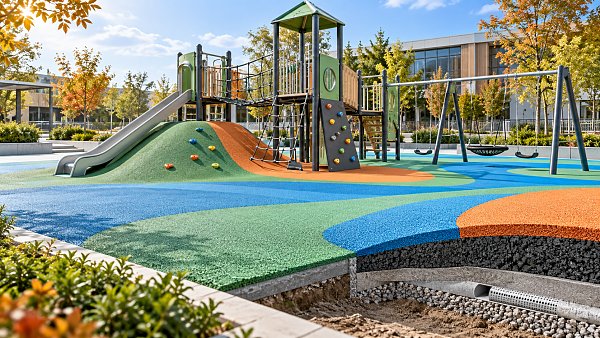
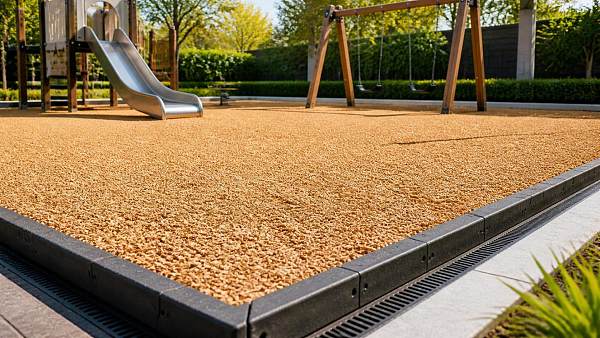
- Surfacing compliance data linked to installed thickness and fall height requirements
- Site layout showing use zones, circulation routes, barriers, and clearance distances
- Anchoring, foundation, and drainage details that protect long-term performance
- Installation records confirming the build follows manufacturer instructions
- Inspection reports identifying entrapment, protrusion, pinch, or access hazards
- Maintenance guidance and replacement-part availability for continued compliance
The last point is often underestimated. Playground certification is easier to defend when the operator can show a realistic maintenance pathway, not just a successful opening-day inspection.
Common approval risks that delay otherwise strong projects
Delays often come from gaps between procurement assumptions and field reality. A project can buy certified components and still face rejection because the assembled site introduces new hazards.
Frequent problem areas
- Certificates refer to a previous product version, not the delivered unit
- Rubber surfacing passes in the lab but fails due to incorrect field thickness
- Independent items create overlapping fall zones after installation
- Imported documentation lacks translation or local conformity references
- Drainage design causes surfacing movement or pooling around safety zones
- Accessibility expectations are addressed too late in the design phase
More importantly, these are not only technical mistakes. They affect opening schedules, handover confidence, insurance reviews, and stakeholder trust. In destination environments, a delayed or restricted play area can also disrupt the broader visitor experience.
How to evaluate suppliers through a certification lens
A useful sourcing question is not simply whether a supplier offers playground certification. The better question is whether the supplier can support certification from concept review to post-installation documentation.
That distinction matters in commercial developments where design customization is common. OEM or ODM capability can be valuable, but custom geometry, finishes, or material substitutions may alter the original compliance basis.
Before approval milestones are set, it helps to verify the following:
- Which parts of the system are third-party certified and which are self-declared
- Whether custom changes require retesting, engineering sign-off, or updated drawings
- How quickly test reports, material data, and installation manuals can be delivered
- Whether the supplier has experience with similar hospitality, campus, or public-use environments
- What after-sales structure exists for inspection support and replacement components
This is where data-backed sourcing becomes useful. Certification quality is easier to assess when supplier claims are connected to documented project experience, technical transparency, and long-term service capability.
A practical framework for early decision-making
For new site approval, the most effective approach is to move playground certification upstream. Instead of treating it as a closing task, use it to structure early decisions across design, procurement, and installation.
A workable sequence
- Confirm governing local codes and accepted international standards before design freeze
- Map intended user age groups, capacity, and supervision conditions
- Align equipment selection with fall height, clearance, and surfacing requirements
- Request a documentation matrix from suppliers before purchase orders are finalized
- Schedule independent review before shipment and again after installation
- Prepare maintenance and inspection procedures before opening day
Simple preparation at this stage can reduce redesign costs later. It also creates a clearer record if questions arise during handover, insurance review, or future incident investigation.
Where to focus next
Playground certification is most useful when it is treated as a decision framework, not a marketing label. The standards that matter for new site approval are the ones that connect tested equipment, compliant surfacing, accurate installation, and local regulatory acceptance into one coherent file.
If a project is still in planning, the next move is to compare intended site conditions against the approval standards likely to apply. If procurement is already underway, review whether each supplier can provide evidence for the exact configuration being built. That early discipline usually determines whether playground certification becomes a smooth approval tool or a late-stage obstacle.
Search News
Hot Articles
- Outdoor RidesIAAPA Launches Insurance Solution for North American Attractions IndustryOct 21, 2026
- Watch OEM & SmartwatchesWatch Movement Parts: How to Check Compatibility With a Specific CaliberOct 21, 2026
- Outdoor RidesEnergylandia Announces Rokan, Set to Be Europe’s Tallest and Longest B&M Wing CoasterOct 20, 2026
Popular Tags
Need ExpertConsultation?
Connect with our specialized leisureengineering team for procurementstrategies.
Recommended News
 Oct 18, 2026Turnkey Playground Installation: What's Included and What Costs Extra?Turnkey playground installation: discover what's included, uncover extra costs, and compare quotes confidently. Learn how to avoid budget surprises before you sign.● Theme Park Strategist
 Oct 08, 2026How to Choose Animatronic Haunted House Props for High-Throughput AttractionsAnimatronic haunted house props for high-throughput attractions: compare motion, triggers, safety, and maintenance to create reliable scares that keep guests moving.● Theme Park Strategist
 Sep 29, 2026Poured Playground Safety Surfacing: How to Specify Thickness for Fall HeightsPoured playground safety surfacing: learn how to specify tested thickness by fall height, ASTM standards, substrate conditions, accessibility, and field verification.● Theme Park Strategist
 Sep 27, 2026Custom Trampoline Park Equipment: Planning Capacity, Safety, and LayoutCustom trampoline park equipment for safer capacity, smooth guest flow, and efficient layouts. Explore practical planning insights for a high-performing park.● Theme Park Strategist
 Aug 30, 2026Entertainment Venue Master Planning: How to Balance Capacity, Flow, and RevenueEntertainment venue development master planning: balance capacity, guest flow, and revenue with practical strategies for resilient, high-performing venues.● Theme Park Strategist
 Sep 07, 2026What Should Buyers Do When a Supplier Delivers Non-Compliant Products?What to do if a supplier delivers non-compliant commercial products: contain risks, document evidence, protect your project, and secure the right remedy.● Theme Park Strategist
 Sep 02, 2026Waterpark Capacity Management: Balancing Queue Times, Safety, and Guest ThroughputWaterpark capacity management strategies to reduce queue times, protect safety, optimize guest throughput, and build a smoother, more profitable park operation.● Theme Park Strategist
 Sep 01, 2026ASTM F2075 Explained: Testing Engineered Wood Fiber for Playground Impact SafetyASTM F2075 explained: learn how engineered wood fiber supports playground impact safety, smarter sourcing, compliance documentation, and reliable maintenance planning.● Theme Park Strategist
 Aug 24, 2026How to Evaluate an Indoor Ninja Warrior Course Supplier in Europe?indoor ninja warrior course Europe supplier guide: learn how to assess safety, EN compliance, engineering, installation, and maintenance support before you choose.● Theme Park Strategist
 Aug 20, 2026How to Choose Modular Indoor Play Equipment for Different Venue Sizes and Age GroupsModular indoor play equipment buying guide: learn how to match venue size, ceiling height, traffic flow, and age groups to create safer, smarter, and more profitable play spaces.● Theme Park Strategist
 Aug 14, 2026POB Push Lifts Overseas Pre-Registrations 45.74%POB boosts overseas pre-registrations for the 2026 China Sport Show by 45.74%, signaling stronger global buyer interest and smarter sourcing opportunities in sports manufacturing.● Theme Park Strategist
 Aug 02, 2026What to Check Before Buying Thick Gymnastic Mats Wholesale for Schools and GymsThick gymnastic mats wholesale buying guide for schools and gyms: learn how to check foam, cover durability, safety documents, samples, and true long-term value before placing a bulk order.● Theme Park Strategist
 Jul 28, 2026How to Design Inclusive Sensory Play Areas for Different Age Groups and NeedsInclusive sensory play starts with smart zoning, age planning, accessibility, and acoustics. Discover practical design tips to create safer, engaging spaces that truly work.● Theme Park Strategist
 Jul 26, 2026How to Evaluate a Bowling Alley Equipment Factory Before Requesting a QuoteBowling alley equipment factory evaluation starts before price. Learn how to check manufacturing scope, engineering, compliance, spare parts, and installation support to avoid costly sourcing mistakes.● Theme Park Strategist
 Jul 16, 2026EN 1176:2026 Takes Effect for Indoor PlaygroundsEN 1176:2026 takes effect for indoor playgrounds in the EU, making conformity assessment mandatory. Learn how this impacts certification, customs clearance, suppliers, and market access.● Theme Park Strategist
 Jul 15, 2026CPSC Sets New ASTM Impact Test for Indoor Playground Metal PartsCPSC sets new ASTM impact test rules for indoor playground metal parts effective Oct. 1, 2026. Learn how the 15kN requirement may affect compliance, testing timelines, and U.S. export delivery.● Theme Park Strategist
 Jul 14, 2026CPSC Tightens Phthalate Limit for Indoor Playground Soft MaterialsCPSC tightens phthalate limits for indoor playground soft materials from Aug 15, 2026. Learn how DIBP control, CBP detention risk, and testing changes impact sourcing, exports, and compliance.● Theme Park Strategist
 Jul 13, 2026Vietnam Tightens IoT Rule for Indoor Playground ImportsVietnam Tightens IoT Rule for Indoor Playground Imports: learn how VNSS-2025 gateway requirements affect exporters, buyers, installers, and delivery timelines before the 2026 deadline.● Theme Park Strategist
 Jul 13, 2026How a Recreational Facility Planning Company Helps Reduce Layout MistakesRecreational facility planning company insights: learn how early layout strategy reduces costly mistakes, improves flow, compliance, and buildability for smoother project delivery.● Theme Park Strategist
 Jul 12, 2026CPSC Halts Imports of Indoor Playground Soft PartsCPSC halts imports of indoor playground soft parts from China under ASTM F3432-26. Learn the compliance risks, testing requirements, and urgent steps importers must take now.● Theme Park Strategist
 Jul 11, 2026CPSC Import Alert Tightens Fire Test Rule for Indoor Playground PaddingCPSC import alert updates indoor playground padding rules to ASTM F3432-26. See how the new fire test affects foam mats, shipments, and U.S. market access.● Theme Park Strategist
 Jul 11, 2026Ice Bumper Cars Bulk Order Checklist for Indoor Parks: Space, Power, and Safety PointsIce bumper cars bulk order guide for indoor parks: learn how to assess space, power, safety, and throughput before buying, so you can avoid costly mistakes and choose the right fleet with confidence.● Theme Park Strategist
 Jul 10, 2026Commercial Playground Equipment for Campuses: Key Safety Standards and Planning TipsCommercial playground equipment for campuses: explore key safety standards, inclusive layout planning, durable materials, and smart procurement tips to avoid costly mistakes.● Theme Park Strategist
 Jul 09, 2026CPSC Recall Escalates Over Phthalates in Indoor Playground PadsCPSC recall escalates over phthalates in indoor playground pads as affected batches exceed CPSIA limits. Learn the risks, supply chain impact, and what buyers should monitor now.● Theme Park Strategist