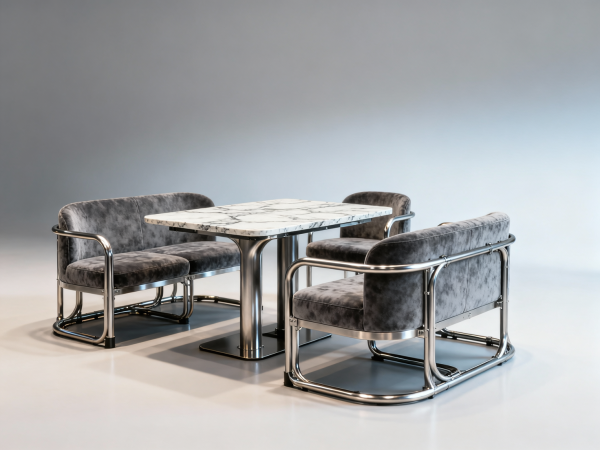
Round or rectangular hotel tables for tighter layouts?
Choosing between round and rectangular hotel tables can reshape how guests move, dine, and interact in compact spaces. For buyers comparing hotel furniture, commercial furniture, and hospitality furniture options, the right table format affects layout efficiency, comfort, and brand image. This guide examines which solution better supports tighter hotel room furniture and dining plans while aligning with practical hospitality procurement needs.
How table shape changes circulation, seating, and layout efficiency
In hotel furniture planning, table shape is not a decorative afterthought. It directly affects aisle clearance, seat count, service access, and guest comfort. In tighter layouts, even a difference of 100–150 mm around the perimeter can influence whether housekeeping carts pass smoothly, whether a breakfast corner feels cramped, or whether a meeting room can support one more table module without violating circulation needs.
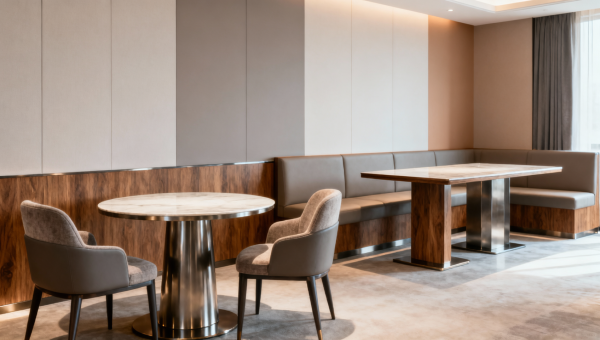
Round hotel tables usually improve movement because they remove corners and soften traffic flow. Guests naturally walk around them, which is useful in boutique hotels, compact breakfast areas, and mixed-use lounge zones. Rectangular hotel tables, however, often use floor area more efficiently against walls, banquettes, and room edges. That makes them a common choice where planners must align furniture tightly with architectural lines and keep dead space to a minimum.
For procurement teams, the real question is not which shape is universally better. It is which shape performs better under specific operating conditions: guest turnover, cleaning frequency, room dimensions, furniture stacking needs, and whether the space serves dining, working, or multipurpose hospitality use. A table that looks efficient on a floor plan may still fail if service staff lose 2–3 minutes per turn because access is awkward.
This is why commercial furniture evaluation should combine design review with operational testing. A practical review often includes 4 core checks: seat capacity, clearance zone, base stability, and compatibility with the selected chair footprint. In hotel room furniture and public area sourcing, shape decisions become stronger when they are linked to measurable use scenarios rather than visual preference alone.
Typical impact areas buyers should assess first
- Circulation width: many compact hospitality layouts aim to preserve at least a functional walking path, especially in breakfast rooms, lounges, and all-day dining spaces.
- Seating density: a 2-seat, 4-seat, or 6-seat plan changes how effectively a tabletop shape converts square meters into usable capacity.
- Service ergonomics: staff need predictable reach zones for cleaning, resetting, and tray handling during repeated daily use.
- Visual zoning: in smaller hotel spaces, furniture shape influences whether the room feels open, formal, intimate, or crowded.
Round vs rectangular hotel tables: which works better in tighter layouts?
The comparison becomes clearer when hotel tables are judged by function instead of by trend. Round tables are often preferred where guest interaction matters, because every seat has equal proximity and there is no “head” position. Rectangular tables are often preferred where edge alignment matters, particularly in narrow footprints, room-side dining setups, and configurations that must nest near partitions or windows.
A round table can feel smaller in use because it encourages smoother movement. Yet it may occupy more effective floor area if the room is narrow and long. A rectangular table can increase usable edge placement, but its corners can interrupt circulation and create pressure points in compact hospitality furniture layouts. The best choice depends on whether the limiting factor is movement, wall placement, or the need to maximize seats per linear meter.
For information researchers and commercial buyers, the safest approach is to compare shapes against the actual deployment type: guest rooms, banquet spillover, café corners, meeting rooms, or flexible restaurant seating. In many hospitality procurement projects, 2 shapes are not competitors but complementary tools. Round tables may serve social zones, while rectangular tables support perimeter zones and modular planning.
The table below summarizes how hotel furniture buyers can evaluate shape choice across space efficiency, seating logic, and operating convenience. These are common commercial considerations rather than rigid rules, but they help narrow the shortlist quickly during early sourcing discussions.
The key takeaway is simple: round tables usually win when movement and sociability are the main priorities, while rectangular tables usually win when edge efficiency and modular planning matter more. In hotel furniture sourcing, layout constraints decide the answer more often than style preference does.
A fast decision rule for early-stage planning
If the space is irregular, heavily trafficked, or designed for quick social turnover, round tables are often the stronger hospitality furniture option. If the space is long, narrow, perimeter-led, or tied to fixed architectural lines, rectangular tables usually create better planning discipline. Buyers can often reach a workable shortlist in 1–2 review rounds by testing both shapes on the same scaled layout.
When mixed deployment makes more sense
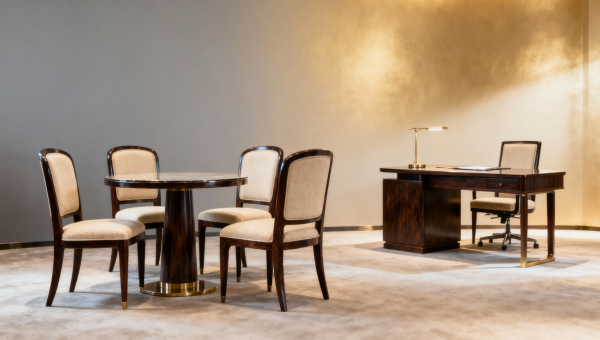
Many hotels do not need a single-shape strategy. A mixed program may use 700–900 mm round tables in lounge or café areas and rectangular tops in guest room dining, meeting rooms, or banquet support zones. This approach reduces compromise and helps procurement teams match inventory to actual usage intensity across departments.
Which hotel spaces favor round tables, and which favor rectangular ones?
Application context matters more than general preference. In hotel furniture projects, the same property may require different shapes for guest rooms, breakfast spaces, executive lounges, and event areas. Buyers who map table shape by use case usually improve both space efficiency and furniture longevity, because the product is asked to do only what that zone really needs.
Round hotel tables perform especially well in compact dining areas where guests approach from multiple directions. They reduce corner collisions and make smaller seating pockets feel less rigid. This can be useful in boutique hotels, lobby cafés, rooftop lounges, and casual dining areas where the mood should feel open rather than tightly gridded.
Rectangular hotel tables are often stronger in guest room furniture programs, extended-stay formats, and banquet back-up areas. They align with walls, sofas, benches, and work-dining hybrid needs. In business hotels, a rectangular top can support both in-room dining and laptop work more naturally over 8–12 hours of intermittent use than a small round top can.
Distributors and sourcing agents should also consider inventory rationalization. A shape that works across 3 application types may reduce SKU fragmentation, simplify replacement planning, and make future replenishment easier over 12–24 months. That matters in regional hospitality supply programs where continuity is as important as first installation cost.
Application matrix for common hotel environments
The table below helps buyers connect table shape with operating context. It is especially useful for procurement reviews, dealer presentations, and early business evaluation when multiple stakeholders must align on one hotel furniture direction.
This matrix does not eliminate the need for project-specific planning, but it shows a consistent pattern: social circulation favors round tables, while functional alignment favors rectangular tables. In commercial furniture sourcing, that distinction helps reduce design revisions and late-stage procurement changes.
Space-specific questions worth asking
- Will the table sit in the center of traffic or against a boundary for most of its life cycle?
- Does the table need to support dining only, or dining plus work, display, or light meeting use?
- Is the zone reset several times per day, or is furniture mostly static for longer periods?
- Will replacement orders be needed in matching finishes over the next 1–3 years?
What procurement teams should check before selecting hotel tables
Procurement errors usually happen when the buying team focuses on tabletop appearance before validating operating details. In hospitality furniture, the table shape decision should be reviewed alongside dimensions, edge profile, base footprint, material durability, and replenishment feasibility. A table may look compact on paper but fail if its base interferes with chair legs or if cleaning access is too narrow.
A disciplined evaluation typically includes 5 key checks: room fit, seating comfort, base clearance, surface durability, and lead time. For many hotel furniture orders, sample review plus layout verification can be completed in 7–15 days, while bulk production planning may require 3–6 weeks depending on finish, quantity, and customization depth. These are common commercial ranges, not universal guarantees.
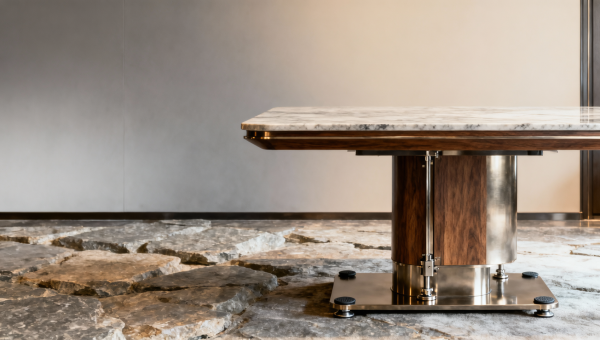
Buyers should also align table choice with maintenance realities. Laminates, veneers, solid wood elements, sintered stone, and compact surfaces all behave differently under repeated wiping, luggage bumps, and serviceware contact. In tighter hotel layouts, damage often occurs at edges and corners first. That means rectangular tables may need stronger corner detailing, while round tables may require close attention to edge sealing and base stability.
For business assessment teams and channel partners, one more factor matters: how repeatable the specification is across markets. A good hotel table program should allow clear documentation of finish code, top thickness range, base style, packing method, and tolerance expectations. That reduces misunderstanding between design, procurement, and factory execution during cross-border sourcing.
Practical procurement checklist
- Confirm usable room dimensions and keep realistic chair pull-out space in the drawing, not only tabletop dimensions.
- Review base geometry and check whether pedestal, four-leg, or sled structures interfere with guest seating comfort.
- Match surface material to cleaning frequency, spill exposure, and expected wear in dining or mixed-use hotel furniture settings.
- Ask for packing details, replacement availability, and whether the same finish can be supplied in follow-up orders.
- Clarify project timing, including sample lead time, production window, and shipping coordination milestones.
Compliance and specification points often overlooked
Depending on project location, buyers may need to review general commercial furniture requirements related to surface performance, structural safety, fire-related material choices in surrounding interiors, or emissions expectations for panels and finishes. GCT supports sourcing conversations by helping buyers compare supplier documentation, customization scope, and commercial feasibility before the order reaches an avoidable risk stage.
Cost, alternatives, and common selection mistakes in hospitality furniture
Cost comparison between round and rectangular hotel tables is rarely just about the tabletop. The real cost includes base construction, packing efficiency, shipping cube, installation time, replacement management, and service life under hotel conditions. Rectangular tables may offer simpler modular planning, while round tables may lower perceived crowding and improve guest flow, which can indirectly support better space performance.
In many sourcing projects, buyers compare three levels of solution: standard catalog tables, semi-custom finish adjustments, and full custom hospitality furniture. Standard products may shorten supply cycles to around 2–4 weeks in some programs, while deeper customization can extend production planning. The right decision depends on whether the project priority is speed, brand differentiation, or consistency across multiple properties.
Alternative strategies can also reduce pressure in tight layouts. For example, rectangular wall-side tables can be combined with fewer round freestanding units to balance density and movement. Flip-top or nesting options may help meeting and function areas. In guest rooms, a compact rectangular table with softened radiused corners can sometimes deliver the best of both categories.
One common mistake is choosing the smallest visible top without checking actual use behavior. Another is assuming more seats always mean better revenue. In reality, poor movement, awkward chair pull-back, and slow reset time can reduce service efficiency. Good commercial furniture selection protects both aesthetics and operations over the full procurement cycle.
Frequent misconceptions that delay better decisions
- “Round tables always save space.” They save perceived space in circulation-heavy zones, but not always in narrow rectangular rooms.
- “Rectangular tables are less comfortable.” They can be highly effective when seat spacing, edge radius, and base clearance are well designed.
- “One shape should be used throughout the property.” Mixed deployment often improves both function and inventory control.
- “Only tabletop size matters.” Base type, aisle width, chair dimensions, and maintenance demands are equally important.
FAQ for buyers comparing round and rectangular hotel tables
The questions below reflect common search intent from hotel procurement teams, business evaluators, and hospitality furniture distributors. They can also help structure supplier discussions before sample approval or quotation review.
Are round hotel tables better for small dining spaces?
Often yes, especially where guests approach from several directions and quick circulation matters. A round table reduces corner conflicts and can make a compact breakfast room feel easier to navigate. However, if the room is long and narrow or heavily wall-oriented, a rectangular table may still use the footprint more efficiently. Buyers should compare both options on a scaled plan before deciding.
What table shape is usually better for hotel guest rooms?
Rectangular tables are often more practical in guest rooms because they align well with walls and can support dining, working, and temporary item placement. In many hotel room furniture programs, this dual-use benefit matters more than pure visual softness. If the room is especially compact, a smaller rectangular top with softened corners can improve safety and usability at the same time.
How long does hotel table sourcing usually take?
A typical process may involve 3 stages: specification confirmation, sample review, and bulk production. Sample discussion can move within 7–15 days if dimensions and finishes are clear. Production lead times often depend on quantity, material, and customization level, commonly ranging from several weeks rather than a few days. International shipping and project coordination should also be built into the schedule early.
What should distributors or project buyers ask suppliers first?
Start with 5 practical topics: available dimensions, base options, finish durability, packing method, and replenishment consistency. If the project involves branded interiors or multi-property rollout, also ask whether matching production can be maintained over future batches. These questions reduce risk more effectively than price-only comparison.
Why work with GCT when selecting hotel furniture for compact layouts?
GCT supports B2B buyers who need more than a product list. In hotel furniture sourcing, shape selection is tied to design intent, compliance awareness, durability expectations, and supplier execution. Our role is to help information researchers, procurement teams, business evaluators, and channel partners compare commercial options with stronger context, clearer specifications, and better alignment to real hospitality use.
Because compact hospitality layouts leave little room for purchasing mistakes, buyers often need support on 6 decision areas: dimension confirmation, material matching, customization scope, lead time planning, documentation review, and supplier communication. GCT helps structure those conversations so projects move faster from concept to feasible sourcing path.
If you are comparing round and rectangular hotel tables for a new property, refurbishment, dealer program, or multi-site rollout, we can help you assess which option better fits your space logic and procurement priorities. That includes discussion on typical size ranges, finish direction, sample support, packaging expectations, and how to balance guest experience with operating efficiency.
Contact GCT to discuss your hotel furniture requirements in practical terms: table dimensions, room layout constraints, seating targets, customization needs, common lead-time ranges, certification or documentation expectations, and quotation planning. A clearer specification at the start usually saves time, reduces revision cycles, and leads to a more reliable hospitality furniture decision.
Search News
Hot Articles
- Stage Lighting & TrussCCTV5 Snooker Broadcast Drives 37% Surge in Stage Lighting Export InquiriesApr 21, 2026
- Indoor PlaygroundVietnam Mandates Child Finger-Trap Sensors for Indoor Play EquipmentApr 21, 2026
- Stage Lighting & TrussGuangdong vs. Shanxi CBA Game Highlights Domestic Smart Arena LightingApr 21, 2026
Popular Tags
Need ExpertConsultation?
Connect with our specialized leisureengineering team for procurementstrategies.
Recommended News
 Apr 21, 2026Hotel tables that stay stable on uneven flooringHotel tables that stay stable on uneven flooring: a practical guide for hospitality procurement covering hotel furniture, commercial furniture, luxury furniture, and specs that reduce wobble, risk, and maintenance.● Hospitality Sourcing Dir
 Apr 21, 2026Round or rectangular hotel tables for tighter layouts?Hotel tables for tight layouts: compare round vs rectangular hotel furniture for better flow, seating, and hospitality procurement decisions. Find the best fit for compact hotel room furniture.● Hospitality Sourcing Dir
 Apr 21, 2026Why hotel chairs fail early in banquet spacesHotel chairs in banquet spaces fail early due to stacking, impact, and weak specs. Learn how hotel furniture and commercial furniture choices cut costs and improve hospitality procurement.● Hospitality Sourcing Dir
 Apr 21, 2026Hotel chairs that look elegant and still hold upHotel chairs that blend luxury furniture appeal with commercial furniture durability. Discover how hotel furniture works with hotel tables, hotel desks, and hotel room furniture for smarter hospitality procurement.● Hospitality Sourcing Dir
 Apr 20, 2026Hotel tables with edge seams that trap moisture and moldHotel tables, park benches & commercial furniture with mold-trapping edge seams? Discover seamless, moisture-resistant hotel furniture solutions—luxury, custom, and compliant.● Hospitality Sourcing Dir
 Apr 20, 2026Hotel chairs rated for 100,000 cycles—but tested how?Discover how top hotel chairs, park benches & commercial furniture are truly tested for 100,000 cycles—backed by BIFMA, EN & GB/T standards. Get verified luxury furniture insights.● Hospitality Sourcing Dir
 Apr 19, 2026Hotel tables that warp under daily cleaning chemicalsHotel tables, hotel chairs, hotel beds & park benches—discover why chemical warping fails luxury furniture & commercial furniture specs. Get expert OEM insights on durable hotel furniture & equipment.● Hospitality Sourcing Dir
 Apr 19, 2026Hotel chairs with hidden wear patterns no one tests forHotel chairs, luxury furniture & commercial furniture buyers: uncover hidden wear patterns in hotel chairs, hotel beds, and custom furniture—before failure hits ROI.● Hospitality Sourcing Dir
 Apr 18, 2026Custom furniture quoting errors—how small measurement gaps become big cost overrunsAvoid costly overruns: Fix custom furniture quoting errors before they derail hotel beds, theme park rides, playground structures & soundproofing materials.● Hospitality Sourcing Dir
 Apr 17, 2026Restaurant furniture that handles spills, scratches, and constant turnoverCommercial furniture built for spills, scratches & turnover—ideal for playground borders, sensory playgrounds, hotel tables, amusement equipment & more.● Hospitality Sourcing Dir
 Apr 16, 2026Custom fabrication for restaurant furniture: When ‘made-to-order’ becomes ‘wait-for-3-months’Custom fabrication for hotel furniture, designer eyewear & jewelry—solve supply chain delays with OEM manufacturing expertise. Get on-time, cross-sector solutions.● Hospitality Sourcing Dir
 Apr 15, 2026Restaurant furniture durability tests don’t match real dining room stressCommercial furniture, playground safety & amusement equipment tested for real-world stress—not just labs. Discover field-validated durability for hotel tables, sensory playgrounds, climbers & more.● Hospitality Sourcing Dir
 Apr 12, 2026Custom furniture for play spaces: When 'bespoke' means higher liability, not better fitOutdoor playground & inclusive playground design demands caution: custom furniture, playground swings, and theme park rides raise liability—discover safer, certified alternatives.● Hospitality Sourcing Dir
 Apr 12, 2026Custom furniture lead times ballooning in 2026—what’s really causing the 14-week delaysOutdoor playground, inclusive playground, and theme park rides face 14-week custom furniture delays in 2026—discover root causes & proven mitigation strategies now.● Hospitality Sourcing Dir
 Apr 07, 2026Custom furniture lead times in 2026: Why ‘standard’ finishes now take longer than premiumCustom furniture, outdoor playground & hotel furniture lead times surged in 2026—discover why standard finishes now lag premium. Get data-backed sourcing strategies for inclusive playground, soundproofing materials & instrument cables.● Hospitality Sourcing Dir
 Apr 04, 2026Restaurant Furniture Buyers Are Asking Office Supplies Factories for Modular Desk Systems — And Getting YesTop office supplies manufacturer & OEM supplier delivers NSF/BIFMA-certified modular desk systems for restaurants—fast, compliant, factory-direct.● Hospitality Sourcing Dir
 Apr 01, 2026What happens to hotel tables when placed on floating floors—real case data from 2026Discover how hotel tables, chairs, desks & sofas interact with soundproofing materials on floating floors—real 2026 data reveals critical acoustic & stability insights for hospitality furniture buyers.● Hospitality Sourcing Dir
 Mar 31, 2026Hotel tables that don’t rattle—what makes the difference in real roomsDiscover hotel tables engineered with soundproofing materials & precision construction—eliminate rattling, elevate guest experience. Premium hotel furniture, desks, chairs, sofas & more.● Hospitality Sourcing Dir
 Mar 31, 2026Hotel reception furniture that ships on time—then arrives with mismatched wood grain batchesCommercial sourcing for hotel reception furniture, amusement park lighting & playground development—guaranteed batch consistency, on-time delivery, and full compliance.● Hospitality Sourcing Dir
 Mar 30, 2026Restaurant furniture from Tier-2 suppliers: durability claims vs. real-world spill cyclesCommercial sourcing of hotel restaurant furniture, amusement park lighting & playground development gear—tested under real spill cycles. Discover durable Tier-2 suppliers.● Hospitality Sourcing Dir
 Mar 30, 2026Hotel bar furniture orders that pass QA—but fail the ‘three-drink test’Hotel bar furniture that passes QA—and the real-world 'three-drink test'. Trusted commercial sourcing for hotel restaurant & reception furniture, amusement park lighting, playground compliance, and electronic music gear.● Hospitality Sourcing Dir
 Mar 30, 2026Hotel reception furniture that looks premium—until the first guest leans on itDiscover durable hotel reception furniture built for real traffic—plus commercial sourcing support for amusement park lighting, playground development, and more.● Hospitality Sourcing Dir
 Mar 28, 2026Restaurant furniture ordered for 'luxury aesthetic'—then reconfigured three times before openingLuxury furniture, trampoline park fixtures, arcade games & park benches—engineered for iterative layouts and premium experiential integrity. Discover adaptive sourcing.● Hospitality Sourcing Dir
 Mar 27, 2026What restaurant furniture buyers overlook when evaluating commercial procurement terms for bulk ordersDiscover expert supply chain solutions, ODM services & OEM manufacturing for amusement park equipment, catering equipment, and commercial procurement—beyond price sheets.● Hospitality Sourcing Dir