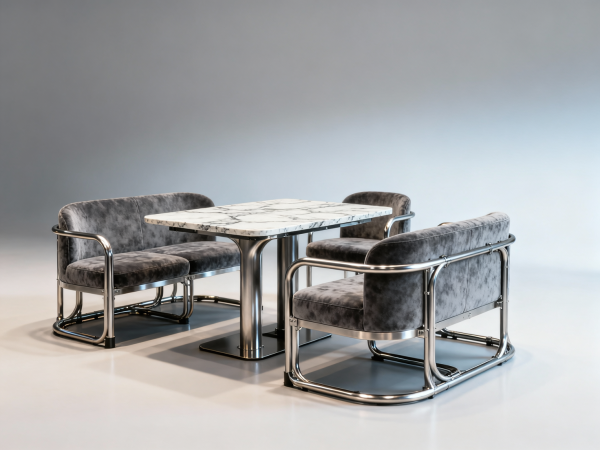
Hotel chairs that look elegant and still hold up
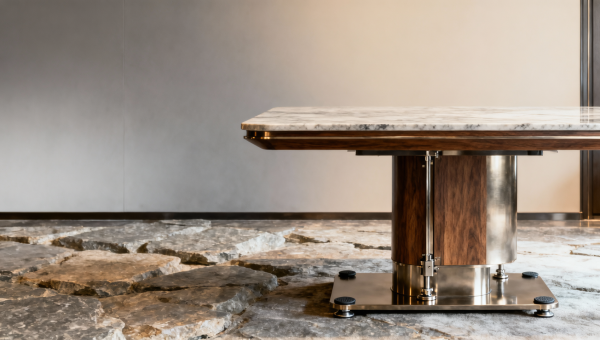
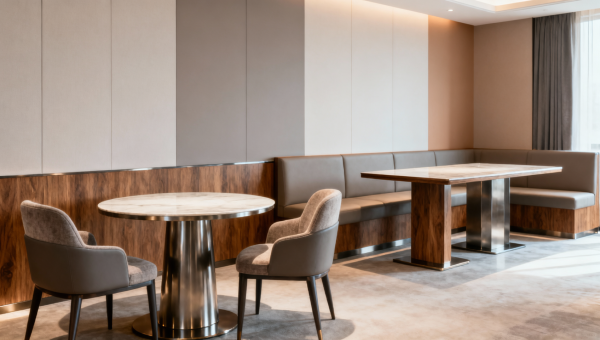
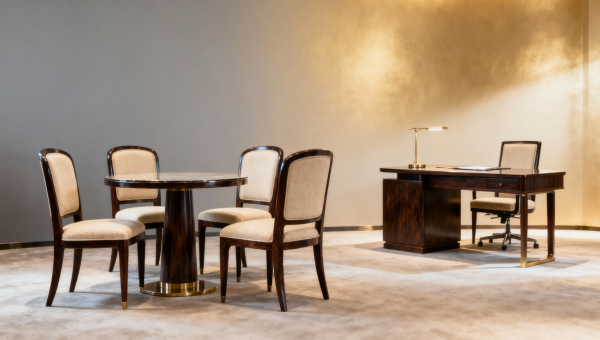
In hospitality design, finding hotel chairs that combine elegant style with long-term durability is essential for both guest experience and hospitality procurement. From luxury furniture concepts to practical commercial furniture planning, the right seating must complement hotel tables, hotel desks, and overall hotel room furniture while standing up to constant use. This guide explores how to choose hotel furniture that looks refined, performs reliably, and supports smarter sourcing decisions.
For most buyers, the answer is straightforward: elegant hotel chairs can absolutely hold up in demanding environments, but only when aesthetics are backed by commercial-grade construction, suitable materials, and a specification that matches the actual use case. The biggest mistake is choosing by appearance alone. The best-performing hotel chairs are selected by balancing design language, maintenance demands, traffic intensity, brand positioning, and total lifecycle cost.
What buyers are really looking for when they search for elegant yet durable hotel chairs
Procurement teams, specifiers, and hospitality buyers are rarely searching for style in isolation. They want seating that helps a property look premium without creating replacement, maintenance, or guest-experience problems six months later. In practical terms, the search intent behind this topic usually includes four priorities:
- A refined visual impression that supports the hotel’s positioning, whether luxury, boutique, business, or lifestyle.
- Reliable commercial performance under repeated daily use in guestrooms, lounges, restaurants, meeting spaces, and public areas.
- Easy upkeep for housekeeping and operations teams.
- Procurement confidence through clear specifications, testing, warranty, and supplier consistency.
That means the real buying question is not “Which chair looks elegant?” but “Which chair still looks elegant after years of hospitality use?”
How to tell whether a hotel chair is truly commercial grade
Many chairs can photograph well in a catalog. Far fewer are engineered for hotel environments. To separate decorative furniture from dependable hotel furniture, buyers should focus on construction details first.
Frame strength is the starting point. Solid hardwood, high-quality engineered wood used correctly, aluminum, stainless steel, and powder-coated steel can all work well depending on the application. What matters is joint integrity, reinforcement, and load-bearing design. Weak joints and poor fastener quality are common failure points.
Seat and back support should be designed for repeated use, not occasional residential seating. High-density foam, durable webbing, molded support components, and stable seat platforms improve comfort retention over time.
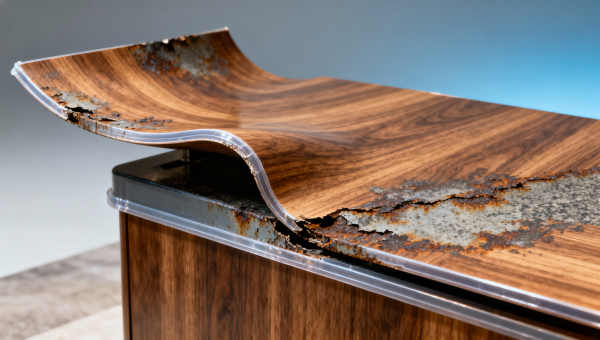
Finish durability is often underestimated. A chair may have an elegant stain, lacquer, veneer, or metal finish, but if that surface scratches easily or reacts poorly to cleaning chemicals, the chair will age badly in operation.
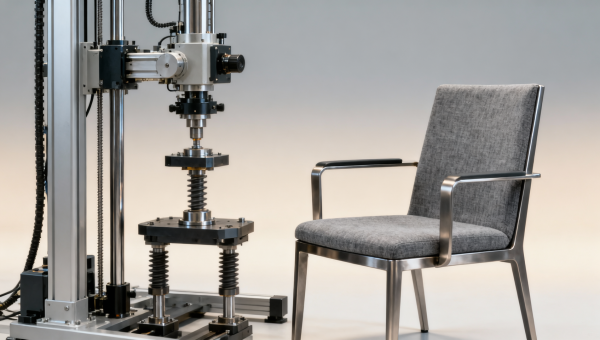
Testing and compliance also matter. Commercial buyers should ask whether chairs have been tested for strength, stability, and performance according to relevant standards for their market. In many sourcing decisions, documentation is as important as design.
- Ask for weight capacity and structural test data.
- Check whether the chair is intended for hospitality or only light commercial use.
- Review warranty terms for frame, upholstery, and finish.
- Request project references in hotels, serviced apartments, or restaurants.
Which materials look upscale and still perform well in hotels
Material choice has a direct effect on both visual elegance and long-term operating cost. The right option depends on where the chair will be used.
Wood chairs remain popular in guest rooms, dining areas, and boutique hospitality settings because they convey warmth and craftsmanship. For better durability, buyers should look for kiln-dried hardwoods, reinforced joinery, and protective finishes that resist abrasion and moisture.
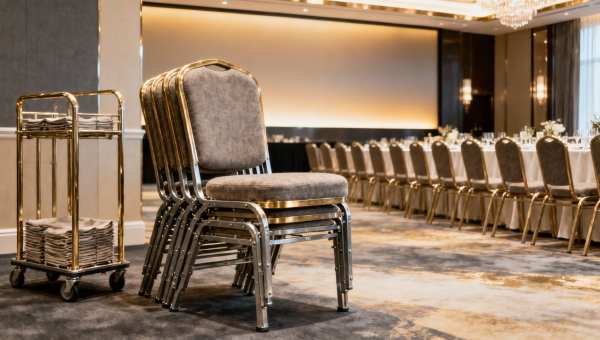
Metal-framed chairs often offer a strong durability advantage in high-traffic areas such as banquets, conference spaces, and foodservice venues. When designed well, they can still look sophisticated, especially with slim profiles, brushed finishes, or upholstered detailing.
Upholstered chairs add comfort and visual richness, but fabric or faux leather selection is critical. Hospitality-grade textiles should resist staining, abrasion, pilling, and fading. In many projects, easy-clean performance fabrics are more practical than delicate decorative materials.
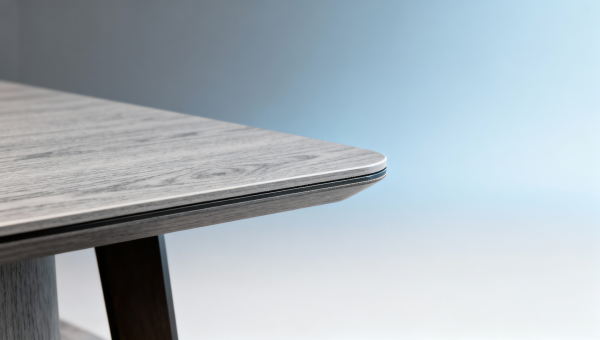
Laminate, veneer, and composite elements can be excellent when engineered for commercial use. They may also support better consistency across large-scale projects. However, edge detailing, substrate quality, and finish adhesion must be reviewed carefully.
Outdoor-adjacent or humid-zone applications require special attention. Spa lounges, resort corridors, poolside dining areas, and coastal properties need moisture-resistant materials, corrosion-resistant metals, and UV-stable surfaces.
How style and durability should change by hotel area
One of the most useful ways to source hotel chairs is to stop treating the property as a single environment. Different areas place different demands on seating.
Guest room chairs should align with hotel room furniture and often need to work alongside hotel desks or side tables. Here, elegance and comfort are especially important because guests interact with the chair at close range. Moderate durability is essential, but visual integration with the room concept often carries equal weight.
Restaurant and café chairs need stronger abrasion resistance, better cleanability, and more robust joinery due to constant movement, spills, and higher turnover. Chairs in these zones must also pair well with hotel tables while supporting efficient service flow.
Lobby and lounge seating usually carries the strongest brand-expression role. Buyers may prioritize sculptural form, premium upholstery, and a luxury furniture look, but public-area use requires high rub-count fabrics, stain resistance, and strong internal construction.
Meeting and event chairs are performance-first products even when they need an upscale look. Stackability, storage efficiency, weight, and frame resilience can be as important as appearance.
Bar and high-top seating requires extra attention to footrest durability, weld quality, and stability. These are frequent stress points in hospitality operation.
What makes a chair stay elegant after repeated use
Long-term elegance is not just about initial design. It comes from how well the chair resists visible wear. Buyers should assess whether the chair will preserve its visual quality under real hotel conditions.
Key indicators include:
- Scratch-resistant finishes that do not show every contact mark.
- Performance upholstery that cleans easily and keeps its texture and color.
- Foam resilience so seat cushions do not flatten quickly.
- Stable joinery that prevents wobbling, loosening, or noise over time.
- Protective glides to reduce floor damage and frame wear.
- Replaceable components such as seat pads or glides for easier maintenance.
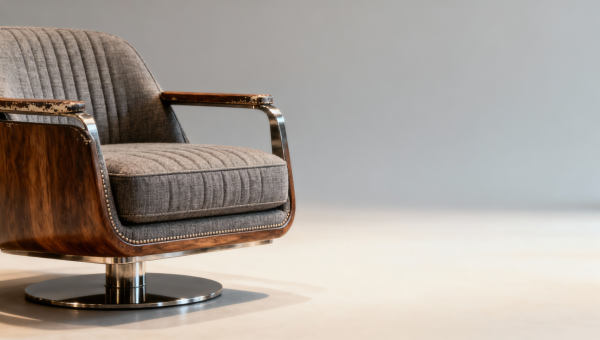
A chair that looks sophisticated on day one but shows edge wear, staining, loose joints, or seat collapse within a year is not truly elegant in a hotel context. Durable elegance is operational elegance.
Questions procurement teams should ask before approving a supplier
For procurement professionals and business evaluators, the supplier review process matters just as much as product appearance. A strong chair design can still become a poor sourcing decision if lead times, quality consistency, or after-sales support are unreliable.
Before approval, buyers should ask:
- What hospitality projects has the supplier completed at similar scale?
- Can they provide customization for dimensions, fabrics, wood stains, or branded finishes?
- What is the quality-control process before shipment?
- How consistent are color, finish, and upholstery across production batches?
- What packaging method is used to reduce transit damage?
- How are claims, replacements, and spare parts handled?
- What are the actual lead times for sampling, approval, and bulk production?
For distributors and sourcing agents, these questions are especially important because downstream clients expect predictable quality and minimal project risk. Strong documentation, transparent communication, and repeatable manufacturing capability often matter more than the lowest quoted price.
How to balance design ambition with budget and lifecycle cost
Elegant seating does not always require the highest upfront spend, but low-cost buying often becomes expensive in operation. A better approach is to compare chair options by lifecycle value.
Consider the following cost factors:
- Initial unit cost
- Freight and packaging efficiency
- Installation or assembly requirements
- Cleaning and maintenance labor
- Repairability and spare part access
- Expected replacement cycle
- Impact on guest perception and brand image
For example, a chair with a slightly higher purchase price but better finish retention, easier cleaning, and fewer replacements may generate better value across three to five years. This is especially relevant for high-traffic hotels, multi-property groups, and operators managing standardized FF&E programs.
Common mistakes that lead to poor chair performance in hotels
Several sourcing mistakes repeatedly cause dissatisfaction in hospitality projects:
- Choosing residential-style furniture for commercial spaces.
- Focusing on visual trend appeal without reviewing technical specifications.
- Selecting delicate upholstery for foodservice or public-use zones.
- Ignoring housekeeping and maintenance requirements.
- Failing to test samples in the actual use environment.
- Overlooking how chairs coordinate with hotel desks, tables, and traffic flow.
- Approving suppliers without checking consistency and project references.
These errors can affect not only durability but also guest comfort, brand presentation, and operational efficiency.
A practical specification approach for smarter hotel chair sourcing
For buyers who need a repeatable decision framework, the most effective method is to build a specification matrix before final selection. This helps align design, operations, and commercial requirements.
A useful chair evaluation matrix can include:
- Use area: guest room, dining, lobby, meeting, outdoor, bar
- Target visual style: luxury, modern, classic, boutique, minimalist
- Required material performance: stain resistance, moisture resistance, scratch resistance
- Structural expectations: weight capacity, stacking, reinforcement
- Maintenance requirements: easy-clean surfaces, replaceable parts
- Compliance and testing documents
- Customization options
- Lead time and MOQ
- Total landed cost
This approach helps procurement teams compare options objectively while still protecting the design intent of the project.
Conclusion: the best hotel chairs combine visual refinement with operational proof
Hotel chairs that look elegant and still hold up are not a contradiction. They are the result of disciplined selection. The right choice supports guest perception, complements hotel furniture schemes, and withstands the realities of hospitality use. For information researchers, procurement teams, and commercial evaluators, the key is to judge chairs not only by form but by construction, material suitability, maintenance profile, supplier reliability, and lifecycle value.
In short, the most successful hotel chairs do three things at once: they fit the brand, perform in the intended setting, and remain visually credible over time. That is what turns a stylish furniture choice into a sound commercial decision.
Search News
Hot Articles
- Stage Lighting & TrussCCTV5 Snooker Broadcast Drives 37% Surge in Stage Lighting Export InquiriesApr 21, 2026
- Indoor PlaygroundVietnam Mandates Child Finger-Trap Sensors for Indoor Play EquipmentApr 21, 2026
- Stage Lighting & TrussGuangdong vs. Shanxi CBA Game Highlights Domestic Smart Arena LightingApr 21, 2026
Popular Tags
Need ExpertConsultation?
Connect with our specialized leisureengineering team for procurementstrategies.
Recommended News
 Apr 21, 2026Hotel tables that stay stable on uneven flooringHotel tables that stay stable on uneven flooring: a practical guide for hospitality procurement covering hotel furniture, commercial furniture, luxury furniture, and specs that reduce wobble, risk, and maintenance.● Hospitality Sourcing Dir
 Apr 21, 2026Round or rectangular hotel tables for tighter layouts?Hotel tables for tight layouts: compare round vs rectangular hotel furniture for better flow, seating, and hospitality procurement decisions. Find the best fit for compact hotel room furniture.● Hospitality Sourcing Dir
 Apr 21, 2026Why hotel chairs fail early in banquet spacesHotel chairs in banquet spaces fail early due to stacking, impact, and weak specs. Learn how hotel furniture and commercial furniture choices cut costs and improve hospitality procurement.● Hospitality Sourcing Dir
 Apr 21, 2026Hotel chairs that look elegant and still hold upHotel chairs that blend luxury furniture appeal with commercial furniture durability. Discover how hotel furniture works with hotel tables, hotel desks, and hotel room furniture for smarter hospitality procurement.● Hospitality Sourcing Dir
 Apr 20, 2026Hotel tables with edge seams that trap moisture and moldHotel tables, park benches & commercial furniture with mold-trapping edge seams? Discover seamless, moisture-resistant hotel furniture solutions—luxury, custom, and compliant.● Hospitality Sourcing Dir
 Apr 20, 2026Hotel chairs rated for 100,000 cycles—but tested how?Discover how top hotel chairs, park benches & commercial furniture are truly tested for 100,000 cycles—backed by BIFMA, EN & GB/T standards. Get verified luxury furniture insights.● Hospitality Sourcing Dir
 Apr 19, 2026Hotel tables that warp under daily cleaning chemicalsHotel tables, hotel chairs, hotel beds & park benches—discover why chemical warping fails luxury furniture & commercial furniture specs. Get expert OEM insights on durable hotel furniture & equipment.● Hospitality Sourcing Dir
 Apr 19, 2026Hotel chairs with hidden wear patterns no one tests forHotel chairs, luxury furniture & commercial furniture buyers: uncover hidden wear patterns in hotel chairs, hotel beds, and custom furniture—before failure hits ROI.● Hospitality Sourcing Dir
 Apr 18, 2026Custom furniture quoting errors—how small measurement gaps become big cost overrunsAvoid costly overruns: Fix custom furniture quoting errors before they derail hotel beds, theme park rides, playground structures & soundproofing materials.● Hospitality Sourcing Dir
 Apr 17, 2026Restaurant furniture that handles spills, scratches, and constant turnoverCommercial furniture built for spills, scratches & turnover—ideal for playground borders, sensory playgrounds, hotel tables, amusement equipment & more.● Hospitality Sourcing Dir
 Apr 16, 2026Custom fabrication for restaurant furniture: When ‘made-to-order’ becomes ‘wait-for-3-months’Custom fabrication for hotel furniture, designer eyewear & jewelry—solve supply chain delays with OEM manufacturing expertise. Get on-time, cross-sector solutions.● Hospitality Sourcing Dir
 Apr 15, 2026Restaurant furniture durability tests don’t match real dining room stressCommercial furniture, playground safety & amusement equipment tested for real-world stress—not just labs. Discover field-validated durability for hotel tables, sensory playgrounds, climbers & more.● Hospitality Sourcing Dir
 Apr 12, 2026Custom furniture for play spaces: When 'bespoke' means higher liability, not better fitOutdoor playground & inclusive playground design demands caution: custom furniture, playground swings, and theme park rides raise liability—discover safer, certified alternatives.● Hospitality Sourcing Dir
 Apr 12, 2026Custom furniture lead times ballooning in 2026—what’s really causing the 14-week delaysOutdoor playground, inclusive playground, and theme park rides face 14-week custom furniture delays in 2026—discover root causes & proven mitigation strategies now.● Hospitality Sourcing Dir
 Apr 07, 2026Custom furniture lead times in 2026: Why ‘standard’ finishes now take longer than premiumCustom furniture, outdoor playground & hotel furniture lead times surged in 2026—discover why standard finishes now lag premium. Get data-backed sourcing strategies for inclusive playground, soundproofing materials & instrument cables.● Hospitality Sourcing Dir
 Apr 04, 2026Restaurant Furniture Buyers Are Asking Office Supplies Factories for Modular Desk Systems — And Getting YesTop office supplies manufacturer & OEM supplier delivers NSF/BIFMA-certified modular desk systems for restaurants—fast, compliant, factory-direct.● Hospitality Sourcing Dir
 Apr 01, 2026What happens to hotel tables when placed on floating floors—real case data from 2026Discover how hotel tables, chairs, desks & sofas interact with soundproofing materials on floating floors—real 2026 data reveals critical acoustic & stability insights for hospitality furniture buyers.● Hospitality Sourcing Dir
 Mar 31, 2026Hotel tables that don’t rattle—what makes the difference in real roomsDiscover hotel tables engineered with soundproofing materials & precision construction—eliminate rattling, elevate guest experience. Premium hotel furniture, desks, chairs, sofas & more.● Hospitality Sourcing Dir
 Mar 31, 2026Hotel reception furniture that ships on time—then arrives with mismatched wood grain batchesCommercial sourcing for hotel reception furniture, amusement park lighting & playground development—guaranteed batch consistency, on-time delivery, and full compliance.● Hospitality Sourcing Dir
 Mar 30, 2026Restaurant furniture from Tier-2 suppliers: durability claims vs. real-world spill cyclesCommercial sourcing of hotel restaurant furniture, amusement park lighting & playground development gear—tested under real spill cycles. Discover durable Tier-2 suppliers.● Hospitality Sourcing Dir
 Mar 30, 2026Hotel bar furniture orders that pass QA—but fail the ‘three-drink test’Hotel bar furniture that passes QA—and the real-world 'three-drink test'. Trusted commercial sourcing for hotel restaurant & reception furniture, amusement park lighting, playground compliance, and electronic music gear.● Hospitality Sourcing Dir
 Mar 30, 2026Hotel reception furniture that looks premium—until the first guest leans on itDiscover durable hotel reception furniture built for real traffic—plus commercial sourcing support for amusement park lighting, playground development, and more.● Hospitality Sourcing Dir
 Mar 28, 2026Restaurant furniture ordered for 'luxury aesthetic'—then reconfigured three times before openingLuxury furniture, trampoline park fixtures, arcade games & park benches—engineered for iterative layouts and premium experiential integrity. Discover adaptive sourcing.● Hospitality Sourcing Dir
 Mar 27, 2026What restaurant furniture buyers overlook when evaluating commercial procurement terms for bulk ordersDiscover expert supply chain solutions, ODM services & OEM manufacturing for amusement park equipment, catering equipment, and commercial procurement—beyond price sheets.● Hospitality Sourcing Dir