How speaker cones and voice coils change repair outcomes
Repair outcomes in professional audio often depend on components that seem deceptively simple.
Among the most decisive are speaker cones and voice coils, which shape tonal balance, heat handling, efficiency, and usable lifespan.
When a driver fails, replacement choices should not focus on fit alone.
They should assess whether new speaker cones and voice coils restore original performance or create new weaknesses.
This matters across entertainment venues, hospitality installations, schools, houses of worship, and commercial public address systems.
A repair that looks economical at first can increase distortion, reduce output, or shorten service intervals.
Understanding the interaction between cone material, coil design, adhesives, and magnetic geometry supports more reliable repair approval and sourcing decisions.
Core function of speaker cones and voice coils
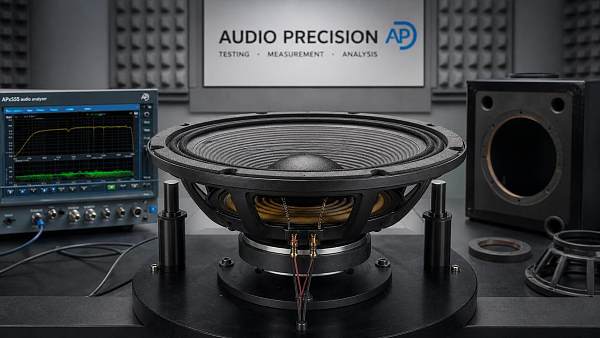
A loudspeaker driver converts electrical energy into motion.
The voice coil receives current and interacts with the magnetic field.
That movement drives the cone, which pushes air and creates audible sound.
Because both parts work as one system, replacing only one element can alter the entire driver behavior.
In practical repair work, speaker cones and voice coils affect several critical outcomes:
- Frequency response and tonal accuracy
- Power handling and thermal resilience
- Sensitivity and output consistency
- Mechanical stability under continuous use
- Compatibility with cabinet tuning and crossover design
A cone that is too heavy can reduce sensitivity and transient speed.
A voice coil with the wrong winding height can change excursion limits and cooling behavior.
Even if the repaired unit works, it may no longer match the remaining drivers in the system.
Why repair results change after component replacement
Not all replacement kits follow original engineering intent.
Small differences in mass, stiffness, winding material, or former dimensions can shift performance in measurable ways.
This is why speaker cones and voice coils are central to service quality evaluation.
Cone variables
Common cone materials include paper pulp, treated paper, polypropylene, Kevlar blends, and composite laminates.
Each material balances weight, damping, and rigidity differently.
Paper often sounds natural and efficient.
Composites may improve stiffness, but they can also change breakup behavior and system voicing.
Voice coil variables
Voice coils vary by wire type, winding pattern, impedance, former material, and thermal adhesives.
Copper and aluminum behave differently in mass and conductivity.
Kapton, fiberglass, and aluminum formers also affect heat transfer and structural stability.
An incorrect voice coil can raise operating temperature or create rubbing under stress.
Current industry attention points in commercial audio service
Commercial audio environments now demand longer duty cycles and tighter system consistency.
That has increased scrutiny around repair parts, especially speaker cones and voice coils.
Several signals are shaping current evaluation standards:
- More venues use distributed systems that require tonal matching across many zones.
- High-output installations expose weak replacement parts quickly.
- Sustainability targets encourage repair, but not at the cost of repeated failure.
- OEM compatibility and traceability now carry greater value in sourcing reviews.
- Digital system tuning makes component deviations easier to hear and measure.
As a result, technical teams increasingly compare repair options by lifecycle performance, not by part price alone.
This broader view is especially relevant in hospitality, education, leisure parks, and branded commercial spaces.
Business value of choosing the right speaker cones and voice coils
The right replacement strategy reduces more than immediate service cost.
It protects system uptime, audience experience, maintenance planning, and asset value.
Well-matched speaker cones and voice coils support business outcomes in four ways.
Acoustic consistency
Matched drivers preserve voicing across speaker arrays, stereo pairs, and multi-room systems.
This matters where brand ambiance and speech intelligibility are important.
Lower interruption risk
A voice coil with better thermal stability can reduce repeat failures during long operating hours.
That supports predictable service scheduling.
Improved total cost control
Cheap substitutes often bring hidden costs through rework, freight, labor, and reputational impact.
Reliable speaker cones and voice coils can produce lower total expenditure over time.
Better compliance with design intent
Commercial audio systems are tuned around driver parameters.
Accurate replacement helps preserve crossover behavior, SPL targets, and safety margins.
Typical repair scenarios and component priorities
Different applications place different demands on repaired drivers.
The table below shows how speaker cones and voice coils should be prioritized by use case.
Practical guidance for evaluating replacement parts
A disciplined process improves repair outcomes and reduces avoidable variation.
Before approving parts, review these checkpoints:
- Verify original driver specifications, including impedance, sensitivity, and intended frequency range.
- Confirm that replacement speaker cones and voice coils match dimensions and moving mass closely.
- Check thermal ratings and former materials for high-duty applications.
- Assess adhesive quality and curing standards, not only visible part shape.
- Request measurement data when possible, including impedance curves or frequency response comparisons.
- Test repaired units against unchanged units in the same system.
If the system is part of a larger installed environment, replacing drivers in matched pairs can help maintain uniform performance.
It is also wise to document source, batch, and repair method for future maintenance reference.
Action path for more reliable repair decisions
Reliable loudspeaker repair starts with better component judgment.
Because speaker cones and voice coils directly determine acoustic output and service durability, they should be reviewed as strategic parts.
A practical next step is to create a simple evaluation matrix.
Include fit, material equivalence, thermal rating, measured performance, and expected duty cycle.
This makes repair approvals more consistent across venues and project types.
When sourcing globally, prioritize traceable suppliers that can explain construction details and provide repeatable quality.
That approach helps preserve sound quality, lowers long-term risk, and supports better commercial audio asset performance.
Search News
Hot Articles
- Commercial KitchenWhat Is Driving Demand for Commercial Hospitality Projects Across the GCC?Oct 06, 2026
- Hotel Room AmenitiesHow to Select Hotel Hair Dryers That Balance Guest Safety, Durability, and CostOct 05, 2026
- Restaurant FurnitureFast-Casual Restaurant Interiors: Design Choices That Improve Speed and Guest FlowOct 04, 2026
Popular Tags
Need ExpertConsultation?
Connect with our specialized leisureengineering team for procurementstrategies.
Recommended News
 Sep 30, 2026How to Choose an Aluminum Projector Ceiling Mount for Load, Drop, and Ceiling TypeChoose an aluminum projector ceiling mount with confidence. Learn how load capacity, drop length, ceiling structure, safety retention, and service access shape a reliable commercial AV installation.● Pro Audio Engineer
 Sep 26, 2026How to Choose Dynamic Microphones for Vocals in Live Stage SettingsDynamic microphones for vocals: learn how to match polar patterns, feedback control, durability, and clarity to live stage needs for reliable, professional sound.● Pro Audio Engineer
 Sep 07, 2026How to Choose Wall Mount Speakers for Clear Audio in Commercial SpacesWall mount speakers for commercial spaces: learn how to optimize coverage, SPL, directivity, installation, and system design for clear, reliable audio.● Pro Audio Engineer
 Sep 03, 2026How to Choose Locking Speakon Speaker Cables for Reliable Live Sound ConnectionsLocking Speakon speaker cables: learn how to select the right gauge, connector pinout, strain relief, and durable construction for reliable live sound connections.● Pro Audio Engineer
 Sep 08, 2026Is It Worth Upgrading a Stage Sound System Mid-Project?Is it worth upgrading stage sound systems mid-project? Discover how to assess performance gaps, costs, compatibility, and long-term venue value.● Pro Audio Engineer
 Sep 04, 2026Can AV Systems Be Retrofitted Into Older Commercial Buildings?Can AV integration be retrofitted into older commercial buildings? Discover practical strategies for reliable, code-aware AV upgrades with minimal disruption.● Pro Audio Engineer
 Jul 17, 2026How to Choose a Crossover Networks Supplier: Key Specs, Quality Checks, and OEM FactorsFind the right crossover networks supplier with this practical guide to key specs, quality checks, OEM factors, and supply chain risks for better audio performance and sourcing confidence.● Pro Audio Engineer
 Jul 16, 2026How to Evaluate ODM Services for Pro Audio: Design, Certification, and Production CapabilitiesODM services for pro audio: learn how to assess design depth, certification readiness, and production strength to choose a reliable partner and launch better audio products with less risk.● Pro Audio Engineer
 Jul 15, 2026JETRO Flags Modular, Low-Power Shift in Pro Stage AudioPro Stage Audio buyers in Japan are shifting fast: JETRO flags modular amplifiers, IP65 line arrays, low standby power, and JIS compliance as key to channel entry.● Pro Audio Engineer
 Jul 15, 2026Paper Speaker Cones Explained: How Cone Weight and Stiffness Affect SoundPaper speaker cones explained: discover how cone weight and stiffness shape sensitivity, clarity, breakup control, and real-world speaker performance for smarter audio sourcing.● Pro Audio Engineer
 Jul 15, 2026Performance Venues Compliance Checklist: Fire Safety, Accessibility, and Crowd RulesPerformance venues compliance checklist covering fire safety, accessibility, and crowd rules. Learn how to reduce delays, improve approvals, and open safer, more resilient venues.● Pro Audio Engineer
 Jul 14, 2026Japan Adds EMC Immunity Test for Stage AmplifiersJapan Adds EMC Immunity Test for Stage Amplifiers: learn how Japan’s 2026 JIS update affects EMC testing, JIS marking, certification timing, and market access for exporters.● Pro Audio Engineer
 Jul 13, 2026CISCE 2026 Adds Pro Stage Audio ZoneCISCE 2026 Adds Pro Stage Audio Zone as free overseas pre-registration opens. Explore key updates for pro audio suppliers, distributors, and system integrators before the Shanghai expo.● Pro Audio Engineer
 Jul 12, 2026Japan Tightens Pro Stage Audio Efficiency Limits Under JIS C 8105-2026Japan Tightens Pro Stage Audio Efficiency Limits Under JIS C 8105-2026: learn how new PSE compliance rules reshape market access, product eligibility, and shipment planning in Japan.● Pro Audio Engineer
 Jul 12, 2026How to Choose Low Profile Ceiling Speakers for Hotels, Offices, and Retrofit ProjectsLow profile ceiling speakers for hotels, offices, and retrofit projects: learn how to compare depth, coverage, compliance, and installation factors to choose the right fit.● Pro Audio Engineer
 Jul 11, 2026Japan Tightens JIS C 8105-2026 for Pro AudioJapan Tightens JIS C 8105-2026 for Pro Audio: learn how stricter standby power, PSE diamond mark rules, and the 2026 deadline impact exports, compliance, and market access.● Pro Audio Engineer
 Jul 10, 2026JETRO Q2 Outlook Signals Higher Stage Audio DemandJETRO Q2 Outlook signals higher stage audio demand in Japan, with 37% procurement growth and stricter PSE Annex D compliance. See what importers, manufacturers, and rental channels must act on now.● Pro Audio Engineer
 Jul 10, 2026How to Choose Wall Mount Speakers for Restaurants by Layout, Coverage, and SPLWall mount speakers for restaurants should match layout, coverage, and SPL. Learn how to choose the right setup for even sound, guest comfort, and reliable performance.● Pro Audio Engineer
 Jul 09, 2026JIS T 9001:2026 Adds Mandatory AI Noise LabelsJIS T 9001:2026 adds mandatory AI noise labels for pro audio gear from October 2026. Learn how it impacts compliance, testing, exports, and product launches.● Pro Audio Engineer
 Jul 06, 2026Improving Sound Reinforcement Speech Clarity: Key Causes of Muddiness and How to Fix ThemSound reinforcement speech clarity starts with identifying reverberation, coverage, noise, and timing issues. Discover practical fixes that make announcements clearer and commercial spaces perform better.● Pro Audio Engineer
 Jul 05, 2026Saudi Rule Adds Arabic UI Requirement for Pro Audio ImportsSaudi Rule Adds Arabic UI Requirement for Pro Audio Imports: learn how SASO’s new Arabic UI mandate affects digital amplifiers, DSP processors, and network audio interfaces before Sept. 1, 2026.● Pro Audio Engineer
 Jul 02, 2026How to Choose Audio Mixing Consoles for Live Venues: Channels, Buses, and I/O ExplainedAudio mixing consoles explained for live venues: learn how to choose the right channels, buses, and I/O to improve workflow, support growth, and avoid costly mistakes.● Pro Audio Engineer
 Jul 01, 2026UL 62368-3:2026 Adds EMC Rules for Pro Stage AudioUL 62368-3:2026 adds EMC rules for Pro Stage Audio, requiring Level 4 immunity and manual labeling by Oct 1, 2026. See what exporters, makers, and buyers must do now.● Pro Audio Engineer
 Jun 30, 2026Sound Reinforcement Design Basics: How to Plan Coverage, SPL, and Speaker PlacementSound reinforcement design starts with smarter coverage, target SPL, and speaker placement. Learn how to plan clearer, more reliable audio performance for commercial spaces.● Pro Audio Engineer