Vietnam Jet Fuel Tightness May Stretch Outdoor Rides Lead Times
The timing of the underlying disruption is not clearly specified in the provided information, but the latest signal is clear: jet fuel import obstacles at multiple international airports in Vietnam have already created tighter flight scheduling conditions and a more restrictive air cargo environment for lightweight Outdoor Rides exports. For exporters, freight forwarders, and overseas buyers, this is not just a logistics delay story; it is a practical execution issue affecting delivery commitments, procurement scheduling, and the transport choices tied to time-sensitive orders in Q3.
What has been confirmed so far
According to the provided event summary, on June 12, 2026, several international airports in Vietnam faced flight scheduling pressure because jet fuel imports were obstructed. The Civil Aviation Authority of Vietnam has already sought coordination support from the Chinese side on supply.
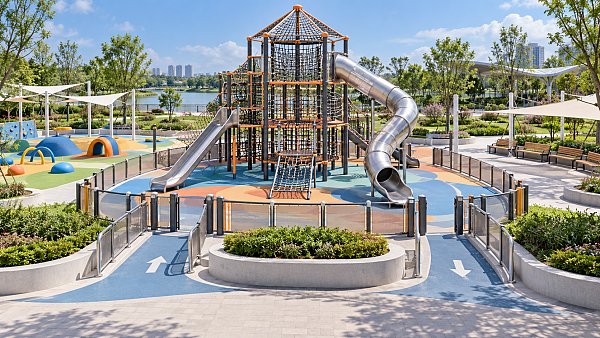
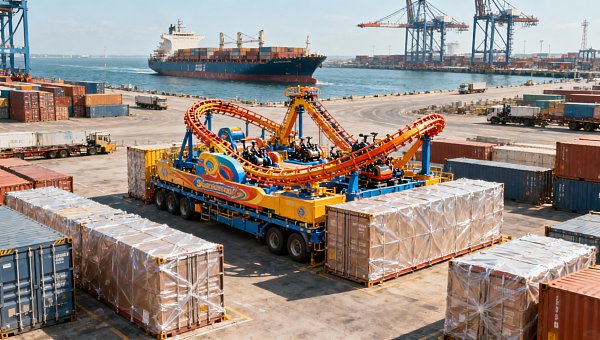
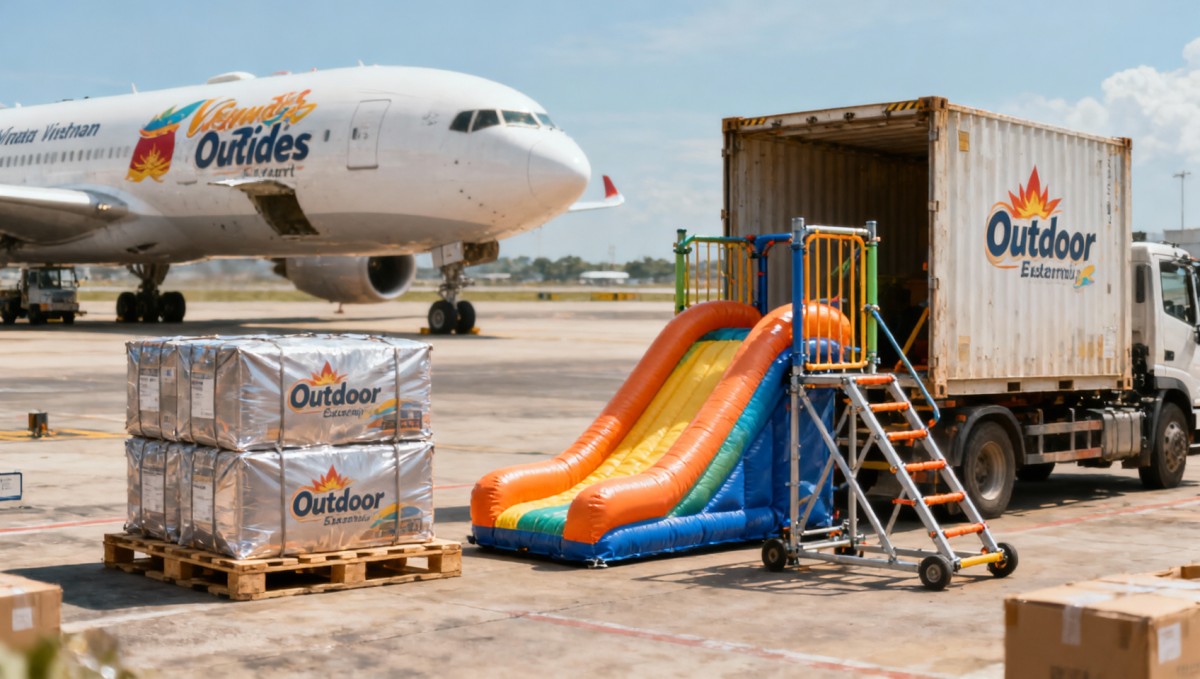
The same summary indicates that this supply chain disruption is expected to materially affect the delivery timeliness of lightweight Outdoor Rides that typically depend on air transport, including inflatable slides, portable climbing frames, and modular children’s play facilities.
It is also confirmed that cargo space premiums at Ho Chi Minh City and Hanoi airports have reached 35%, and some freight forwarders have suspended acceptance of urgent delivery orders. For buyers in Europe and the United States, the immediate implication is the need to reassess Q3 project schedules and possible sea freight alternatives.
Where the pressure is likely to surface first
Exporters relying on air delivery windows
From an industry perspective, exporters of lightweight Outdoor Rides may be the first group to feel the impact because their shipment model often depends on predictable airport capacity and fast transit. The main pressure point is not only transit time, but also whether committed delivery windows, booking arrangements, and customer acceptance milestones can still be met under tighter cargo conditions.
What deserves closer attention is the documentary and contractual side of delivery. Where orders were structured around urgent dispatch, exporters may need to review shipment terms, delivery notices, booking confirmations, and any time-linked commercial commitments that could be affected by reduced air cargo availability.
Freight service providers facing changing acceptance rules
For freight forwarders and related supply chain service providers, the reported suspension of some urgent cargo intake suggests a shift in actual operating conditions rather than a purely theoretical risk. In practice, this can affect quotation validity, booking priorities, cargo acceptance timing, and route planning for shipments moving through Ho Chi Minh City or Hanoi.
Analysis shows that service providers should pay close attention to current carrier acceptance criteria, booking lead times, and any revised operating instructions that alter how urgent or high-priority cargo is handled. Even without a newly published regulation in the provided information, the execution environment itself is changing and may function like a temporary operational constraint.
Overseas buyers adjusting procurement and project sequencing
European and U.S. buyers may face the issue from the procurement side rather than the transport side. If Q3 projects were built around air-delivered components, then project sequencing, installation timing, and downstream customer commitments may all need to be revisited.
Observably, buyers should not treat this only as a freight cost issue. The more immediate concern may be whether procurement files, delivery schedules, and internal approval timelines still match current logistics conditions. Where sea freight is being considered as an alternative, the operational assumptions behind that switch require review rather than automatic substitution.
Practical points companies should monitor now
Review whether delivery promises still match transport reality
Analysis shows that companies should first compare existing order commitments against the latest air cargo constraints. If lead times for Outdoor Rides exports may extend to six to eight weeks, then promised dispatch dates, customer milestones, and internal production release plans may need to be checked against actual booking feasibility.
Track any official wording and operating updates
The provided information confirms a request for supply coordination, but it does not provide detailed implementation measures or a finalized operating framework. It is more appropriate to monitor follow-up statements, airport operating notices, and any updated execution guidance that may affect cargo handling, scheduling, or acceptance conditions.
Recheck documents tied to urgent or seasonal orders
For orders linked to seasonal sales windows or project openings, companies should closely examine shipment documents, technical files, customer delivery instructions, and procurement schedules to identify where timing assumptions may no longer hold. This is especially relevant where air shipment had been treated as a default delivery path.
Assess substitution plans without assuming equal execution risk
The event summary indicates that sea freight alternatives are being reconsidered by buyers. Observably, companies should treat that option as a planning adjustment rather than a simple replacement. Any switch in mode may affect lead-time planning, packaging readiness, downstream installation coordination, and after-sales timing, all of which require case-by-case review.
Why this should be read as an execution signal
Analysis shows that this development is best understood less as a standalone transport incident and more as an execution signal affecting trade performance under constrained logistics conditions. The confirmed facts do not establish a new formal trade rule, certification rule, or published regulatory standard in themselves. However, they do indicate that actual delivery conditions for certain export categories can tighten quickly when airport operating capacity is disrupted.
What deserves closer attention is whether this temporary supply-side stress leads to follow-on changes in operating practice, buyer requirements, freight acceptance standards, or tender scheduling assumptions. For the Outdoor Rides segment, the immediate issue is practical enforceability of delivery plans rather than a completed policy reshaping.
How the market is most reasonably reading it
At this stage, the development is more appropriately understood as a live operational disruption with clear implications for export timing, procurement coordination, and logistics planning. It does not yet support broader conclusions beyond the facts provided, but it does justify closer monitoring by exporters, freight intermediaries, and overseas buyers with Q3 exposure.
A neutral reading is that the key change is already visible in execution conditions: tighter airport cargo capacity, higher premiums, and reduced acceptance of urgent orders. Whether this remains a short-term logistics constraint or develops into a wider rule-related adjustment still requires observation.
Basis of this article and what still needs verification
This article is generated based on the user-provided news title, event timing field, and event summary. The specific official source link was not provided in the input, so any subsequent interpretation should continue to be verified against authoritative materials where available.
For this type of development, commonly relevant source categories may include official notices, regulator releases, customs or trade authority information, industry association updates, standard-setting documents, and reporting from authoritative media. Further observation is still needed on later policy detail, operational interpretation, buyer-side requirement changes, tender document adjustments, industry feedback, and actual implementation by companies.
Search News
Hot Articles
Popular Tags
Need ExpertConsultation?
Connect with our specialized leisureengineering team for procurementstrategies.
Recommended News
 Oct 26, 2026Aurora Park Phase One Opens at Former SeaWorld Site in OhioAurora Park at Ohio’s former SeaWorld site is scheduled to open phase one on October 25, 2026. Discover its restored dock, pavilion and new public recreation spaces.● Theme Park Strategist
 Oct 25, 2026Six Flags to Add Seat Belts to Goliath and Eight Other Coasters to Improve SafetySix Flags reportedly plans to add seat belts to Goliath and eight other coasters. Explore the planned safety upgrades, ride closures and potential retrofit implications.● Theme Park Strategist
 Oct 23, 2026Comcast Q3 Earnings: Universal Theme Park Revenue Falls 4.4% to $2.6 BillionComcast Q3 earnings: Universal theme park revenue reportedly fell 4.4% to $2.6 billion. Explore what ticket discounts and pricing pressure could mean for operators, ticket sellers and suppliers.● Theme Park Strategist
 Oct 21, 2026IAAPA Launches Insurance Solution for North American Attractions IndustryExplore IAAPA Insurance Solution, a dedicated insurance and risk management offering for North American attractions operators, and discover what it could mean for your business.● Theme Park Strategist
 Oct 20, 2026Energylandia Announces Rokan, Set to Be Europe’s Tallest and Longest B&M Wing CoasterDiscover Energylandia’s Rokan, set to become Europe’s tallest and longest B&M wing coaster. Explore the 62-metre thrill ride planned for spring 2027 in the new Volana themed area.● Theme Park Strategist
 Oct 23, 2026Can Amusement Ride Suppliers Meet Safety Rules Without On-Site Audits?Can a supplier pass amusement safety compliance without on-site audit? Explore accepted evidence, remote checks, and required inspections to make safer sourcing decisions.● Theme Park Strategist
 Oct 03, 2026How to Select Leisure Park Equipment for Safe, High-Throughput Visitor AreasLeisure park equipment selection guide for safe, high-throughput venues—explore capacity, supervision, durability, accessibility, and supplier criteria.● Theme Park Strategist
 Sep 18, 2026What Drives Animatronic Dinosaur Manufacturer Prices for Theme Park Projects?Animatronic dinosaurs manufacturer price guide: compare motion, materials, controls, installation, and lifecycle costs to plan a durable theme park attraction.● Theme Park Strategist
 Sep 06, 2026Do Amusement Ride Safety Compliance Requirements Change Every Year?Do amusement safety compliance requirements change annually? Learn what really changes, from standards and inspections to permits, upgrades, and local approvals.● Theme Park Strategist
 Sep 02, 2026How Long Does It Take to Receive Full Safety Documents From an OEM?How long does it take to get full safety documentation from OEM partners? Discover realistic timelines, common delays, and practical steps to secure compliant files faster.● Theme Park Strategist
 Sep 03, 2026Designing Adventure Park Safety Systems for Zip Lines, Ropes Courses, and Daily InspectionsAdventure park safety systems: learn how to design safer zip lines and ropes courses with daily inspections, defect controls, rescue readiness, and staff training.● Theme Park Strategist
 Aug 22, 2026What to Look for When Choosing Three Seat Jet Skis for Rental or Resort UseThree seat jet skis for rental or resort use should balance stability, safety, maintenance, and guest comfort. Learn how to choose models that boost uptime and guest satisfaction.● Theme Park Strategist
 Aug 17, 2026What Parts Matter Most in a Roller Coaster and How Do They Affect Ride Safety?Roller coaster parts determine ride safety more than most riders realize. Explore how tracks, restraints, brakes, wheels, and control systems work together to protect every ride.● Theme Park Strategist
 Aug 15, 20262026 China Sports Expo Sees 45.74% More Overseas Pre-registered Buyers as POB Expands Procurement Matching2026 China Sports Expo boosts overseas pre-registered buyers by 45.74% as POB expands procurement matching for fitness, outdoor, and venue suppliers.● Theme Park Strategist
 Aug 14, 2026What Should Buyers Check Before Choosing a Flying Chair Ride Exporter?Flying chair ride exporter buyers should check safety, structure, export support, and spare parts before purchase to reduce risk and choose a reliable supplier.● Theme Park Strategist
 Aug 04, 2026EU Issues EN 1176-1:2026 for Playground SafetyEU Issues EN 1176-1:2026 for Playground Safety: learn how the new standard impacts Outdoor Rides, CE certification, inventory checks, and EU compliance before March 2027.● Theme Park Strategist
 Aug 03, 2026CPSC Adopts ASTM F1487-26 for Imported Outdoor RidesOutdoor Rides face a major U.S. compliance shift as CPSC adopts ASTM F1487-26. Learn the new certification, testing, and customs risks before November 1, 2026.● Theme Park Strategist
 Jul 26, 2026Revised EN 1176:2026 Triggers Re-Certification for Outdoor RidesOutdoor Rides face immediate EN 1176:2026 re-certification for new CE applications. Learn how testing, documentation, and EU market access rules now affect exports and delivery plans.● Theme Park Strategist
 Jul 21, 2026CPSC Recall Flags Structural Risk in Outdoor RidesCPSC recall flags structural risk in outdoor rides: learn how ASTM F1487-23 failures affect importers, distributors, and compliance teams across the U.S., Canada, and Australia.● Theme Park Strategist
 Jul 19, 2026How to Choose Outdoor Fitness Equipment for Parks Based on Users, Space, and BudgetOutdoor fitness equipment for parks: learn how to choose the right mix based on users, space, and budget to improve safety, usage, and long-term value.● Theme Park Strategist
 Jul 15, 2026Ocean Freight Spike Pressures Outdoor Rides ExportsOcean Freight Spike Pressures Outdoor Rides Exports as Shanghai-Rotterdam rates surge 42%. See how rising freight costs, delays, and rerouting risks could reshape Europe-bound delivery plans.● Theme Park Strategist
 Jul 14, 2026EN 1176 Revision Takes Effect for Outdoor Ride Weld TestingEN 1176 revision takes effect for outdoor ride weld testing from Sept 1, 2026. Learn ISO 5817 level B, third-party NDT report rules, and key EU compliance steps.● Theme Park Strategist
 Jul 12, 2026Vietnam Requires AI Anti-Collision Systems for Imported Outdoor RidesVietnam Requires AI Anti-Collision Systems for Imported Outdoor Rides from Sept. 15, 2026. Learn compliance rules, VAST certification needs, and how importers can avoid delays.● Theme Park Strategist
 Jul 11, 2026Vietnam Tightens Rules for Imported Outdoor RidesVietnam Tightens Rules for Imported Outdoor Rides: learn how Vietnam’s 2026 compliance update adds AI anti-collision, Vietnamese logs, and local maintenance duties for importers and manufacturers.● Theme Park Strategist