On June 1, 2026, a new maritime confrontation between Iran and Israel led to temporary navigation controls in the Strait of Hormuz, affecting sea freight routes used by outdoor ride equipment and steel-structure component shipments from China to Saudi Arabia and the United Arab Emirates. The development is particularly relevant to outdoor amusement equipment exporters, project contractors, distributors, and logistics service providers because it directly changes delivery schedules on a key shipping corridor.
Event Overview
According to the available information, the latest maritime confrontation between Iran and Israel occurred on June 1, 2026. On June 2, the International Maritime Organization, together with the maritime authorities of Oman and the United Arab Emirates, announced temporary navigation controls in the Strait of Hormuz.
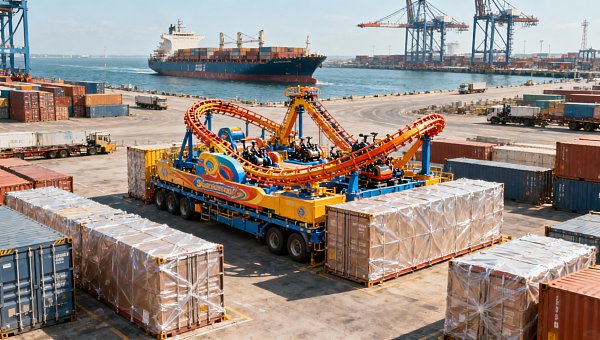
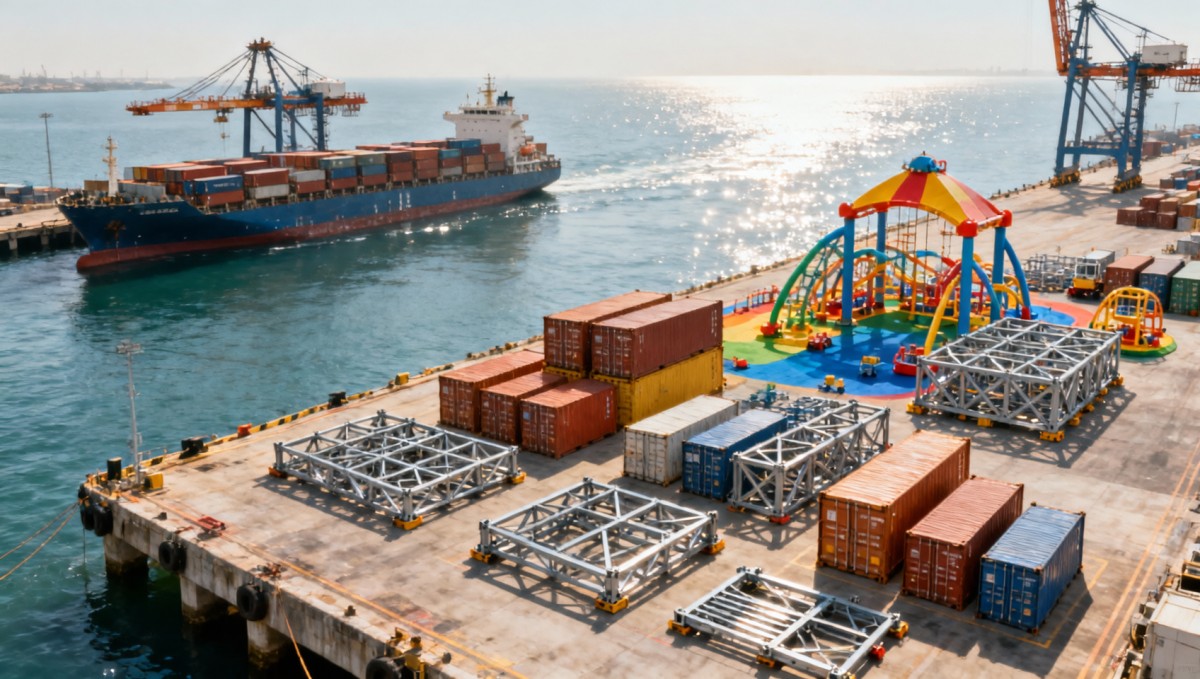
The announced measures have led to the suspension of passage on several main routes. As a result, sea shipments of complete outdoor ride equipment and steel-structure components from Guangdong and Zhejiang in China to Saudi Arabia and the United Arab Emirates are facing average delays of 12 to 15 days. Some shipping companies have also suspended new bookings on affected routes.
Which Industry Segments Are Affected
Direct Exporters of Outdoor Ride Equipment
Exporters shipping complete outdoor ride equipment from China to Saudi Arabia and the United Arab Emirates are directly affected because their cargo relies on maritime routes now subject to temporary controls. The main impact is delivery delay, especially for orders already in transit or waiting for vessel space.
From an industry perspective, the pressure on exporters is not limited to transport timing. It may also affect delivery commitments, customer communication, and coordination with installation or project handover schedules in destination markets.
Manufacturers of Steel-Structure Components
Manufacturers supplying steel-structure components for outdoor ride projects may face delayed outbound shipments if their products are routed through the affected sea lanes. Since the available information specifically mentions steel-structure components, this segment should pay close attention to shipping schedules and booking availability.
Analysis shows that the most immediate concern for these manufacturers is not production capacity itself, but whether completed goods can leave ports on time and whether downstream project timelines can absorb an additional 12 to 15 days in sea transit.
Project Buyers and Channel Distributors in Saudi Arabia and the UAE
Importers, project buyers, and channel distributors in Saudi Arabia and the United Arab Emirates may experience later-than-expected arrivals of outdoor ride equipment and related components. The impact is mainly reflected in project delivery planning, inventory availability, and coordination with local installation schedules.
Observably, companies with projects tied to fixed opening dates or phased construction schedules need to review whether the delayed arrival of complete equipment or steel structures will affect subsequent installation and acceptance procedures.
Shipping and Supply Chain Service Providers
Freight forwarders, shipping agents, and supply chain service providers are affected because some main routes have suspended passage and some carriers have paused new bookings. This may require more frequent communication with exporters, consignees, and carriers regarding route status and booking feasibility.
What currently deserves more attention is the gap between official navigation control announcements and actual cargo execution. Even when cargo is ready, booking availability and vessel routing may change according to carrier decisions.
What Companies Should Watch and How to Respond
Track Official Updates on Navigation Controls
Companies should continue monitoring official statements from the International Maritime Organization and relevant maritime authorities in Oman and the United Arab Emirates. The current delay information is linked to temporary navigation controls, so any adjustment to the controls may directly affect shipping schedules.
It is more appropriate to understand the current situation as a logistics-risk event tied to a specific maritime corridor, rather than as a general disruption to all export activity.
Review Affected Orders by Destination and Cargo Type
Exporters and project suppliers should identify which orders are bound for Saudi Arabia and the United Arab Emirates and whether they include complete outdoor ride equipment or steel-structure components. These are the shipment categories specifically mentioned in the current information.
From an industry perspective, separating affected orders from unaffected orders is important. Companies should avoid treating all shipments equally and should instead focus on cargo that depends on routes currently subject to passage suspension or booking restrictions.
Communicate Delivery Adjustments Early
For shipments already scheduled or awaiting booking, companies should communicate expected delays of 12 to 15 days to buyers, distributors, and project partners where applicable. This is especially important when installation, site preparation, or project acceptance depends on cargo arrival.
Analysis shows that early communication may reduce disputes caused by unclear timelines, particularly when some carriers have already paused new bookings on affected routes.
Prepare Contingency Plans for Booking and Scheduling
Companies should work with freight forwarders and shipping providers to confirm whether existing bookings remain valid and whether new bookings are still available. If a carrier has paused acceptance of new cargo, exporters may need to reassess shipment timing and project coordination.
Observably, the most practical response at this stage is to maintain updated shipment records, confirm carrier status, and align delivery expectations with destination partners before committing to revised project schedules.
Editor’s View / Industry Observation
From an industry perspective, this event is already producing measurable logistics consequences for outdoor ride equipment and steel-structure component shipments from Guangdong and Zhejiang to Saudi Arabia and the United Arab Emirates. The reported 12 to 15 day delay indicates that the issue has moved beyond a simple risk signal for affected cargo.
At the same time, it is more appropriate to understand this as a route-specific and policy-driven disruption rather than a confirmed long-term change in trade conditions. The key uncertainty remains how long the temporary navigation controls will continue and how shipping companies will handle bookings during the control period.
What currently deserves more attention is not only the delay itself, but the chain reaction it may create for project planning, installation timing, customer delivery commitments, and logistics cost assessment in the outdoor ride equipment sector.
Conclusion
The temporary navigation controls in the Strait of Hormuz have created a direct shipping delay for outdoor ride equipment and steel-structure components moving from China to Saudi Arabia and the United Arab Emirates. For exporters, manufacturers, distributors, and logistics providers, the industry significance lies in delivery planning and route execution rather than in product demand itself.
Observably, the current information should be read as a concrete logistics disruption with ongoing uncertainty. Companies are better served by closely tracking official updates, identifying affected orders, and preparing practical communication and scheduling responses.
Information Source Statement
- Main sources: International Maritime Organization announcement, Oman maritime authority, United Arab Emirates maritime authority, and the provided event summary dated June 1 to June 2, 2026.
- Items requiring continued observation: the duration of the temporary navigation controls in the Strait of Hormuz, the reopening status of affected main routes, and whether shipping companies resume new bookings for cargo bound for Saudi Arabia and the United Arab Emirates.