EU EN 1176-1:2026 Enforcement Countdown for Outdoor Rides
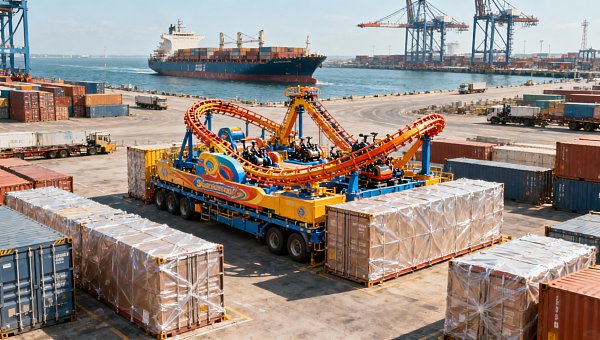
As of , the European Committee for Standardization (CEN) has confirmed the mandatory enforcement of EN 1176-1:2026 — Playground Equipment and Surfacing — Part 1: General Safety Requirements — effective 15 June 2026. This regulatory shift introduces new technical, chemical, and labeling obligations that directly impact global exporters of outdoor amusement rides, particularly those based in China. The accelerated compliance window — requiring CE conformity declarations issued by Notified Bodies (NBs) within 72 hours prior to shipment — signals a tightening of market access discipline across the EU’s import control framework.
Event Overview
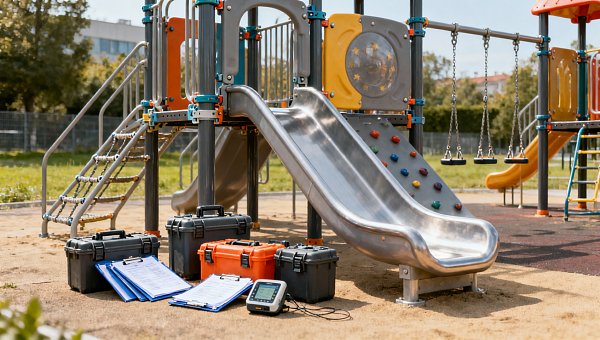
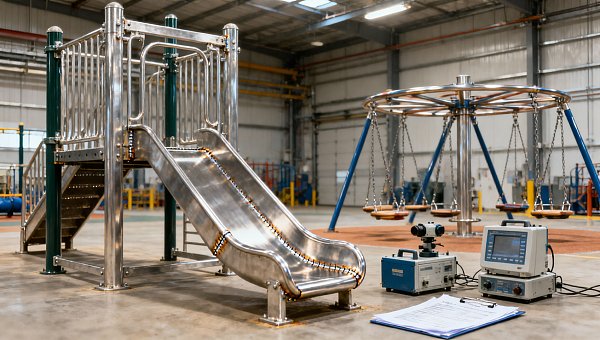
The European Committee for Standardization (CEN) officially confirmed on 20 May 2026 that EN 1176-1:2026 will become mandatory on 15 June 2026. The standard introduces three key requirements: (1) dynamic load impact testing under real-world operational conditions; (2) migration limits for hazardous substances from recycled materials used in structural or contact components; and (3) multilingual installation warning labels — covering at least English, French, German, and one additional official EU language relevant to the destination member state. Exporters of outdoor rides must obtain a CE conformity declaration issued by an EU Notified Body no later than 72 hours before delivery to an EU port; failure to do so may result in customs detention, refusal of entry, or distributor-initiated returns.
Industries Affected
Direct export trading enterprises: These firms face immediate commercial risk due to the 72-hour pre-arrival certification deadline. Unlike previous iterations, EN 1176-1:2026 requires NB-issued declarations tied to specific production batches and shipping consignments — not generic product certifications. Delays in NB review, documentation mismatches, or insufficient test reports can trigger port hold-ups, contract penalties, and reputational damage with EU distributors.
Raw material procurement enterprises: Suppliers of recycled polymers, coated metals, and surface infill materials (e.g., EPDM granules, rubber mulch) must now provide full chemical migration test data compliant with EN 1176-1:2026 Annex D. This includes third-party verification of heavy metals (Pb, Cd, Cr(VI)), PAHs, and phthalates under simulated child-contact conditions. Procurement contracts increasingly require upfront chemical compliance warranties — shifting liability upstream.
Manufacturing enterprises: Factories producing outdoor rides must revise mechanical design validation protocols to include dynamic impact simulations (e.g., swing arm fatigue, slide deceleration force mapping) and integrate multilingual label management into final assembly workflows. Internal quality checkpoints now need traceability to NB test reports — meaning production line records must align precisely with declared test parameters and batch IDs.
Supply chain service providers: Certification consultants, logistics coordinators, and NB liaison agents are seeing demand surge for ‘fast-track’ conformity support — especially for urgent shipments nearing the 15 June deadline. However, NB capacity remains constrained; lead times for impact testing alone average 14–21 days. Providers offering integrated documentation + test scheduling + label compliance auditing are gaining competitive advantage.
Key Focus Areas and Recommended Actions
Verify NB capacity and booking windows immediately
Notified Bodies authorized for EN 1176-1:2026 testing — such as TÜV Rheinland, SGS, and Bureau Veritas — report near-full slots through Q3 2026. Exporters should confirm NB availability, submit pre-test documentation packages (including CAD files, material specs, and draft labels), and secure test scheduling at least 25 days prior to planned shipment.
Conduct gap analysis on recycled content and labeling systems
Manufacturers must audit all recycled-material suppliers against EN 1176-1:2026 Annex D migration thresholds and update internal labeling SOPs to ensure printed warnings meet font size, contrast, language sequence, and weathering resistance requirements (EN ISO 20743 & EN ISO 12944-6). Digital label generation tools with EU-language templates are now considered essential infrastructure.
Implement batch-level conformity traceability
CE declarations under EN 1176-1:2026 are no longer product-level but consignment-specific. Enterprises must upgrade ERP or MES systems to log test report IDs, NB certificate numbers, and production batch dates per outbound container — enabling rapid retrieval during customs inspection or post-market surveillance.
Editorial Perspective / Industry Observation
Analysis shows this is not merely a technical update but a strategic recalibration of EU market gatekeeping. The 72-hour rule effectively transforms conformity assessment from a pre-market activity into a just-in-time logistics dependency — exposing systemic fragility in cross-border certification coordination. Observably, Chinese manufacturers historically reliant on ‘certification brokers’ rather than in-house regulatory competence are disproportionately exposed. From industry perspective, the shift favors vertically integrated exporters who control both material sourcing and final assembly — as only they can reliably synchronize chemical compliance, mechanical validation, and multilingual labeling across a single value chain. Current more critical concern is not whether the standard is technically feasible, but whether fragmented supply chains can achieve synchronized readiness before 15 June.
Conclusion
The enforcement of EN 1176-1:2026 marks a watershed moment for outdoor ride exports to the EU — moving beyond static safety checks toward dynamic, material-aware, and time-bound compliance. It reflects a broader trend where regional regulatory regimes increasingly treat product conformity as a live, auditable process — not a one-time stamp. For affected enterprises, preparedness is no longer measured in months, but in coordinated days.
Source Attribution
Official confirmation issued by the European Committee for Standardization (CEN) on 20 May 2026 (CEN/TC 136/N1927); referenced standards: EN 1176-1:2026, EN ISO 12944-6:2018, EN ISO 20743:2021. Note: NB designation status for EN 1176-1:2026 remains subject to ongoing updates via the NANDO database — continued monitoring advised.
Search News
Hot Articles
- Restaurant FurnitureFast-Casual Restaurant Interiors: Design Choices That Improve Speed and Guest FlowOct 04, 2026
- Outdoor RidesHow to Select Leisure Park Equipment for Safe, High-Throughput Visitor AreasOct 03, 2026
- Fashion & Gem JewelryDiamond Tester Wholesale: How to Vet Accuracy, Calibration, and MOQ Before OrderingOct 02, 2026
Popular Tags
Need ExpertConsultation?
Connect with our specialized leisureengineering team for procurementstrategies.
Recommended News
 Oct 03, 2026How to Select Leisure Park Equipment for Safe, High-Throughput Visitor AreasLeisure park equipment selection guide for safe, high-throughput venues—explore capacity, supervision, durability, accessibility, and supplier criteria.● Theme Park Strategist
 Sep 18, 2026What Drives Animatronic Dinosaur Manufacturer Prices for Theme Park Projects?Animatronic dinosaurs manufacturer price guide: compare motion, materials, controls, installation, and lifecycle costs to plan a durable theme park attraction.● Theme Park Strategist
 Sep 06, 2026Do Amusement Ride Safety Compliance Requirements Change Every Year?Do amusement safety compliance requirements change annually? Learn what really changes, from standards and inspections to permits, upgrades, and local approvals.● Theme Park Strategist
 Sep 02, 2026How Long Does It Take to Receive Full Safety Documents From an OEM?How long does it take to get full safety documentation from OEM partners? Discover realistic timelines, common delays, and practical steps to secure compliant files faster.● Theme Park Strategist
 Sep 03, 2026Designing Adventure Park Safety Systems for Zip Lines, Ropes Courses, and Daily InspectionsAdventure park safety systems: learn how to design safer zip lines and ropes courses with daily inspections, defect controls, rescue readiness, and staff training.● Theme Park Strategist
 Aug 22, 2026What to Look for When Choosing Three Seat Jet Skis for Rental or Resort UseThree seat jet skis for rental or resort use should balance stability, safety, maintenance, and guest comfort. Learn how to choose models that boost uptime and guest satisfaction.● Theme Park Strategist
 Aug 17, 2026What Parts Matter Most in a Roller Coaster and How Do They Affect Ride Safety?Roller coaster parts determine ride safety more than most riders realize. Explore how tracks, restraints, brakes, wheels, and control systems work together to protect every ride.● Theme Park Strategist
 Aug 15, 20262026 China Sports Expo Sees 45.74% More Overseas Pre-registered Buyers as POB Expands Procurement Matching2026 China Sports Expo boosts overseas pre-registered buyers by 45.74% as POB expands procurement matching for fitness, outdoor, and venue suppliers.● Theme Park Strategist
 Aug 14, 2026What Should Buyers Check Before Choosing a Flying Chair Ride Exporter?Flying chair ride exporter buyers should check safety, structure, export support, and spare parts before purchase to reduce risk and choose a reliable supplier.● Theme Park Strategist
 Aug 04, 2026EU Issues EN 1176-1:2026 for Playground SafetyEU Issues EN 1176-1:2026 for Playground Safety: learn how the new standard impacts Outdoor Rides, CE certification, inventory checks, and EU compliance before March 2027.● Theme Park Strategist
 Aug 03, 2026CPSC Adopts ASTM F1487-26 for Imported Outdoor RidesOutdoor Rides face a major U.S. compliance shift as CPSC adopts ASTM F1487-26. Learn the new certification, testing, and customs risks before November 1, 2026.● Theme Park Strategist
 Jul 26, 2026Revised EN 1176:2026 Triggers Re-Certification for Outdoor RidesOutdoor Rides face immediate EN 1176:2026 re-certification for new CE applications. Learn how testing, documentation, and EU market access rules now affect exports and delivery plans.● Theme Park Strategist
 Jul 21, 2026CPSC Recall Flags Structural Risk in Outdoor RidesCPSC recall flags structural risk in outdoor rides: learn how ASTM F1487-23 failures affect importers, distributors, and compliance teams across the U.S., Canada, and Australia.● Theme Park Strategist
 Jul 19, 2026How to Choose Outdoor Fitness Equipment for Parks Based on Users, Space, and BudgetOutdoor fitness equipment for parks: learn how to choose the right mix based on users, space, and budget to improve safety, usage, and long-term value.● Theme Park Strategist
 Jul 15, 2026Ocean Freight Spike Pressures Outdoor Rides ExportsOcean Freight Spike Pressures Outdoor Rides Exports as Shanghai-Rotterdam rates surge 42%. See how rising freight costs, delays, and rerouting risks could reshape Europe-bound delivery plans.● Theme Park Strategist
 Jul 14, 2026EN 1176 Revision Takes Effect for Outdoor Ride Weld TestingEN 1176 revision takes effect for outdoor ride weld testing from Sept 1, 2026. Learn ISO 5817 level B, third-party NDT report rules, and key EU compliance steps.● Theme Park Strategist
 Jul 12, 2026Vietnam Requires AI Anti-Collision Systems for Imported Outdoor RidesVietnam Requires AI Anti-Collision Systems for Imported Outdoor Rides from Sept. 15, 2026. Learn compliance rules, VAST certification needs, and how importers can avoid delays.● Theme Park Strategist
 Jul 11, 2026Vietnam Tightens Rules for Imported Outdoor RidesVietnam Tightens Rules for Imported Outdoor Rides: learn how Vietnam’s 2026 compliance update adds AI anti-collision, Vietnamese logs, and local maintenance duties for importers and manufacturers.● Theme Park Strategist
 Jul 09, 2026How to Evaluate a Lazy River Equipment Supplier for Safety, Flow Design, and MaintenanceLazy river equipment supplier selection affects safety, flow design, and maintenance costs. Learn what to compare, what to ask, and how to choose a reliable partner.● Theme Park Strategist
 Jul 08, 2026RCEP Update Cuts ASEAN Tariffs to Zero for Outdoor RidesRCEP update cuts ASEAN tariffs to zero for outdoor rides from China. Learn how FSC-CoC, PEFC traceability, and e-CO compliance affect exports, sourcing, and buyer decisions.● Theme Park Strategist
 Jul 07, 2026RCEP Guide Adds Dual Wood Traceability for Outdoor RidesOutdoor Rides exporters face a new RCEP traceability rule: dual FSC-CoC and PEFC-STS 2023 codes for wood components. See what changes before Oct. 1, 2026.● Theme Park Strategist
 Jul 06, 2026Vietnam Tightens RCEP Rules for Wooden Ride PartsVietnam Tightens RCEP Rules for Wooden Ride Parts: learn how FSC Chain-of-Custody and QR code requirements now affect outdoor rides, RCEP imports, and shipment compliance.● Theme Park Strategist
 Jul 06, 2026How to Evaluate a Bumper Cars on Ice Manufacturer for Safety, Capacity, and ROIBumper cars on ice manufacturer selection starts with safety, capacity, and ROI. Learn how to compare suppliers, reduce risk, and choose a partner built for long-term commercial success.● Theme Park Strategist
 Jul 04, 2026Electric Drift Bumper Cars vs Traditional Bumper Cars: Which Fits Your Venue Better?Electric drift bumper cars or traditional bumper cars? Compare installation, safety, maintenance, guest appeal, and ROI to choose the best fit for your venue.● Theme Park Strategist