Amusement Safety Compliance in the USA: ASTM, CPSC, and State Approval Requirements
Why does amusement safety compliance USA require more than one checklist?
Amusement safety compliance USA is rarely a single approval step.
For most ride projects, technical review spans design rules, public safety expectations, and state-level operating permissions.
That is why ASTM, CPSC, and state agencies appear together so often.
They do not always play the same role, and confusion usually starts there.
In practical terms, ASTM standards often shape engineering and inspection criteria.
CPSC guidance influences incident reporting, hazard awareness, and consumer safety expectations.
State approval requirements then determine whether a ride can actually be installed, tested, and opened.
For commercial experience sectors tracked by GCT, this layered structure matters well beyond theme parks.
It also affects family entertainment venues, mixed-use resorts, and location-based leisure projects.
A technically strong product can still face delays if jurisdictional documents are incomplete.
A complete filing can also fail if risk analysis does not match the ride’s actual operating profile.
So the better question is not whether compliance exists.
It is how each compliance layer affects review timing, liability exposure, and launch readiness.
What do ASTM, CPSC, and state approval each really cover?
These terms are often grouped together, but their functions differ.
A clear distinction makes amusement safety compliance USA easier to evaluate.
ASTM usually provides the technical backbone.
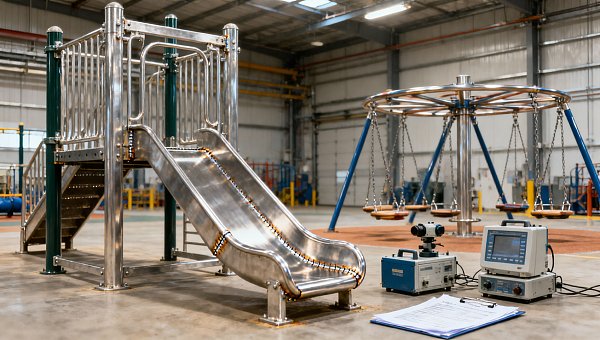
For example, reviewers may expect evidence of structural calculations, restraint analysis, control system logic, and maintenance instructions.
CPSC is different.
It is not simply a substitute for engineering approval.
More often, it shapes the broader safety context, especially when injury patterns or foreseeable misuse need attention.
State authorities then decide what must be filed before commissioning.
Some states require stamped drawings and detailed manuals.
Others focus heavily on annual inspections, insurance evidence, and in-service modifications.
In short, amusement safety compliance USA is a combined technical and regulatory exercise.
When does a ride become harder to approve than expected?
The difficult cases are usually not caused by one missing signature.
They become difficult because the design story, operating story, and approval story do not align.
In actual review work, several patterns appear again and again.
- The ride was designed to one ASTM revision, but submitted under another expectation.
- Hazard analysis exists, yet operator procedures do not address the same failure scenarios.
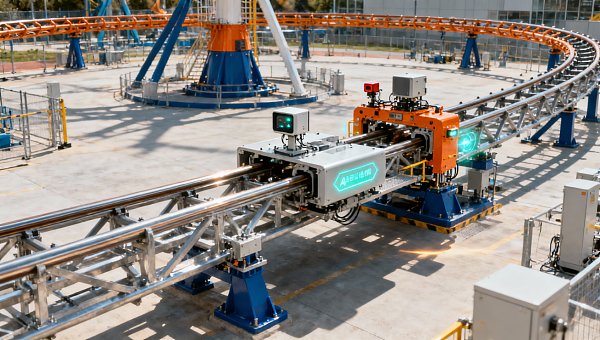
- Control systems were updated after factory testing, without clear validation records.
- State filing assumes a standard installation, but the site introduces custom foundations or envelope constraints.
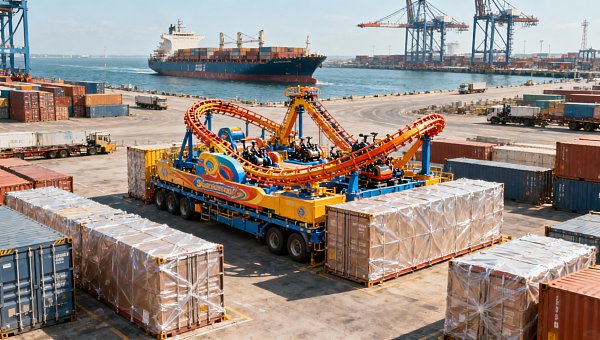
- Imported components have quality records, but not in the format local reviewers expect.
That last point matters for global sourcing programs.
Across GCT-covered commercial sectors, cross-border projects often succeed or fail on documentation discipline.
A component may be technically acceptable, yet still delay approval if traceability is weak.
More common than many expect is the issue of scope creep.
A ride starts as an off-the-shelf model.
Then branding, theming, enclosure changes, or throughput targets alter loads and evacuation assumptions.
At that stage, amusement safety compliance USA should be reassessed, not assumed.
How should documentation be reviewed before state submission?
A useful review starts with consistency, not volume.
Large binders do not help if core records contradict each other.
Before submission, it helps to check whether the technical file answers five practical questions.
This kind of review reduces avoidable back-and-forth with inspectors.
It also improves comparability across suppliers and ride models.
Where sourcing decisions involve multiple countries, document normalization becomes especially valuable.
That is one reason compliance intelligence remains central in GCT-style market evaluation.
The issue is not only product quality.
It is whether quality can be demonstrated in a jurisdiction-ready form.
Are state approval requirements mostly similar, or do they change the strategy?
They can change the strategy more than expected.
The United States does not apply one universal amusement ride approval system.
Some jurisdictions are highly structured, with formal registration cycles and prescribed inspection paths.
Others may leave more responsibility with operators, insurers, or third-party inspectors.
That means amusement safety compliance USA should be planned around the target state from the beginning.
A few practical differences usually affect timing:
- Whether sealed engineering documents are required before fabrication or before installation.
- Whether annual permits depend on in-state inspection windows.
- How temporary events, mobile rides, or seasonal setups are classified.
- How major modifications trigger reapproval, retesting, or new filings.
- How incident reporting thresholds are defined and enforced.
This is where many timelines slip.
Teams often estimate manufacturing duration carefully, but underestimate permit sequencing.
A ride can be mechanically complete and still unable to open on schedule.
For technical review, the smarter approach is jurisdiction-first planning.
Define the state pathway early, then map ASTM evidence and CPSC-related safety logic into that pathway.
What are the most common mistakes in amusement safety compliance USA?
The biggest mistake is treating compliance as a late-stage paperwork task.
Once that happens, technical inconsistencies become expensive to fix.
Several other mistakes appear frequently.
- Assuming ASTM conformity alone guarantees state approval.
- Using generic operation manuals that ignore site-specific evacuation conditions.
- Overlooking control software revisions after acceptance testing.
- Failing to document component substitutions during sourcing or maintenance.
- Underestimating the review impact of themed cladding, rider envelope changes, or accessibility adjustments.
Another common misunderstanding involves CPSC references.
Some teams treat CPSC material as background reading only.
In reality, incident trends and public hazard expectations can shape how a reviewer views foreseeable risk.
That does not replace engineering analysis, but it influences how complete the analysis needs to feel.
Where multiple vendors contribute to one installation, interface risk is another weak point.
If ride structure, controls, foundations, and themed elements are split across contracts, the approval file needs one coherent owner.
What is the best next step before launch or market entry?
The strongest next step is a readiness review built around evidence, not assumptions.
That review should confirm the governing ASTM basis, the target state pathway, and the operating risks that need clear control.
It should also test whether design records, inspection records, and operating documents tell the same story.
For projects influenced by global sourcing, it helps to standardize certificates, revision tracking, and supplier traceability early.
That is especially relevant in commercial environments where guest experience, brand reputation, and operational uptime are tightly linked.
Amusement safety compliance USA works best when engineering, documentation, and approval planning move together.
If one part falls behind, the entire launch sequence becomes harder to defend.
A practical closing move is to build a state-specific compliance matrix.
List applicable ASTM references, required submission items, inspection triggers, change-control rules, and unresolved technical questions.
That single step often reveals approval risk earlier than a full formal audit.
It also creates a cleaner basis for comparing ride options, suppliers, and launch schedules with confidence.
Search News
Hot Articles
- Jewelry Packaging & DisplayHow to Evaluate a Luxury Retail Packaging Supplier for Premium Brand ConsistencySep 20, 2026
- Commercial KitchenHow to Select a Spiral Dough Mixer for Bakery Batch Size and Dough HydrationSep 19, 2026
- Outdoor RidesWhat Drives Animatronic Dinosaur Manufacturer Prices for Theme Park Projects?Sep 18, 2026
Popular Tags
Need ExpertConsultation?
Connect with our specialized leisureengineering team for procurementstrategies.
Recommended News
 Sep 18, 2026What Drives Animatronic Dinosaur Manufacturer Prices for Theme Park Projects?Animatronic dinosaurs manufacturer price guide: compare motion, materials, controls, installation, and lifecycle costs to plan a durable theme park attraction.● Theme Park Strategist
 Sep 06, 2026Do Amusement Ride Safety Compliance Requirements Change Every Year?Do amusement safety compliance requirements change annually? Learn what really changes, from standards and inspections to permits, upgrades, and local approvals.● Theme Park Strategist
 Sep 02, 2026How Long Does It Take to Receive Full Safety Documents From an OEM?How long does it take to get full safety documentation from OEM partners? Discover realistic timelines, common delays, and practical steps to secure compliant files faster.● Theme Park Strategist
 Sep 03, 2026Designing Adventure Park Safety Systems for Zip Lines, Ropes Courses, and Daily InspectionsAdventure park safety systems: learn how to design safer zip lines and ropes courses with daily inspections, defect controls, rescue readiness, and staff training.● Theme Park Strategist
 Aug 22, 2026What to Look for When Choosing Three Seat Jet Skis for Rental or Resort UseThree seat jet skis for rental or resort use should balance stability, safety, maintenance, and guest comfort. Learn how to choose models that boost uptime and guest satisfaction.● Theme Park Strategist
 Aug 17, 2026What Parts Matter Most in a Roller Coaster and How Do They Affect Ride Safety?Roller coaster parts determine ride safety more than most riders realize. Explore how tracks, restraints, brakes, wheels, and control systems work together to protect every ride.● Theme Park Strategist
 Aug 15, 20262026 China Sports Expo Sees 45.74% More Overseas Pre-registered Buyers as POB Expands Procurement Matching2026 China Sports Expo boosts overseas pre-registered buyers by 45.74% as POB expands procurement matching for fitness, outdoor, and venue suppliers.● Theme Park Strategist
 Aug 14, 2026What Should Buyers Check Before Choosing a Flying Chair Ride Exporter?Flying chair ride exporter buyers should check safety, structure, export support, and spare parts before purchase to reduce risk and choose a reliable supplier.● Theme Park Strategist
 Aug 04, 2026EU Issues EN 1176-1:2026 for Playground SafetyEU Issues EN 1176-1:2026 for Playground Safety: learn how the new standard impacts Outdoor Rides, CE certification, inventory checks, and EU compliance before March 2027.● Theme Park Strategist
 Aug 03, 2026CPSC Adopts ASTM F1487-26 for Imported Outdoor RidesOutdoor Rides face a major U.S. compliance shift as CPSC adopts ASTM F1487-26. Learn the new certification, testing, and customs risks before November 1, 2026.● Theme Park Strategist
 Jul 26, 2026Revised EN 1176:2026 Triggers Re-Certification for Outdoor RidesOutdoor Rides face immediate EN 1176:2026 re-certification for new CE applications. Learn how testing, documentation, and EU market access rules now affect exports and delivery plans.● Theme Park Strategist
 Jul 21, 2026CPSC Recall Flags Structural Risk in Outdoor RidesCPSC recall flags structural risk in outdoor rides: learn how ASTM F1487-23 failures affect importers, distributors, and compliance teams across the U.S., Canada, and Australia.● Theme Park Strategist
 Jul 19, 2026How to Choose Outdoor Fitness Equipment for Parks Based on Users, Space, and BudgetOutdoor fitness equipment for parks: learn how to choose the right mix based on users, space, and budget to improve safety, usage, and long-term value.● Theme Park Strategist
 Jul 15, 2026Ocean Freight Spike Pressures Outdoor Rides ExportsOcean Freight Spike Pressures Outdoor Rides Exports as Shanghai-Rotterdam rates surge 42%. See how rising freight costs, delays, and rerouting risks could reshape Europe-bound delivery plans.● Theme Park Strategist
 Jul 14, 2026EN 1176 Revision Takes Effect for Outdoor Ride Weld TestingEN 1176 revision takes effect for outdoor ride weld testing from Sept 1, 2026. Learn ISO 5817 level B, third-party NDT report rules, and key EU compliance steps.● Theme Park Strategist
 Jul 12, 2026Vietnam Requires AI Anti-Collision Systems for Imported Outdoor RidesVietnam Requires AI Anti-Collision Systems for Imported Outdoor Rides from Sept. 15, 2026. Learn compliance rules, VAST certification needs, and how importers can avoid delays.● Theme Park Strategist
 Jul 11, 2026Vietnam Tightens Rules for Imported Outdoor RidesVietnam Tightens Rules for Imported Outdoor Rides: learn how Vietnam’s 2026 compliance update adds AI anti-collision, Vietnamese logs, and local maintenance duties for importers and manufacturers.● Theme Park Strategist
 Jul 09, 2026How to Evaluate a Lazy River Equipment Supplier for Safety, Flow Design, and MaintenanceLazy river equipment supplier selection affects safety, flow design, and maintenance costs. Learn what to compare, what to ask, and how to choose a reliable partner.● Theme Park Strategist
 Jul 08, 2026RCEP Update Cuts ASEAN Tariffs to Zero for Outdoor RidesRCEP update cuts ASEAN tariffs to zero for outdoor rides from China. Learn how FSC-CoC, PEFC traceability, and e-CO compliance affect exports, sourcing, and buyer decisions.● Theme Park Strategist
 Jul 07, 2026RCEP Guide Adds Dual Wood Traceability for Outdoor RidesOutdoor Rides exporters face a new RCEP traceability rule: dual FSC-CoC and PEFC-STS 2023 codes for wood components. See what changes before Oct. 1, 2026.● Theme Park Strategist
 Jul 06, 2026Vietnam Tightens RCEP Rules for Wooden Ride PartsVietnam Tightens RCEP Rules for Wooden Ride Parts: learn how FSC Chain-of-Custody and QR code requirements now affect outdoor rides, RCEP imports, and shipment compliance.● Theme Park Strategist
 Jul 06, 2026How to Evaluate a Bumper Cars on Ice Manufacturer for Safety, Capacity, and ROIBumper cars on ice manufacturer selection starts with safety, capacity, and ROI. Learn how to compare suppliers, reduce risk, and choose a partner built for long-term commercial success.● Theme Park Strategist
 Jul 04, 2026Electric Drift Bumper Cars vs Traditional Bumper Cars: Which Fits Your Venue Better?Electric drift bumper cars or traditional bumper cars? Compare installation, safety, maintenance, guest appeal, and ROI to choose the best fit for your venue.● Theme Park Strategist
 Jul 03, 2026EN 15330-2:2026 Takes Effect for Outdoor RidesEN 15330-2:2026 takes effect for Outdoor Rides in the EU on July 1, 2026. Learn how CE certification and ISO 13849-1 PLd impact market access, customs clearance, and export compliance.● Theme Park Strategist