EU Mandates Dual UL 1277 & EN 50575 Certification for Pro Audio Cables
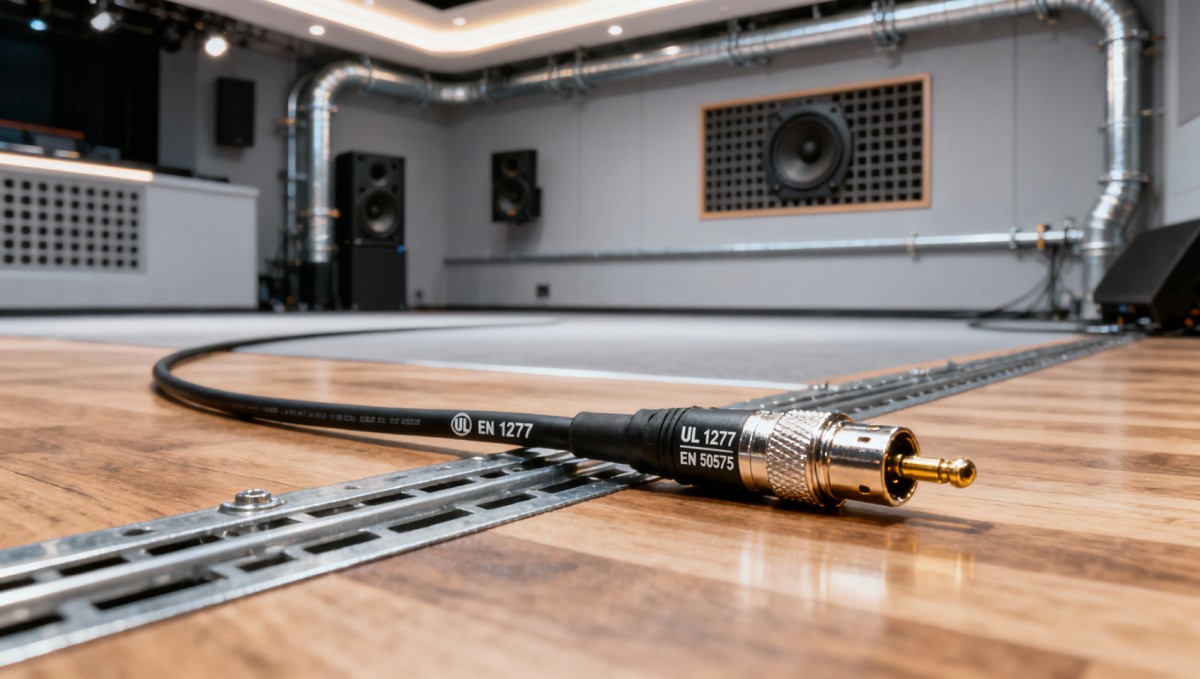
On 28 May 2026, the European Union’s amended Construction Products Regulation (CPR) supplement Directive EU 2026/892 entered into force, requiring mandatory dual certification labeling — UL 1277 (fire performance) and EN 50575 (flame retardancy class) — on all professional stage audio cables intended for fixed installation, including loudspeaker and digital audio cables. This requirement directly affects manufacturers, importers, and project specifiers supplying public venues across the EU.
Event Overview
Directive EU 2026/892, amending the CPR framework, became effective on 28 May 2026. It stipulates that all Pro Stage Audio cables used in permanent building installations must bear both UL 1277 and EN 50575 certification markings and be accompanied by a Declaration of Conformity (DoC). Products lacking these labels are prohibited from use in EU public venue projects — such as concert halls, theatres, conference centres, and broadcast facilities.
Industries Affected
Manufacturers of Pro Audio Cables
Manufacturers supplying fixed-installation audio cables to the EU market must now ensure each product line meets both UL 1277 (a U.S.-originated fire test standard widely accepted in EU conformity assessment) and EN 50575 (the harmonized EU cable flame classification standard). Impact includes revised product testing protocols, updated technical documentation, and potential revalidation of existing certifications.
Importers and Distributors
Importers and distributors handling Pro Stage Audio cables for EU resale face new compliance gatekeeping responsibilities. They must verify DoC validity, confirm correct labeling on packaging and product surfaces, and maintain traceability records. Non-compliant stock may no longer be placed on the EU market after the effective date.
System Integrators and AV Contractors
System integrators and audio-visual contractors specifying or installing cables in EU public buildings must now validate certification status prior to procurement. Projects tendered or commissioned after 28 May 2026 require documented evidence of dual certification; non-compliant cables risk rejection during site inspection or commissioning audits.
Testing and Certification Bodies
Certification bodies accredited under EU frameworks are seeing increased demand for combined UL 1277/EN 50575 assessments. While UL 1277 is not an EU-harmonized standard per se, its inclusion reflects pragmatic alignment with fire safety expectations in high-risk acoustic environments — a point requiring careful interpretation by notified bodies.
Key Considerations and Recommended Actions
Monitor official guidance from EU national CPR authorities
While Directive EU 2026/892 is in force, national market surveillance authorities may issue implementation clarifications — especially regarding transitional arrangements for legacy stock or equivalency pathways for non-UL-tested cables. Stakeholders should subscribe to updates from national Product Contact Points (PCPs).
Prioritize verification for high-volume fixed-installation SKUs
Not all Pro Audio cables fall under this requirement — only those designated for permanent installation. Companies should audit their product portfolios to identify SKUs explicitly marketed or technically rated for fixed use (e.g., CL2/CL3-rated equivalents, plenum-rated variants), and prioritize certification validation for those lines first.
Distinguish between regulatory signal and operational enforcement
Analysis shows this directive functions primarily as a specification-level mandate rather than a broad-market ban. Its immediate enforcement focus is on publicly funded or safety-regulated venues — not retail or portable applications. Businesses should assess exposure based on end-use context, not product category alone.
Update documentation workflows and supplier agreements
Importers and integrators should revise purchase orders and supplier contracts to include explicit clauses requiring dual certification labeling and valid DoC. Internal quality checklists for incoming goods should now include visual verification of both marks and DoC cross-referencing.
Editorial Perspective / Industry Observation
Observably, this requirement signals a tightening convergence between EU construction safety policy and professional audio infrastructure — particularly where acoustic performance intersects with passive fire protection. It is less a sudden regulatory shock and more a formalization of existing best practices among leading EU-spec contractors. From an industry perspective, it underscores how niche audio applications are increasingly governed by broader building compliance frameworks. Current attention should focus on implementation consistency across member states, as enforcement rigor may vary pending national transposition guidance.
Conclusion: This directive does not redefine cable performance standards but elevates documentation and traceability requirements for a defined subset of Pro Stage Audio products. It is best understood not as a technical barrier, but as a contractual and compliance checkpoint embedded in EU public procurement and building safety workflows. Stakeholders should treat it as an operational update — not a strategic pivot.
Source: Official Journal of the European Union, Directive (EU) 2026/892 amending Regulation (EU) No 305/2011 (CPR); EU Commission Press Release IP/26/2417 (27 May 2026).
Note: National implementation guidance and transitional provisions remain under observation and may vary by Member State.
Search News
Hot Articles
- Office Furniture & EquipChoosing Commercial Air Conditioners for Offices: Capacity, Zoning, and NoiseOct 13, 2026
- Fashion & Gem JewelryHow to Choose Designer Eyewear That Fits Your Store’s Customer ProfileOct 12, 2026
- Musical InstrumentsA Practical Guide to Identifying Wooden Orchestral Instruments by Family and ToneOct 10, 2026
Popular Tags
Need ExpertConsultation?
Connect with our specialized leisureengineering team for procurementstrategies.
Recommended News
 Oct 13, 2026Choosing Commercial Air Conditioners for Offices: Capacity, Zoning, and NoiseChoosing commercial air conditioners for offices? Compare capacity, zoning, and noise to improve comfort, avoid costly mistakes, and find the right system for your workplace.● Institutional Buyer
 Oct 12, 2026How to Choose Designer Eyewear That Fits Your Store’s Customer ProfileDesigner eyewear buying guide for retailers: match frames, price points, brand appeal, fit, and supplier support to your store’s customer profile for stronger sales.● Luxury Retail Analyst
 Oct 10, 2026A Practical Guide to Identifying Wooden Orchestral Instruments by Family and ToneWooden orchestral instruments made simple: identify strings, flutes, clarinets, oboes, and bassoons by sound source, design, and tone.● Pro Audio Engineer
 Oct 08, 2026How to Choose Animatronic Haunted House Props for High-Throughput AttractionsAnimatronic haunted house props for high-throughput attractions: compare motion, triggers, safety, and maintenance to create reliable scares that keep guests moving.● Theme Park Strategist
 Oct 07, 2026Thermal Diamond Testers: How They Work and When They Can Misidentify StonesThermal diamond tester guide: learn how it works, spot false positives from moissanite, and choose reliable verification methods for jewelry trade and retail.● Luxury Retail Analyst
 Oct 06, 2026What Is Driving Demand for Commercial Hospitality Projects Across the GCC?Commercial hospitality GCC demand is rising through destination-led tourism, mixed-use development, and premium operational standards. Explore the procurement strategies shaping resilient projects.● Hospitality Sourcing Dir
 Oct 05, 2026How to Select Hotel Hair Dryers That Balance Guest Safety, Durability, and CostHair dryer for hotels: learn how to select safe, durable, cost-efficient models with the right certifications, performance, maintenance, and supplier support.● Hospitality Sourcing Dir
 Oct 04, 2026Fast-Casual Restaurant Interiors: Design Choices That Improve Speed and Guest FlowRestaurant interiors for fast casual brands: discover design choices that improve guest flow, speed service, streamline pickup, and elevate every visit.● Hospitality Sourcing Dir
 Oct 03, 2026How to Select Leisure Park Equipment for Safe, High-Throughput Visitor AreasLeisure park equipment selection guide for safe, high-throughput venues—explore capacity, supervision, durability, accessibility, and supplier criteria.● Theme Park Strategist
 Oct 02, 2026Diamond Tester Wholesale: How to Vet Accuracy, Calibration, and MOQ Before OrderingDiamond tester wholesale guide: verify accuracy, calibration records, supplier quality controls, and MOQ terms before ordering. Source reliable testers with confidence.● Luxury Retail Analyst
 Oct 01, 2026How Hotels Can Choose Amenity Bottles That Balance Brand Image and Refill CostsHotel amenity bottles: learn how to balance premium brand presentation, refill costs, hygiene, durability, and efficient housekeeping workflows.● Hospitality Sourcing Dir
 Sep 30, 2026How to Choose an Aluminum Projector Ceiling Mount for Load, Drop, and Ceiling TypeChoose an aluminum projector ceiling mount with confidence. Learn how load capacity, drop length, ceiling structure, safety retention, and service access shape a reliable commercial AV installation.● Pro Audio Engineer
 Sep 29, 2026Poured Playground Safety Surfacing: How to Specify Thickness for Fall HeightsPoured playground safety surfacing: learn how to specify tested thickness by fall height, ASTM standards, substrate conditions, accessibility, and field verification.● Theme Park Strategist
 Sep 28, 2026How U.S. Schools Can Choose Laboratory Equipment for Safe, Compliant Science LabsSchool laboratory equipment USA: learn how to select safe, compliant lab furniture, ventilation, emergency systems, and durable tools for K–12 science labs.● Institutional Buyer
 Sep 27, 2026Custom Trampoline Park Equipment: Planning Capacity, Safety, and LayoutCustom trampoline park equipment for safer capacity, smooth guest flow, and efficient layouts. Explore practical planning insights for a high-performing park.● Theme Park Strategist
 Sep 26, 2026How to Choose Dynamic Microphones for Vocals in Live Stage SettingsDynamic microphones for vocals: learn how to match polar patterns, feedback control, durability, and clarity to live stage needs for reliable, professional sound.● Pro Audio Engineer
 Sep 25, 2026How to Evaluate a Wall-Mounted Hotel Hair Dryer Manufacturer for Bulk ProjectsHotel hair dryers wall mounted manufacturer evaluation guide: compare safety, durability, installation fit, OEM options, total cost, and reliable bulk-project support.● Hospitality Sourcing Dir
 Sep 24, 2026Conveyor Pizza Oven Price: What Buyers Should Budget for Capacity and FeaturesConveyor pizza oven price guide: compare capacity, features, installation costs, and quote factors to choose the right commercial oven for your operation.● Hospitality Sourcing Dir
 Sep 23, 2026How Restaurant Buyers Can Source Hospitality Supplies Without OverorderingHospitality supplies for restaurants: learn practical sourcing strategies to cut excess inventory, protect cash flow, improve supplier reliability, and keep every service running smoothly.● Hospitality Sourcing Dir
 Sep 22, 2026Commercial Kitchen Design Price: Budgeting by Layout, Equipment, and MEP ScopeCommercial kitchen design price explained: budget smarter for layout, equipment, MEP scope, compliance, installation, and long-term operational performance.● Hospitality Sourcing Dir
 Sep 21, 2026How Schools Can Cut Printing Costs When Buying Ink Cartridges in BulkSchool ink cartridges wholesale made smarter: cut printing costs with fleet planning, cost-per-page comparisons, reliable suppliers, and inventory controls.● Institutional Buyer
 Sep 20, 2026How to Evaluate a Luxury Retail Packaging Supplier for Premium Brand ConsistencyLuxury retail packaging supplier evaluation guide: protect premium brand consistency with proven quality control, material expertise, scalable production, and supply reliability.● Luxury Retail Analyst
 Sep 19, 2026How to Select a Spiral Dough Mixer for Bakery Batch Size and Dough HydrationSpiral dough mixer bakery guide: match batch size, flour load, and hydration to select reliable torque, temperature control, and consistent dough results.● Hospitality Sourcing Dir
 Sep 18, 2026What Drives Animatronic Dinosaur Manufacturer Prices for Theme Park Projects?Animatronic dinosaurs manufacturer price guide: compare motion, materials, controls, installation, and lifecycle costs to plan a durable theme park attraction.● Theme Park Strategist