Hotel desks with built in power are now expected
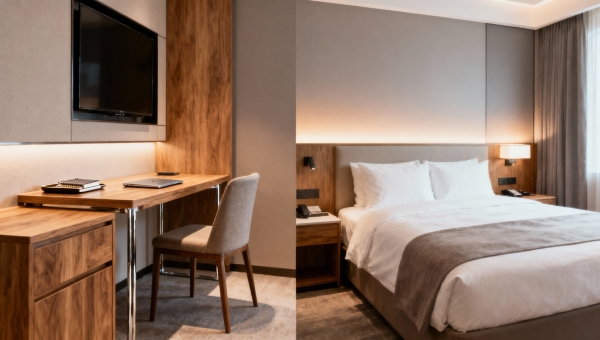
In modern hospitality procurement, hotel desks with built in power have shifted from a premium upgrade to a baseline expectation. For buyers comparing hotel furniture, hotel room furniture, and commercial furniture solutions, this trend reflects a broader demand for smarter guest experiences, efficient design, and long-term value—especially across luxury furniture projects where functionality now matters as much as style.
For procurement teams, distributors, and commercial evaluators, this is no longer a cosmetic furniture decision. A guestroom desk now functions as a work surface, charging station, light-duty dining area, and digital convenience point. If the desk fails on any of those functions, the room experience feels outdated even when the finishes look premium.
This shift has changed how hotel room furniture is specified, priced, and evaluated. Built-in power is increasingly written into project briefs for upscale, business, mixed-use, and even select-service properties. The result is a new sourcing standard: hotel desks must combine aesthetics, electrical practicality, durability, code awareness, and maintenance access in one commercial-grade package.
For global buyers working across refurbishment cycles of 3 to 7 years, or new-build programs with phased deliveries over 8 to 24 weeks, choosing the right powered desk configuration can affect installation cost, guest satisfaction, and replacement planning. The sections below break down what buyers should evaluate before specifying powered desks at scale.
Why built-in power has become a core hotel desk requirement
The hospitality guestroom has changed faster than many furniture specifications. Ten years ago, a desk with a lamp and a nearby wall outlet was acceptable in many properties. Today, guests often arrive with 2 to 4 personal devices, including phones, tablets, smartwatches, laptops, and accessories. A hotel desk without convenient power access creates immediate friction.
This is especially relevant in business hotels, airport hotels, urban lifestyle properties, and extended-stay formats. In these segments, the desk is not decorative. It supports active use for 30 minutes to 6 hours per day, depending on guest profile. That usage pattern changes the importance of outlet positioning, USB availability, cable management, and surface ergonomics.
From a commercial furniture perspective, built-in power also improves layout flexibility. When designers integrate outlets into the desk, they reduce dependence on fixed wall positions and simplify room planning. This matters when rooms are compact, typically between 22 and 32 square meters, where every furniture dimension and circulation path must be optimized.
There is also a brand perception issue. In upper-upscale and luxury furniture programs, guests increasingly expect seamless usability. A desk that forces a guest to crawl behind furniture or unplug a lamp to charge a laptop undermines the room’s premium feel. In practical terms, built-in power now supports both operational convenience and perceived room quality.
For sourcing teams, the requirement is clear: hotel desks with built in power are no longer optional in many projects. They should be treated as a standard specification category, similar to drawer slides, edge durability, or surface finish performance.
Key demand drivers behind the shift
- Guests commonly carry multiple charging-dependent devices, often requiring AC power plus USB-A or USB-C access.
- Hybrid work has expanded in-room desk use beyond traditional corporate travel, increasing average functional demand.
- Refurbishment projects increasingly prioritize visible usability upgrades that improve reviews without changing room footprint.
- Hotel operators want fewer guest complaints related to inaccessible outlets, loose extension solutions, or damaged adapters.
What this means for procurement strategy
Instead of buying desks first and solving power later, buyers should specify powered desks at the concept stage. This allows electrical modules, cutouts, cable paths, modesty panels, and installation access to be coordinated early. In large projects above 100 rooms, early coordination can prevent repeated site adjustments and reduce installation delays by several days per floor.
What buyers should evaluate in powered hotel desk design
Not all powered desks deliver the same operational value. Two desks may look similar in finish and dimensions, yet differ significantly in power module quality, cord routing, safety considerations, and long-term serviceability. For hotel furniture procurement, the right decision depends on balancing guest experience with maintenance practicality.
Desk size is the first practical issue. In many guestrooms, commercial desks range from 1000 mm to 1400 mm in length and 500 mm to 650 mm in depth. Once power units are integrated, usable writing space can shrink if ports are poorly placed. Buyers should ensure that charging access does not interfere with laptop use, tray placement, or cleaning reach.
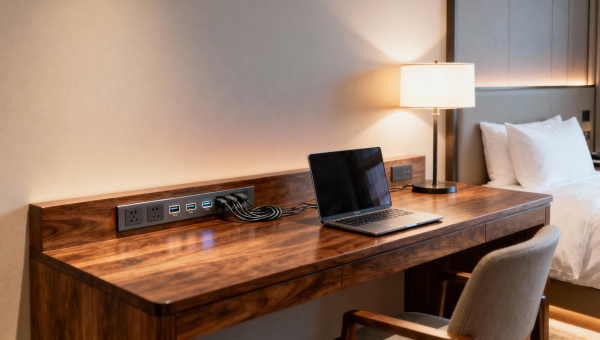
Power configuration is the second issue. A common hospitality setup includes 1 to 2 AC outlets, 1 USB-A port, and 1 USB-C port. Some projects prefer a simpler arrangement with 2 AC outlets only, especially when local power adapters vary by market. The best specification depends on guest mix, brand positioning, and regional compatibility requirements.
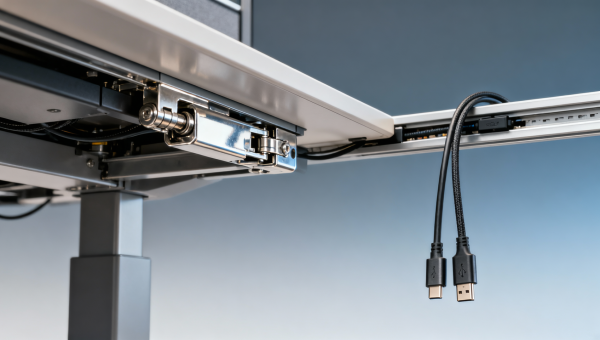
Cable management is equally important. Exposed cords quickly undermine the visual standard of luxury furniture and increase housekeeping frustration. The desk should allow controlled cable drop, underside fastening, and access for replacement. In high-turnover properties, good cable management can reduce visible wear within the first 12 to 18 months of operation.
Finally, buyers should assess whether the power system is integrated into the desk, mounted onto the top, recessed into a grommet, or paired with a hidden module below. Each approach affects appearance, replacement time, and installation flexibility.
Typical powered desk configurations
The table below compares common hotel desk power solutions used in guestroom furniture projects. The right option often depends on brand standard, room segment, and refurbishment constraints.
For most midscale to upscale hotel room furniture programs, a balanced solution is a compact module offering 2 power outputs and at least 1 charging port type. For premium guestrooms, visual integration becomes more important, so concealed or recessed approaches often justify the added fabrication precision.
Practical specification checklist
- Confirm desk dimensions, leg clearance, and surface area after the power unit is installed.
- Match outlet type and voltage approach to target market or project location.
- Review cord exit points, strain relief, and underside cable protection.
- Check replacement access so maintenance staff can service components within 10 to 20 minutes, not by dismantling the full unit.
- Ensure finishes around cutouts resist chipping, swelling, and cleaning chemicals.
Performance, safety, and durability standards that matter in commercial use
A powered desk is a furniture item, but it also becomes part of the room’s functional electrical environment. That means the buyer must evaluate more than design drawings. In commercial hospitality use, durability, service access, and compliance awareness are just as important as appearance.
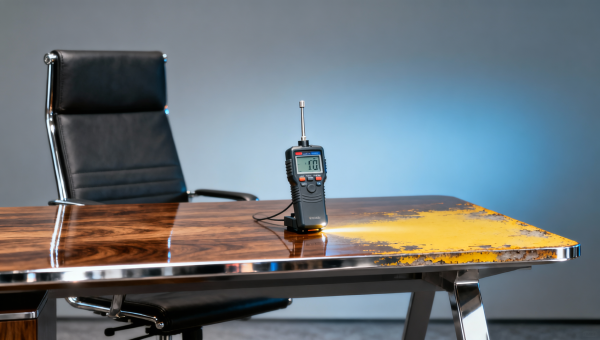
Surface durability remains the first line of performance. Hotel desks are exposed to hot drink cups, repeated wiping, luggage impact, and device edge abrasion. A commercial specification should consider scratch resistance, edge band integrity, and moisture behavior around cable openings. Weak detailing often fails first at drilled openings or power cutout corners.
Structural stability is another overlooked factor. Many desks must support laptop use, occasional leaning, room service placement, and housekeeping contact. Typical loading expectations for the top surface can range from 30 kg to 60 kg in practical use. When power modules are integrated, the furniture should still maintain rigidity without wobble or panel deflection.
From an operational safety perspective, buyers should verify how the desk interacts with local electrical installation requirements, cord protection, grounded connections where applicable, and heat generation from charging modules. Commercial evaluators should avoid treating a powered desk as a purely decorative casegood item.
Maintenance teams also need realistic replacement procedures. In many hotels, room downtime is expensive. If a charging module fails and replacement takes 45 to 60 minutes plus furniture disassembly, lifecycle cost increases quickly across a 200-room property. Modular access and component standardization matter.
Commercial evaluation points for powered desks
The following table highlights key performance areas procurement teams should review before approving a hotel furniture supplier or powered desk sample.
The most important takeaway is that powered hotel room furniture should be reviewed as a system, not only as a visual sample. A good-looking mock-up can still create service problems if access panels, cable routing, and edge details are not resolved before bulk production.
Common risk points during approval
- Specifying charging ports without checking replacement availability across markets.
- Approving veneer or laminate cutouts without reinforced edging.
- Ignoring clearance for housekeeping tools and guest leg space.
- Using residential-grade modules in rooms with high occupancy turnover.
Sourcing, pricing, and project delivery considerations for global buyers
For distributors, procurement managers, and sourcing teams, the commercial decision goes beyond desk design. Powered hotel desks affect factory coordination, packaging, installation sequencing, and after-sales planning. This is especially true for export projects where furniture and electrical accessories may come from different supply chains.
Lead time should be discussed early. A standard hotel desk may have a production cycle of 4 to 8 weeks depending on volume, finish complexity, and sampling stage. Once built-in power is added, the timeline may extend by 1 to 3 additional weeks if the power module must be sourced separately, tested with the desk cutout, or adapted for destination market requirements.
Packaging also deserves attention. Powered desks include exposed interfaces and cord elements that require better internal protection than standard casegoods. Poor packaging design increases the risk of cracked panels around cutouts, bent power housings, or cable damage in transit. For overseas distribution, drop-test awareness and spare-part planning should be part of the sourcing discussion.
Cost evaluation should include more than unit price. Buyers should compare the desk body cost, power module cost, installation labor, spare module planning, and service time. In some cases, a slightly higher initial specification lowers lifecycle cost because replacement is faster and visual wear is better controlled over a 3 to 5 year operating window.
For global commercial projects, suppliers that can coordinate OEM or ODM adaptation are often better positioned. Hotels may require different socket types, cord lengths, finishes, or mounting details for regional programs. A sourcing partner that understands both furniture production and commercial deployment constraints adds measurable value.
Typical procurement factors by project type
Different hotel formats prioritize different buying criteria. The table below helps commercial evaluators compare sourcing priorities when selecting hotel desks with built in power.
This comparison shows that there is no single universal solution. The best hotel furniture specification is the one that aligns use case, brand positioning, service model, and replacement strategy from the start.
A practical sourcing workflow
- Define guest profile, room segment, and target desk usage duration.
- Approve desk dimensions and power layout at drawing stage.
- Review a physical sample with cable routing and actual module installed.
- Confirm spare-part policy, lead time, and replacement method before bulk order.
- Coordinate installation sequence with site electrical planning and final room layout.
Common buyer questions and implementation advice
As powered desks become standard in hotel room furniture, buyers often face the same implementation questions. These usually concern project suitability, service life, cost control, and specification mistakes. Addressing them early helps reduce change orders and improves procurement confidence.
Are hotel desks with built in power suitable for all hotel segments?
Not every segment needs the same level of integration, but most modern hotels benefit from some form of powered desk solution. In luxury and upper-upscale rooms, integration should be discreet and design-led. In midscale and select-service properties, a durable standardized module may be more appropriate. Even compact guestrooms can support a 1000 mm desk with a minimal charging unit if space planning is done carefully.
What are the most common specification mistakes?
The most frequent mistakes are treating power as an add-on, underestimating cable visibility, and failing to check maintenance access. Another issue is specifying port types without considering guest market or replacement availability. A desk may look complete on paper but become difficult to service after the first 6 to 12 months if access panels were not designed properly.
How long should buyers expect these desks to remain serviceable?
Service life depends on material quality, occupancy level, and maintenance discipline. In many commercial settings, well-built desks can remain structurally viable for several years, but power modules may need earlier replacement depending on usage intensity. That is why modularity matters. Buyers should plan spare components and verify that replacements can be installed without damaging finished panels.
What maintenance practices help preserve appearance and function?
- Inspect outlets, USB ports, and visible cords during routine room checks every 1 to 3 months.
- Use cleaning procedures that avoid excessive moisture around cutouts and charging ports.
- Train housekeeping teams not to pull furniture by the cord zone or push service carts into exposed modules.
- Keep a small spare inventory for the most frequently used power components in properties above 100 rooms.
Final implementation advice for commercial teams
The strongest results come when operators, designers, and sourcing teams align early. A powered desk should be reviewed as part of the full guestroom experience: work comfort, device charging, visual consistency, cleaning access, and service efficiency. When these factors are coordinated, the desk becomes a small but highly visible value driver in the room.
Hotel desks with built in power are now a practical benchmark in modern hospitality furniture, not a niche upgrade. For buyers evaluating hotel furniture, commercial furniture, or luxury furniture programs, the right specification improves guest usability, protects brand perception, and reduces long-term service friction. The most successful sourcing decisions balance design, electrical practicality, durability, and replacement access from the start.
Global Commercial Trade supports commercial buyers, procurement teams, distributors, and project decision-makers with sourcing insight tailored to complex hospitality environments. If you are planning a refurbishment, developing a new guestroom standard, or comparing powered hotel desk solutions across suppliers, contact us to discuss your project, request a customized sourcing plan, or explore more hotel furniture solutions.
Search News
Hot Articles
- Stage Lighting & TrussCCTV5 Snooker Broadcast Drives 37% Surge in Stage Lighting Export InquiriesApr 21, 2026
- Indoor PlaygroundVietnam Mandates Child Finger-Trap Sensors for Indoor Play EquipmentApr 21, 2026
- Stage Lighting & TrussGuangdong vs. Shanxi CBA Game Highlights Domestic Smart Arena LightingApr 21, 2026
Popular Tags
Need ExpertConsultation?
Connect with our specialized leisureengineering team for procurementstrategies.
Recommended News
 Apr 14, 2026Fuzhou Hospital's Office Supply Tender Fails Due to Lack of BiddersFuzhou Hospital's office supply tender failed due to lack of qualified bidders, exposing gaps in regional suppliers' compliance and procurement experience. Learn key considerations for international buyers evaluating Chinese vendors.● Institutional Buyer
 Apr 14, 2026Chongqing Launches Office Supplies Procurement with 2-Hour Delivery FocusChongqing's office supplies procurement (KZQ26A00105) sets new standards with 2-hour delivery focus and 60% SME quota. Discover how this 886,700 RMB tender impacts logistics and supply chains in China's evolving B2B market.● Institutional Buyer
 Apr 11, 2026Henan Justice Department Office Supplies Procurement: Kehai Smart Tech Wins BidHenan Kehai Smart Tech wins Henan Justice Department office supplies procurement bid, showcasing China's 'one-order, multi-point delivery' trend. Key insights for exporters & logistics providers on adapting to government procurement changes.● Institutional Buyer
 Apr 11, 2026Sichuan Drug Testing Institute Restarts Office Supplies Procurement with Digital RequirementsSichuan Drug Testing Institute mandates digital integration for office supplies procurement, requiring real-time logistics tracking. Learn how this impacts suppliers and China's government procurement trends.● Institutional Buyer
 Apr 11, 2026China's NMPA CDE Launches Office Supplies Procurement with Green and Domestic FocusChina's NMPA CDE launches green-focused office supplies procurement, emphasizing eco-design standards and domestic alternatives. Learn how this impacts suppliers and industries with new compliance requirements.● Institutional Buyer
 Apr 21, 2026What size hotel desks work in compact guest roomsHotel desks for compact guest rooms: discover the right hotel furniture sizes, layouts, and hospitality procurement tips to maximize space, comfort, and luxury furniture appeal.● Institutional Buyer
 Apr 21, 2026Hotel desks with built in power are now expectedHotel desks with built in power are redefining hotel furniture and hotel room furniture. Explore smarter commercial furniture choices for hospitality procurement and better guest satisfaction.● Institutional Buyer
 Apr 20, 2026Commercial furniture upholstery stains that won’t lift—even with pro cleanersCommercial furniture stains won’t lift? Discover stain-resistant solutions for hotel beds, park benches, luxury furniture & more—backed by lab data & real-world performance.● Institutional Buyer
 Apr 19, 2026Commercial furniture fire ratings that change mid-projectCommercial furniture fire ratings—especially for hotel beds, park benches, hotel chairs, and luxury custom furniture—can shift mid-project. Avoid delays, cost overruns, and non-compliance with real-time, E-E-A-T–validated fire safety intelligence.● Institutional Buyer
 Apr 17, 2026Why commercial furniture specs matter more than price in 2026Commercial furniture, playground borders, sensory playgrounds & more—why specs trump price in 2026 for safety, ROI & brand trust. Discover how.● Institutional Buyer
 Apr 17, 2026Office furniture & equip: How ‘modular’ claims fall apart after three reconfigurationscommercial furniture, playground safety & sensory playground systems—why 'modular' fails after 3 reconfigurations. Get data-backed validation for amusement equipment, hotel tables & educational supplies.● Institutional Buyer
 Apr 16, 2026Custom fabrication for office furniture: Why CAD files alone don’t guarantee fit-on-siteCustom fabrication for hotel furniture, designer eyewear & luxury watches demands real-world fit—not just CAD files. Discover why OEM manufacturing, supply chain solutions & precision matter on-site.● Institutional Buyer
 Apr 16, 2026Luxury furniture finishes that resist UV fading outdoorsDiscover UV-resistant luxury furniture finishes for park benches, music stands & outdoor playgrounds—engineered for colorfastness, compliance, and premium aesthetics under harsh sun.● Institutional Buyer
 Apr 15, 2026Luxury furniture materials that age well — and those that don’tDiscover luxury furniture materials that age gracefully—ideal for park benches, music stands, orchestral instruments & more. Avoid costly failures.● Institutional Buyer
 Apr 15, 2026Why commercial furniture specs matter more than price in 2026Commercial furniture specs—playground borders, sensory playgrounds, music accessories & more—drive safety, durability & experience in 2026. Stop choosing by price alone.● Institutional Buyer
") Apr 13, 2026Why contract furniture quotes vary by 40%—and what’s really included (or missing)Discover why hotel desks, commercial playgrounds & trampoline park manufacturer quotes vary by 40%—and what’s truly included in hospitality furniture, outdoor play structures, microphone systems & more.● Institutional Buyer
Apr 13, 2026Why contract furniture quotes vary by 40%—and what’s really included (or missing)Discover why hotel desks, commercial playgrounds & trampoline park manufacturer quotes vary by 40%—and what’s truly included in hospitality furniture, outdoor play structures, microphone systems & more.● Institutional Buyer Apr 13, 2026Contract furniture lead times in 2026: why ‘standard’ delivery now means 14+ weeksHotel desks, hospitality furniture & commercial playgrounds now face 14+ week lead times in 2026. Discover why—and how to mitigate delays for outdoor play structures, trampoline park manufacturing, stage equipment & more.● Institutional Buyer
 Apr 14, 2026Office furniture & equip that supports hybrid work—but fails silently in summer heatOffice supplies, arcade games & percussion instruments—engineered for hybrid work AND summer heat. Discover heat-resilient office furniture that won’t fail silently.● Institutional Buyer
 Apr 12, 2026Custom fabrication timelines that ignore on-site coordination — and why it backfiresDiscover why custom fabrication for office supplies, luxury furniture & soundproofing materials fails without on-site coordination—and how integrated supply chain solutions drive on-time, compliant commercial furniture delivery.● Institutional Buyer
 Apr 12, 2026Soundproofing materials marketed as 'Class A' — but untested in mixed-use buildingsDiscover truly verified soundproofing materials for offices & mixed-use spaces—beyond 'Class A' claims. Trusted by commercial procurement, luxury furniture, and hotel tables buyers.● Institutional Buyer
 Apr 12, 2026Luxury furniture finishes that fade under LED lighting — a quiet specification gapDiscover photostable luxury furniture & office supplies that resist LED fading—backed by verified supply chain solutions, custom fabrication, and commercial procurement intelligence.● Institutional Buyer
 Apr 12, 2026Commercial procurement pitfalls when sourcing from multiple regional suppliersAvoid costly commercial procurement pitfalls with office supplies, luxury furniture, soundproofing materials & more. Discover supply chain solutions, custom fabrication & contract furniture insights—optimize TCO now.● Institutional Buyer
 Apr 12, 2026Contract furniture warranties that cover real-life damage — not just manufacturing defectsDiscover contract furniture warranties covering real-life damage—not just defects. Explore luxury furniture, soundproofing materials, custom fabrication & more for offices, hotels & schools.● Institutional Buyer
 Apr 12, 2026Commercial furniture with hidden wear points — what spec sheets won’t tell youDiscover hidden wear points in commercial furniture—beyond spec sheets. Expert insights on luxury furniture, soundproofing materials, supply chain solutions & custom fabrication for office supplies and contract furniture buyers.● Institutional Buyer