Why do trampoline park prices vary so much between suppliers?
Why Do Trampoline Park Prices Vary So Much Between Suppliers?
If you're comparing trampoline park price quotes from different suppliers—or evaluating indoor playground supplier options—you've likely noticed dramatic cost variations. From trampoline park equipment specs to indoor playground design complexity, safety compliance, and OEM/ODM customization levels, multiple factors drive trampoline park cost differences. As a global sourcing hub for Amusement & Leisure Parks, Global Commercial Trade (GCT) delivers E-E-A-T–validated insights into why trampoline park supplier pricing diverges—and how procurement professionals can decode true value beyond the sticker price.
It’s Not About “Cheap” vs. “Expensive”—It’s About Where Value Is Embedded
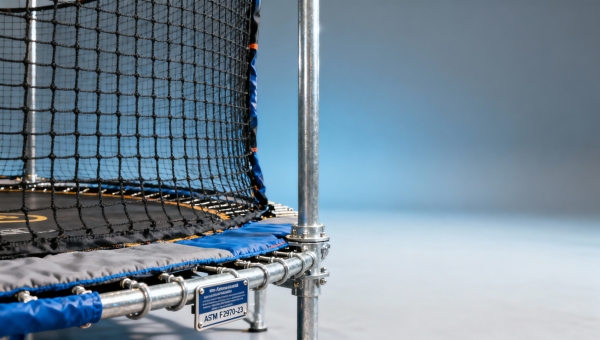
Trampoline park suppliers quote anywhere from $85 to $320+ per square foot—not because of markup whims, but because they’re selling fundamentally different commercial assets. A $110/sq ft quote may cover only CE-certified trampolines and basic foam pits, while a $275/sq ft quote includes ASTM F2970-compliant structural framing, integrated fire-rated netting, custom branding integration, and full turnkey project management with 3D BIM coordination. For procurement professionals and institutional buyers, the first step isn’t negotiating price—it’s mapping what’s *included*, *certified*, and *supported* in each proposal.
Five Non-Negotiable Cost Drivers You Must Audit—Before Signing
Price variance isn’t noise—it’s signal. Below are the five structural cost levers that separate transactional vendors from strategic partners. Each directly impacts ROI, insurance eligibility, operational lifespan, and guest retention.
1. Safety Certification Depth—Not Just “CE” or “ASTM”, But *Which* Standards—and Who Validates Them?
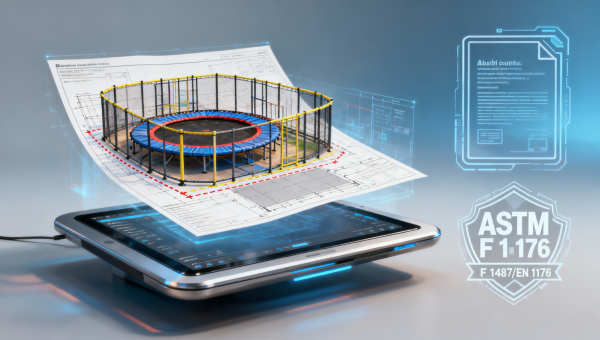
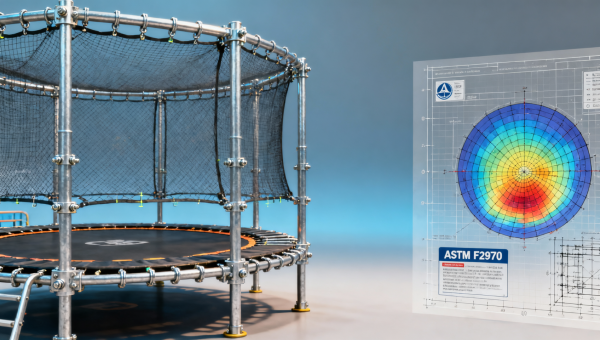
“Complies with ASTM” means little without context. Reputable suppliers embed third-party lab reports (e.g., TÜV SÜD, UL Solutions) for *each* component: frame weld integrity (EN 1090-2 EXC3), mat tensile strength (ASTM F2970 Annex C), and net break-load testing (≥1,200 kg). Low-cost bids often reference outdated standards (e.g., ASTM F2374-17 instead of current F2374-23) or self-declare compliance—invalidating liability coverage and triggering municipal inspection rejections. Always request dated, supplier-specific test certificates—not generic brochures.
2. Structural Engineering Integration—Is the Supplier Designing for Your Floor Load, Not Just Their Catalog?
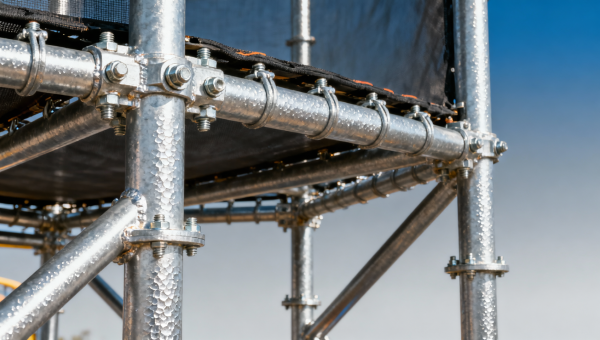
A trampoline park isn’t plug-and-play. High-bounce zones exert dynamic loads up to 8x static weight. Suppliers who provide stamped structural drawings—signed and sealed by a licensed engineer registered in your jurisdiction—absorb engineering risk and ensure compliance with local building codes (e.g., IBC Chapter 16, ASCE 7-22 live load factors). Those quoting “standard layout” without site-specific load calcs shift liability—and potential retrofit costs—to you.
3. OEM vs. ODM Capability—Customization That Adds Revenue, Not Just Cost
True ODM (Original Design Manufacturing) means co-developing revenue-generating features: modular party zone configurations with RFID-triggered lighting, dual-height trampolines for adaptive programming, or seamless integration with POS and occupancy analytics platforms. These aren’t “add-ons”—they’re embedded monetization pathways. Conversely, OEM-only suppliers resell off-the-shelf units with fixed dimensions and no API access, limiting scalability and data capture. Ask: “Can your system integrate with our existing CRM or access control platform?” If the answer is “no” or “not without middleware,” you’re buying hardware—not infrastructure.
4. Warranty Scope & Claims Process—What Happens When a Frame Weld Fails at Month 18?
A “10-year frame warranty” sounds strong—until you read the fine print. Leading suppliers offer *transferable*, *labor-inclusive*, *on-site* warranties backed by bonded service networks (e.g., 48-hour response in Tier-1 cities). Budget suppliers often limit coverage to material replacement, require return shipping at your cost, and exclude labor or corrosion damage—even in humid coastal markets. Verify: Is the warranty underwritten by the manufacturer—or just a promise on letterhead?
5. Commercial-Grade Support Ecosystem—Not Just Installation, But Operational Enablement
The real cost divergence appears post-installation. Top-tier suppliers include staff certification programs (e.g., IATP-accredited safety trainer accreditation), spare-part logistics SLAs (<72h delivery for critical components), and quarterly firmware updates for smart safety systems. Others deliver a manual and a phone number. For multi-site operators or franchise groups, this ecosystem determines training consistency, downtime reduction, and brand-standard enforcement across locations.
How Procurement Teams Can Cut Through the Noise—A Practical Framework
Instead of comparing line-item totals, use this three-tier validation framework:
- Compliance Layer: Cross-check every cited standard against current editions (e.g., ASTM F2970-23, EN 13219:2022); verify third-party lab report numbers match component SKUs.
- Operational Layer: Request documented proof of field service coverage (e.g., certified technician rosters, regional warehouse inventory logs) and uptime SLAs for connected systems.
- Strategic Layer: Evaluate scalability: Can the same platform support phased expansion? Does the supplier have ≥3 case studies in your target market segment (e.g., mall-anchored, school-adjacent, hospitality-integrated)?
This shifts evaluation from “lowest bid” to “lowest total cost of ownership over 7 years”—including insurance premiums, maintenance reserves, and revenue leakage from downtime or non-compliant closures.
Final Takeaway: Price Variation Is a Diagnostic Tool—Not a Problem to Solve
Dramatic trampoline park price variation isn’t market inefficiency—it’s precise reflection of embedded risk allocation, regulatory rigor, and long-term partnership depth. For procurement directors, distributors, and commercial developers, the highest-value supplier isn’t the one quoting closest to your budget. It’s the one whose cost structure transparently maps to your operational requirements, compliance obligations, and growth roadmap. At Global Commercial Trade, we don’t publish generic price benchmarks. We curate supplier capability dossiers—validated by hospitality procurement directors and leisure park safety auditors—that let you assess *why* prices differ—and decide *where you need to pay more* to avoid paying much more later.
Search News
Hot Articles
- Stage Lighting & Truss2026 FIBA Women's World Cup Draw Sets LED Timing Screen RequirementsApr 27, 2026
- Hotel Room AmenitiesIranian Delegation’s Ritual Gesture at Sanya ASG Sparks Mideast Hospitality Procurement ShiftApr 27, 2026
- Arcade & VR MachinesSnooker World Championship 'China Derby' Drives VR Viewing DemandApr 27, 2026
Popular Tags
Need ExpertConsultation?
Connect with our specialized leisureengineering team for procurementstrategies.
Recommended News
 Apr 27, 2026Vietnam Mandates Child Finger-Trap Sensors for Indoor Play EquipmentVietnam mandates child finger-trap sensors for indoor play equipment starting Aug 1, 2026 — comply now to avoid delays, penalties & market access risks.● Theme Park Strategist
 Apr 26, 2026Fan Zhendong Visits SF as MLTT Investor; Chinese AI Ping Pong Tech Draws Silicon Valley InterestAI ping pong tech from China grabs Silicon Valley’s attention as Fan Zhendong, MLTT investor and Olympic champ, demos smart table tennis systems in SF—key for sports hardware, AI analytics & FDA-regulated fitness devices.● Theme Park Strategist
 Apr 26, 2026Vietnam Enforces Child Finger-Trap Sensors for Indoor Playground EquipmentChild finger-trap sensors now mandatory for indoor playground equipment in Vietnam—comply with QCVN 17:2026/BKHCN before import or sale.● Theme Park Strategist
 Apr 25, 2026Vietnam Mandates Child Finger-Trap Sensors for Indoor Play EquipmentVietnam mandates child finger-trap sensors for indoor play equipment—TCVN-certified, ≤0.3s response. Critical for importers, OEMs & compliance teams ahead of July 1, 2026 deadline.● Theme Park Strategist
 Apr 24, 2026Vietnam Mandates Child Finger-Trap Sensors for Indoor Playground EquipmentVietnam mandates child finger-trap sensors for indoor playground equipment—VINA-CE certified & third-party tested. Act now to ensure compliance, avoid shipment delays, and meet April 23, 2026 deadline.● Theme Park Strategist
 Apr 26, 2026Indoor playground supplier references: why asking for ‘recent projects’ isn’t enoughDiscover verified indoor playground suppliers & trampoline park equipment—backed by safety certs, installation proof, and real-world performance data.● Theme Park Strategist
 Apr 26, 2026Trampoline park equipment warranties: what ‘lifetime frame’ really coversTrampoline park equipment warranties decoded: what 'lifetime frame' really covers—and how it affects trampoline park cost, safety, and ROI.● Theme Park Strategist
 Apr 26, 2026Indoor playground design software outputs that don’t meet local building codesStruggling with trampoline park design or indoor playground supplier compliance? Discover how code-violating software risks safety, cost & permits—get verified, jurisdiction-specific solutions.● Theme Park Strategist
 Apr 26, 2026Trampoline park safety updates in 2026—new ASTM standards affecting layout plansTrampoline park safety updates in 2026: new ASTM standards impact trampoline park design, cost, and supplier selection—get compliant layout plans & equipment now.● Theme Park Strategist
 Apr 26, 2026Indoor playground supplier MOQs: when ‘no minimum’ means hidden volume commitmentsIndoor playground supplier & trampoline park supplier insights: uncover hidden MOQs, trampoline park cost trade-offs, and high-quality musical instruments for bands or schools.● Theme Park Strategist
 Apr 26, 2026Why some trampoline park cost estimates double after site surveyTrampoline park cost surprises? Discover why estimates double after site survey—and how expert trampoline park supplier GCT ensures accurate, compliant pricing upfront.● Theme Park Strategist
 Apr 26, 2026Trampoline park supplier vetting checklist—beyond ISO and CE marksTrampoline park supplier vetting goes beyond ISO/CE—assess safety, design, durability & installation. Compare trampoline park price, cost, and equipment quality with our expert checklist.● Theme Park Strategist
 Apr 26, 2026Indoor playground installation: hidden labor costs most quotes omitIndoor playground installation labor costs often hide 20–35% overruns. Discover trampoline park cost truths, safety compliance, and supplier transparency—get a labor-validated quote today.● Theme Park Strategist
 Apr 26, 2026Are ‘certified’ trampoline park equipment kits actually tested as full systems?Trampoline park supplier? Discover why 'certified' kits often lack full-system safety testing—and how to verify real trampoline park safety, design & cost efficiency.● Theme Park Strategist
 Apr 26, 2026Trampoline park design trends shifting away from wall-to-wall trampolines in 2026Discover 2026 trampoline park design trends—safety-first zoned layouts, lower trampoline park cost, and certified indoor playground supplier solutions.● Theme Park Strategist
 Apr 26, 2026Indoor playground manufacturer lead times: why 12 weeks is now the minimumIndoor playground manufacturer & trampoline park supplier? Discover why 12 weeks is now the minimum lead time for safe, certified installations — and how top suppliers ensure quality, compliance, and ROI.● Theme Park Strategist
 Apr 26, 2026Trampoline park safety certifications you can’t verify online—what to ask forTrampoline park safety certifications you can’t verify online—ask for ISO 9001, ASTM F2970-23 reports, PE sign-off & audit logs before choosing a trampoline park supplier.● Theme Park Strategist
 Apr 26, 2026What’s missing from most indoor playground supplier contracts?Discover what’s missing in indoor playground supplier contracts—trampoline park safety, design accountability & installation warranties. Avoid delays, cost overruns & brand risk.● Theme Park Strategist
 Apr 26, 2026Do trampoline park suppliers include structural engineering reports?Trampoline park supplier? Verify structural engineering reports for safety, compliance & cost efficiency. Trusted indoor playground manufacturer insights.● Theme Park Strategist
 Apr 28, 2026Are indoor playground suppliers really offering turnkey installation?Discover verified indoor playground suppliers & trampoline park suppliers offering true turnkey installation — not just marketing claims. Compare trampoline park price, safety, design, and equipment quality with GCT’s B2B intelligence.● Theme Park Strategist
 Apr 28, 2026Why do trampoline park prices vary so much between suppliers?Trampoline park price varies by safety, design & supplier—discover why trampoline park supplier choices impact cost, compliance & ROI. Get expert insights!● Theme Park Strategist
 Apr 23, 2026Fan Zhendong Visits Silicon Valley as MLTT Investor, AI Ping-Pong Tech Draws AttentionAI ping-pong tech takes center stage as Fan Zhendong visits Silicon Valley as MLTT investor—key for smart sports hardware, AI coaching platforms & SaaS providers.● Theme Park Strategist
 Apr 23, 2026Vietnam Mandates Child Finger-Trap Sensors for Indoor Play EquipmentChild finger-trap sensors now mandatory for indoor play equipment in Vietnam—learn how QCVN 121:2026 impacts exporters, manufacturers & suppliers ahead of July 1, 2026 enforcement.● Theme Park Strategist
 Apr 22, 2026Vietnam Mandates Child Finger-Trap Sensors for Indoor Playground EquipmentVietnam mandates child finger-trap sensors for indoor playground equipment—comply with QCVN 128:2026 & TCVN 9350:2023 before Oct 2026!● Theme Park Strategist