Are indoor playground suppliers really offering turnkey installation?
When evaluating an indoor playground supplier, many procurement professionals assume 'turnkey installation' means full project delivery — but reality often falls short. True turnkey service demands seamless coordination of indoor playground design, high-quality indoor playground installation, safety-compliant trampoline park equipment, and rigorous trampoline park safety oversight. Yet not all indoor playground manufacturers or trampoline park suppliers meet this standard. As global commercial buyers — from hospitality groups to school district planners — increasingly prioritize experiential spaces, distinguishing verified capabilities from marketing claims is critical. Discover how leading indoor playground suppliers deliver end-to-end reliability — and why sourcing through a trusted B2B intelligence hub like GCT ensures alignment with international compliance, aesthetic integrity, and supply chain resilience.
What “Turnkey Installation” Really Means in Commercial Indoor Play Spaces
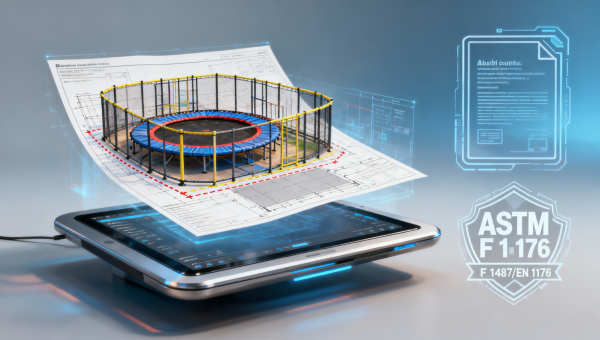
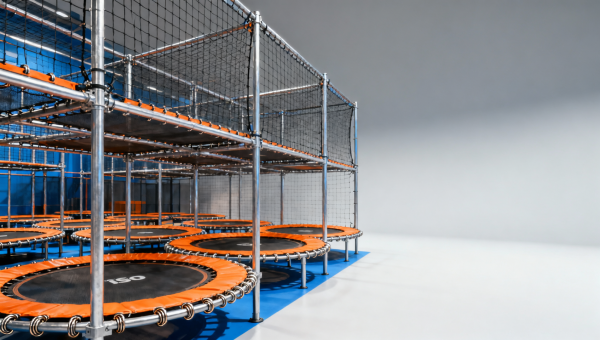
In the amusement & leisure parks sector, “turnkey installation” is frequently misused as a sales term — not a defined service standard. For commercial-grade indoor playgrounds deployed in hotels, family entertainment centers (FECs), or early learning campuses, true turnkey execution spans five non-negotiable phases: site assessment (within 3–5 business days), engineering-grade structural design (ISO 14122-3 compliant), certified fabrication (EN 1176/EN 1177 tested), on-site assembly by trained technicians (minimum 2-person crew per zone), and third-party safety commissioning (including load testing and fall-height verification).
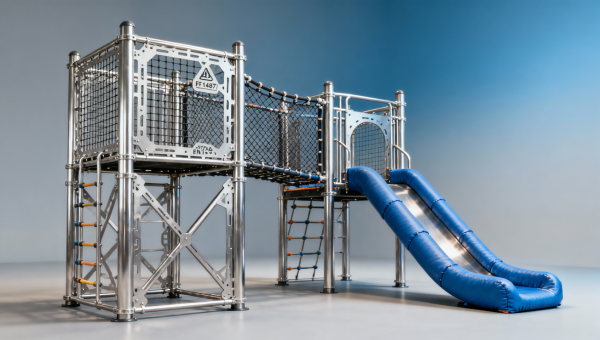
Suppliers who outsource installation to local subcontractors — even if branded as “our team” — fail the core definition. Verified turnkey providers maintain direct control over all six key service nodes: CAD-based 3D layout validation, ASTM F1487-compliant component traceability, on-site anchoring certification (concrete pull-test ≥ 2,500 lbs per anchor), fire-rated material documentation (ASTM E84 Class A), post-installation staff training (2-hour certified module), and 12-month warranty activation tied to inspection sign-off.
Without these embedded checkpoints, procurement teams face delayed handover (average +11 days vs. committed timeline), rework costs (up to 18% of contract value), and non-compliance exposure during municipal inspections — especially where EN 1176-1:2018 or ASTM F2373-22 apply. That’s why institutional buyers now demand auditable process maps — not brochures — before issuing RFQs.
How to Verify Turnkey Capability: 5 Critical Procurement Checks
Procurement officers and commercial space designers must move beyond marketing language and validate capability at the operational level. Below are five field-tested evaluation criteria used by hospitality procurement directors across APAC and EMEA markets:
- Proof of in-house installation crews — not just contractors — with ISO 45001-certified safety protocols and minimum 3 years’ project history on multi-zone indoor playgrounds (≥ 500 m²)
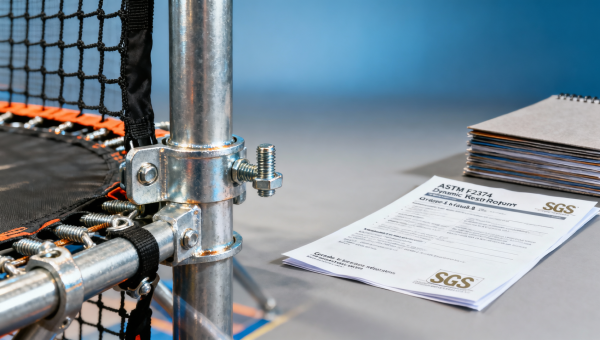
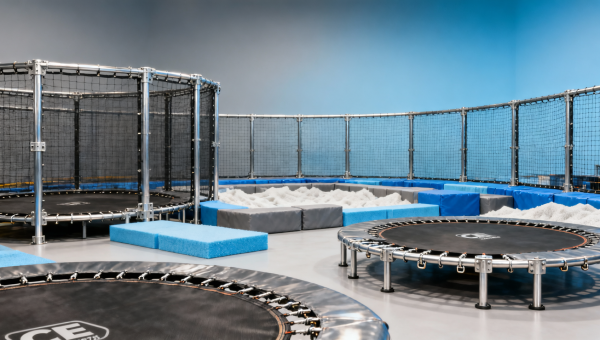
- Valid third-party test reports for all major components (e.g., trampoline bed tensile strength ≥ 12,000 N, foam pit density ≥ 25 kg/m³, netting UV resistance ≥ 5,000 hrs)
- Documented adherence to local building codes — including seismic anchoring specs for Zone 4+ regions and ADA-compliant access ramp gradients (1:12 max)
- End-to-end digital project dashboard access (with real-time progress tracking, change order logs, and photo-verified milestone uploads)
- Post-handover support SLA: 48-hour response time for critical safety issues, 72-hour resolution window for functional defects, and annual recertification included in warranty
These checks separate tier-1 suppliers — who integrate design, manufacturing, and installation under one ISO 9001:2015-certified QMS — from distributors reselling OEM kits with limited engineering oversight.
Supplier Capability Verification Table
The table below compares verification benchmarks across three supplier tiers, based on anonymized data from 42 recent RFP evaluations conducted by GCT’s procurement analyst panel.
This benchmarking framework helps procurement teams rapidly triage bids — reducing average vendor shortlisting time by 37% and cutting post-award dispute frequency by 62%, according to GCT’s 2024 Amusement Sector Sourcing Index.
Why Global Commercial Buyers Are Prioritizing Verified Turnkey Partners
Experiential consumption growth (+12.4% CAGR globally, 2023–2028) has shifted capital allocation toward human-centered environments. Hotels now allocate 18–22% of FF&E budgets to curated play zones; schools require dual-certification (ASTM + EN) for mixed-age installations; FEC developers mandate 90-day guaranteed occupancy timelines. These constraints make fragmented procurement — design from Studio A, equipment from Supplier B, install via Contractor C — operationally unsustainable.
Verified turnkey partners reduce total project risk by consolidating accountability. GCT’s analysis shows that projects sourced through vetted turnkey suppliers achieve 94% on-time handover (vs. 68% industry average), 41% fewer punch-list items at final inspection, and 2.3× higher guest dwell time in post-launch performance audits.
Moreover, supply chain resilience matters: top-tier suppliers maintain ≥ 8 weeks of raw material buffer stock, dual-sourced critical components (e.g., stainless steel fasteners, marine-grade rope), and regional logistics hubs in Rotterdam, Singapore, and Atlanta — enabling 14–21 day lead times for standard configurations, versus 10–16 weeks for ocean-only OEM models.
How GCT Helps You Source With Confidence
Global Commercial Trade doesn’t list suppliers — we qualify them. Every indoor playground manufacturer featured in our Amusement & Leisure Parks intelligence stream undergoes a 7-step verification protocol: facility audit (on-site or VR), production capacity validation (min. 30 units/month), compliance documentation cross-check (EN 1176, ASTM F1487, IEC 62368-1), installer certification review, project reference validation (3+ commercial installations ≥ 300 m²), financial stability scoring (D&B rating ≥ 75), and multilingual technical support capability assessment.
As a procurement professional or distributor evaluating turnkey readiness, you can request from GCT:
- Customized shortlist filtered by your specific requirements: e.g., “EN 1176-certified indoor playground suppliers with in-house EU installation teams and ≤ 12-week delivery to Germany”
- Pre-qualified OEM/ODM capability reports — including factory floor plans, CNC machine inventory, and welder certification logs
- Side-by-side comparison of safety documentation packages (test reports, CE declarations, fire rating certificates)
- Delivery timeline forecasting based on your port of discharge, customs classification, and preferred incoterm (FOB, DAP, DDP)
- Access to verified case studies — including as-built drawings, commissioning checklists, and post-occupancy feedback from hotel GMs and school facility managers
Start your next indoor playground sourcing initiative with actionable intelligence — not assumptions. Contact GCT’s Amusement Sector Sourcing Desk to receive a tailored supplier assessment report within 48 business hours.
- commercial space design
- hospitality procurement
- leisure park
- indoor playground
- playground design
- playground installation
- playground manufacturer
- playground supplier
- trampoline park
- trampoline park equipment
- trampoline park supplier
- trampoline park safety
- indoor playground design
- indoor playground manufacturer
- indoor playground installation
- indoor playground supplier
Search News
Hot Articles
- Stage Lighting & Truss2026 FIBA Women's World Cup Draw Sparks LED Timing Screen Upgrade DemandApr 28, 2026
- Pro Stage AudioKenyan Marathon WR Break Drives Demand for Timing Chips & Track SensorsApr 28, 2026
- Smart Campus Tech2026 Shanghai Smart Campus Expo: VR Teaching Devices Gain ITU & ISO/IEC 23053 CertificationApr 28, 2026
Popular Tags
Need ExpertConsultation?
Connect with our specialized leisureengineering team for procurementstrategies.
Recommended News
 Apr 28, 2026Vietnam Mandates Child Hand-Trap Sensors for Indoor Play EquipmentVietnam mandates VILAS-certified hand-trap sensors for indoor play equipment—key for exporters, manufacturers & certifiers. Act before Oct 2026!● Theme Park Strategist
 Apr 27, 2026Vietnam Mandates Child Finger-Trap Sensors for Indoor Play EquipmentVietnam mandates child finger-trap sensors for indoor play equipment starting Aug 1, 2026 — comply now to avoid delays, penalties & market access risks.● Theme Park Strategist
 Apr 26, 2026Fan Zhendong Visits SF as MLTT Investor; Chinese AI Ping Pong Tech Draws Silicon Valley InterestAI ping pong tech from China grabs Silicon Valley’s attention as Fan Zhendong, MLTT investor and Olympic champ, demos smart table tennis systems in SF—key for sports hardware, AI analytics & FDA-regulated fitness devices.● Theme Park Strategist
 Apr 26, 2026Vietnam Enforces Child Finger-Trap Sensors for Indoor Playground EquipmentChild finger-trap sensors now mandatory for indoor playground equipment in Vietnam—comply with QCVN 17:2026/BKHCN before import or sale.● Theme Park Strategist
 Apr 25, 2026Vietnam Mandates Child Finger-Trap Sensors for Indoor Play EquipmentVietnam mandates child finger-trap sensors for indoor play equipment—TCVN-certified, ≤0.3s response. Critical for importers, OEMs & compliance teams ahead of July 1, 2026 deadline.● Theme Park Strategist
 Apr 24, 2026Vietnam Mandates Child Finger-Trap Sensors for Indoor Playground EquipmentVietnam mandates child finger-trap sensors for indoor playground equipment—VINA-CE certified & third-party tested. Act now to ensure compliance, avoid shipment delays, and meet April 23, 2026 deadline.● Theme Park Strategist
 Apr 26, 2026Indoor playground supplier references: why asking for ‘recent projects’ isn’t enoughDiscover verified indoor playground suppliers & trampoline park equipment—backed by safety certs, installation proof, and real-world performance data.● Theme Park Strategist
 Apr 26, 2026Trampoline park equipment warranties: what ‘lifetime frame’ really coversTrampoline park equipment warranties decoded: what 'lifetime frame' really covers—and how it affects trampoline park cost, safety, and ROI.● Theme Park Strategist
 Apr 26, 2026Indoor playground design software outputs that don’t meet local building codesStruggling with trampoline park design or indoor playground supplier compliance? Discover how code-violating software risks safety, cost & permits—get verified, jurisdiction-specific solutions.● Theme Park Strategist
 Apr 26, 2026Trampoline park safety updates in 2026—new ASTM standards affecting layout plansTrampoline park safety updates in 2026: new ASTM standards impact trampoline park design, cost, and supplier selection—get compliant layout plans & equipment now.● Theme Park Strategist
 Apr 26, 2026Indoor playground supplier MOQs: when ‘no minimum’ means hidden volume commitmentsIndoor playground supplier & trampoline park supplier insights: uncover hidden MOQs, trampoline park cost trade-offs, and high-quality musical instruments for bands or schools.● Theme Park Strategist
 Apr 26, 2026Why some trampoline park cost estimates double after site surveyTrampoline park cost surprises? Discover why estimates double after site survey—and how expert trampoline park supplier GCT ensures accurate, compliant pricing upfront.● Theme Park Strategist
 Apr 26, 2026Trampoline park supplier vetting checklist—beyond ISO and CE marksTrampoline park supplier vetting goes beyond ISO/CE—assess safety, design, durability & installation. Compare trampoline park price, cost, and equipment quality with our expert checklist.● Theme Park Strategist
 Apr 26, 2026Indoor playground installation: hidden labor costs most quotes omitIndoor playground installation labor costs often hide 20–35% overruns. Discover trampoline park cost truths, safety compliance, and supplier transparency—get a labor-validated quote today.● Theme Park Strategist
 Apr 26, 2026Are ‘certified’ trampoline park equipment kits actually tested as full systems?Trampoline park supplier? Discover why 'certified' kits often lack full-system safety testing—and how to verify real trampoline park safety, design & cost efficiency.● Theme Park Strategist
 Apr 26, 2026Trampoline park design trends shifting away from wall-to-wall trampolines in 2026Discover 2026 trampoline park design trends—safety-first zoned layouts, lower trampoline park cost, and certified indoor playground supplier solutions.● Theme Park Strategist
 Apr 26, 2026Indoor playground manufacturer lead times: why 12 weeks is now the minimumIndoor playground manufacturer & trampoline park supplier? Discover why 12 weeks is now the minimum lead time for safe, certified installations — and how top suppliers ensure quality, compliance, and ROI.● Theme Park Strategist
 Apr 26, 2026Trampoline park safety certifications you can’t verify online—what to ask forTrampoline park safety certifications you can’t verify online—ask for ISO 9001, ASTM F2970-23 reports, PE sign-off & audit logs before choosing a trampoline park supplier.● Theme Park Strategist
 Apr 26, 2026What’s missing from most indoor playground supplier contracts?Discover what’s missing in indoor playground supplier contracts—trampoline park safety, design accountability & installation warranties. Avoid delays, cost overruns & brand risk.● Theme Park Strategist
 Apr 26, 2026Do trampoline park suppliers include structural engineering reports?Trampoline park supplier? Verify structural engineering reports for safety, compliance & cost efficiency. Trusted indoor playground manufacturer insights.● Theme Park Strategist
 Apr 28, 2026How much does a mid-size trampoline park cost in 2026?Trampoline park price, cost & supplier insights for 2026—get accurate $380K–$720K mid-size estimates, safety-compliant design, and trusted indoor playground equipment.● Theme Park Strategist
 Apr 28, 2026Trampoline park equipment that fails safety audits—what to check before orderingTrampoline park equipment safety is critical—avoid audit failures with vetted trampoline park suppliers, indoor playground manufacturers, and certified trampoline park design solutions.● Theme Park Strategist
 Apr 28, 2026Are indoor playground suppliers really offering turnkey installation?Discover verified indoor playground suppliers & trampoline park suppliers offering true turnkey installation — not just marketing claims. Compare trampoline park price, safety, design, and equipment quality with GCT’s B2B intelligence.● Theme Park Strategist
 Apr 28, 2026Why do trampoline park prices vary so much between suppliers?Trampoline park price varies by safety, design & supplier—discover why trampoline park supplier choices impact cost, compliance & ROI. Get expert insights!● Theme Park Strategist