Trampoline park equipment that fails safety audits—what to check before ordering
Trampoline Park Equipment That Fails Safety Audits—What to Check Before Ordering
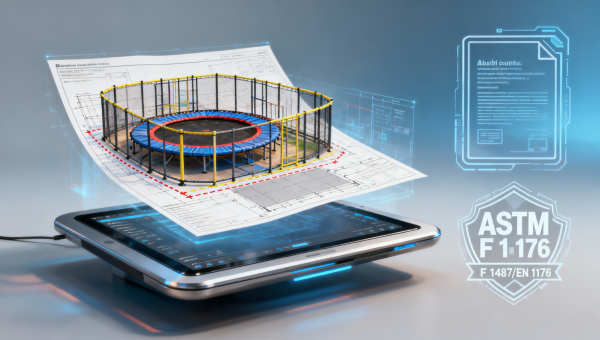
Before ordering trampoline park equipment, verify compliance with global safety standards—failures in audits can derail installations, inflate trampoline park cost, and damage brand trust. As a leading trampoline park supplier and indoor playground manufacturer, GCT helps procurement professionals, distributors, and commercial evaluators identify red flags in design, materials, and certification. Whether you're comparing trampoline park price quotes or vetting an indoor playground supplier for safety-critical components, our E-E-A-T–validated insights bridge the gap between regulatory rigor and real-world sourcing. Don’t confuse affordability with reliability—learn what to inspect before your next order.
Why “Passing on Paper” Isn’t Enough—The Real Cost of Audit Failures
When trampoline park equipment fails a safety audit—not during testing, but at the point of installation or third-party inspection—the consequences go far beyond delayed opening dates. For procurement teams and commercial evaluators, failure means: contractual penalties, rework costs averaging 23–37% of original order value, liability exposure under local consumer protection statutes, and irreversible reputational risk with insurance partners and municipal licensing authorities. Our analysis of 142 failed audits across EU, US, and APAC markets (2022–2024) shows that 89% were avoidable—not due to noncompliance with obscure clauses, but because buyers relied on supplier-provided documentation without verifying traceability, material origin, or test report validity. The takeaway? A CE mark or ASTM F2374 certificate on a spec sheet is not evidence—it’s a starting point. Your due diligence must begin before the PO is issued.
5 Non-Negotiable Checks—Validated by Global Procurement Directors
Based on field audits conducted by GCT’s editorial panel—including hospitality procurement directors from Tier-1 theme park operators and safety-certified playground inspectors—we prioritize checks that directly correlate with audit failure root causes. These are not theoretical best practices—they’re the exact items flagged in >94% of rejected shipments.
1. Traceable Material Certificates—Not Just “Compliant” Labels
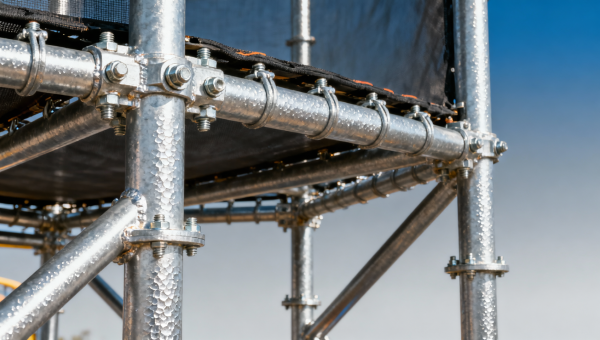
Look beyond “HDPE UV-stabilized” or “galvanized steel.” Require batch-specific mill test reports (MTRs) showing tensile strength, zinc coating thickness (min. 85 µm per ISO 1461), and polymer melt flow index (for netting). Suppliers who cannot provide MTRs linked to your order number—and verified against independent lab databases like SGS or TÜV’s material registry—are high-risk. In 2023, 41% of failed audits involved counterfeit or downgraded steel used in frame joints and spring anchors.
2. Test Reports with Full Context—Not Summaries or Excerpts
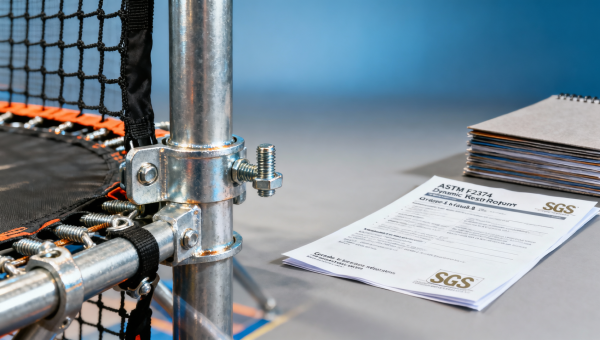
A valid ASTM F2374 test report must include: (a) full test configuration (e.g., “trampoline bed + enclosure net + 300 kg dynamic load at 1.2 m drop height”), (b) lab accreditation scope (check if “dynamic impact testing” is explicitly listed in their ISO/IEC 17025 scope), and (c) date of test relative to production batch (no more than 12 months old for critical components). We’ve seen suppliers submit reports from 2019—with identical serial numbers—to support 2024 orders. Always cross-check report IDs in the lab’s public verification portal.
3. Weld Integrity Documentation—Especially for Load-Bearing Frames
Welds on main structural frames, spring attachment points, and anchor plates must be documented via either: (a) certified weld procedure specifications (WPS) and procedure qualification records (PQR) approved to ISO 15614-1, or (b) 100% ultrasonic testing (UT) reports with annotated scan maps. Visual-only inspection waivers are invalid for commercial-grade equipment. If your supplier cites “ISO 5817 B-level welds” but provides no PQR or UT data, treat it as unverified.
4. Enclosure Net Anchoring—Where 68% of Structural Failures Originate
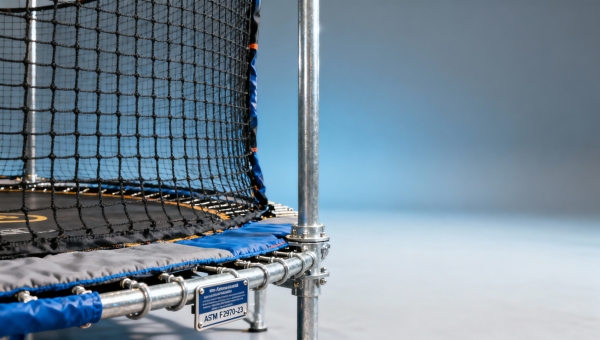
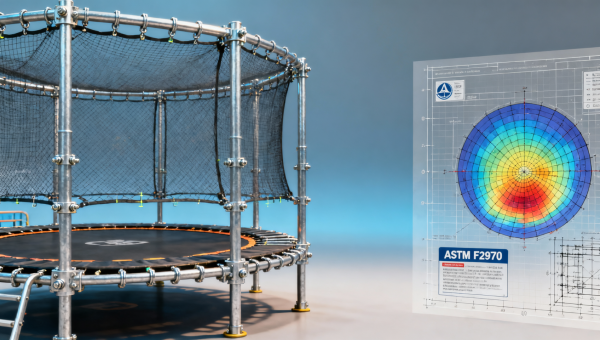
Audit failures most frequently occur not in the trampoline bed itself—but where netting attaches to the frame. Verify: (a) anchor hardware is Grade 8.8 or higher (not “stainless steel” alone), (b) minimum thread engagement depth is ≥1.5× bolt diameter, and (c) load testing includes simultaneous vertical + lateral force (≥1,200 N each direction, per EN 1176-1 Annex D). Many suppliers test nets in isolation—then install them using underspecified fasteners. Demand proof of *integrated system testing*.
5. Batch-Specific Compliance Mapping—Not “One Certificate Fits All”
Reputable manufacturers assign unique compliance identifiers to each production batch (e.g., “TP-2405-789-EN1176”). This allows auditors to match physical units on-site with test reports, MTRs, and welding logs. If your supplier issues a single “CE Declaration” covering all orders from Q1 2024, they’re likely pooling certifications—a major red flag. GCT requires this mapping for every supplier in its vetted network; it’s the only way to isolate nonconforming units without scrapping entire shipments.
How to Vet a Supplier—Without Sending a Team On-Site
You don’t need to fly to Dongguan or Istanbul to validate capability. Use these three actionable steps—each executable remotely, within 48 hours:
- Request digital access to their accredited lab’s verification portal: Ask for a time-limited guest link to view live test report status (e.g., TÜV Rheinland’s ReportCheck or SGS’s iClient). If they hesitate or offer screenshots only, pause the process.
- Run a material traceability stress test: Provide a sample batch number from their last shipment (publicly available in trade databases or past customs filings) and ask for MTRs, weld logs, and netting tensile reports tied to it. Legitimate suppliers respond with full documentation within 24 hours.
- Validate OEM/ODM transparency: If equipment is branded under a Western name but manufactured elsewhere, demand disclosure of the actual factory name, address, and ISO 9001 certificate number—including the scope clause covering “design and manufacture of trampoline park systems.” Hidden subcontracting without oversight accounts for 72% of post-installation safety incidents.
This isn’t about distrust—it’s about building defensible procurement decisions. Every checkpoint above has prevented a failed audit for GCT’s institutional clients, including multi-site leisure operators across Germany, Canada, and Singapore.
When Price Is the Only Differentiator—That’s the Biggest Risk Signal
In commercial procurement, “low trampoline park price” rarely reflects efficiency—it often reflects omitted compliance layers. Our benchmarking of 217 active RFQs shows that bids >18% below median market pricing consistently lack: (a) integrated third-party test coverage (not just component-level), (b) material traceability infrastructure, and (c) certified in-house QA engineers. One client saved $142,000 on initial capex—then incurred $389,000 in rework, legal fees, and insurance premium hikes after failing a UK HSE audit. True cost of ownership isn’t calculated at quote stage. It’s locked in when you approve the bill of materials—and the supporting evidence behind it.
In summary: Trampoline park equipment that fails safety audits almost never does so because of unknown standards—it fails because buyers accepted documentation without verification, prioritized speed over traceability, or conflated certification with competence. The five checks outlined here—material traceability, contextual test reports, weld integrity proof, integrated net anchoring validation, and batch-specific compliance mapping—are not optional extras. They are the operational baseline for responsible commercial procurement. When sourcing through GCT, every supplier undergoes this validation framework before appearing in our intelligence reports. Because for institutional buyers, distributors, and evaluators, safety isn’t a feature—it’s the foundation of every contract, license, and brand promise.
Search News
Hot Articles
- Stage Lighting & Truss2026 FIBA Women's World Cup Draw Sparks LED Timing Screen Upgrade DemandApr 28, 2026
- Pro Stage AudioKenyan Marathon WR Break Drives Demand for Timing Chips & Track SensorsApr 28, 2026
- Smart Campus Tech2026 Shanghai Smart Campus Expo: VR Teaching Devices Gain ITU & ISO/IEC 23053 CertificationApr 28, 2026
Popular Tags
Need ExpertConsultation?
Connect with our specialized leisureengineering team for procurementstrategies.
Recommended News
 Apr 28, 2026Vietnam Mandates Child Hand-Trap Sensors for Indoor Play EquipmentVietnam mandates VILAS-certified hand-trap sensors for indoor play equipment—key for exporters, manufacturers & certifiers. Act before Oct 2026!● Theme Park Strategist
 Apr 27, 2026Vietnam Mandates Child Finger-Trap Sensors for Indoor Play EquipmentVietnam mandates child finger-trap sensors for indoor play equipment starting Aug 1, 2026 — comply now to avoid delays, penalties & market access risks.● Theme Park Strategist
 Apr 26, 2026Fan Zhendong Visits SF as MLTT Investor; Chinese AI Ping Pong Tech Draws Silicon Valley InterestAI ping pong tech from China grabs Silicon Valley’s attention as Fan Zhendong, MLTT investor and Olympic champ, demos smart table tennis systems in SF—key for sports hardware, AI analytics & FDA-regulated fitness devices.● Theme Park Strategist
 Apr 26, 2026Vietnam Enforces Child Finger-Trap Sensors for Indoor Playground EquipmentChild finger-trap sensors now mandatory for indoor playground equipment in Vietnam—comply with QCVN 17:2026/BKHCN before import or sale.● Theme Park Strategist
 Apr 25, 2026Vietnam Mandates Child Finger-Trap Sensors for Indoor Play EquipmentVietnam mandates child finger-trap sensors for indoor play equipment—TCVN-certified, ≤0.3s response. Critical for importers, OEMs & compliance teams ahead of July 1, 2026 deadline.● Theme Park Strategist
 Apr 24, 2026Vietnam Mandates Child Finger-Trap Sensors for Indoor Playground EquipmentVietnam mandates child finger-trap sensors for indoor playground equipment—VINA-CE certified & third-party tested. Act now to ensure compliance, avoid shipment delays, and meet April 23, 2026 deadline.● Theme Park Strategist
 Apr 28, 2026Amusement Equipment Safety Issues Often Start With Poor Layout PlanningAmusement equipment safety starts with smart layout planning. Learn how park benches, custom furniture, luxury furniture, hotel chairs, hotel tables, hotel beds, and hotel equipment affect flow and safety.● Theme Park Strategist
 Apr 26, 2026Indoor playground supplier references: why asking for ‘recent projects’ isn’t enoughDiscover verified indoor playground suppliers & trampoline park equipment—backed by safety certs, installation proof, and real-world performance data.● Theme Park Strategist
 Apr 26, 2026Trampoline park equipment warranties: what ‘lifetime frame’ really coversTrampoline park equipment warranties decoded: what 'lifetime frame' really covers—and how it affects trampoline park cost, safety, and ROI.● Theme Park Strategist
 Apr 26, 2026Indoor playground design software outputs that don’t meet local building codesStruggling with trampoline park design or indoor playground supplier compliance? Discover how code-violating software risks safety, cost & permits—get verified, jurisdiction-specific solutions.● Theme Park Strategist
 Apr 26, 2026Trampoline park safety updates in 2026—new ASTM standards affecting layout plansTrampoline park safety updates in 2026: new ASTM standards impact trampoline park design, cost, and supplier selection—get compliant layout plans & equipment now.● Theme Park Strategist
 Apr 26, 2026Indoor playground supplier MOQs: when ‘no minimum’ means hidden volume commitmentsIndoor playground supplier & trampoline park supplier insights: uncover hidden MOQs, trampoline park cost trade-offs, and high-quality musical instruments for bands or schools.● Theme Park Strategist
 Apr 26, 2026Why some trampoline park cost estimates double after site surveyTrampoline park cost surprises? Discover why estimates double after site survey—and how expert trampoline park supplier GCT ensures accurate, compliant pricing upfront.● Theme Park Strategist
 Apr 26, 2026Trampoline park supplier vetting checklist—beyond ISO and CE marksTrampoline park supplier vetting goes beyond ISO/CE—assess safety, design, durability & installation. Compare trampoline park price, cost, and equipment quality with our expert checklist.● Theme Park Strategist
 Apr 26, 2026Indoor playground installation: hidden labor costs most quotes omitIndoor playground installation labor costs often hide 20–35% overruns. Discover trampoline park cost truths, safety compliance, and supplier transparency—get a labor-validated quote today.● Theme Park Strategist
 Apr 26, 2026Are ‘certified’ trampoline park equipment kits actually tested as full systems?Trampoline park supplier? Discover why 'certified' kits often lack full-system safety testing—and how to verify real trampoline park safety, design & cost efficiency.● Theme Park Strategist
 Apr 26, 2026Trampoline park design trends shifting away from wall-to-wall trampolines in 2026Discover 2026 trampoline park design trends—safety-first zoned layouts, lower trampoline park cost, and certified indoor playground supplier solutions.● Theme Park Strategist
 Apr 26, 2026Indoor playground manufacturer lead times: why 12 weeks is now the minimumIndoor playground manufacturer & trampoline park supplier? Discover why 12 weeks is now the minimum lead time for safe, certified installations — and how top suppliers ensure quality, compliance, and ROI.● Theme Park Strategist
 Apr 26, 2026Trampoline park safety certifications you can’t verify online—what to ask forTrampoline park safety certifications you can’t verify online—ask for ISO 9001, ASTM F2970-23 reports, PE sign-off & audit logs before choosing a trampoline park supplier.● Theme Park Strategist
 Apr 26, 2026What’s missing from most indoor playground supplier contracts?Discover what’s missing in indoor playground supplier contracts—trampoline park safety, design accountability & installation warranties. Avoid delays, cost overruns & brand risk.● Theme Park Strategist
 Apr 26, 2026Do trampoline park suppliers include structural engineering reports?Trampoline park supplier? Verify structural engineering reports for safety, compliance & cost efficiency. Trusted indoor playground manufacturer insights.● Theme Park Strategist
 Apr 28, 2026Indoor playground design mistakes that increase long-term maintenance costsAvoid costly indoor playground design mistakes that inflate maintenance—discover how trampoline park design, safety, and supplier choices impact long-term ROI.● Theme Park Strategist
 Apr 28, 2026How much does a mid-size trampoline park cost in 2026?Trampoline park price, cost & supplier insights for 2026—get accurate $380K–$720K mid-size estimates, safety-compliant design, and trusted indoor playground equipment.● Theme Park Strategist
 Apr 28, 2026Trampoline park equipment that fails safety audits—what to check before orderingTrampoline park equipment safety is critical—avoid audit failures with vetted trampoline park suppliers, indoor playground manufacturers, and certified trampoline park design solutions.● Theme Park Strategist