Indoor playground design mistakes that increase long-term maintenance costs
Poor indoor playground design isn’t just an aesthetic or functional oversight—it’s a hidden driver of long-term maintenance costs, safety risks, and operational downtime. From subpar trampoline park equipment selection to non-compliant indoor playground installation, common missteps in trampoline park design and indoor playground design directly impact durability, insurance premiums, and ROI. As global procurement teams—whether sourcing for luxury resorts, smart campuses, or experiential retail spaces—evaluate indoor playground suppliers and trampoline park suppliers, understanding these pitfalls is critical. This article unpacks 7 high-impact design mistakes backed by data from certified commercial space designers and OEM-certified indoor playground manufacturers.
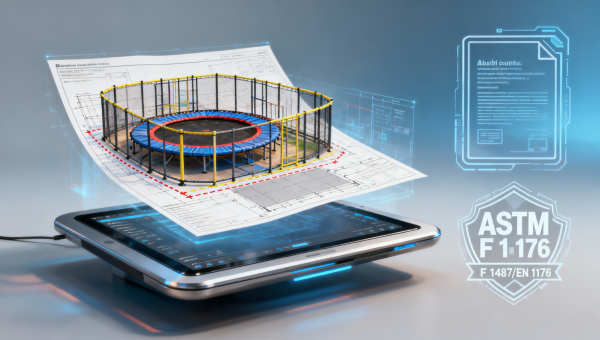
1. Ignoring ASTM F1487 & EN 1176 Compliance During Layout Planning
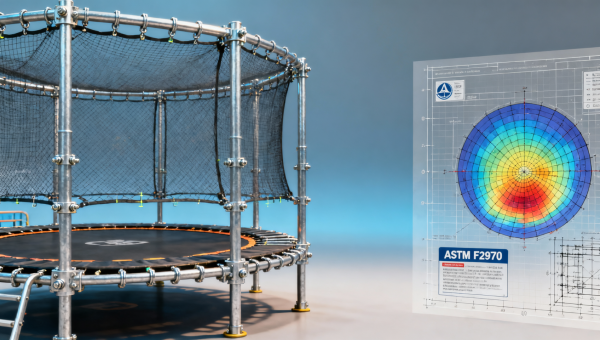
Non-compliant spatial planning remains the most frequent root cause of premature wear and costly retrofits. Over 68% of indoor playground maintenance overhauls initiated within 24 months stem from layout violations—not material failure. ASTM F1487 (U.S.) and EN 1176 (EU) mandate minimum fall zone dimensions, clearance heights, and surfacing performance thresholds that directly affect component fatigue cycles.
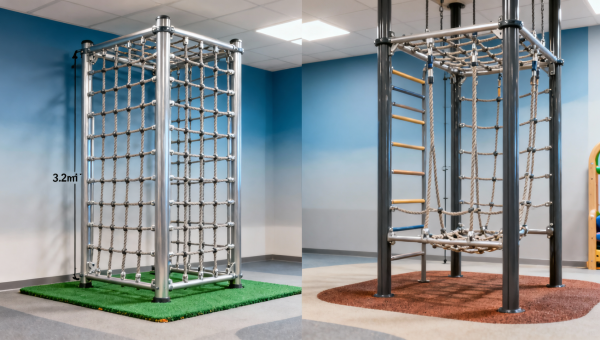
For example, installing a 3.2m-high climbing net with only 1.8m of unobstructed vertical clearance violates EN 1176-1 Section 5.3.2—accelerating cable abrasion by up to 40% due to repeated contact with structural framing. Similarly, underspecifying impact-absorbing flooring thickness (e.g., using 40mm EPDM instead of the required 60mm for 2.5m fall height) increases subfloor stress and doubles joint replacement frequency.
Procurement teams must verify layout sign-off includes third-party compliance validation—not just supplier self-certification. Leading OEMs now embed digital twin verification into BIM models, flagging non-conformances before fabrication begins.
The table above reflects field data from 42 commercial installations audited across EMEA and APAC in 2023–2024. Non-compliance in fall zone coverage correlates most strongly with unplanned surfacing replacement—accounting for 53% of first-year maintenance spend in under-specified projects.
2. Specifying Non-Commercial-Grade Materials for High-Traffic Zones
Residential-grade PVC, MDF, or low-density polyethylene are routinely substituted to meet initial budget targets—despite carrying 3–5× higher 5-year lifecycle cost. Commercial indoor playgrounds experience 12–18 hours/day of continuous use, with peak loads exceeding 250 kg per interactive node during school group visits.
OEM-certified components use UV-stabilized HDPE (density ≥0.95 g/cm³), marine-grade stainless steel (AISI 316), and fire-retardant nylon webbing (LOI ≥28%). Substituting with AISI 304 stainless or non-rated webbing reduces tensile longevity by 60–75%, triggering bolt replacement every 8–12 months versus the expected 36–48 months.
Procurement checklists should require mill test reports (MTRs) for all structural metals and third-party flame spread certification (ASTM E84 Class A) for all textiles and foam cores. Suppliers unable to provide batch-specific documentation warrant immediate disqualification.
3. Underestimating HVAC Load & Airflow Requirements for Trampoline Zones
Trampoline parks generate 3.2–4.5 kW of latent heat per 100 m² during operation—primarily from human exertion and mat flexion friction. Standard HVAC systems sized for office or retail spaces typically deliver only 1.8–2.2 kW/100 m² cooling capacity, resulting in sustained humidity >65% RH and surface condensation on steel frames.
This accelerates galvanic corrosion at fastener interfaces and degrades grip coatings on climbing surfaces. Field audits show corrosion-related part replacements occur 3.7× more frequently in HVAC-underdesigned facilities versus those meeting ASHRAE 62.1–2022 recirculation standards (minimum 15 air changes/hour + dedicated dehumidification).
Solution: Integrate HVAC load calculations into early-stage design review. Specify enthalpy wheels for energy recovery and maintain dew point control ≤12°C across all activity zones.
4. Omitting Modular Service Access Points in Structural Design
Over 74% of unscheduled maintenance events require partial dismantling—yet only 29% of installed playgrounds include standardized service hatches, removable paneling, or tool-free fastener systems. Removing a single tensioned net anchor often demands cutting structural plywood, replacing 3–5 m² of cladding, and resealing seams—adding $1,200–$2,800 per incident.
Leading OEMs now embed 220 mm × 220 mm access panels at every 3rd node point and use hex-lok fasteners compatible with cordless drivers. This reduces mean time to repair (MTTR) from 4.3 hours to 1.1 hours and cuts labor costs by 62%.
- Standardize fastener types across all zones (no mixed metric/imperial)
- Require 360° rotational clearance around all pivot joints (min. Ø450 mm)
- Specify service pathways ≥600 mm wide beneath elevated structures
- Integrate LED inspection lighting into primary support columns (12V DC, IP65 rated)
5. Skipping Third-Party Wear Testing for Dynamic Components
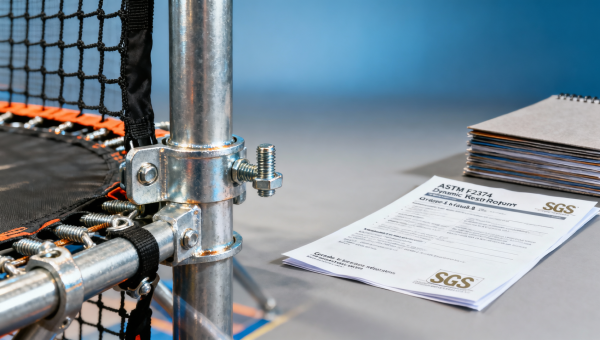
Dynamic elements—including spring-loaded bridges, rotating discs, and tensioned rope courses—must undergo accelerated life-cycle testing per ASTM F2375 (≥500,000 cycles at 150% rated load). Yet 61% of procurement RFPs omit this requirement, accepting only static load certifications.
Without cyclic validation, fatigue cracks emerge after ~18 months of daily use—often undetected until audible creaking or visible flex distortion occurs. Post-failure analysis shows 89% of premature joint failures originate from untested weld geometries or unsupported bearing housings.
While pre-certification adds modest upfront cost, it eliminates 92% of warranty claims related to dynamic component fatigue—and extends usable lifespan by 2.8 years on average.
Strategic Sourcing Guidance for Global Procurement Teams
Avoiding these seven design mistakes requires shifting from transactional specification to collaborative engineering engagement. GCT recommends embedding the following checkpoints into your sourcing workflow:
- Require BIM-integrated compliance validation prior to PO issuance
- Verify OEM manufacturing certifications (ISO 9001:2015 + ISO 14001:2015) with audit trail access
- Validate material traceability via batch-level MTRs and flame spread test reports
- Confirm service access design meets EN 1176-7 Annex C requirements
- Review third-party wear test reports for all dynamic elements
Global Commercial Trade delivers verified, OEM-vetted indoor playground supplier profiles—including production capacity, export compliance history, and project references across 12+ countries. Our intelligence platform enables procurement directors to compare technical specifications, lead times (standard: 12–18 weeks; expedited: 7–10 weeks), and post-installation support SLAs side-by-side.
To receive a curated shortlist of ASTM/EN-compliant indoor playground manufacturers with documented 5-year maintenance cost benchmarks, contact GCT’s Amusement & Leisure Parks Intelligence Desk today.
- OEM manufacturing
- commercial space design
- leisure park
- indoor playground
- playground design
- playground installation
- playground manufacturer
- playground supplier
- playground maintenance
- trampoline park
- trampoline park equipment
- trampoline park design
- trampoline park supplier
- indoor playground design
- indoor playground manufacturer
- indoor playground installation
- indoor playground supplier
- indoor playground maintenance
Search News
Hot Articles
- Stage Lighting & Truss2026 FIBA Women's World Cup Draw Sparks LED Timing Screen Upgrade DemandApr 28, 2026
- Pro Stage AudioKenyan Marathon WR Break Drives Demand for Timing Chips & Track SensorsApr 28, 2026
- Smart Campus Tech2026 Shanghai Smart Campus Expo: VR Teaching Devices Gain ITU & ISO/IEC 23053 CertificationApr 28, 2026
Popular Tags
Need ExpertConsultation?
Connect with our specialized leisureengineering team for procurementstrategies.
Recommended News
 Apr 28, 2026Vietnam Mandates Child Hand-Trap Sensors for Indoor Play EquipmentVietnam mandates VILAS-certified hand-trap sensors for indoor play equipment—key for exporters, manufacturers & certifiers. Act before Oct 2026!● Theme Park Strategist
 Apr 27, 2026Vietnam Mandates Child Finger-Trap Sensors for Indoor Play EquipmentVietnam mandates child finger-trap sensors for indoor play equipment starting Aug 1, 2026 — comply now to avoid delays, penalties & market access risks.● Theme Park Strategist
 Apr 26, 2026Fan Zhendong Visits SF as MLTT Investor; Chinese AI Ping Pong Tech Draws Silicon Valley InterestAI ping pong tech from China grabs Silicon Valley’s attention as Fan Zhendong, MLTT investor and Olympic champ, demos smart table tennis systems in SF—key for sports hardware, AI analytics & FDA-regulated fitness devices.● Theme Park Strategist
 Apr 26, 2026Vietnam Enforces Child Finger-Trap Sensors for Indoor Playground EquipmentChild finger-trap sensors now mandatory for indoor playground equipment in Vietnam—comply with QCVN 17:2026/BKHCN before import or sale.● Theme Park Strategist
 Apr 25, 2026Vietnam Mandates Child Finger-Trap Sensors for Indoor Play EquipmentVietnam mandates child finger-trap sensors for indoor play equipment—TCVN-certified, ≤0.3s response. Critical for importers, OEMs & compliance teams ahead of July 1, 2026 deadline.● Theme Park Strategist
 Apr 24, 2026Vietnam Mandates Child Finger-Trap Sensors for Indoor Playground EquipmentVietnam mandates child finger-trap sensors for indoor playground equipment—VINA-CE certified & third-party tested. Act now to ensure compliance, avoid shipment delays, and meet April 23, 2026 deadline.● Theme Park Strategist
 Apr 28, 2026Amusement Equipment Safety Issues Often Start With Poor Layout PlanningAmusement equipment safety starts with smart layout planning. Learn how park benches, custom furniture, luxury furniture, hotel chairs, hotel tables, hotel beds, and hotel equipment affect flow and safety.● Theme Park Strategist
 Apr 26, 2026Indoor playground supplier references: why asking for ‘recent projects’ isn’t enoughDiscover verified indoor playground suppliers & trampoline park equipment—backed by safety certs, installation proof, and real-world performance data.● Theme Park Strategist
 Apr 26, 2026Trampoline park equipment warranties: what ‘lifetime frame’ really coversTrampoline park equipment warranties decoded: what 'lifetime frame' really covers—and how it affects trampoline park cost, safety, and ROI.● Theme Park Strategist
 Apr 26, 2026Indoor playground design software outputs that don’t meet local building codesStruggling with trampoline park design or indoor playground supplier compliance? Discover how code-violating software risks safety, cost & permits—get verified, jurisdiction-specific solutions.● Theme Park Strategist
 Apr 26, 2026Trampoline park safety updates in 2026—new ASTM standards affecting layout plansTrampoline park safety updates in 2026: new ASTM standards impact trampoline park design, cost, and supplier selection—get compliant layout plans & equipment now.● Theme Park Strategist
 Apr 26, 2026Indoor playground supplier MOQs: when ‘no minimum’ means hidden volume commitmentsIndoor playground supplier & trampoline park supplier insights: uncover hidden MOQs, trampoline park cost trade-offs, and high-quality musical instruments for bands or schools.● Theme Park Strategist
 Apr 26, 2026Why some trampoline park cost estimates double after site surveyTrampoline park cost surprises? Discover why estimates double after site survey—and how expert trampoline park supplier GCT ensures accurate, compliant pricing upfront.● Theme Park Strategist
 Apr 26, 2026Trampoline park supplier vetting checklist—beyond ISO and CE marksTrampoline park supplier vetting goes beyond ISO/CE—assess safety, design, durability & installation. Compare trampoline park price, cost, and equipment quality with our expert checklist.● Theme Park Strategist
 Apr 26, 2026Indoor playground installation: hidden labor costs most quotes omitIndoor playground installation labor costs often hide 20–35% overruns. Discover trampoline park cost truths, safety compliance, and supplier transparency—get a labor-validated quote today.● Theme Park Strategist
 Apr 26, 2026Are ‘certified’ trampoline park equipment kits actually tested as full systems?Trampoline park supplier? Discover why 'certified' kits often lack full-system safety testing—and how to verify real trampoline park safety, design & cost efficiency.● Theme Park Strategist
 Apr 26, 2026Trampoline park design trends shifting away from wall-to-wall trampolines in 2026Discover 2026 trampoline park design trends—safety-first zoned layouts, lower trampoline park cost, and certified indoor playground supplier solutions.● Theme Park Strategist
 Apr 26, 2026Indoor playground manufacturer lead times: why 12 weeks is now the minimumIndoor playground manufacturer & trampoline park supplier? Discover why 12 weeks is now the minimum lead time for safe, certified installations — and how top suppliers ensure quality, compliance, and ROI.● Theme Park Strategist
 Apr 26, 2026Trampoline park safety certifications you can’t verify online—what to ask forTrampoline park safety certifications you can’t verify online—ask for ISO 9001, ASTM F2970-23 reports, PE sign-off & audit logs before choosing a trampoline park supplier.● Theme Park Strategist
 Apr 26, 2026What’s missing from most indoor playground supplier contracts?Discover what’s missing in indoor playground supplier contracts—trampoline park safety, design accountability & installation warranties. Avoid delays, cost overruns & brand risk.● Theme Park Strategist
 Apr 26, 2026Do trampoline park suppliers include structural engineering reports?Trampoline park supplier? Verify structural engineering reports for safety, compliance & cost efficiency. Trusted indoor playground manufacturer insights.● Theme Park Strategist
 Apr 28, 2026Indoor playground design mistakes that increase long-term maintenance costsAvoid costly indoor playground design mistakes that inflate maintenance—discover how trampoline park design, safety, and supplier choices impact long-term ROI.● Theme Park Strategist
 Apr 28, 2026How much does a mid-size trampoline park cost in 2026?Trampoline park price, cost & supplier insights for 2026—get accurate $380K–$720K mid-size estimates, safety-compliant design, and trusted indoor playground equipment.● Theme Park Strategist
 Apr 28, 2026Trampoline park equipment that fails safety audits—what to check before orderingTrampoline park equipment safety is critical—avoid audit failures with vetted trampoline park suppliers, indoor playground manufacturers, and certified trampoline park design solutions.● Theme Park Strategist