What Makes a Trampoline Park Profitable Beyond Ticket Sales?
A profitable trampoline park relies on far more than ticket sales. From arcade games, indoor playground zones, and adventure playground upgrades to strategic partnerships and high-margin add-ons, operators are building stronger revenue models. For buyers, distributors, and business evaluators, understanding how a trampoline park expands commercial value across entertainment categories is essential to making smarter sourcing and investment decisions.
In the sports and entertainment sector, trampoline parks are no longer single-attraction venues. The most resilient facilities combine active play, family dwell time, food service, event programming, and retail-style upselling into one integrated business model. For procurement teams and channel partners, this changes the sourcing conversation from buying equipment to designing a revenue system.
That shift matters because profitability is shaped by utilization rate, visitor mix, safety management, maintenance efficiency, and the ability to monetize every square meter. A park that sells only jump sessions may struggle with seasonality and low average spend, while a diversified venue can generate income across weekdays, weekends, school holidays, and private events.
Why Ticket Revenue Alone Is Not Enough
A trampoline park usually operates with high fixed costs. Lease payments, staff coverage, insurance, cleaning, equipment inspection, and power consumption continue whether attendance is high or low. If the business relies only on 60-minute or 90-minute jump tickets, revenue can become too dependent on weekend traffic and holiday peaks.
In many indoor entertainment facilities, ticketing may remain the primary income source, but not always the highest-margin one. Operators often target at least 3 to 5 complementary revenue streams so that average revenue per visitor rises even when footfall is flat. This is especially important in parks where occupancy varies sharply between school days and peak family periods.
From a sourcing perspective, the question is not simply whether trampoline equipment is durable. It is whether the overall layout supports longer stays, repeat visits, and cross-selling. A venue that extends dwell time from 75 minutes to 120 minutes often creates more opportunities for food, arcade credits, birthday packages, grip socks, lockers, and photo products.
Commercial buyers should therefore evaluate a park as a multi-zone entertainment asset. The trampoline area may anchor the venue, but profitability often comes from how effectively that anchor feeds adjacent attractions and premium services.
Core limitations of a ticket-only model
- Revenue concentration in only 1 product category, which increases vulnerability to local competition.
- Lower monetization of non-jumping companions such as parents, siblings, or group organizers.
- Reduced ability to offset quiet periods, especially weekday mornings and off-season months.
- Less flexibility in pricing when inflation raises operating costs by 5% to 12% over a contract cycle.
The table below shows how a trampoline park’s income mix changes when add-on categories are introduced alongside admission sales.
The main takeaway is that profitability improves when each visitor has more than one opportunity to spend. For procurement and distribution stakeholders, this means equipment selection should support bundled consumption rather than isolated admission sales.
The Revenue Layers That Strengthen Commercial Performance
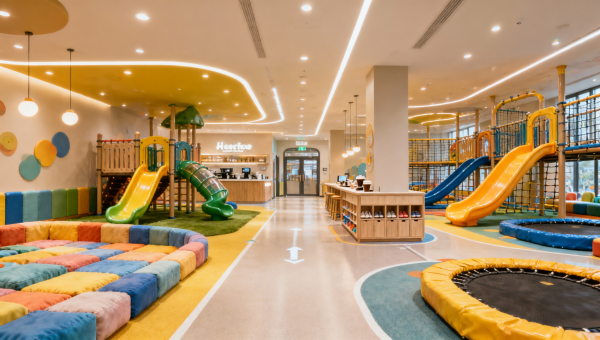
A well-planned trampoline park often combines at least 4 functional layers: core jumping attractions, secondary play zones, event-based packages, and retail or service add-ons. The value of this structure is commercial balance. When one category slows, another can support daily cash flow and staff productivity.
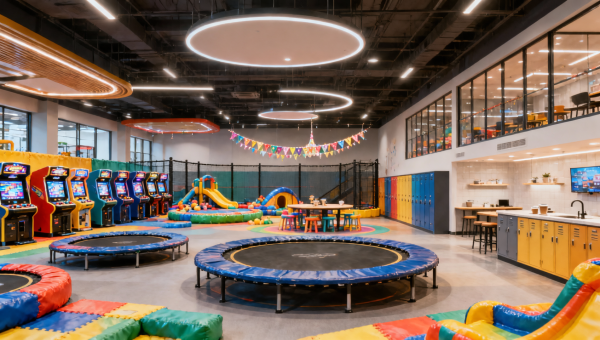
Arcade games are a common example. They appeal to guests waiting for jump sessions, younger siblings below the preferred jump age, and visitors who want shorter play bursts. Even a modest 8 to 20-machine arcade zone can materially increase per-cap spending when placed near the entrance, café, or redemption counter.
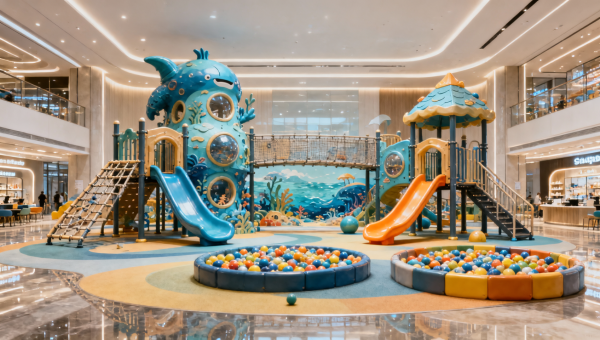
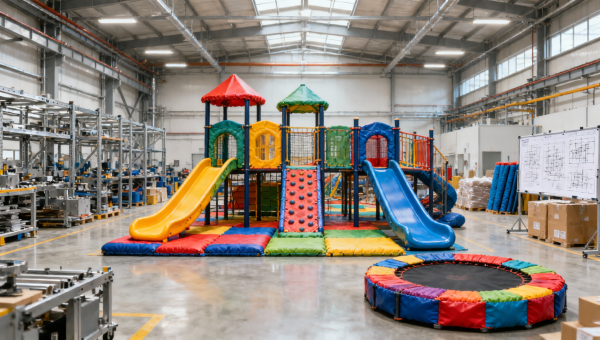
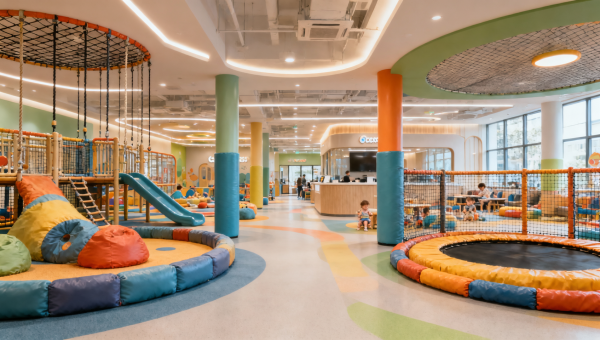
Indoor playground areas create another profit layer. Soft play, toddler zones, climbing elements, and sensory play structures broaden the age range, making the venue attractive for families with children from 2 to 12 years old. This matters because family groups often choose venues that can entertain different age brackets at the same time.
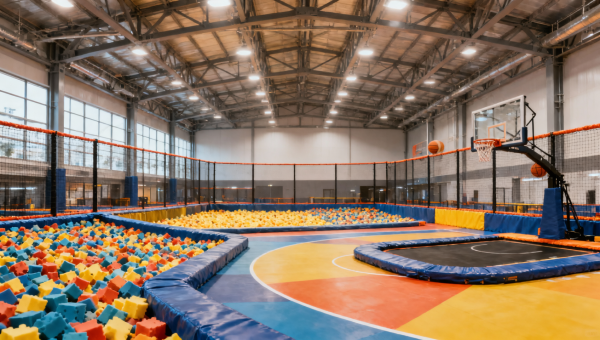
Adventure playground upgrades, such as ninja courses, rope obstacles, dodgeball courts, foam pits, reaction walls, or climbing walls, also help reduce product fatigue. Instead of revisiting the same park for only one trampoline experience, customers perceive a larger activity mix and are more likely to return within 30 to 90 days.
High-value add-ons with practical B2B impact
For buyers evaluating equipment packages or expansion plans, the following add-ons tend to improve commercial performance when properly matched to local demand and site size.
- Birthday rooms and party hosting services, which convert family visits into pre-booked packages with food, jump time, and private room access.
- Memberships and multi-visit passes, which help stabilize repeat traffic over 3-month, 6-month, or annual periods.
- Branded grip socks, lockers, and merchandise, which provide low-space ancillary sales.
- Corporate events, school bookings, and team sessions, which fill lower-demand weekday slots between 10:00 and 16:00.
Layout drives spend conversion
Commercial performance is also influenced by traffic flow. If the café, arcade, and party rooms sit outside the natural customer path, spending rates may remain weak. By contrast, parks that place waiting zones, food counters, and redemption points along the guest journey usually increase conversion without raising footfall.
The table below compares common profit-building zones and their operational value in a modern trampoline park.
For distributors and sourcing managers, the most effective package is not always the largest one. It is the combination that suits local demographics, available floor area, staffing capability, and targeted revenue mix.
Designing a Profitable Park Through Space Planning and Procurement
Profitability begins before opening day. Space planning, material selection, and supplier coordination determine how safely and efficiently the park will operate over the next 3 to 7 years. Buyers should evaluate not only attraction appeal but also throughput, cleaning access, modularity, spare parts availability, and inspection practicality.
In many projects, operators over-invest in visually impressive trampoline layouts while under-investing in support zones. However, reception, footwear control, queuing areas, seating, food preparation, storage, and party rooms all influence spending and staff efficiency. A poor layout may create bottlenecks even when attraction quality is high.
For medium-sized indoor parks, a practical planning approach is to divide the site into 5 commercial functions: active play, spectator and waiting area, food and beverage, event space, and service back-of-house. This structure helps procurement teams compare vendor proposals with clearer operational objectives instead of making decisions on attraction count alone.
Commercial sourcing also benefits from modular thinking. Parks that reserve 10% to 15% of floor flexibility for future refreshes can rotate features without full reconstruction. This matters in competitive markets where a partial upgrade after 18 to 24 months may be more viable than a complete redesign.
What procurement teams should verify before purchase
- Material durability for high-frequency use, especially pads, springs, jump mats, netting, and climbing grips.
- Maintenance accessibility, including how quickly components can be inspected or replaced during weekly checks.
- Lead time realism, with typical commercial production and delivery cycles ranging from 4 to 12 weeks depending on customization.
- Installation scope clarity, including whether freight, on-site assembly, training, and spare parts kits are separately priced.
- Compatibility between trampoline systems and adjacent zones such as soft play, arcade, or café layouts.
The following table outlines procurement factors that directly affect long-term profitability rather than only initial capital expenditure.
This comparison shows why lowest purchase price is not always the strongest commercial choice. A slightly higher initial investment can be justified when it reduces downtime, simplifies maintenance, and preserves upgrade flexibility.
Operations, Safety, and Repeat Business as Profit Drivers
In active entertainment venues, operational discipline directly affects revenue. Safety incidents, poor cleanliness, long check-in lines, or inconsistent staff supervision can lower reviews, reduce repeat visits, and increase liability exposure. For that reason, profitable trampoline parks manage operations as carefully as they manage attraction design.
Routine inspection schedules are one of the most practical profit protections. Daily visual checks, weekly functional reviews, and monthly maintenance logging help identify wear before a closure becomes necessary. Even a 1-day closure during a peak weekend can reduce revenue across tickets, food, parties, and arcade use at the same time.
Staffing structure also matters. Parks typically need trained supervisors for jump areas, front-desk staff for waivers and admissions, cleaning support, and event hosts for group bookings. Understaffing may appear to save labor cost, but it often reduces customer throughput and lowers upsell performance at the point of service.
Repeat business is another major profit driver. Memberships, school partnerships, loyalty credits, and event packages can reduce customer acquisition pressure. In practice, a venue with a healthy repeat base can better absorb slow tourism periods or weather-related demand swings than one dependent only on first-time visitors.
Operational priorities that influence profitability
- Maintain clear age zoning and user rules to reduce conflict between toddlers, children, and teens.
- Use timed sessions and digital booking controls to balance occupancy during 30-minute or 60-minute entry windows.
- Schedule maintenance outside peak hours to protect weekend capacity.
- Train staff to recommend party upgrades, food bundles, or return passes during natural customer touchpoints.
Common commercial mistakes
One common mistake is focusing only on opening-day attraction count. Another is ignoring replacement planning for high-contact items such as padding and socks. A third is failing to build offers for non-jump visitors. Parents and guardians may not buy admission, but they can still generate café, seating, and event revenue if the venue is designed for them.
For business evaluators, a strong park is not simply busy. It is operationally stable, safety-conscious, and able to convert visits into recurring customer value over 6 to 12 months.
What Buyers, Distributors, and Evaluators Should Ask Before Investing
For B2B stakeholders, the most useful question is not “How much does a trampoline park cost?” but “What revenue architecture can this park support?” The answer depends on site size, target customer profile, regional competition, and how effectively the equipment package matches the intended operating model.
Distributors and agents should assess whether a supplier can support different market tiers, from compact family-focused sites to larger mixed-entertainment centers. Procurement teams should examine documentation quality, customization scope, packaging standards, and coordination capacity across multiple product categories such as trampoline systems, soft play, and amusement add-ons.
Business evaluators should also study revenue resilience. A park that can produce income from tickets, parties, food, arcade activity, memberships, and group bookings is generally better positioned than one relying on only 1 or 2 categories. This is especially relevant in markets with rising rent, labor, and utility costs.
GCT’s value in this environment is the ability to connect sourcing strategy with commercial-use reality. For buyers in amusement and leisure parks, the priority is not just finding products, but identifying suppliers and configurations that can perform reliably in real operating conditions and support broader experiential business goals.
Practical evaluation checklist
Before finalizing a project or supplier shortlist, decision-makers can use the following checklist to align procurement with profitability targets.
A disciplined evaluation process helps buyers avoid underperforming layouts, mismatched attraction mixes, and service gaps that may only become visible after launch.
FAQ for commercial decision-makers
How many revenue streams should a trampoline park ideally have?
A practical benchmark is 4 to 6 streams: ticketing, parties, food and beverage, arcade or games, merchandise, and memberships or group events. The exact mix depends on floor area and local demand, but relying on only 1 or 2 streams usually limits resilience.
Which add-on delivers the fastest commercial impact?
In many family-focused venues, party rooms and arcade zones are among the fastest to influence spend because they monetize both group bookings and waiting time. However, the best result comes from matching the add-on to the customer profile rather than following a generic template.
What lead time should buyers expect for a commercial trampoline park project?
Typical project timing can range from 4 to 12 weeks for production and delivery, with additional time for site preparation, installation, and local approvals. Complex custom projects or multi-zone entertainment centers may require longer scheduling buffers.
What is the biggest sourcing mistake in this category?
The biggest mistake is buying attractions without a commercial layout strategy. Equipment may look impressive, but if it does not support flow, age segmentation, party sales, maintenance access, and ancillary spending, the park may underperform despite strong initial attendance.
A profitable trampoline park is built on diversified revenue, smart layout planning, disciplined operations, and supplier choices that support long-term commercial performance. Tickets remain essential, but the strongest venues create value through arcade integration, indoor playground coverage, adventure upgrades, event packaging, and repeat-visit mechanisms.
For information researchers, procurement professionals, business evaluators, and channel partners, the key is to assess the full operating model rather than the attraction list alone. If you are exploring trampoline park sourcing, expansion planning, or integrated amusement solutions, contact GCT to get tailored guidance, compare commercial configurations, and learn more about practical solutions for modern entertainment spaces.
Search News
Hot Articles
- Stage Lighting & TrussCCTV5 Snooker Broadcast Drives 37% Surge in Stage Lighting Export InquiriesApr 21, 2026
- Indoor PlaygroundVietnam Mandates Child Finger-Trap Sensors for Indoor Play EquipmentApr 21, 2026
- Stage Lighting & TrussGuangdong vs. Shanxi CBA Game Highlights Domestic Smart Arena LightingApr 21, 2026
Popular Tags
Need ExpertConsultation?
Connect with our specialized leisureengineering team for procurementstrategies.
Recommended News
 Apr 21, 2026Vietnam Mandates Child Finger-Trap Sensors for Indoor Play EquipmentVietnam mandates child finger-trap sensors for indoor play equipment—comply with TCVN 9507:2023 by July 1, 2026 to clear customs & protect kids.● Theme Park Strategist
 Apr 20, 2026NES Launches Sports Community Curator ProgramSports Community Curator program launched by NES — join global fitness studios, uni clubs & outdoor groups to co-create, test gear & grow with Chinese sports brands.● Theme Park Strategist
 Apr 17, 2026CPSC AI Safety Alert: 200ms Delay in Child Playground AI Systems = HazardCPSC AI Safety Alert: 200ms delay in child playground AI systems = hazard. Learn how latency compliance impacts Target/Walmart listings, testing, and supply chain.● Theme Park Strategist
 Apr 17, 20262026 Shanghai Sailing Open Adopts Domestic SeaChronos Pro Timing SystemSeaChronos Pro timing system debuts at 2026 Shanghai Sailing Open — ITU-certified, millisecond-accurate, wind- and tide-integrated. A game-changer for marine sports tech.● Theme Park Strategist
 Apr 16, 2026FDA Proposes New Labeling Rules for Sports Nutrition Supplements with Chinese LabelsFDA's new labeling rules for sports nutrition supplements with Chinese labels take effect April 2026—learn compliance must-dos for U.S. importers, manufacturers & brands.● Theme Park Strategist
 Apr 15, 2026Saudi SASO Updates Amusement Ride Standards: VR Devices Now Require Mandatory EMC TestingSaudi SASO's new 2026 standard mandates EMC testing for VR amusement rides, impacting exporters. Learn key compliance strategies for Saudi market access.● Theme Park Strategist
 Apr 14, 2026Japan Mandates Multilingual E-Manuals for Fitness Equipment from April 2026Japan mandates multilingual e-manuals for fitness equipment from April 2026. Learn how this impacts manufacturers & importers with JIS T 0601-1 compliance requirements. Stay ahead of the regulation!● Theme Park Strategist
 Apr 13, 2026WTT Taiyuan Adopts Chinese AI Table Tennis Analysis System with ITTF Export CertificationWTT Taiyuan adopts Chinese AI table tennis analysis system with ITTF export certification, enabling real-time ball speed & spin tracking. A game-changer for sports tech in emerging markets like Southeast Asia & Middle East.● Theme Park Strategist
 Apr 13, 2026First Female Snooker Player Achieves Multiple Century Breaks as Chinese Table Gains WPBSA CertificationChinese snooker player Bai Yulu makes history with multiple century breaks using WPBSA-certified 'Tournament Pro X7' table, marking a milestone for Chinese manufacturing in professional snooker equipment. Discover how this impacts global markets.● Theme Park Strategist
 Apr 13, 2026RCEP Zero Tariff on China's TPU Sports Protective Gear Boosts ASEAN TradeRCEP's zero-tariff policy on China's TPU sports protective gear boosts ASEAN trade, giving Chinese exporters cost advantages over Korean rivals. Learn how manufacturers and distributors can capitalize on this opportunity.● Theme Park Strategist
 Apr 10, 2026Japan's JIS T 9001:2026 Sports Flooring Anti-Slip Standard Mandatory from April 2026Japan's JIS T 9001:2026 standard mandates anti-slip sports flooring (SCOF ≥ 0.6) from April 2026. Chinese exporters must adapt to meet new requirements. Learn key compliance strategies.● Theme Park Strategist
 Apr 10, 2026Bai Yulu Makes History at Snooker World Championship, Sparks Surge in Women's Sports Equipment DemandBai Yulu makes history at Snooker World Championship with two century breaks, sparking 185% surge in women's sports equipment demand. Discover how manufacturers, e-commerce & supply chains can capitalize on this trend.● Theme Park Strategist
 Apr 10, 20262026 Badminton Asia Championships Quarterfinals Schedule Announced, Shi Yuqi to Compete; Southeast Asia Racket Orders Face 6-8 Week Delays2026 Badminton Asia Championships quarterfinals schedule revealed with Shi Yuqi competing, while Southeast Asia faces 6-8 week racket delays. Learn how supply chain issues impact manufacturers and get strategies to navigate equipment shortages.● Theme Park Strategist
 Apr 10, 2026WTT Taiyuan Challenge Sparks Smart Equipment Demand: Japan Buyers Scrutinize AI Training TechDiscover how the WTT Taiyuan Challenge boosts demand for AI training tech as Japanese buyers evaluate smart sports equipment. Learn key opportunities for manufacturers with JIS-certified solutions.● Theme Park Strategist
 Apr 10, 2026Chinese Snooker Players' Success Spurs Global Demand for Cue AccessoriesChinese snooker players' success drives 210% global demand surge for cue accessories. Explore how manufacturers & exporters can capitalize on this trend with UK, German & Australian markets leading inquiries.● Theme Park Strategist
 Apr 10, 2026EU Updates EN 16830:2026 Eyewear Safety Standard, Impacting China's Sports Goggle ExportsEU's updated EN 16830:2026 eyewear safety standard impacts China's sports goggle exports with stricter CE certification requirements. Learn how manufacturers and exporters can adapt to new impact resistance, UV400+, and blue light blocking standards before the September 2026 deadline.● Theme Park Strategist
 Apr 22, 2026Vietnam Mandates Child Finger-Trap Sensors for Indoor Playground EquipmentVietnam mandates child finger-trap sensors for indoor playground equipment—comply with QCVN 128:2026 & TCVN 9350:2023 before Oct 2026!● Theme Park Strategist
 Apr 22, 2026How to Tell if an Indoor Playground Design Is Too GenericIndoor playground buyers: learn how to spot a generic indoor playground design before it feels like a trampoline park or adventure playground template, and protect brand appeal and ROI.● Theme Park Strategist
 Apr 22, 2026Indoor Playground Layout Mistakes That Limit Repeat VisitsIndoor playground and trampoline park layout mistakes can quietly reduce repeat visits, spend, and safety. Learn how zoning, arcade games flow, and adventure playground planning drive stronger returns.● Theme Park Strategist
 Apr 22, 2026Trampoline Park Equipment That Wears Out Faster Than ExpectedTrampoline park buyers: discover which indoor playground and adventure playground components wear out first, how to cut downtime, improve safety, and choose equipment with better long-term ROI.● Theme Park Strategist
 Apr 22, 2026What Makes a Trampoline Park Profitable Beyond Ticket Sales?Trampoline park profit goes beyond tickets with arcade games, indoor playground and adventure playground upgrades. Discover smarter revenue ideas for buyers and operators.● Theme Park Strategist
 Apr 21, 2026Trampoline park price per square foot explained simplyTrampoline park price per square foot explained simply—compare every trampoline park supplier and indoor playground manufacturer with clear cost drivers, scope tips, and smarter ROI insights.● Theme Park Strategist
 Apr 22, 2026Indoor playground manufacturer or trader? A practical way to tellIndoor playground manufacturer or indoor playground supplier? Learn practical checks to spot traders, compare trampoline park supplier options, reduce sourcing risk, and choose with confidence.● Theme Park Strategist
 Apr 22, 2026How indoor playground suppliers handle custom layoutsIndoor playground supplier insights: learn how an indoor playground manufacturer plans custom layouts for safety, traffic flow, branding, and trampoline park price—compare smarter and avoid costly redesigns.● Theme Park Strategist